

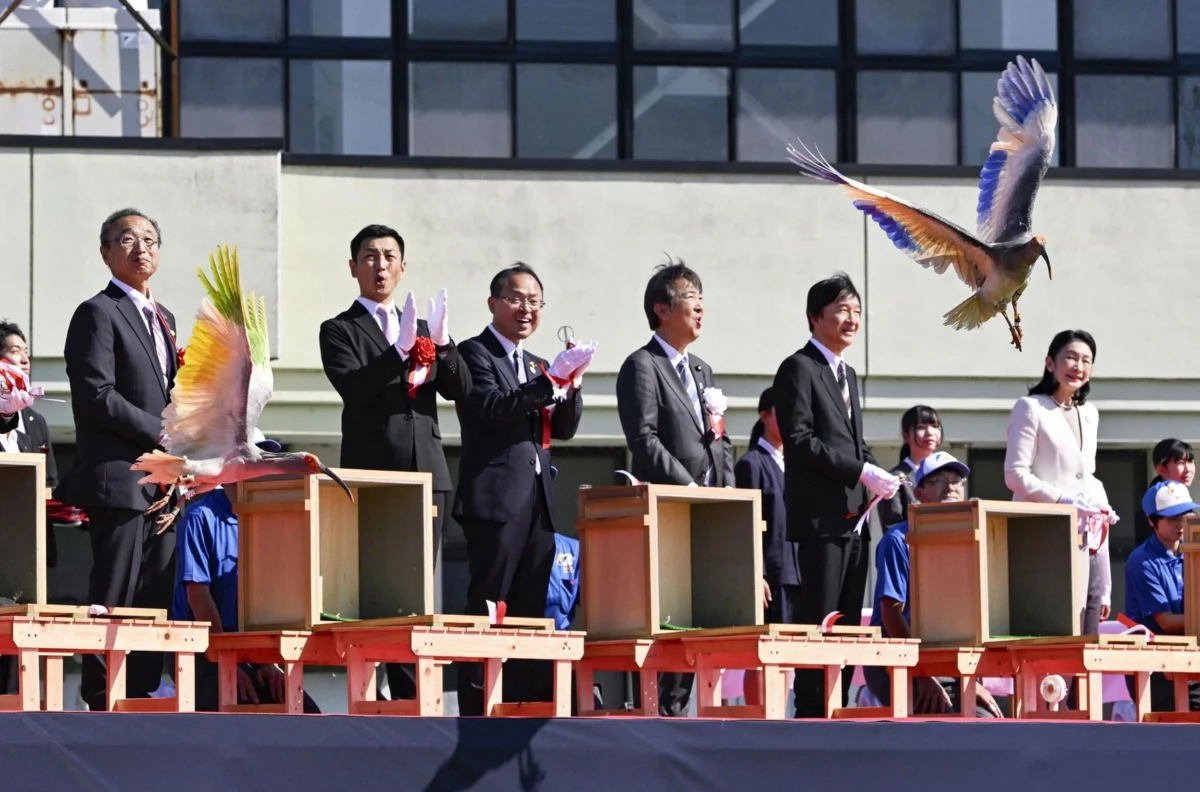
HAKUI, Ishikawa Prefecture — In a historic environmental milestone that blends ecological restoration with a profound sense of regional resilience, eight crested ibises (Nipponia nippon) were released into the wild in Hakui, Ishikawa Prefecture, this past Sunday. This momentous event marks the first time in 56 years that the "Toki"—a bird long considered a natural treasure of Japan—has graced the skies of the country’s main island, Honshu.
The release is more than a biological success story; it is a poignant symbol of renewal for a region still grappling with the physical and emotional devastation wrought by the catastrophic earthquake that struck the Noto Peninsula on New Year’s Day 2024. As the birds took flight, they carried with them the hopes of a community seeking both environmental harmony and social recovery.
The Weight of History: A Chronology of Decline and Resurrection
To understand the gravity of Sunday’s release, one must look back at the precipitous decline of the species. For centuries, the crested ibis was a common sight across the Japanese archipelago. However, the rapid modernization and industrialization of the 20th century, coupled with aggressive overhunting and the widespread use of agricultural chemicals, decimated their numbers.
The Timeline of Extinction and Survival:
- The Early 20th Century: Populations began a sharp decline due to habitat loss and the loss of traditional, biodiversity-friendly farming practices.
- 1970: The last known wild crested ibis on Japan’s main island of Honshu was captured, signaling the end of the species’ presence on the mainland.
- 1981: The final five wild individuals in Japan were captured on Sado Island in a desperate, last-ditch effort to save the species from total extinction through captive breeding.
- 2003: Japan’s native subspecies was officially declared extinct in the wild.
- The "China Connection": Recognizing the gravity of the situation, the Chinese government gifted Japan several crested ibises. These birds became the genetic foundation for the current reintroduction program.
- 2008: The first successful reintroduction of captive-bred birds occurred on Sado Island.
- 2024: The expansion program reaches a critical milestone with the release of eight birds in Hakui, Ishikawa Prefecture, marking the return to the mainland after 56 years.
Supporting Data: From Near-Extinction to Recovery
The reintroduction of the crested ibis is widely considered one of the most successful avian conservation projects in East Asian history. The progress made on Sado Island serves as the blueprint for the current expansion onto the mainland.
Since the initial release in 2008, the population on Sado has grown from a handful of pioneers to an estimated 500 individuals. This growth has been supported by rigorous monitoring and intensive habitat management. The Ministry of the Environment has tracked these birds using GPS technology and physical banding, ensuring that researchers can study their movement patterns, nesting success, and dietary habits.
The move to the mainland is a strategic necessity. As the Sado population reaches the island’s carrying capacity, the risk of disease or localized environmental disasters—such as avian influenza or severe weather—threatens the entire population. Establishing a "sub-population" on the mainland provides a critical safety net, ensuring the long-term viability of the species in the wild.
Habitat Restoration: A Community-Led Revolution
The survival of the crested ibis is not solely a matter of releasing birds; it is a matter of restoring the ecosystem in which they thrive. Crested ibises are "indicator species," meaning their health reflects the overall health of their environment. They require clean water, thriving populations of insects, frogs, and small fish, and nesting trees that are protected from human interference.
In preparation for Sunday’s release, the community of Hakui underwent a fundamental shift in land management. Local farmers, working in tandem with conservationists, drastically reduced the use of pesticides and chemical fertilizers in their paddy fields. This move has allowed the return of the aquatic life that constitutes the ibis’s primary food source.
"The ibis is a demanding guest," noted one local agricultural official. "To welcome them back, we had to change the way we farm. We have moved toward ‘Toki-friendly’ farming, which prioritizes biodiversity over maximum chemical output. It is a return to traditional, sustainable agriculture that benefits both the bird and the local economy."
Official Responses and the Symbolism of Resilience
The timing of the release, occurring less than a year after the Noto Peninsula earthquake, has infused the project with deep emotional significance. For the residents of Ishikawa, the ibis represents a return to normalcy and a promise of a future where nature and humanity can coexist even after disaster.
Government Statements
The Ministry of the Environment issued a statement characterizing the release as "a testament to the patience of the Japanese people and the success of international scientific cooperation."
Local prefectural officials in Ishikawa were more direct in their interpretation of the event. A spokesperson for the prefecture stated: "The earthquake tested our spirit and shattered our landscape. Seeing these birds released into our skies is a powerful symbol of our region’s revival. Just as the ibis has returned from the brink of extinction, we are determined to rebuild our communities and restore our lives."
Environmental experts involved in the project emphasized that while the release is a cause for celebration, the work is far from finished. Monitoring teams will remain on-site in Hakui for the foreseeable future to ensure the birds are adapting to their new environment and to mitigate potential conflicts between the birds and local infrastructure.
Implications: A New Era for Japanese Conservation
The success of the Hakui release has significant implications for future environmental policy in Japan. It demonstrates that local communities, when properly incentivized and educated, can act as effective stewards of endangered species.
Future Challenges and Strategic Goals:
- Genetic Diversity: Maintaining a robust gene pool is essential. Future programs will focus on swapping birds between Sado and the mainland to prevent inbreeding.
- Expansion of Protected Areas: The success in Hakui may lead to the designation of further protected "ibis corridors" across the Noto Peninsula and beyond.
- Public Engagement: Sustaining public support is critical. If the birds begin to feed in private gardens or cause minor agricultural disruptions, the government must be prepared to offer compensation and mediation to keep the community on the side of conservation.
- International Cooperation: The program remains a pillar of Japan-China diplomatic relations. Continued transparency and sharing of scientific data between the two nations will be vital for the species’ survival in the long term.
As the sun set over the paddy fields of Hakui on Sunday, the eight crested ibises were seen foraging in the shallow waters, seemingly unfazed by their new surroundings. For a country that has often struggled to balance the demands of a high-tech economy with the needs of the natural world, their presence is a quiet but powerful reminder of what is possible when science, government, and local community interests align.
The return of the crested ibis is not just a biological recovery; it is a cultural reclamation. For 56 years, the mainland was a quieter, less vibrant place without the distinct silhouette of the Toki against the sunset. Today, that silence has been broken, and for the people of Ishikawa, the birds’ return is a harbinger of a greener, more resilient tomorrow.
© KYODO












No comments yet. Be the first to join the conversation!