Basiran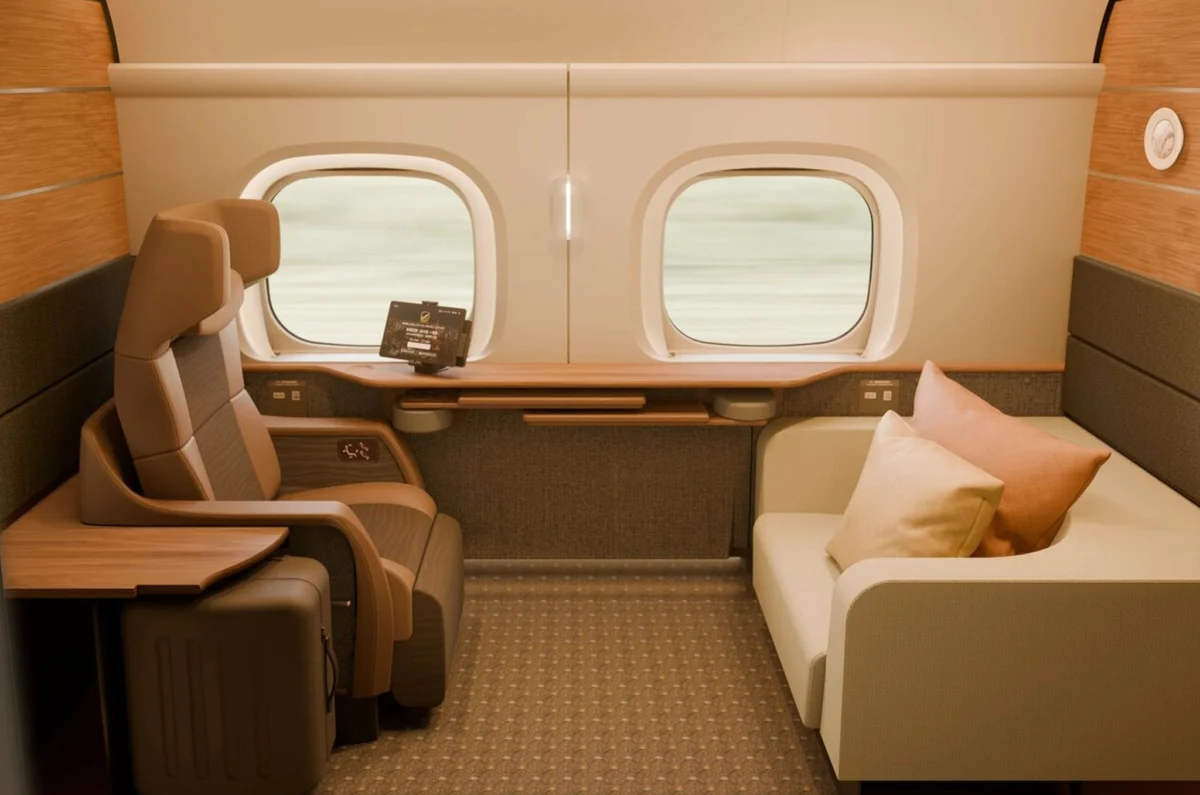
By Editorial Staff
Updated: June 19, 2026
The landscape of Japanese rail travel is undergoing a significant transformation. As the Tokaido Shinkansen—the high-speed artery connecting Japan’s most vital economic hubs—prepares to celebrate its ongoing evolution, operators have announced a bold pivot toward ultra-luxury travel. Beginning October 1, 2026, Central Japan Railway (JR Central) and West Japan Railway (JR West) will introduce the "Supreme Class," a premium private compartment service designed to cater to a growing demographic of high-net-worth travelers and business professionals seeking unparalleled privacy and comfort.
Simultaneously, the rails of Tokyo are serving as a bridge between East and West. As Japan looks toward the future of high-speed rail, it is also celebrating its deep-rooted history, marked this week by a symbolic gesture of friendship between the world-renowned London Underground and the Tokyo Metro.
The Advent of "Supreme Class": Redefining High-Speed Luxury
For decades, the Shinkansen has been synonymous with efficiency, punctuality, and technological precision. However, with the introduction of Supreme Class, the focus shifts toward exclusivity. These state-of-the-art compartments represent a departure from the open-plan seating that has defined bullet train travel since the 1960s.
Technical Specifications and Cabin Design
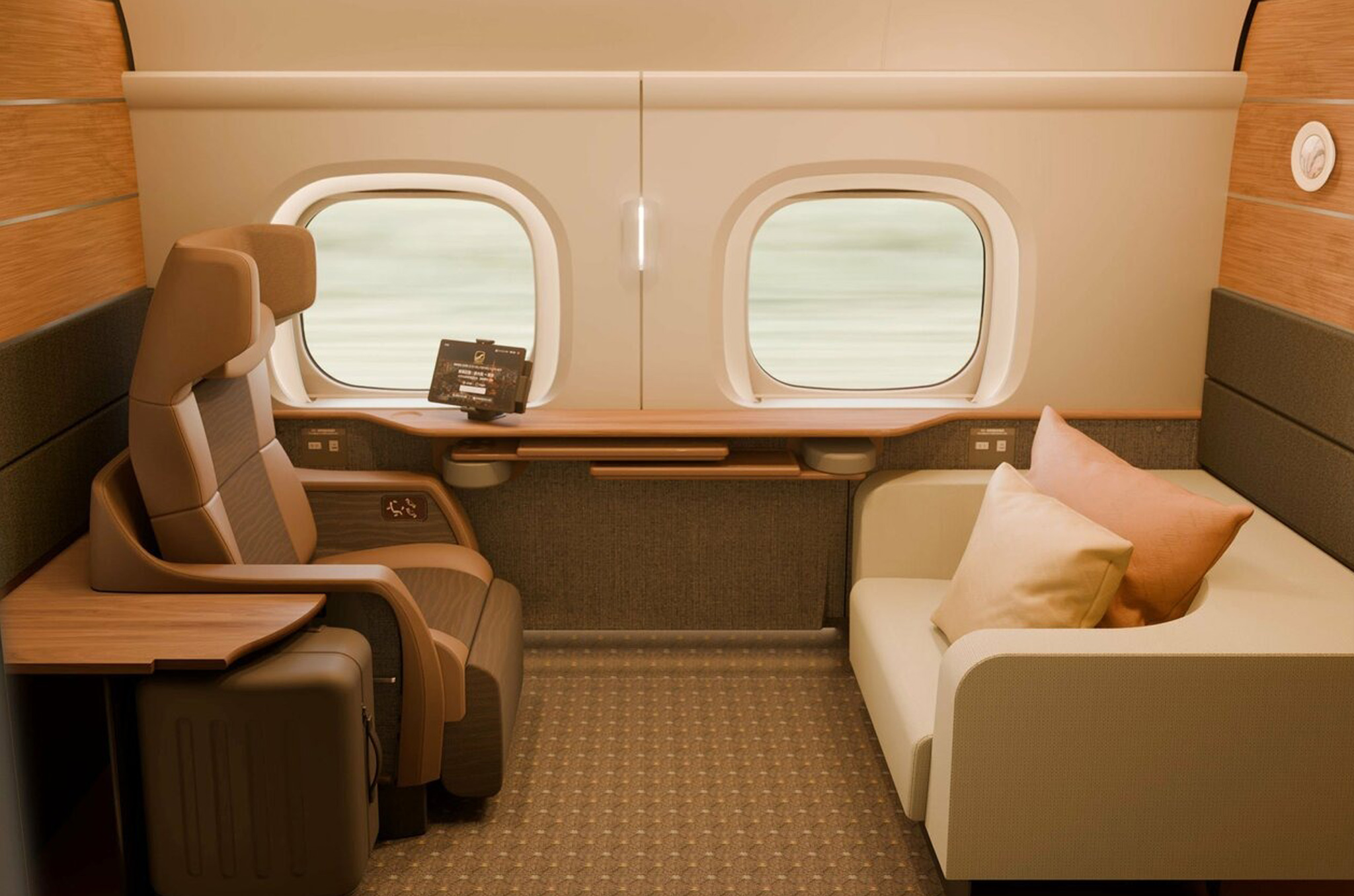
The Supreme Class is designed as a sanctuary of silence and security. Each compartment features:
- Lockable Electronic Doors: Ensuring absolute privacy for sensitive business discussions or personal relaxation.
- Customized Climate and Lighting: Passengers maintain total control over their immediate environment, with adjustable air conditioning and personalized lighting profiles.
- Enhanced Connectivity: Dedicated high-speed Wi-Fi, optimized for uninterrupted video conferencing and data-intensive work.
- Ergonomic Seating: Advanced reclining capabilities tailored for long-haul comfort.
Tiered Luxury: The Two-Configuration Model
JR Central is segmenting its premium offering into two distinct experiences to cater to different passenger profiles:
- The Suite Cabin (Car 7): Designed for maximum comfort, this configuration functions as a mobile office or lounge. It includes a plush sofa, expansive floor space, and a layout that comfortably accommodates up to two passengers.
- The Solo Cabin (Car 10): Tailored for the solitary traveler or the solo business executive, this compartment offers a more compact but equally sophisticated environment.
The pricing structure reflects the premium nature of these spaces. A solo private room on the Nozomi service between Tokyo and Nagoya will command a price of ¥32,440. For the more spacious two-person suite, the premium cost is set at ¥47,060, with the caveat that both passengers must also hold standard fare and limited express tickets. Reservations for these coveted spaces will be handled exclusively through the "Smart EX" digital portal, streamlining the booking process for international and domestic travelers alike.
Chronology of the Rollout
The implementation of the Supreme Class is a phased, long-term strategic initiative aimed at capturing the luxury travel market without disrupting the high-frequency nature of the Tokaido line.
- October 1, 2026 (Phase One): Launch of Supreme Class on approximately 12 daily train services.
- Fiscal Year 2026–2027: Gradual integration of cabins into the fleet, focusing on high-traffic business routes.
- Fiscal Year 2027 (April): Expansion of offerings to include "semi-private suites" featuring high-walled sliding doors and non-encroaching reclining shells.
- Fiscal Year 2028 (End): The target milestone for Supreme Class availability on 30% of all Tokaido Shinkansen operations.
Beyond the Suite: The Evolution of Passenger Experience
JR Central President Shunsuke Niwa emphasized that this initiative is not merely about adding luxury, but about addressing the changing nature of the passenger experience. During a press conference held on Wednesday, Niwa remarked, "The Supreme Class allows us to provide better services to customers who want high-quality offerings. We are observing a shift in how our passengers utilize their time on board; for many, the train is no longer just transit—it is an extension of their office or a place for rejuvenation."
The innovation does not stop with fully enclosed rooms. By April 2027, the company plans to roll out "semi-private" suites. These will feature a unique "shell design" for seats. Unlike standard designs where a reclining seatback encroaches into the space of the person behind, the shell remains fixed. This engineering breakthrough ensures that even in standard-premium sections, the sanctity of a passenger’s personal space is maintained.
A Century of Subways: The London-Tokyo Connection
While JR Central looks to the future, the Tokyo Metro is honoring its past. On Thursday, the city welcomed Sadiq Khan, the Mayor of London, for a diplomatic mission aimed at deepening the economic and cultural ties between the United Kingdom and Japan.
The Ueno Station Roundel
The highlight of the visit occurred at Ueno Station, where Mayor Khan unveiled an official Transport for London (TfL) roundel. This iconic piece of British design now stands in one of Tokyo’s busiest transit hubs, serving as a permanent monument to the century-long bond between the two cities’ underground networks.
The history of Tokyo’s subway is, in fact, a story of British influence. In the early 20th century, Noritsugu Hayakawa, the founder of the Tokyo underground system, traveled to London to study the "Tube." Inspired by the efficiency and infrastructure of the London Underground, Hayakawa returned to Japan to build what would become the Ginza Line, which opened in 1927.
A Full-Circle Partnership
Mayor Khan’s speech underscored the irony and the beauty of this historical loop:
"It is amazing to think the inspiration for the Ginza Line can be traced back to our Tube in London," Khan noted. "And the relationship has now come full circle, with Tokyo Metro involved in running our newest and busiest railway, the game-changing Elizabeth Line."
The cross-pollination of transit expertise between Tokyo Metro and TfL serves as a blueprint for modern urban planning. By sharing data on safety, environmental sustainability, and passenger flow, both cities are positioning themselves to meet the climate challenges of the 21st century.
Implications for the Future of Global Transit
The convergence of these two stories—the launch of luxury Shinkansen suites and the celebration of the Tokyo-London transit bond—highlights the bifurcated nature of modern rail infrastructure. On one hand, operators are under pressure to provide "premiumization" for an increasingly demanding business class. On the other, they are tasked with maintaining the public utility of mass transit systems that have served millions for nearly a century.
Economic Impact
For JR Central, the Supreme Class represents a significant revenue diversification strategy. By tapping into the "premium-leisure" market, the company can mitigate the plateauing growth of standard ticket sales. The high price point of these cabins is expected to attract executives and affluent tourists who might otherwise choose domestic flights.
Cultural and Diplomatic Impact
The partnership between London and Tokyo serves as a reminder that transit is more than just tracks and steel. It is a conduit for culture. As Tokyo prepares for the 100th anniversary of its subway system in 2027, the presence of the TfL roundel at Ueno serves as a tangible symbol of international cooperation. It signals to investors and citizens alike that both nations remain committed to the concept of the "prosperous, green city"—a vision that relies heavily on the ability to move millions of people efficiently, comfortably, and sustainably.
As we look toward the remainder of 2026 and into 2027, the rail industry in both Japan and the UK appears to be at an inflection point. Whether through the installation of high-tech private suites on the Shinkansen or the preservation of historical transit aesthetics, the goal remains the same: to make the journey as significant as the destination.


 Neng Nana
 Asro
Asro