

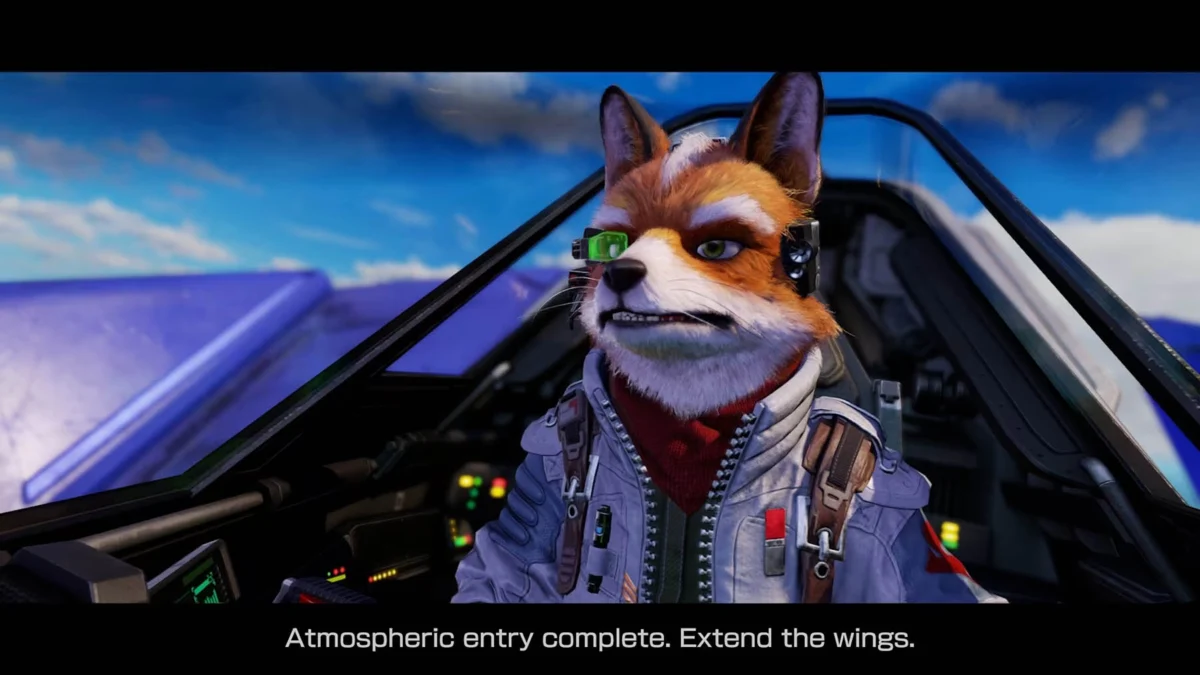
In a move that has sent ripples of excitement through the retro-gaming community and beyond, Nintendo has officially unveiled a comprehensive reimagining of its legendary title, Star Fox 64. Simply titled Star Fox, the new project is slated for a June 25, 2026, release on the Nintendo Switch 2. The reveal, accompanied by a lengthy gameplay demonstration, showcases a title that balances the nostalgic core of the original Nintendo 64 masterpiece with the high-fidelity graphical prowess and social integration expected of next-generation hardware.
Main Facts: A New Chapter in the Lylat System
The Lylat System is once again under siege. The core premise remains faithful to the 1997 classic: the nefarious scientist Andross has launched a surprise, catastrophic assault on the galaxy, and the only force standing between total annihilation and salvation is the Star Fox Mercenary Squad. Players will once again take the mantle of Fox McCloud, leading his iconic crew—the ace pilot Falco Lombardi, the brilliant but often frantic engineer Slippy Toad, and the seasoned veteran Peppy Hare—through the heat of interstellar battle.
This reimagining is far from a simple remaster. Nintendo has overhauled the engine to provide a complete visual, mechanical, and auditory modernization. The game introduces branching narrative paths that promise a more dynamic campaign, alongside a suite of new gameplay modes that leverage the advanced hardware of the Switch 2, including precise mouse-controlled targeting via the new Joy-Con 2 controllers.
Chronology of the Star Fox Legacy
The journey to this 2026 release is steeped in decades of gaming history. The Star Fox franchise has long been a benchmark for technical achievement.
- 1993: The original Star Fox launched on the Super Nintendo, introducing the world to the Super FX chip and groundbreaking 3D polygonal graphics.
- 1997: Star Fox 64 (released as Lylat Wars in Europe) set the gold standard for rail shooters, introducing voice acting and the Rumble Pak, which revolutionized tactile feedback in gaming.
- 2000s–2010s: The franchise saw various iterations, including the experimental Star Fox Adventures, the tactical Star Fox Command, and the Wii U’s Star Fox Zero, which utilized dual-screen mechanics.
- 2025: Rumors regarding a high-budget reboot began circulating as internal leaks from Nintendo’s Kyoto headquarters suggested a "return to form" project intended to showcase the graphical capabilities of the upcoming Switch 2.
- June 2, 2026: Nintendo officially pulls back the curtain with an extensive gameplay trailer, confirming the June 25 release date.
Supporting Data: Modes, Mechanics, and Connectivity
The gameplay reveal highlights a deep commitment to both solo and multiplayer experiences. Nintendo has structured the game into several distinct pillars:
The Campaign and Cooperative Play
The heart of the experience remains the Campaign Mode. Players will pilot the Arwing through redesigned stages, with Nintendo promising "branching paths" that offer significant replayability. Perhaps most exciting is the inclusion of local and online co-op. Using "GameShare 2" technology, two players can tackle the campaign together: one acting as the Pilot, responsible for flight and maneuvering, and the other as the Gunner, focusing on precision targeting and tactical support.
Battle Mode and Social Integration
For competitive players, the 4-vs.-4 aerial combat mode offers a high-stakes arena to test piloting skills. This mode supports local play via GameShare, meaning only one copy of the game is required for four players to participate.
Perhaps the most surprising addition is the integration of the "GameChat" system. By utilizing a compatible USB camera, players can project their facial expressions onto their character models. Seeing a player’s genuine reaction to an Arwing explosion, mapped onto the face of Fox McCloud, represents a leap forward in the "personalization" of multiplayer gaming.
Audio and the Nintendo Music Ecosystem
Simultaneous with the game’s announcement, Nintendo has expanded its Nintendo Music service. A curated playlist of 10 tracks from the new Star Fox score has been added, emphasizing the company’s push toward a cross-platform lifestyle experience. These tracks are optimized for integration with Apple CarPlay and Android Auto, ensuring the pulse-pounding synths of the Lylat System can follow players into their daily commutes. The "My Mix" feature also uses AI to analyze play history, crafting personalized soundtracks for users.

Official Responses and Industry Context
While Nintendo representatives have kept quiet regarding specific sales projections, the tone surrounding the announcement is one of high confidence. During a recent investor briefing, the development team noted that Star Fox is being positioned as a "foundational showcase" for the Switch 2’s processing capabilities.
"We wanted to honor the kinetic energy of the 1997 original while removing the barriers that defined that era," said a lead developer in a recent press statement. "The goal was to make the cockpit feel tactile, the explosions feel massive, and the squad feel like a living, breathing team."
Industry analysts have praised the decision to focus on a "reimagining" rather than a sequel or a remake. "By leaning into the Star Fox 64 blueprint, Nintendo is playing to their strengths," noted one gaming market analyst. "The audience has been clamoring for a return to the classic rail-shooter formula, and by adding modern social features like the avatar-mirroring GameChat, they are ensuring the game feels relevant to a younger, streaming-focused generation."
Implications for the Future of Nintendo
The release of Star Fox on June 25, 2026, acts as a litmus test for Nintendo’s strategy regarding its "legacy IP" portfolio. If successful, the game could set a template for how the company approaches other dormant franchises—namely, how to bridge the gap between "retro" appeal and "next-gen" performance.
1. The Death of the "Remake" Stigma
For years, the industry has debated whether remakes dilute original creative vision. Nintendo’s approach here—keeping the mission structure and character dynamics of the 1997 classic while layering on modern physics, lighting, and networking—suggests a middle ground. It proves that a franchise can be "reimagined" without losing the soul of the original experience.
2. Ecosystem Interoperability
The aggressive expansion of Nintendo Music and the use of cross-device GameShare indicate that Nintendo is finally moving toward a more unified digital ecosystem. Integrating game assets (like the Star Fox avatars) into social-leaning chat platforms suggests that Nintendo sees the future of its hardware as a social hub, rather than just a standalone console.
3. The Switch 2 Hardware Ceiling
Technically, the gameplay footage released on June 2nd confirms that the Switch 2 is capable of high-fidelity environmental destruction and particle effects that were previously reserved for high-end PCs. If Star Fox runs at a locked, high frame rate while rendering the intense, chaotic dogfights shown in the trailer, it will effectively silence critics who have long pointed to Nintendo’s hardware as "underpowered."
Conclusion
As the June 25 release date approaches, anticipation is reaching a fever pitch. Star Fox represents a rare alignment of nostalgia and innovation. It is an invitation for veteran players to return to a world they once saved, and an introduction for a new generation to one of the most iconic squads in gaming history. Whether you are aiming for a high score in the Campaign or engaging in high-speed dogfights with friends, the Lylat System looks more vibrant, dangerous, and engaging than ever before. Nintendo isn’t just releasing a game; they are rebooting a legend, and the galaxy is ready for takeoff.











No comments yet. Be the first to join the conversation!