

By João Silva | Technology Correspondent
In an era where the boundary between virtual reality and physical displays continues to blur, Acer has made a definitive statement at this year’s industry showcases. By unveiling a refreshed and aggressive lineup of gaming displays under its flagship Predator and mainstream-focused Nitro brands, the hardware giant is attempting to corner every niche of the enthusiast market. From the return of glasses-free 3D technology to the bleeding-edge reality of 1000Hz refresh rates, Acer’s latest offerings represent a significant technological leap in how we consume digital content.
The Main Facts: A Diverse Arsenal of Displays
Acer’s latest announcement is not merely a product refresh; it is a strategic diversification of its monitor portfolio. The company has identified three primary consumer archetypes: the immersive 3D enthusiast, the professional-grade OLED gamer, and the competitive esports professional.
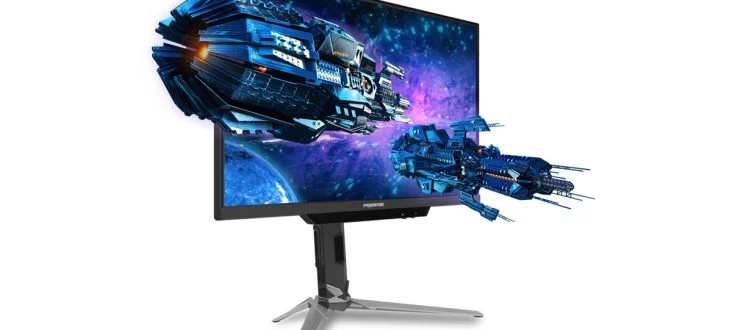
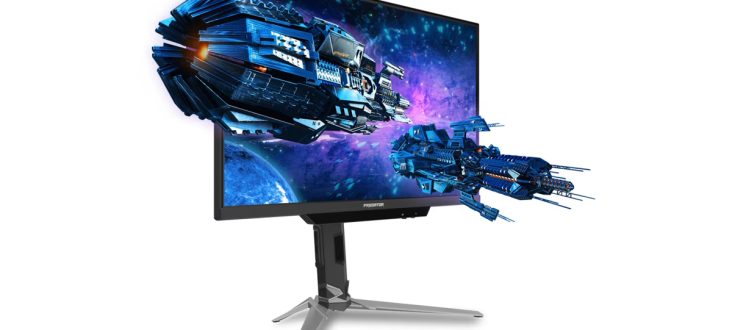
The highlight of the new Predator series is the Predator XB273K 3D, a monitor that revives the long-dormant dream of 3D gaming without the inconvenience of bulky polarized glasses. By integrating advanced eye-tracking technology, the display creates a sense of depth that was previously impossible without dedicated eyewear.
On the performance front, the Predator X34 F1 positions itself as a luxury contender. Featuring a curved QD-OLED Penta Tandem panel, it aims to deliver the "holy grail" of display specifications: a 360Hz refresh rate paired with a near-instantaneous 0.03ms GTG (Grey-to-Grey) response time.
For the Nitro series—Acer’s volume-moving performance brand—the updates are equally impressive, pushing the boundaries of what consumers can expect at a mid-range price point. The inclusion of Dual-Format Resolution (DFR) technology across multiple models allows these screens to shift dynamically between high-resolution productivity and high-frequency competitive gaming.
Chronology: The Evolution Toward 1000Hz
The journey to the current state of monitor technology has been one of rapid acceleration. Only five years ago, a 144Hz refresh rate was considered the gold standard for high-end gaming. Today, that ceiling has been shattered.
- Early 2020s: The industry shifted focus toward resolution, moving from 1080p to 1440p and 4K, with high refresh rates reserved for niche competitive monitors.
- 2023-2024: The introduction of OLED technology into the gaming monitor market changed the game, providing superior contrast and response times.
- Late 2025: The development of DFR (Dual-Format Resolution) technology enabled monitors to swap between native resolutions and high-speed, lower-resolution modes, solving the bottleneck of GPU bandwidth.
- Mid-2026 (Present): Acer officially announces the Nitro XV273U F5, capable of a staggering 1000Hz refresh rate at HD resolution. This marks the first time a consumer display has entered the four-digit territory, a milestone previously thought to be years away.
Supporting Data: Specifications Breakdown
To understand the engineering marvel behind these displays, one must look closely at the specifications. Acer has utilized a combination of IPS, VA, and QD-OLED panel technologies to meet specific use cases.
The Predator Series
- Predator XB273K 3D: Focuses on the SpatialLabs ecosystem. It delivers 4K at 180Hz, proving that 3D immersion no longer requires a sacrifice in refresh rate or pixel density.
- Predator X34 F1: A 34-inch curved powerhouse. The "Penta Tandem" OLED architecture is specifically designed to boost brightness and longevity, addressing the common historical complaints regarding OLED burn-in. With 99% DCI-P3 coverage and VESA DisplayHDR True Black 500 certification, it is as much a creative tool as it is a gaming display.
The Nitro Series
- Nitro XV345CKR P: A 34-inch ultra-wide beast featuring 1344-zone Mini LED backlighting. The zone count is critical here, as it allows for a 5K WUHD resolution while maintaining deep blacks and high peak brightness (VESA DisplayHDR 1000). The ability to switch to 360Hz at a lower resolution (WFHD) via DFR makes it a versatile hybrid for both sim-racing and twitch shooters.
- Nitro XV320QX: A 31.5-inch 5K IPS panel that emphasizes productivity features. Including an "Acer Smart Dial" and an infrared remote control suggests this monitor is designed for the modern hybrid office/gaming setup, where users frequently switch between professional workflows and entertainment.
- Nitro XV273U F5: The "speed king." By utilizing an IPS panel that native-clocks at 540Hz and scales to 1000Hz at HD resolution, this monitor is aimed squarely at professional esports athletes who require the lowest possible input latency.
Implications: The Impact on Gaming and Hardware
The introduction of these monitors brings several significant implications for the PC hardware ecosystem.
The GPU Bottleneck
The leap to 1000Hz raises a pertinent question: can current graphics cards support it? While a display may refresh at 1000Hz, the GPU must be capable of rendering frames at a corresponding rate to see a benefit. For most modern AAA titles, hitting 1000 frames per second is mathematically impossible even with flagship GPUs like the RTX 5090. Consequently, this technology is currently reserved for low-fidelity, high-speed titles such as Counter-Strike 2, Valorant, or League of Legends.
The Return of 3D
SpatialLabs technology is a fascinating pivot. By using eye-tracking to adjust the image in real-time, Acer is betting that users want a more immersive experience without the friction of wearing glasses. If successful, this could revitalize 3D gaming, which has languished since the failed experiments of the mid-2010s.
Mini-LED vs. OLED
The rivalry between Mini-LED (featured in the Nitro XV345CKR P) and QD-OLED (featured in the Predator X34 F1) continues to intensify. Mini-LED offers superior brightness and zero risk of permanent image retention, making it better for static productivity tasks. Conversely, QD-OLED provides the best motion clarity and color accuracy currently available. Acer’s decision to offer both options allows consumers to choose based on their specific usage patterns rather than forcing a "one-size-fits-all" panel technology.
Official Responses and Industry Outlook
While Acer has yet to release full pricing for every regional market, the sentiment from the company’s internal briefing is one of "uncompromising performance."
"We are no longer just looking at pixels," an Acer spokesperson noted during the pre-launch briefing. "We are looking at the human perception of motion. By providing the user with tools to toggle between high resolution and high speed, we are giving the gamer agency over their hardware."
Industry analysts remain cautiously optimistic. While the 1000Hz milestone is a technical triumph, many experts note that the human eye’s ability to discern improvements beyond 360Hz is a subject of ongoing debate. However, as has been the case with the transition from 60Hz to 144Hz, the difference is often felt in the responsiveness of the input rather than just the visual fluidity of the screen.
Conclusion: Is it Time to Upgrade?
As we move through the latter half of 2026, the monitor market has never been more competitive. For the average user, the choices have become daunting.
If your primary focus is competitive gaming, the Nitro XV273U F5 and its 1000Hz capabilities represent the absolute pinnacle of current technology. For those who prioritize cinematic beauty and deep, inky blacks, the Predator X34 F1’s QD-OLED panel is likely the superior choice. Meanwhile, for those who crave a unique, cutting-edge experience, the Predator XB273K 3D offers a glimpse into a future where the flat screen is no longer the final frontier.
The question remains: will the market adopt these high-frequency displays at scale, or will they remain a playground for the elite? Regardless of the answer, Acer has cemented its position as a primary innovator, forcing its competitors to rethink the limits of what a display can do. As the year progresses, we look forward to testing these units in real-world scenarios to determine if the 1000Hz promise holds up under the pressure of professional competition.
Are you planning on upgrading your display this year? The landscape is shifting rapidly, and whether you are chasing the fastest refresh rates or the most vibrant OLED colors, 2026 is shaping up to be a historic year for display technology.










No comments yet. Be the first to join the conversation!