

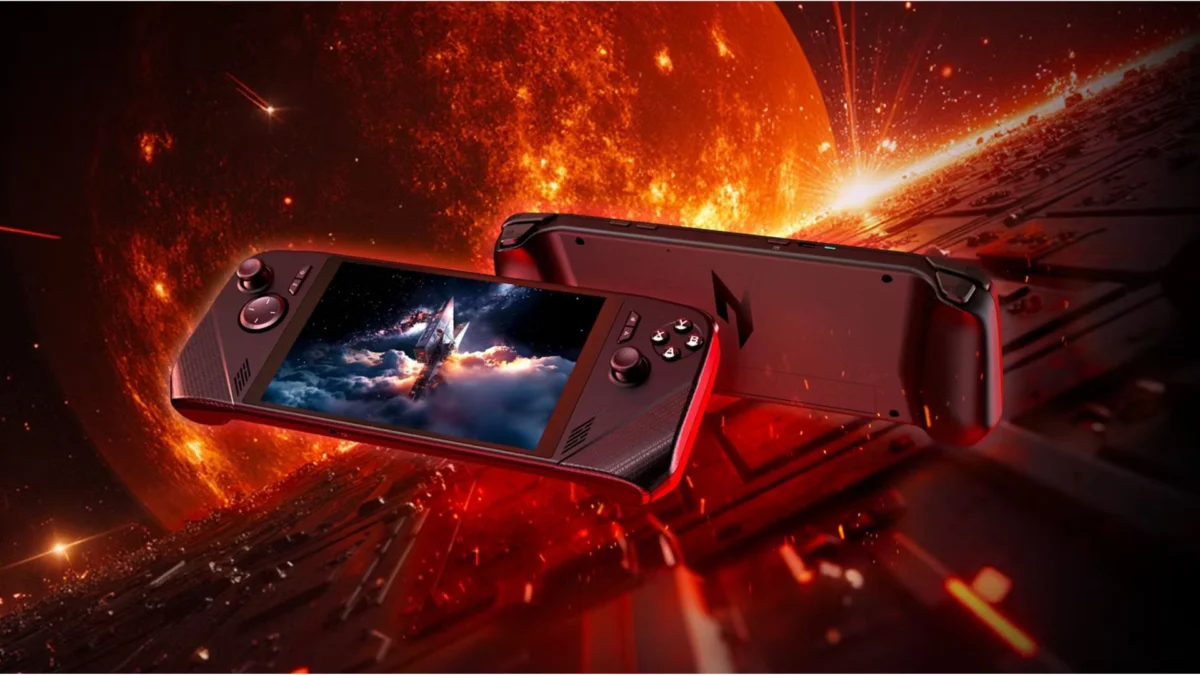
In a rapidly evolving gaming landscape, where portability often clashes with the raw power required for modern AAA titles, Acer has unveiled its latest hardware solution: the Nitro Blaze Link. As the gaming industry grapples with fluctuating hardware prices and the increasing popularity of remote-play ecosystems, Acer is positioning this device not as a standalone powerhouse, but as a specialized portal for gamers who already own a high-performance PC.
The announcement, which comes on the heels of controversial price adjustments in the handheld sector—most notably regarding the Steam Deck—signals a strategic pivot for the Taiwanese tech giant. By opting for a streaming-first architecture rather than an expensive, self-contained silicon engine, Acer is aiming to capture a specific segment of the market: the "PC gamer on the move."
Main Facts: What is the Acer Nitro Blaze Link?
The Acer Nitro Blaze Link is a dedicated remote-play handheld console designed to mirror the capabilities of a user’s primary gaming PC. Unlike the ASUS ROG Ally or the Lenovo Legion Go, which utilize onboard APUs to process game logic, the Nitro Blaze Link functions as a high-fidelity display and input interface.
Technical Specifications and Design
The device features a 7-inch touchscreen with a resolution of 1,200p, designed to provide crisp visuals for streaming titles from a host machine. Connectivity is handled via Wi-Fi 6, which Acer claims is optimized for low-latency streaming to ensure that the "input-to-action" lag remains minimal—a critical requirement for competitive or fast-paced gaming.
Weighing in at approximately one pound, the device is designed for ergonomics, featuring a form factor that mimics the popular aesthetics of contemporary handhelds. According to reports from CNET, the device runs on a lightweight Linux-based operating system. Most notably, the internal hardware is extremely sparse, utilizing only 1GB of RAM. This confirms that the device is incapable of running native gaming applications or AAA titles locally; its sole purpose is to serve as a bridge between the user’s hands and their high-performance gaming rig.
Chronology: The Evolution of Remote Play
The concept of "remote play" or "game streaming" is not a novel invention, but its adoption has seen a distinct lifecycle that mirrors the broader trends in cloud computing and wireless fidelity.
The Early Days: NVIDIA Shield and PS Vita
Remote play began as a niche experiment. Sony’s PlayStation Vita allowed for local streaming from the PS4, though it was often hindered by the network limitations of the early 2010s. Simultaneously, NVIDIA’s Shield Portable introduced the world to the concept of streaming PC games via local network, a feature that was later relegated to the NVIDIA Games app.
The "Portal" Era: 2023 to Present
The launch of the PlayStation Portal in 2023 marked a paradigm shift. Sony proved that there was a massive consumer appetite for a dedicated, single-purpose remote-play device, provided the user experience was seamless. The device prioritized ergonomics and a high-quality screen over internal processing power, focusing on the "Remote Play" experience.
The 2026 Shift: Acer’s Entry
Acer’s entry into this market in mid-2026 represents the current industry consensus: the market is now mature enough to support dedicated handhelds for specific use cases. Acer has observed the rise of "handheld inflation"—where devices like the Steam Deck are seeing price hikes due to premium screen technology and higher storage tiers—and identified a "value gap." By removing the CPU/GPU, Acer aims to provide a more affordable alternative for the existing PC gaming base.
Supporting Data: Understanding the "Value-Performance" Tradeoff
The gaming handheld market is currently divided into two distinct philosophies: the Integrated Powerhouse and the Streamed Portal.
Comparative Market Analysis
- The Integrated Powerhouse (e.g., Steam Deck, ROG Ally): These devices carry the cost of custom silicon (APUs), high-speed NVMe storage, and complex thermal management solutions. They are essentially portable PCs. Their cost is high, and their battery life is often limited by the heavy power draw of the processor.
- The Streamed Portal (e.g., Nitro Blaze Link): These devices reduce the hardware footprint significantly. By relying on the host PC for all computation, the handheld’s battery life can be optimized for display and wireless communication, and the bill of materials (BOM) is drastically reduced.
The Role of Network Infrastructure
The efficacy of the Nitro Blaze Link is tethered to the advancement of Wi-Fi standards. With Wi-Fi 6 (and increasingly Wi-Fi 7) becoming common in households, the bottleneck for streaming has moved from bandwidth availability to latency. Acer’s decision to launch the Nitro Blaze Link in late 2026 coincides with the widespread deployment of mesh Wi-Fi systems and high-speed fiber internet, which are the prerequisites for a stable, lag-free remote-play experience.
Official Responses and Corporate Strategy
Acer has been deliberate in its messaging regarding the device. In official statements, the company frames the Nitro Blaze Link as a tool for "gamers who demand performance and value." This is a calculated response to the feedback loop of the current gaming market, where the "cost-per-hour-of-play" is becoming a point of contention for consumers.
Acer’s Rationale
By positioning the device as a companion, Acer is avoiding a direct conflict with the "all-in-one" gaming handhelds. Instead of trying to convince a user to replace their PC, they are selling an extension of that PC. This strategy mitigates the risk of technical obsolescence; as the user upgrades their main PC, the Nitro Blaze Link automatically "improves" because it is streaming from a more powerful source.
While the company has remained tight-lipped regarding the exact MSRP, analysts suggest that to be competitive, the device must sit significantly below the price point of a baseline Steam Deck. If Acer can hit a price point that makes the device an "impulse buy" for existing PC owners, they could capture a significant market share.
Implications: The Future of Handheld Gaming
The introduction of the Nitro Blaze Link carries several long-term implications for the gaming industry.
1. The Death of the "All-in-One" Requirement
If devices like the Nitro Blaze Link gain traction, the pressure on manufacturers to cram high-end GPUs into handhelds may subside. This could lead to a bifurcation of the market: high-end, expensive handhelds for those who want total independence, and affordable, high-quality streaming devices for the mass market.
2. The Impact on PC Sales
Acer’s strategy may indirectly boost their desktop and laptop sales. By creating a device that is useless without a powerful gaming PC, Acer is essentially creating an ecosystem lock-in. If a consumer enjoys their remote-play experience on the Nitro Blaze Link, they are more likely to stay within the Acer/Windows ecosystem for their next primary PC upgrade.
3. Sustainability and E-Waste
From an environmental perspective, these streaming devices are arguably more sustainable. Because they lack heavy processors and complex cooling systems, they are easier to manufacture and eventually recycle. Furthermore, they extend the "useful life" of older gaming PCs that might struggle to output to a 4K monitor but can easily handle a 1,200p stream to a handheld device.
4. Challenges Ahead
Despite the potential, the Nitro Blaze Link faces significant hurdles. Network congestion remains the primary enemy of the remote-play experience. Furthermore, the device will need to support a robust software suite—likely a custom interface that simplifies the process of connecting to Steam, Epic, or Xbox apps on the host PC. If the pairing process is cumbersome, the device will struggle to gain mainstream adoption.
Conclusion: A Gamble on Connectivity
As we look toward the fourth quarter of 2026, the success of the Acer Nitro Blaze Link will be the ultimate test of the "remote-play-first" philosophy. The device represents a lean, focused approach to hardware design that prioritizes the user’s existing investment in gaming infrastructure.
While it won’t satisfy the gamer who needs to play offline on a long-haul flight without a host PC, it offers a compelling vision of the future: a world where the handheld is merely a window into a larger, more powerful computing environment. Whether the market is ready for a device that is fundamentally an "accessory" rather than a "console" remains to be seen, but Acer is betting that in a world of rising costs and high-speed wireless connectivity, the value proposition will be impossible for the average gamer to ignore.
The Nitro Blaze Link is not just a piece of hardware; it is a declaration that the future of gaming may not be about carrying the power with you, but about accessing it wherever you choose to sit.












No comments yet. Be the first to join the conversation!