Dwi Wanna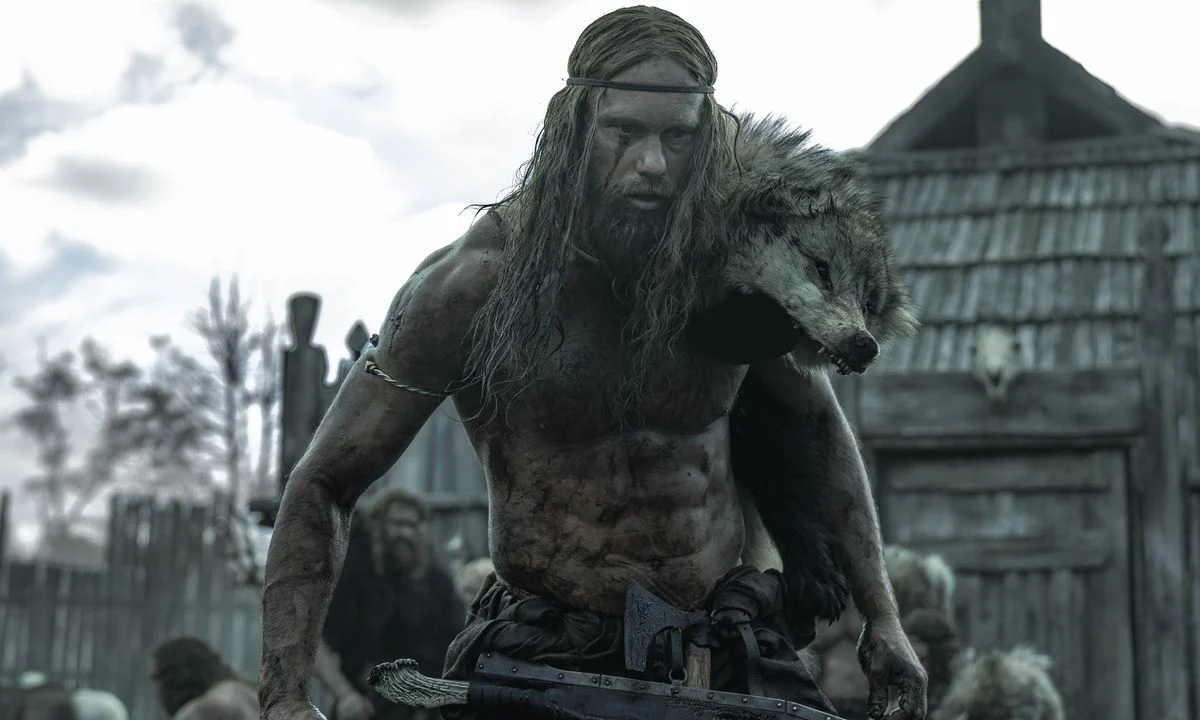
Robert Eggers has cultivated a cinematic brand that is as unmistakable as it is uncompromising. To walk into an Eggers film is to step through a portal into a bygone era, where the dialogue is thick with period-accurate vernacular, the atmosphere is suffocatingly authentic, and the presence of Willem Dafoe—often in a role that defies traditional archetypes—serves as a comforting anchor in an otherwise alien landscape.
With his fourth feature film, Werwulf, looming on the horizon for a Christmas 2026 release, audiences are once again bracing for the director’s signature blend of historical rigor and supernatural dread. While Eggers’ filmography—comprising The Witch, The Lighthouse, The Northman, and Nosferatu—is marked by distinct temporal and geographical settings, a fascinating, connective tissue has begun to emerge. In a recent dialogue with Esquire, Eggers revealed that his upcoming exploration of the werewolf mythos in 13th-century England is not entirely disconnected from the visceral, Viking-era bloodlust of his 2022 epic, The Northman.
The Main Facts: A Convergence of Folklore
For the uninitiated, Werwulf centers on a 13th-century English farmer, played by Aaron Taylor-Johnson, who finds himself ensnared in the terrifying manifestations of lycanthropy. While the film promises to be a standalone narrative, Eggers suggests that the logic of the creature’s existence is deeply rooted in the same cultural archetypes he explored in The Northman.
The connection is not one of plot or shared universe continuity—there is no looming threat of an immortal Amleth appearing in medieval England—but rather a thematic lineage. Eggers is tracing the evolution of the "human-as-beast" trope. He posits that the visceral, ritualistic "wolf-coats" of the Viking age serve as a primal ancestor to the satanic, cursed werewolves of later Christianized Europe. By bridging these two distinct epochs, Eggers is essentially mapping the cultural transformation of how humanity perceives its own capacity for savagery.
A Chronological Evolution of the "Beast"
To understand the depth of this connection, one must look at the trajectory of Eggers’ obsession with the "beast within."
9th Century: The Ulfhéðnar of The Northman
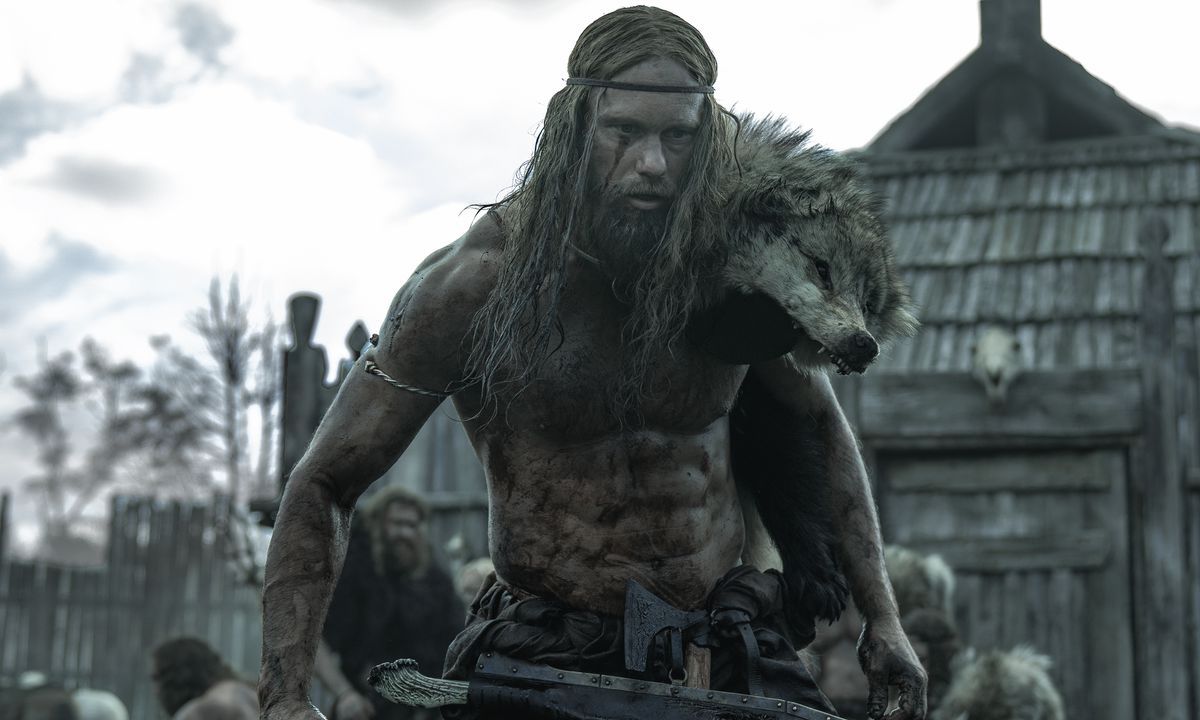
In The Northman, the transformation into a wolf is not a curse, but a strategic, spiritual aspiration. Alexander Skarsgård’s Amleth, inspired by the Norse ulfhéðnar (wolf-coats), uses the imagery and psychological weight of the wolf to transcend his humanity. In the 9th-century Norse context, becoming a wolf was a form of holy terror. It was a shedding of the self to become a conduit for Odin’s fury. The rituals performed by young Amleth and his father, King Aurvandill (Ethan Hawke), under the guidance of the court fool Heimir (Willem Dafoe), were not meant to evoke fear in the practitioners, but to weaponize the primal.
13th Century: The Demonized Wolf of Werwulf
Fast forward four centuries to the setting of Werwulf, and the perception of this transformation has undergone a tectonic shift. Influenced by the encroaching reach of the medieval Church, the "beast" is no longer a tool of the warrior, but a mark of the damned. As Eggers notes, the transition from the Norse warrior-wolf to the Christian werewolf is a transition from power to perversion. "In a Christian setting," Eggers explains, "people who turn into werewolves become evil, and the early associations in the Christian mythology become satanic."
Supporting Data: The Historical Aesthetic
Eggers’ commitment to historical detail is not mere window dressing; it is the engine of his narrative tension. In The Northman, this meant recreating the specific, brutal social structures of the Viking Age, complete with the Old Norse concepts of fate and warrior-societies.
In Werwulf, we can expect a similar immersion into 13th-century English life. The film is likely to treat the existence of the werewolf not as a "monstrous anomaly" in an otherwise rational world, but as a literal, terrifying reality consistent with the period’s theological framework. Much like the coven of witches in his debut, The Witch, the creatures in Werwulf will be drawn directly from the documented anxieties and superstitions of the people living through that era. By refusing to "modernize" or "rationalize" these myths, Eggers forces the audience to view the world through the eyes of someone who truly believes that the forest is alive with predators that walk on two legs.
Official Responses and Creative Intent
In his interview with Esquire, Eggers expressed a desire to move beyond the traditional "horror movie" tropes of the werewolf subgenre. He is not interested in the modern cinematic language of the werewolf (the Hollywood tropes of full moons and silver bullets). Instead, he is interested in the origins of the story.
The inclusion of Willem Dafoe as a hunter in Werwulf is telling. Dafoe, who played the shamanistic fool in The Northman, represents the bridge between the old ways and the new. His character in Werwulf will likely embody the transition from the ancient hunter who understood the beast, to the modern inquisitor who fears it. Eggers’ intent is to show that while the myth of the werewolf is constant, the meaning assigned to it shifts as the culture shifts.
The Implications: Why This Matters for Horror
The implications of these thematic connections are profound for the horror genre. By linking the Berserkers of The Northman to the werewolves of Werwulf, Eggers is engaging in a form of "cinematic archaeology." He is effectively arguing that horror movies—when done with his level of intent—are not just scares; they are cultural documents.
This approach elevates Werwulf from a simple creature feature to an intellectual investigation into the history of fear. If The Northman was about the tragedy of fate and the weight of legacy, Werwulf appears to be about the tragedy of belief and the moral weight of sin.
Furthermore, the casting of Aaron Taylor-Johnson suggests a shift in the "Eggers Leading Man" archetype. While Skarsgård was a hulking force of nature, Taylor-Johnson is expected to bring a more grounded, vulnerable, and perhaps more desperate performance, fitting for a man trapped by both the physical threat of a wolf and the psychological threat of the Church’s condemnation.
Conclusion: A Christmas Offering of Dark Folklore
As the release date of December 25, 2026, approaches, the discourse surrounding Werwulf is likely to intensify. Audiences who found themselves captivated by the icy, ritualistic landscapes of The Northman will find a familiar, chilling darkness in Werwulf.
Robert Eggers has proven that he is not interested in building cinematic universes in the traditional sense; he is building a catalogue of human consciousness. By exploring how we viewed the "wolf" in the 9th century versus how we feared it in the 13th, he is providing a mirror to our own history. Whether the film succeeds as a terrifying horror movie or fails as a misunderstood period piece, one thing is certain: it will be a singular experience, marked by that rare, unsettling magic that only Eggers can conjure. When the credits roll on Werwulf, we won’t just be looking at a story about a man turning into a monster—we will be looking at the very history of how we, as a species, learned to fear the shadow in the woods.

 Asep Darmawan
 Layla Zulfa