Asep Darmawan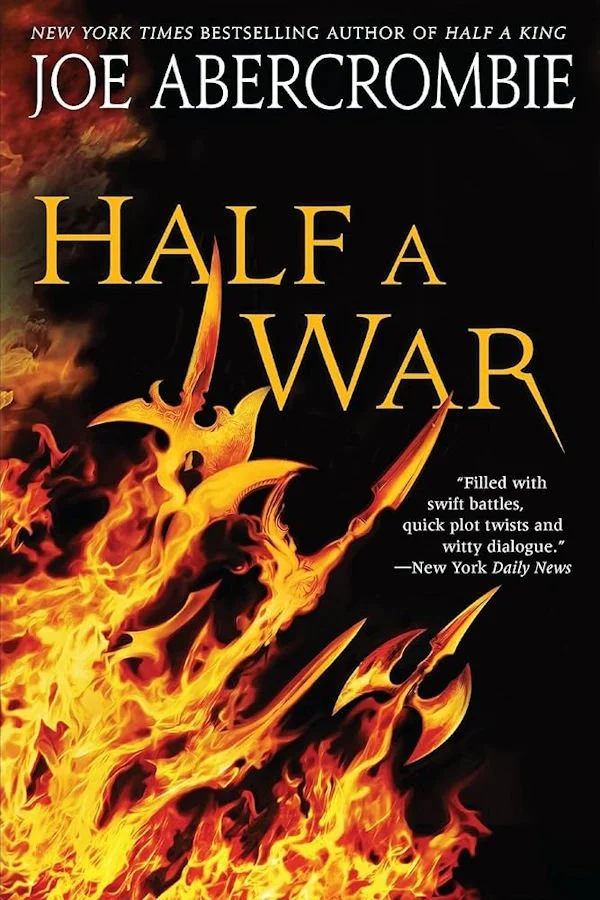
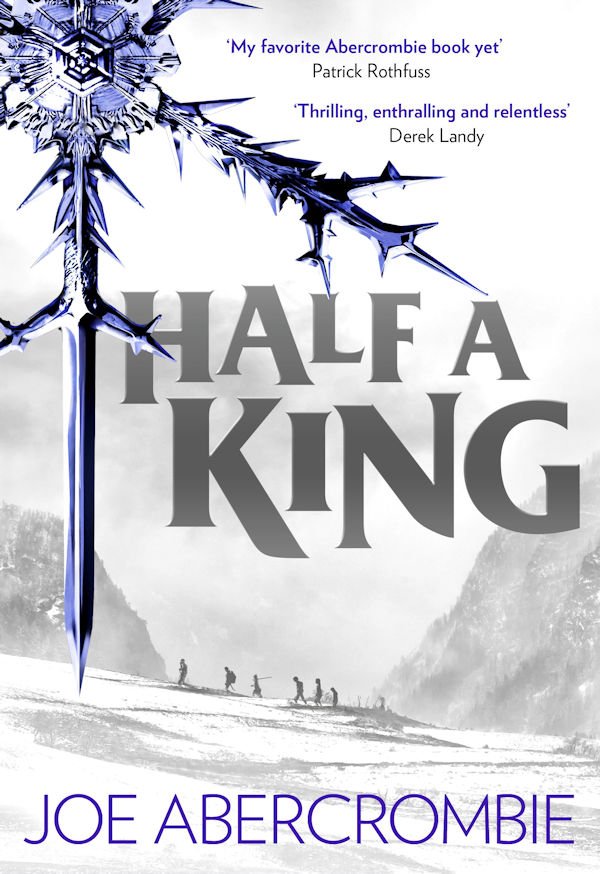
In 2014, when Joe Abercrombie—the undisputed titan of "Grimdark" fantasy—released Half a King, the literary world experienced a collective moment of cognitive dissonance. Known for the morally radioactive, sprawling, and nihilistic landscapes of The First Law trilogy, Abercrombie’s pivot to a shorter, punchier narrative focused on a teenage prince was met with both curiosity and skepticism. The publisher’s decision to slap the "Young Adult" (YA) label on the cover acted as both a gateway and a barrier.
Over a decade later, the Shattered Sea trilogy stands as a fascinating case study in literary marketing. If one were to strip away the YA designation, would Half a King be recognized not as a departure from the Abercrombie brand, but as its most distilled and disciplined iteration?
The Chronology of a Genre-Bending Pivot
To understand the current discourse surrounding the Shattered Sea, one must look at the trajectory of Abercrombie’s career leading up to 2014.
- 2006: The Blade Itself is published, revolutionizing the grimdark subgenre. Abercrombie establishes a reputation for subverting tropes, featuring characters who are as likely to betray their allies as they are to save the world.
- 2006–2013: Abercrombie cements his status with the remainder of The First Law trilogy and stand-alone novels (Best Served Cold, The Heroes, Red Country). These books are characterized by massive word counts, multi-POV structures, and profound cynicism.
- 2014: Half a King is released. The marketing explicitly positions it as a crossover YA title.
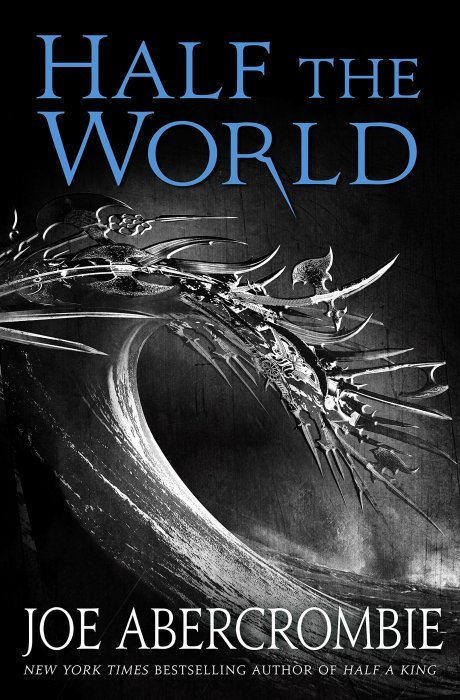
- 2015: Half the World and Half a War complete the trilogy. The series is lauded for its pacing, yet remains physically and thematically distinct from the "big" epic fantasies of the era.
- 2019–2021: The release of the Age of Madness trilogy marks a return to the gargantuan, multi-layered storytelling of the original First Law era, further distancing the Shattered Sea books in the minds of readers as a "different kind" of Abercrombie work.
Supporting Data: The Anatomy of the "YA" Misconception
The primary point of contention for readers has always been the "YA" tag. In the publishing industry, this label often serves as a shorthand for specific narrative constraints: a clear moral binary, a heavy emphasis on budding romance, and a protagonist whose arc is defined by the loss of innocence.
However, Half a King operates in direct defiance of these tropes. Prince Yarvi, the protagonist, is not a "chosen one" in the traditional sense. Born with a withered hand, he is physically marginalized in a society that values brute strength above all else. His journey is not a coming-of-age story about finding one’s inner hero; it is a brutal education in the necessity of being a villain to survive.
Thematic Parallels
When comparing the Shattered Sea to The First Law, the thematic overlap is undeniable:
- The Outsider: Yarvi mirrors characters like Glokta or Logen Ninefingers—individuals whose physical or social circumstances force them to look at the world with a cynical, utilitarian eye.
- The Failure of Virtue: In Abercrombie’s world, goodness is often a liability. Yarvi’s survival is predicated on his ability to out-think, out-plot, and occasionally out-betray his enemies.
- The Cost of Power: While the scope of the Shattered Sea is smaller, the weight of power remains crushing. The political intrigue, while more streamlined, is no less lethal than the machinations of the Union’s Closed Council.
The Professional Critique: Form vs. Function
From a structural perspective, the "YA" label did not change the author’s voice; it simply compressed it. The Shattered Sea functions as a masterclass in narrative efficiency. Where The Blade Itself might spend fifty pages establishing the mood of a city, Half a King achieves the same impact through a sharp, ten-page sequence of dialogue and action.
The "Lord Grimdark" Signature
Critics who argued that the series was "too safe" failed to account for Abercrombie’s trademark dark humor. The banter between Yarvi and his motley crew of outcasts is quintessentially "Abercrombian." There is a persistent, dry wit that undercuts the gravity of the situations, and an unrelenting, almost comedic hatred for the "elves"—a recurring, mysterious element that hints at a larger, more horrifying history.
By focusing on a tighter narrative arc, Abercrombie was able to sharpen his prose. The lack of sprawl meant that every decision Yarvi made had immediate, life-altering consequences. This intensity creates a "ticking clock" sensation that is often absent in the bloated middle volumes of epic fantasy trilogies.
Implications: The Marketing Paradox
The central irony of Half a King is that the very label intended to widen the demographic reach may have actually restricted it. By categorizing the book as "Young Adult," the marketing team unintentionally signaled to hardcore grimdark fans that this was "watered-down" Abercrombie. Simultaneously, the book’s inherent cynicism and brutality occasionally alienated younger readers looking for the escapist optimism more common in the YA genre.
The "Crossover" Challenge
The publishing industry often struggles with books that defy easy categorization. Half a King is a "crossover" in the most difficult sense—it is a book for adults that is accessible to younger readers, and a book for younger readers that refuses to coddle them with morality.
If we examine the reception of contemporary works like The Devils (2024), we see a similar phenomenon. Readers are often quick to judge an author by the "scale" of their work rather than the "substance." The implication is that shorter, faster-paced novels are inherently less serious than massive, multi-volume epics. This is a fallacy that ignores the difficulty of writing a tightly plotted, character-driven story.
Conclusion: A Re-Evaluation
It is time to retire the idea that Half a King is a "YA book" in the pejorative sense. It is, quite simply, an Abercrombie book. It contains the same skepticism regarding human nature, the same brilliance in character construction, and the same biting humor that has made him one of the most significant fantasy writers of the 21st century.
When we strip away the marketing labels and the expectations of genre, what remains is a compelling, lean, and intellectually rigorous story about a man who refuses to be broken by the world that tried to discard him. Whether one approaches the series as a seasoned veteran of The First Law or as a newcomer to the genre, the Shattered Sea offers a rare commodity: a story that is both fast-paced enough to be a page-turner and cynical enough to be a sobering reflection on the cost of ambition.
Ultimately, the lesson of Half a King is not that the author changed his stripes, but that the reader’s perception of "seriousness" is often dictated by the cover art and the metadata provided by the publisher. For those willing to look past the label, the Shattered Sea stands as a vital pillar of the Abercrombie canon, proving that you don’t need a thousand pages to dismantle the traditional hero’s journey—you just need a sharp mind and a willingness to embrace the shadows.


 Reynand Wu