

When the opening credits of Mating Season roll on Netflix, the audience is greeted not by polished animation, but by raw, real-life National Geographic-style footage of woodland creatures engaging in the biological imperatives of copulation. Set to the soulful, languid crooning of Elvin Bishop’s “Fooled Around and Fell in Love,” the sequence is a stark, hilarious, and unapologetic mission statement. It is a bold, irreverent signal that while this show shares the DNA of Big Mouth—Netflix’s cultural juggernaut that spent eight seasons exploring the sweaty, awkward, and profane corridors of middle school puberty—it has arrived with a more mature, if equally chaotic, agenda.
Created by Nick Kroll alongside his long-time collaborators Andrew Goldberg, Mark Levin, and Jennifer Flackett, Mating Season represents a pivot from the adolescent angst of the hormone-riddled halls of Bridgeton Middle School to the existential, romantic, and often drunken entanglements of adulthood. With all 10 episodes of the first season now streaming, the creative team is eager to clarify that this is not simply “Big Mouth in the woods.” Instead, it is an evolution of their signature brand of sex comedy, tailored for a demographic that has moved past the question of “what is happening to my body?” and into the much more complicated question of “why am I still single?”
A Departure from the Puberty Playbook
The premise of Mating Season is deceptively simple: a community of forest animals lives in a society that mirrors human civilization, albeit one where residents sleep in caves, hibernate through the winter, and deal with the perennial threats of predators and the elements. However, beneath the fur and the woodland aesthetics, the characters are archetypes of the modern thirty-something experience.
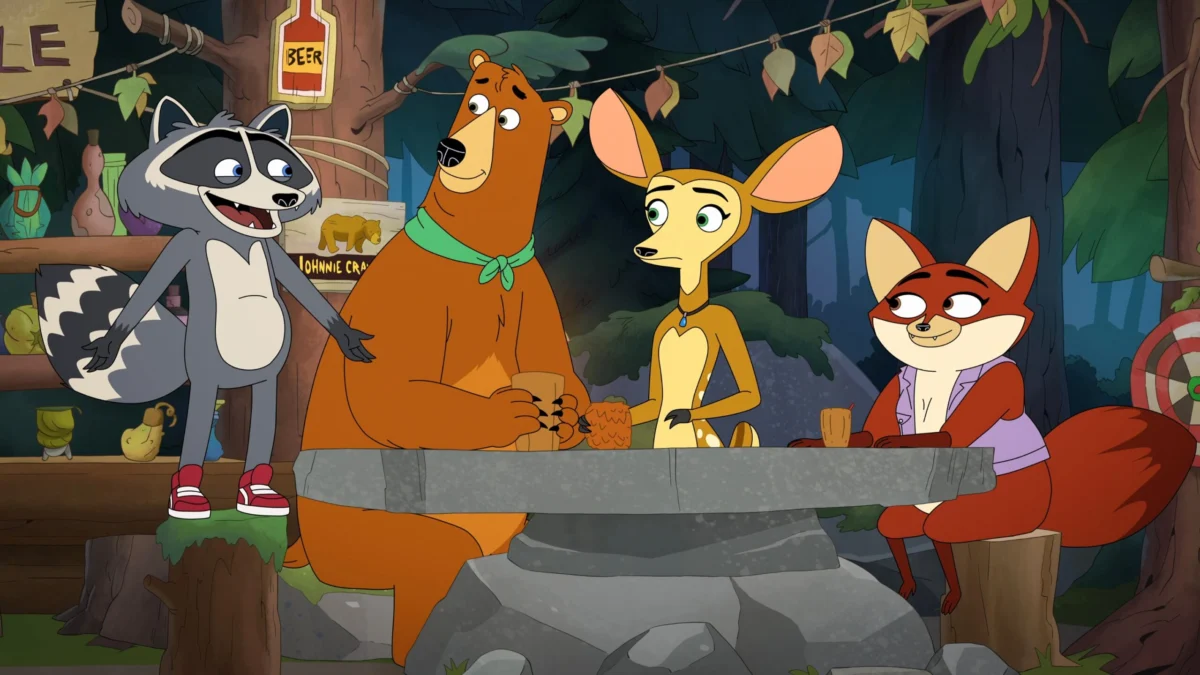
The core ensemble is anchored by four distinct personalities: Josh (voiced by Zach Woods), a sensitive bear currently reeling from a devastating, blindsiding breakup; Ray (Nick Kroll), a hedonistic, chaotic raccoon; Fawn (June Diane Raphael), a deer who serves as the group’s voice of reason; and Penelope (Sabrina Jalees), a shy, introspective fox. Together, they navigate the mundane and the absurd, from the social minefield of attending an ex’s wedding to the collective nihilism of spending a Tuesday afternoon getting drunk at the local forest trading post.
For Kroll, the transition from the frantic energy of Big Mouth to the more grounded, hangout-sitcom vibe of Mating Season was a deliberate choice. “We were finishing Big Mouth and batting around ideas for what to do next because we love working together so much,” Kroll told IndieWire. “Mark Levin came in with the title Mating Season, and it was immediately clear. It felt like a great opportunity to take the style of storytelling we refined over eight seasons and apply it to an adult dating world.”

The Evolution of the Ensemble
While Big Mouth grew from a project inspired by the childhoods of Kroll and Goldberg into an expansive, sprawling world that tackled a wide array of adolescent perspectives, Mating Season opts for a more focused, intimate approach.
“There’s something about Big Mouth—specifically the focus on kids understanding their identities—that allowed us to dig into many different characters,” Kroll explained. “With Mating Season, we are being much more contained. This is an ensemble show about these four core characters. We want to really be with them as our way in. If you go too wide too early, it becomes confusing and disjointed for an audience to absorb it all.”
This strategy of containment allows the show to function more like a traditional sitcom. By locking the audience into the perspective of Josh, Ray, Fawn, and Penelope, the show captures the intensity of friendships in one’s late 20s and 30s, where your social circle is often the only thing keeping you tethered to reality.
Crafting the Woodland World
Building a functional universe from scratch presented unique challenges. The creative team, led by the vision of Kroll and Goldberg, had to establish a “world bible” that dictated the rules of their forest society. These included practical questions: Do they wear clothes? Do they have smartphones? How do they handle the inherent predator-prey dynamics of nature?
The result is a hybrid world that leans into the humor of the uncanny. In this society, famous pop-culture figures like Bambi or Garfield exist as established celebrities. The decision to include these meta-references provides a layer of cultural commentary that feels right at home in the Kroll-verse.

The production process also prioritized spontaneity. Kroll, who has harbored a lifelong fascination with raccoons—often citing their “funny little hands” as a source of endless comedic potential—was adamant about the show’s improvisational nature.
“Oftentimes in animation, especially in the post-COVID era, actors record their lines one at a time in the booth,” Kroll noted. “But the more you can get people together, the sharper everything is. Everyone’s performance comes up. We had June, Zach, and Sabrina—all incredible improvisers. We were able to add moments and jokes throughout the recording process, and that energy really comes through in the final performance.”
Implications for the Future of Animated Comedy
The success of Mating Season will likely be measured by whether it can carve out its own identity while operating under the shadow of its predecessor. Big Mouth redefined what adult animation could look like on a streaming platform, proving that vulgarity and deep emotional intelligence are not mutually exclusive.
By shifting the focus to the “hangout” dynamic of adulthood, Mating Season taps into a vein of television that has seen a resurgence in recent years—shows that prioritize character chemistry over high-concept plot devices. The stakes here are not about saving the world or navigating a magical puberty monster; they are about the crushing weight of a breakup, the anxiety of professional instability, and the struggle to find companionship in a world that feels increasingly fragmented.
Furthermore, the show’s emphasis on improvisation suggests a desire to keep the medium of adult animation fresh. In an industry where scripts are often locked down months or years in advance, the willingness to allow actors to play and iterate in the booth creates a sense of liveliness that is often missing from major studio productions.

Final Thoughts: A Raccoon’s Dream
For Nick Kroll, the role of Ray is more than just a voice-over gig; it is the culmination of a career-long obsession. From his early stand-up days to his Broadway success in Oh, Hello, Kroll has consistently found ways to inject his raccoon fixation into his work.
“Wherever I get a chance, I’ve mentioned or thought about raccoons,” Kroll said with a laugh. “So when we started to work on this, I felt like, ‘Well, for sure, I will be a raccoon.’”
As Mating Season settles into the Netflix library, it stands as a testament to the longevity of the Kroll-Goldberg-Levin-Flackett partnership. It is a show that is comfortable in its own skin—or fur, as it were. Whether the audience will respond to the specific, neurotic, and often biting humor of these forest dwellers remains to be seen, but the intent is clear: the creators have found a new way to explore the messiness of the human condition, and they are having a hell of a time doing it.
With all ten episodes now available, viewers have the opportunity to binge this woodland saga and decide for themselves if the transition from middle school puberty to forest-floor adulthood is the next logical step in the evolution of modern animated comedy. One thing is certain: they’ve certainly set the tone with that opening scene.











No comments yet. Be the first to join the conversation!