

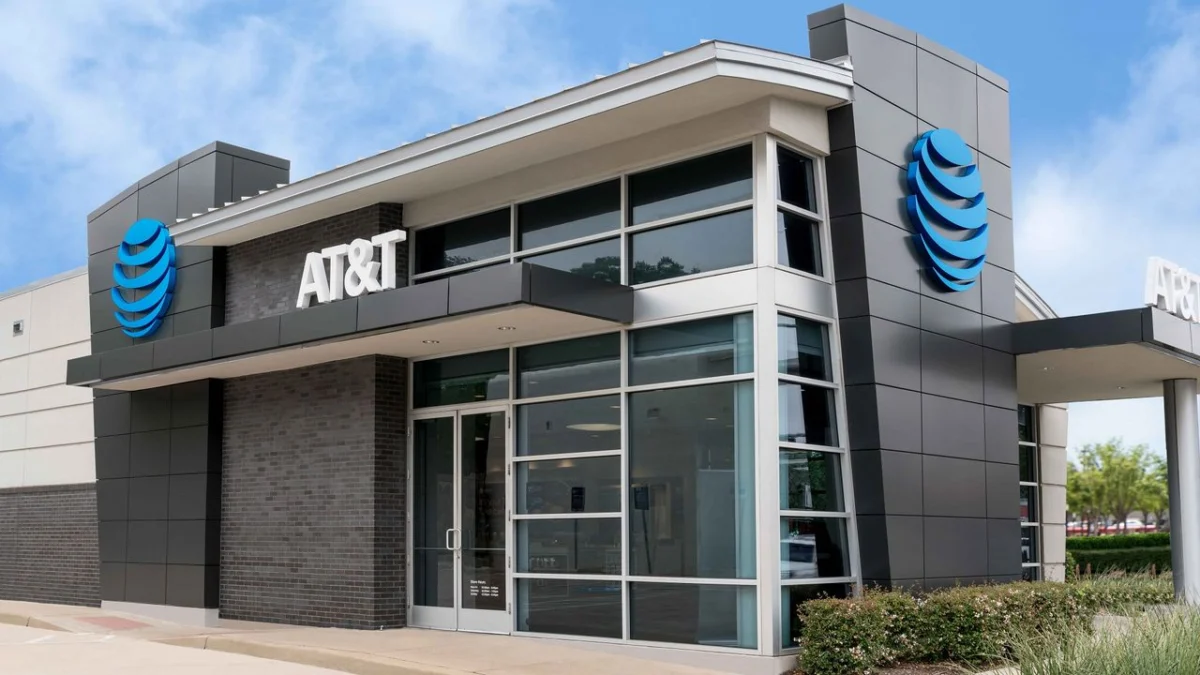
In a landmark legal challenge that could redefine the telecommunications landscape of the United States, AT&T has officially filed a lawsuit against the state of California. The telecommunications giant is petitioning the Federal Communications Commission (FCC) to intervene and effectively end state-sanctioned mandates that require it to maintain "Carrier of Last Resort" (COLR) obligations.
At the heart of this dispute is the fate of the aging, copper-based Public Switched Telephone Network (PSTN). While AT&T views these legacy systems as an expensive, obsolete relic of the 20th century, the state of California—and many of its residents—see them as a vital safety net in a state frequently plagued by wildfires, earthquakes, and power grid instability.
The Core of the Conflict: Profitability vs. Public Service
AT&T’s legal offensive, filed in the U.S. District Court for the Southern District of California, names the California Public Utilities Commission (CPUC) and the state’s attorney general as primary defendants. The company’s position is unambiguous: it argues that the regulatory burden of maintaining copper infrastructure is an unsustainable drain on resources that hampers the company’s ability to invest in modern, high-speed, and resilient alternatives.
According to internal company data, maintaining the copper-based network costs AT&T over $1 billion annually. Yet, this vast, sprawling infrastructure serves a shrinking fraction of the population—estimated at just 3% of the company’s total user base. AT&T characterizes this as an inefficient allocation of capital that prevents the company from pivoting toward 21st-century technologies, such as fiber-optic broadband and advanced wireless 5G connectivity.
Furthermore, the company points to the physical vulnerability of its copper lines. As global copper prices have surged, the metal has become a prime target for theft and vandalism, leading to frequent service outages that require costly repairs. For AT&T, the math is simple: the legacy network is a liability that is increasingly impossible to justify from a fiscal perspective.
A Chronology of the Disconnect
To understand how we reached this impasse, it is necessary to examine the evolution of the regulatory environment surrounding telecommunications.
- The Early 20th Century: The "Carrier of Last Resort" concept was established to ensure that every household—regardless of how remote or impoverished—had access to basic, reliable telephone service. This mandate ensured that copper wiring reached every corner of the country.
- The Rise of Mobility (2000s–2010s): As mobile technology became ubiquitous, the reliance on landlines began a steep decline. By the late 2010s, industry analysts noted that the vast majority of households had adopted cellular service as their primary, and often only, means of communication.
- The "Grandfathering" Phase: Recognizing the shift, the FCC allowed carriers to stop accepting new subscribers for legacy landline services in certain markets. This allowed AT&T to gradually shrink its copper footprint, though it remained tethered to existing customers under state COLR laws.
- The Current Legal Challenge (2024): After exhausting administrative avenues with the CPUC, AT&T has shifted to federal litigation, asserting that federal law should preempt state regulations. They contend that the FCC has the ultimate authority to determine the future of national communication standards, rendering California’s specific mandates unenforceable.
Supporting Data: The Case for Obsolescence
AT&T’s arguments are bolstered by shifting consumer habits. Nationwide, approximately 80% of adults now rely exclusively on wireless phone services for their daily communication needs. Among those who do not use cellular exclusively, the preference has shifted toward IP-based (Internet Protocol) voice services, which offer higher clarity and more features than traditional analog copper lines.
From an environmental perspective, AT&T has framed its desired transition as a "green" initiative. The company claims that retiring the legacy copper network would result in a massive reduction in energy consumption. Projections suggest that moving away from copper could save an estimated 300 million kilowatt-hours annually by 2030. To put this into perspective, the company equates this energy saving to eliminating the carbon emissions generated by 17 million gallons of gasoline.
However, the transition is not merely about swapping copper for fiber. AT&T has explicitly stated that it does not intend to replace all copper installations with fiber-optic cables. Instead, the company is proposing a "wireless-first" approach. In areas where fiber deployment is deemed economically unfeasible or geographically impractical, AT&T wants the flexibility to transition customers to wireless home phone solutions—effectively replacing a wire in the ground with a signal in the air.
The Opposition: Reliability and the "Safety Net" Argument
The California Public Utilities Commission (CPUC) has not sat idly by. While the commission has stated it does not have a specific, rigid rule regarding the "retirement" of copper facilities, it maintains that any transition must prioritize reliability and universal access.
The CPUC and consumer advocacy groups raise a critical point: reliability. During major emergencies, such as the devastating wildfires that have become a hallmark of California’s climate reality, fiber and wireless networks are often the first to fail due to power outages or cell tower damage. Copper lines, which are traditionally powered by the central office rather than a home’s electrical outlet, have historically remained functional even when the power grid goes dark.
For rural, elderly, and marginalized communities, the landline is more than a nostalgic piece of technology; it is a life-critical emergency tool. There are currently approximately 40,000 "Lifeline" subscribers in California—low-income individuals who rely on subsidized services to maintain a connection to emergency services and essential healthcare providers. AT&T’s petition seeks permission to discontinue service to a combined 199,000 residential and business customers, a move that critics argue could leave these populations dangerously isolated.
Implications for the Future of Connectivity
The resolution of this lawsuit will likely set a national precedent. If AT&T succeeds, it will effectively signal the end of the "Carrier of Last Resort" era in the United States, granting major telecoms the autonomy to dictate which technologies they maintain and which markets they serve based on profitability.
1. The Preemption Battle
At its core, this is a constitutional struggle over federal versus state power. If the court rules in favor of AT&T, it will reinforce the principle of federal preemption, potentially stripping states of their ability to enforce consumer protection laws that go beyond federal minimums.
2. The Digital Divide
A victory for AT&T could exacerbate the digital divide. While the company promises "wireless-first" solutions, there is no guarantee that these services will offer the same level of latency, bandwidth, or emergency reliability as wired connections. Critics fear that "second-class" service tiers could emerge for rural areas, while urban centers benefit from high-speed fiber upgrades.
3. The Future of Disaster Resilience
As climate change continues to increase the frequency and severity of natural disasters, the debate over "what constitutes a reliable network" will only intensify. If copper is removed, the industry will be under immense pressure to prove that 5G and satellite-based alternatives can meet the same high-availability standards required for public safety.
Conclusion
AT&T’s lawsuit against the state of California is a quintessential example of the friction between legacy infrastructure and modern innovation. While the company’s desire to streamline its operations and reduce maintenance costs is financially sound, the regulatory framework exists precisely to protect the public interest when corporate and societal goals diverge.
As the court weighs the arguments, the decision will reach far beyond the borders of California. It will answer a fundamental question: Is reliable communication a public utility that must be maintained at all costs, or is it a commodity subject to the shifting tides of market efficiency? For the 199,000 customers currently in the crosshairs, the answer is a matter of safety, security, and the ability to connect with the world around them.












No comments yet. Be the first to join the conversation!