

The horror genre is undergoing a profound metamorphosis. For decades, mainstream portrayals of Asian and Asian American figures in horror were stifled by the “revenge wraith” archetype—the figure of the long-haired, vengeful spirit popularized by international hits like Ringu and Ju-On. While these icons defined an era, the contemporary literary landscape is aggressively pivoting away from these tired tropes. As we move through 2026, a surge of Asian American authors is reclaiming the genre, injecting it with nuance, cultural specificity, and a level of innovation that forces readers to confront terrors far more tangible than standard jump-scares.
The Shift: Moving Beyond the "Revenge Wraith"
In a seminal essay for Nightmare Magazine, author Rena Mason articulated a sentiment shared by many in the creative community: "It’s time to let the women with the long wet hair in Asian cinema and their Western remakes rest. They’re tired." This exhaustion with the "revenge wraith" trope has served as a catalyst for a new wave of Asian American literature.
Modern writers are no longer interested in recycling spectral figures for purely aesthetic shock value. Instead, they are utilizing the mechanics of horror to dissect real-world anxieties—political instability, the erosion of bodily autonomy, generational trauma, and the surveillance state. This evolution marks a significant departure from Hollywood’s historical tendency to commodify Asian identity, offering instead a deeply personal exploration of what it means to live at the intersection of cultural heritage and the modern world.

Chronology of the 2026 Horror Boom
The current literary climate is not an overnight success but the culmination of years of grassroots advocacy and a growing appetite for diverse voices.
- Early 2024–2025: A marked increase in acquisitions by major publishing houses focusing on BIPOC horror. Authors like Trang Thanh Tran began bridging the gap between Young Adult (YA) sensibilities and adult-level psychological dread.
- Late 2025: The publication of experimental works, such as Alma Katsu’s Fiend, signaled a transition for established authors to pivot from historical fiction toward contemporary, character-driven horror.
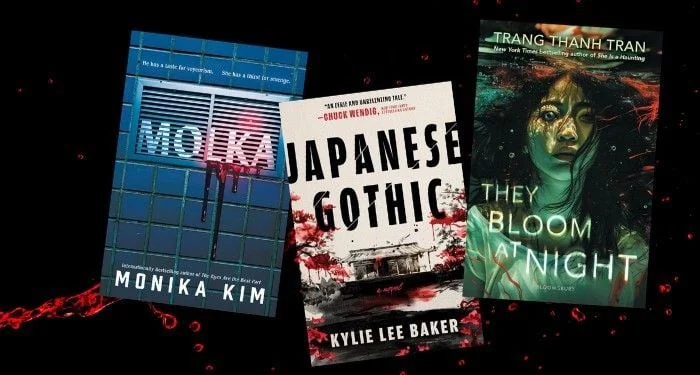
- Spring 2026: A banner season for the genre. With the simultaneous release of highly anticipated titles like Kylie Lee Baker’s Japanese Gothic and Monika Kim’s Molka, the market has officially solidified Asian American horror as a top-tier category in bookstore rotations.
- May 2026: Industry analysts are noting a trend where horror titles are no longer niche, with Asian American authors increasingly appearing on bestseller lists and in major editorial roundups.
Supporting Data: Why Nuance Matters
The commercial success of these titles is backed by a shift in consumer demand. According to recent reader engagement metrics from platforms like Book Riot, there is a measurable preference for "culturally grounded" horror. Readers are seeking stories that mirror their own lived experiences, even within the context of the macabre.
The success of Molka by Monika Kim, for instance, highlights a growing desire for "social horror." By anchoring the narrative in the real-world epidemic of "spy cam" crimes (molka) in South Korea, the book transforms a contemporary technological threat into a visceral, literary nightmare. This trend suggests that modern audiences are less interested in supernatural entities and more engaged with stories that address:

- Technological Violation: The loss of privacy and consent in the digital age.
- Structural Oppression: The intersection of government surveillance and personal freedom.
- Domestic Decay: The erosion of family structures and the secrets hidden behind "model minority" facades.
Official Perspectives: The Authors’ Voice
The authors spearheading this movement are intentional about their craft. When discussing her latest work, Japanese Gothic, Kylie Lee Baker emphasizes the need for structural innovation. By employing a dual-timeline narrative—juxtaposing a contemporary college student with a female samurai from the 19th century—Baker avoids the traps of linear, derivative storytelling.
Similarly, in Issues with Authority, Nadia Bulkin challenges the conventional boundaries of the novella. Her work, which touches upon psychic government experiments and the grotesque reality of beauty pageants, serves as a critique of institutional power. Bulkin’s approach mirrors a broader industry shift: authors are using the "horror" label as a Trojan Horse to smuggle in complex sociological critiques.
Implications for the Future of Publishing
The rise of Asian American horror has significant implications for the future of the book industry.

Diversifying the Genre
The "Fright Stuff" isn’t just about scares; it’s about the democratization of fear. By platforming diverse perspectives, publishers are finding that the "mainstream" reader is far more sophisticated than previously assumed. They are capable of engaging with complex cultural motifs that were once deemed "too niche" for wide distribution.
The Role of Feedback
Publishers are increasingly relying on direct community engagement to shape their catalogs. Initiatives, such as the 2026 Book Riot reader survey, represent a shift toward a collaborative relationship between curators and readers. By understanding the specific sub-genres and themes that resonate with the community, publishers can continue to foster an environment where voices like those of Trang Thanh Tran and Alma Katsu can flourish.
A New Standard for "Horror"
We are witnessing a standard shift in how "quality" horror is measured. The critical reception of these books suggests that the industry is moving away from judging horror based on the "scare-per-page" ratio and toward evaluating it based on emotional resonance and thematic depth. The terror in these stories is not just a sensation; it is an argument.

Essential Reads: A Curated Overview
For those looking to engage with this movement, the current landscape offers a diverse range of entries:
- For the lovers of history and violence: Japanese Gothic by Kylie Lee Baker provides a masterclass in dual-timeline structure and visceral prose.
- For the fans of Southern Gothic and Body Horror: They Bloom at Night by Trang Thanh Tran offers a haunting look at environmental and personal survival in the wake of disaster.
- For those interested in contemporary social critique: Molka by Monika Kim serves as an essential, if disturbing, exploration of voyeurism and consent.
- For the short-fiction enthusiast: Issues with Authority by Nadia Bulkin proves that even in smaller formats, horror can deliver profound systemic critiques.
- For those exploring family dynamics: Fiend by Alma Katsu subverts traditional family drama with a sharp, demon-infused edge.
Conclusion: A Sustained Evolution
The boom in Asian American horror is not a fleeting trend. It is a reflection of a generation of writers who are refusing to be limited by the archetypes of the past. By blending the grotesque with the grounded, and the supernatural with the sociological, these authors are building a robust, enduring sub-genre. As we look toward the remainder of 2026 and beyond, one thing is certain: the most effective horror stories are no longer just those that keep us awake at night—they are those that force us to look, with clear eyes, at the very real terrors of our world.
If you are interested in keeping up with the latest in the genre, consider exploring recent collections of AAPI horror authors and upcoming queer horror releases for the summer season. The landscape of fear is changing, and it is far more expansive than it has ever been.









No comments yet. Be the first to join the conversation!