Azzam Bilal Chamdy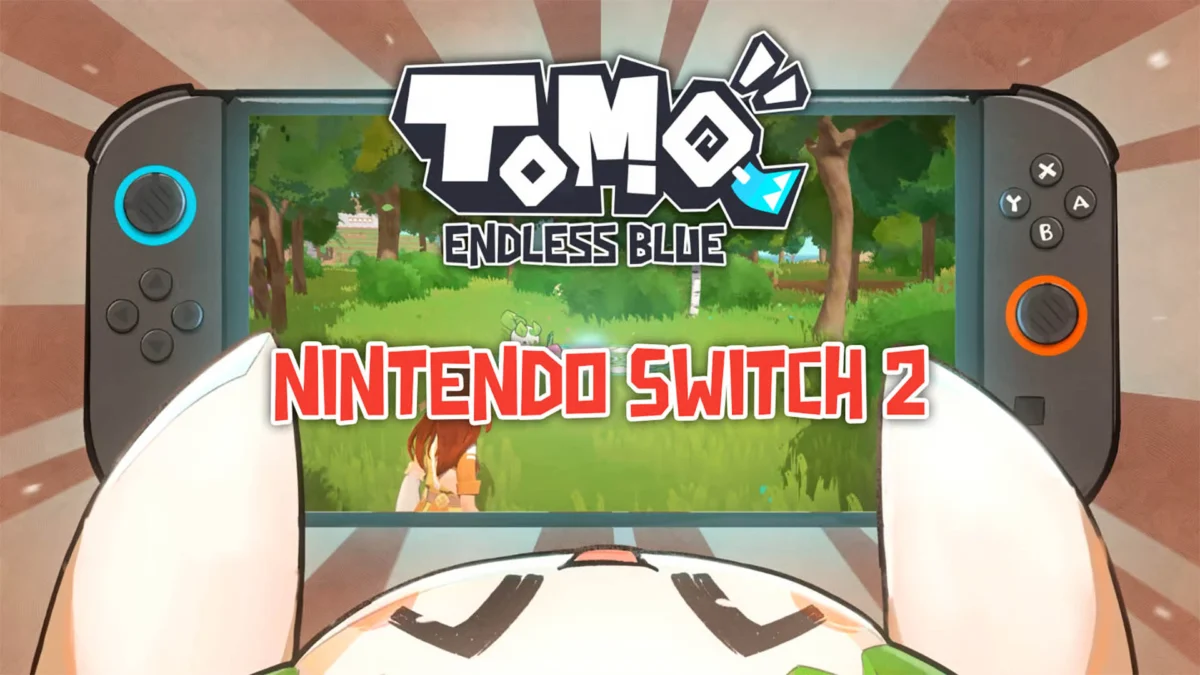
Executive Summary
In a move that solidifies its status as one of the most anticipated indie titles of the coming year, developer Onibi has officially announced that their upcoming action RPG, Tomo: Endless Blue, will be arriving on Nintendo’s next-generation hardware, the Switch 2. This announcement arrives as the project’s crowdfunding campaign on Kickstarter smashes through its initial funding goals, signaling robust player interest in the game’s unique blend of creature collection, procedural exploration, and creative sandbox mechanics. Scheduled for a 2026 release across PC and Nintendo’s upcoming console, Tomo: Endless Blue is positioning itself as a flagship experience for fans of cozy, anime-inspired adventure games.
The Genesis of an Ocean Odyssey
The journey of Tomo: Endless Blue began with a vision to marry the satisfying loop of creature collection with the high-stakes creativity of vehicle building. Set in a world where civilization has been reduced to fragmented, drifting islands, the game tasks players with navigating a vast, mysterious ocean known as the "Endless Blue."
The project’s public profile rose sharply during its Kickstarter campaign, which captured the imagination of the gaming community through its promise of vibrant, procedurally generated worlds. By focusing on the concept of "fragments of lost civilizations," Onibi has created a setting that is both melancholic and hopeful, encouraging players to explore the remnants of history while building a future for their captured companions, the Tomo.
A Chronology of Development
- Early 2025: Conceptualization and prototype testing of the procedural generation systems for the "Endless Blue" environments.
- Mid-2026 (June): Launch of the Kickstarter campaign, which rapidly exceeded its initial financial targets, demonstrating high community demand.
- June 18, 2026: Onibi officially confirms that in addition to the Windows PC (Steam) release, the game will be developed for the Nintendo Switch 2.
- Late 2026 (Projected): Global release window for the title across all confirmed platforms, including Windows, Linux, and Mac.
Mechanics and Gameplay: A Three-Pillar Approach
Tomo: Endless Blue distinguishes itself by refusing to be tethered to a single genre. Instead, it offers a hybrid experience supported by three primary pillars:
1. Creature Collection and Bond-Building
At the heart of the game are the Tomo, mysterious creatures that populate the various islands. Unlike traditional monster-taming games that focus purely on combat, Tomo emphasizes the "daily life" aspect. Players are encouraged to bring creatures home, integrate them into their living spaces, and develop relationships that provide utility in both exploration and navigation.
2. Procedural Engineering
The "build" mechanic is perhaps the most ambitious feature. Players can construct complex vehicles and contraptions using block-based systems. This is not merely for aesthetics; these custom-built machines are essential for traversing the gaps between the drifting island fragments. The procedural nature of the world ensures that no two islands—or the civilizations they host—are ever the same, forcing players to adapt their engineering strategies constantly.
3. Societal Reconstruction
The narrative depth of the game lies in the exploration of these islands. Each fragment of land is a "microcosm of a unique civilization." As players land on these shores, they interact with NPCs, uncover the history of the world before the flood, and participate in the vibrant cultures that have managed to endure within the Endless Blue.
Supporting Data: The Kickstarter Phenomenon
The success of the Tomo: Endless Blue crowdfunding effort serves as a critical indicator of market trends within the independent gaming sector. As of the latest reporting, the campaign has nearly doubled its initial funding goal. This "over-funding" is often the catalyst that allows developers to expand their scope, providing the financial runway to pursue platform-specific optimizations like those required for the Switch 2.
Onibi’s commitment to accessibility has also played a significant role in their success. By confirming Mac and Linux versions, alongside a pledge to provide DRM-free alternatives, the team has cultivated a loyal following among the "pro-consumer" gaming demographic. This strategic outreach has not only secured funding but has also provided the studio with a direct line of feedback from their most dedicated players.

Official Responses and Strategic Vision
The decision to bring the title to Nintendo’s successor hardware was not taken lightly. In a press release issued alongside the announcement, Benjamin Devienne, Founder and CEO of Onibi, articulated the studio’s philosophy regarding the platform choice.
"The community has been asking about Nintendo Switch 2 since the first days of the campaign," Devienne noted. "Tomo is about setting sail to find rare creatures, bringing them home, and building a world around them. That fantasy feels very natural on Nintendo hardware, and we wanted to celebrate the final days of the Kickstarter by confirming that bringing Tomo to Switch 2 is part of our plan."
This sentiment underscores a broader trend in the industry where developers are increasingly aligning their "cozy" or "exploration-based" titles with Nintendo’s hardware ecosystem. The portable nature of the console complements the bite-sized, procedural nature of Tomo’s island-hopping gameplay.
Implications for the Future
The confirmation of a Switch 2 version for Tomo: Endless Blue has several significant implications for both the studio and the broader indie landscape.
For the Developer
Onibi is positioning itself as a multi-platform indie powerhouse. By managing development across PC, Mac, Linux, and the Switch 2 simultaneously, they are testing their logistical capabilities. If successful, this release could establish Onibi as a studio capable of delivering high-quality, polished experiences that bridge the gap between niche artistic vision and mass-market accessibility.
For the Industry
The shift toward "Day One" or "Launch Window" support for the Switch 2 by indie developers suggests that Nintendo’s next console is viewed as a vital venue for the indie sector. Historically, indie games have found a "second home" on Nintendo hardware, often outperforming their sales on more powerful PC or high-end console rigs. Tomo: Endless Blue is among the first wave of titles to commit to this ecosystem, and its performance will likely be a bellwether for other developers currently weighing their own development budgets.
For the Consumer
For players, the promise of a DRM-free, multi-platform release is a welcome development. In an era of digital rights management and platform exclusivity, Onibi’s commitment to cross-platform parity—ensuring that the Tomo experience remains consistent regardless of whether it is played on a high-end desktop or a portable console—is a refreshing approach that prioritizes the player’s choice of hardware.
Conclusion: Setting Sail
As the countdown to 2026 begins, all eyes will be on Onibi to see how they manage the technical complexities of porting their procedural engine to the Switch 2. Tomo: Endless Blue is more than just a game; it is an experiment in community-led development and a test of whether a niche, anime-themed RPG can capture the broader imagination of the gaming public.
With its blend of creative building, creature interaction, and a deep, mysterious lore, the game is well-positioned to become a standout title in the upcoming release calendar. Whether you are a fan of monster-collecting games or simply someone looking for a new world to get lost in, the Endless Blue looks like a journey worth taking. For now, the developers continue to refine their vision, buoyed by the overwhelming support of a community that is clearly ready to set sail.


 Asro
Asro
 Muslim