Ali Ikhwan
The Guild Wars franchise has always occupied a unique, somewhat rebellious corner of the online gaming world. Since the release of the original game in 2005, developer ArenaNet has consistently challenged the established norms of the Massive Multiplayer Online (MMO) genre. With the highly anticipated Guild Wars 3 now officially in the conversation, the gaming community is gripped by a singular, burning question: Just how "massive" will this new entry be?
In a recent blog post that has sent ripples through the enthusiast community, ArenaNet studio head Colin Johanson provided the most significant clarity to date regarding the studio’s design philosophy. By dissecting the DNA of the previous two titles, Johanson has attempted to map out where Guild Wars 3 sits on the spectrum—revealing a game that is neither a carbon copy of its predecessors nor a departure from the series’ core identity.
A Taxonomy of Tyria: Looking Back to Move Forward
To understand the direction of Guild Wars 3, one must first understand the disparate identities of its forebears. The original Guild Wars (often referred to as Guild Wars 1 or GW1) was a masterclass in genre-blurring. It featured shared town hubs and a competitive PvP scene that felt like an MMO, yet its instanced mission-based exploration and tactical, skill-heavy combat were more akin to an Action RPG (ARPG). ArenaNet officially categorized it as a "Cooperative Online RPG," though the gaming public—drawn to its massive roster of character classes and social interactivity—eventually branded it an MMO.
Guild Wars 2, conversely, embraced the "MMO" label with open arms. Released in 2012, it arrived as a titan of the genre, defined by its dynamic world events, horizontal progression, and a living world that rewarded exploration over the traditional "gear treadmill." It was, and remains, an industry benchmark for how to iterate on MMO conventions.
According to Johanson, Guild Wars 3 is intentionally designed to exist in the middle of this spectrum. While it leans more heavily into the MMORPG definition than the original Guild Wars, it intentionally avoids replicating the large-scale, open-world pillars that define Guild Wars 2. This strategic positioning is designed to allow all three games to coexist as distinct experiences, each serving a different type of player and telling different stories within the expansive lore of Tyria.
Chronology: A Series Defined by Evolution
The evolution of the Guild Wars series is a testament to ArenaNet’s willingness to experiment.
- 2005: The release of Guild Wars Prophecies. It introduced the concept of instanced world exploration, which reduced server lag and focused the player experience on tactical party-based gameplay rather than the "zerg" mentality of contemporary games like World of Warcraft.
- 2005–2010: A period of rapid expansion through standalone campaigns (Factions, Nightfall) and the Eye of the North expansion, cementing the series as a premier competitive eSport and cooperative RPG.
- 2012: The launch of Guild Wars 2. The transition to a persistent, open-world environment marked a pivot toward social exploration and public events.
- 2012–Present: Guild Wars 2 continues to evolve through the "Living World" format and recent expansions like Secrets of the Obscure and Janthir Wilds, maintaining a dedicated player base that appreciates the lack of a subscription fee and a respectful approach to player time.
- The Present Day: The confirmation of Guild Wars 3 development. While release dates remain speculative, the announcement represents a shift in strategy for NCSoft and ArenaNet, moving toward a modern engine and a fresh take on the franchise’s core tenets.
Decoding the "Middle Ground": What Does It Mean?
Johanson’s admission that his explanation is "broad and vague" is an understatement, yet for the observant reader, there are clues. By stating that Guild Wars 3 will not focus on the "large-scale gameplay pillars" of its predecessor, ArenaNet is essentially telling fans to recalibrate their expectations.
In the modern gaming landscape, "MMO" has become a loaded term. For many, it implies endless daily quests, massive server populations, and the need for a dedicated guild to achieve meaningful progression. If Guild Wars 3 moves away from these concepts, it could suggest a pivot toward more meaningful, player-driven narrative arcs, perhaps utilizing modern procedural generation or advanced AI-driven world systems to provide a sense of scale without the traditional "massive" overhead.
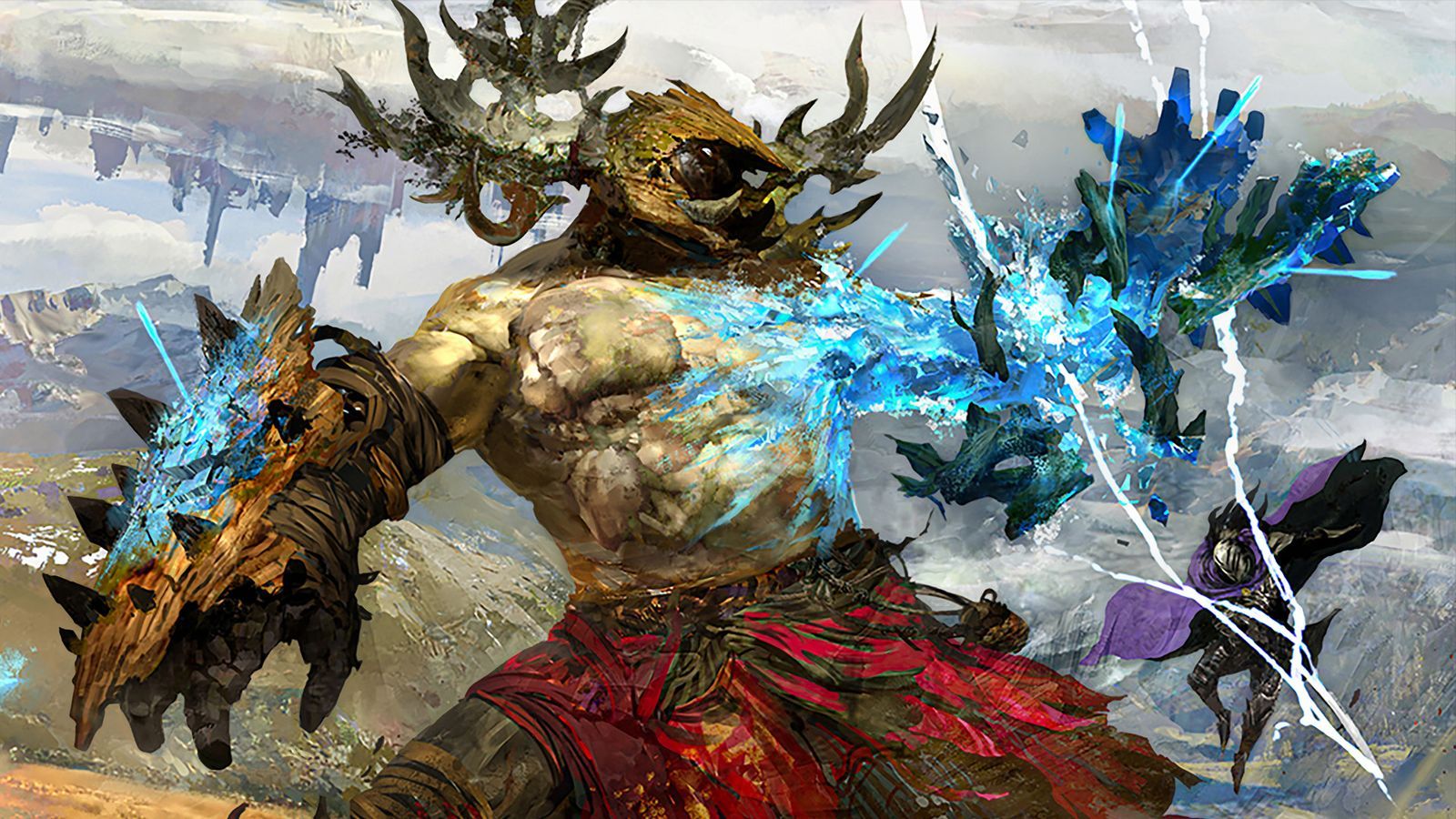
The industry has seen a resurgence in "co-op centric" games that borrow MMO aesthetics—titles like Helldivers 2 or Warframe provide a sense of community and progression without forcing the player into the rigidity of a traditional MMORPG. It is possible that Guild Wars 3 is aiming for this sweet spot: the social connectivity of an MMO combined with the tight, mission-focused loop of an ARPG.
The Social Media Firestorm: Speculation vs. Reality
Predictably, the vacuum of concrete information has been filled by a deluge of fan speculation. On platforms like Reddit and various gaming forums, the community is divided into three distinct camps:
- The Purists: Fans who want a direct spiritual successor to the original Guild Wars. They crave the tactical depth, the complex skill-bar customization, and the instanced group play that made the original a cult classic.
- The Modernists: Players who expect a New World-style survival and territory-control experience, hoping for high-fidelity combat and a persistent world that reacts to player influence in real-time.
- The Skeptics: A growing group of players who believe the "MMO" label is becoming a marketing hindrance. They hope Guild Wars 3 will shed the baggage of the genre entirely, favoring a high-quality, multiplayer-focused action RPG that allows for solo play or small-group co-op without the systemic bloat of an MMO.
The intensity of this debate highlights the unique position ArenaNet finds itself in. The studio isn’t just managing a sequel; they are managing the legacy of two distinct gaming communities that often have diametrically opposed preferences.
The Broader Implications: The State of the MMO in 2026
The announcement of Guild Wars 3 comes at a pivotal time. As PC Gamer contributor Harvey Randall recently noted, the state of the MMO in the mid-2020s is one of frustration. Players are tired of the "live service" model that treats them as metrics rather than participants. They are fatigued by the cycle of burnout, the endless gear grinds, and the feeling that their favorite worlds are being managed by algorithms rather than storytellers.
If ArenaNet succeeds in creating a game that captures the "feeling" of an MMO—the sense of being part of a living, breathing world—without the administrative tedium that usually accompanies the genre, Guild Wars 3 could serve as a much-needed oasis.
The success of Guild Wars 3 will likely hinge on its ability to define a new "middle ground." By refusing to be a pure, traditional MMO, ArenaNet is insulating itself against the inevitable comparisons to World of Warcraft or Final Fantasy XIV. Instead, they are positioning the game as a unique, self-contained experience.
Conclusion: A Philosophy of Coexistence
Ultimately, the most important takeaway from Johanson’s update is the commitment to the coexistence of the franchise. In an industry that often shutters old servers to make way for new iterations, the promise that Guild Wars 1, Guild Wars 2, and Guild Wars 3 can survive side-by-side on their own timelines is refreshing.
We are still in the infancy of the Guild Wars 3 reveal cycle. What we know for sure is that ArenaNet is not building a product for the sake of market saturation; they are building a game that attempts to solve the fundamental tension between the intimacy of an RPG and the scale of an MMO. Whether they hit that target or find themselves in an entirely new genre remains to be seen. But for the millions of players who have called Tyria home over the last two decades, the journey has only just begun.


 Asro
Asro
 Muslim