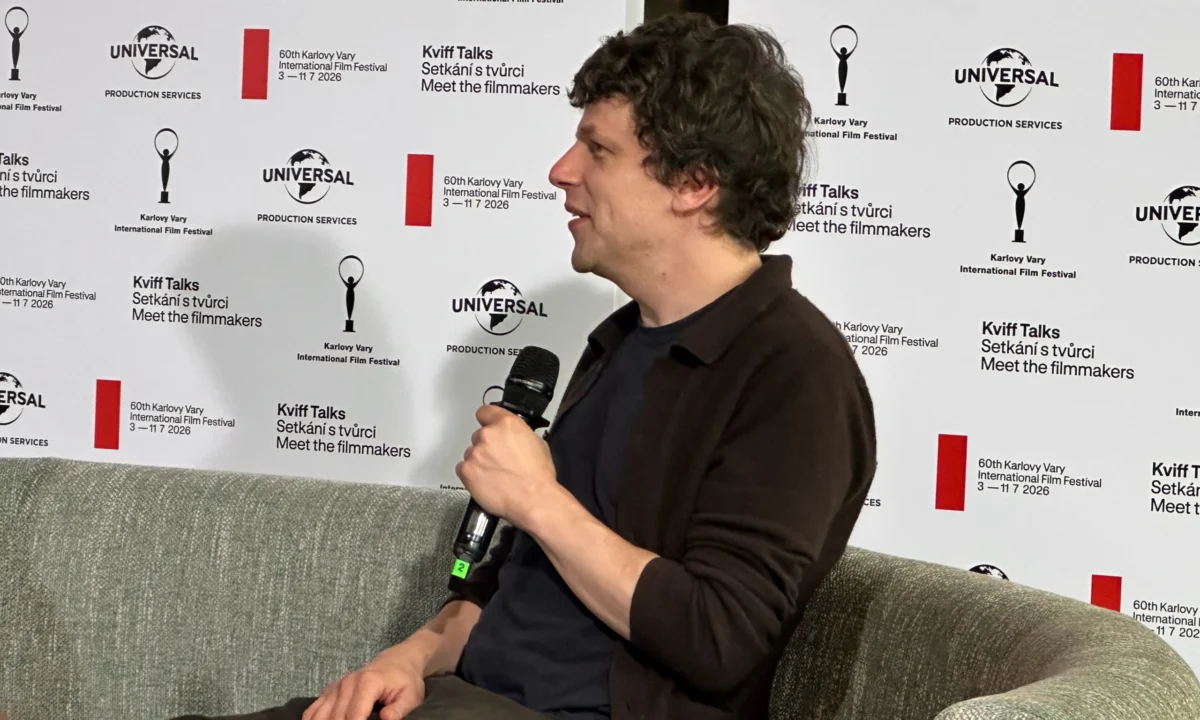
The Karlovy Vary International Film Festival (KVIFF), a prestigious fixture in the European cinematic calendar, served as the backdrop for a candid and wide-ranging discussion featuring acclaimed actor, writer, and director Jesse Eisenberg. During a high-profile "KVIFF Talk"—a signature segment of the festival that provides an intimate window into the lives of industry luminaries—Eisenberg addressed his complex relationship with his most iconic role, the ethics of modern technology, and his personal aversion to the digital public square.
As the Czech festival celebrates its 60th edition, Eisenberg’s presence offered a sharp, intellectual contrast to the glitz of the red carpet, providing attendees with a deeply human perspective on the intersection of fame and privacy.
The Zuckerberg Legacy: From Character Study to Personal Disavowal
Perhaps the most resonant portion of the conversation centered on David Fincher’s 2010 masterpiece, The Social Network. When asked about his portrayal of Meta Platforms chairman and CEO Mark Zuckerberg—a performance that earned him an Academy Award nomination—Eisenberg’s tone shifted from nostalgic to distinctly wary.
"He wasn’t very well-known at the time," Eisenberg recalled of the production period. "The movie seemed like such a strange thing to make because no one really knew who he was. He wasn’t in the public eye a lot, so it was more just an interesting character study."
However, the passage of time and the subsequent evolution of Facebook (now Meta) into a global media behemoth have fundamentally altered Eisenberg’s view of the association. The actor was unequivocal in his desire to decouple his artistic identity from the real-world figure of Zuckerberg.
"I thought of it as an interesting character, and then he became famous," Eisenberg stated. "Now, I don’t want to be associated with him anymore because I don’t really like the comparison."
The critique sharpened when the discussion turned to the societal impact of social media. Eisenberg offered a scathing assessment of the man behind the platform, suggesting that the architecture of modern digital life is fundamentally at odds with human well-being. "I see that the person who created this website is not a person who cares about people," Eisenberg remarked. "If this guy is the creator of this world, I don’t want to live in that world."
The Digital Void: Why Eisenberg Shuns the Spotlight
Eisenberg’s critique of Zuckerberg is not merely professional; it is deeply personal and rooted in a profound discomfort with the nature of modern celebrity. During the KVIFF Talk, the A Real Pain star revealed that he is a total abstainer from all forms of social media.
"I talk about myself so much, it’s not healthy," he admitted to the audience, drawing laughter for his self-awareness. "I’m not on any of that stuff. All that stuff scares me so much—Facebook, social media, Twitter, whatever. Already, I feel humiliated to be in public talking about myself. It’s disgusting, so I’m not going to say, ‘Hey, I drank this water.’ All that stuff terrifies me."
This philosophy serves as a cornerstone of Eisenberg’s career strategy. In an industry that increasingly demands that actors curate a constant, unfiltered digital presence to maintain their "brand," Eisenberg has chosen the path of relative obscurity, prioritizing the work—writing, directing, and acting—over the pursuit of digital engagement.
Chronology of a Busy Festival: From Accolades to Artistic Reflection
The KVIFF Talk served as the climax of a whirlwind day for the actor. The day began on a high note with the presentation of the festival’s prestigious President’s Award, an honor recognizing his significant contributions to contemporary cinema. This recognition preceded a special screening of The Double, the 2013 psychological thriller directed by Richard Ayoade, in which Eisenberg delivers a haunting, dual-performance that remains a critical highlight of his filmography.
The festival itself, currently celebrating its 60th anniversary, has been a hub of activity. The opening night of KVIFF 2026 saw a parade of Hollywood legends, including Dustin Hoffman, who was awarded the Crystal Globe for Outstanding Artistic Contribution to World Cinema, and Maggie Gyllenhaal, who joined Eisenberg in receiving the President’s Award. The presence of these figures, alongside industry titan Harvey Keitel, has underscored the festival’s enduring importance as a sanctuary for serious cinematic discourse.
The "Magical" and the Mundane: A Philosophy of Experience
In a lighter, yet profoundly philosophical moment toward the end of his talk, an audience member asked Eisenberg if he had ever experienced something that felt "magical" or defies logical explanation.
Eisenberg’s response was characteristically blunt and revealing. He recounted a singular experience with acid in his youth, describing the visceral, physical paralysis he felt, followed by a conversation with a friend that stripped away the "mystical" veneer of the drug. He then juxtaposed this with the genuine, profound magic of parenthood.
"I guess between taking the acid and bringing life into this world and nurturing it through happiness and hard times are the two most special experiences of my life," he concluded. The contrast between the chemical, solitary experience of his youth and the grounded, communal experience of raising a child captured the essence of Eisenberg’s growth as an artist and a person.
Implications for Future Creative Projects
As Eisenberg looks to the future, his focus remains firmly on creative control and authentic storytelling. His upcoming project as writer and director, The Debut, is highly anticipated. Featuring an ensemble cast that includes Julianne Moore and Paul Giamatti, the film promises to be a complex, layered work.
Notably, Eisenberg has also taken on the role of composer, having written the music and lyrics for a "musical-within-the-movie." The project, which is slated for a fall release by A24, appears to be a natural extension of his desire to work within a self-contained creative universe, far removed from the public-facing demands of modern social media conglomerates.
Industry Context: The Shift in Celebrity Transparency
Eisenberg’s refusal to engage with the "personal brand" economy is emblematic of a broader, emerging trend among a subset of actors who are pushing back against the "always-on" culture of Hollywood. While platforms like Instagram and TikTok have become standard promotional tools for major studio releases, the psychological toll on performers—the constant need for self-documentation and the loss of privacy—is becoming a subject of active debate.
By explicitly stating his distaste for the comparison to Mark Zuckerberg and the "disgusting" nature of performative public life, Eisenberg is positioning himself as an outlier. His KVIFF appearance highlighted a fundamental truth about the state of the industry: while the business of film is inextricably linked to the technology platforms that Zuckerberg built, the art of film remains deeply tethered to the private, the human, and the tangible.
As KVIFF continues through July 11, the discussions initiated by Eisenberg and his contemporaries will likely persist. Whether through the lens of political satire or the intimate, often grueling process of directing a feature film, these artists are grappling with what it means to be a "public figure" in an age where the lines between reality, social performance, and corporate identity have become increasingly blurred.
For Jesse Eisenberg, the answer is clear: the most rewarding life is the one lived away from the screen, behind the camera, and in the quiet, unrecorded moments of human experience.