

By Kirsten Howard | July 4, 2026
Two hundred and fifty years ago, the American colonies made a definitive break from the British Empire, cementing a Declaration of Independence that would ripple through history. It was, by all objective metrics, the right move. The relationship had grown toxic, stifling, and fundamentally incompatible with the burgeoning democratic spirit of the New World. As the United States celebrates its semiquincentennial anniversary, it is worth reflecting on the nation that was left behind—a nation that, to put it mildly, never quite managed to pull itself together in the aftermath.
While America blossomed into a global superpower, the United Kingdom spent the subsequent centuries navigating a complex, often fraught, identity crisis. We moved from the height of imperial ambition to a period of introspective gloom, defined by post-industrial malaise and a uniquely British penchant for pessimism. To commemorate the Fourth of July, it is perhaps time to examine the cultural byproduct of this national disposition: a television landscape that excels at documenting, celebrating, and finding humor in the profound misery of the British people.
The Chronology of Discontent: From Empire to Ennui
The trajectory of British national morale can be traced through the shifting tides of the 20th and 21st centuries. Following the devastation of two World Wars and the dismantling of the British Empire, the country found itself in a state of existential retreat. The "stiff upper lip," once a hallmark of imperial stoicism, slowly morphed into a defensive mechanism against a reality that felt increasingly out of control.
By the late 20th century, the British psyche had become inextricably linked to a "moaning culture." This was not merely about complaining; it was a sophisticated social ritual. Whether it was the unreliable state of the National Health Service (NHS) or the perpetual gloom of the British weather—which remains the most reliable subject of national discourse—the collective spirit was one of cautious, often cynical, resignation.
This trend has accelerated in the last decade. With the rapid turnover of prime ministers—six in the last ten years, with a seventh imminent—political instability has become the new normal. For a nation trapped on a rainy island, this instability has fostered a profound sense of restlessness. We have become a country that views the horizon not with hope, but with the expectation of a dark cloud.
Supporting Data: The Anatomy of British Pessimism
Sociological studies into British humor and media consumption reveal a stark truth: we do not watch television to escape our problems; we watch it to validate them. According to industry analysis, British sitcoms and soap operas that lean into themes of social failure, financial ruin, and interpersonal betrayal consistently outperform "feel-good" programming.
This is not a failure of taste, but a reflection of the national ethos. The British audience finds a strange, dark comfort in characters who mirror their own struggles. When the forecast predicts a rare sunny day, the average British citizen is more likely to remark, "It won’t last," than to enjoy the heat. This inherent skepticism is the bedrock of our cultural output. We are a nation that has collectively embraced the role of Marvin the Paranoid Android; we expect the worst, and we are rarely disappointed.
Official Cultural Reflections: Five Shows That Define the Despair
To truly understand why the UK remains the world’s leading exporter of melancholy, one must look at the specific programs that have shaped our cultural identity. These shows serve as a cautionary tale for our American cousins: keep your boundaries, preserve your peace, and perhaps look away if you feel the urge to rekindle the flame.
1. EastEnders: The Relentless Grind
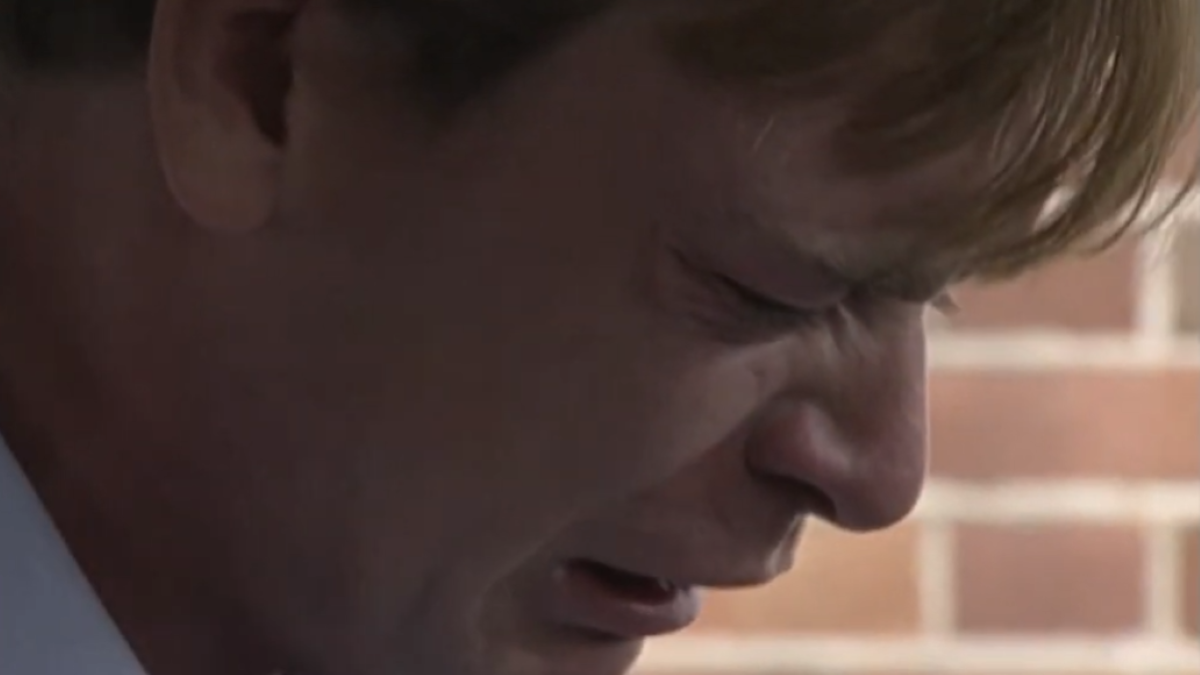
Since its debut in 1985, EastEnders has served as the definitive chronicle of London’s East End misery. While fictional, the show’s portrayal of life as a constant cycle of betrayal, addiction, and financial catastrophe is arguably more "real" to the British public than the evening news. The character of Ian Beale, played by Adam Woodyatt, stands as a monument to human suffering. With a history of five failed marriages, a daughter murdered by his own son, and a litany of business failures, Beale has become an icon of the British condition. If the UK were to move toward a republic, his portrait would surely be on the shortlist for the new currency.
2. Peep Show: The Narcissism of Failure
Peep Show (2003–2015) elevated the sitcom to a study in psychological degradation. Following the lives of Mark Corrigan and Jeremy Usbourne, the show used a "point-of-view" camera technique to force the audience into the minds of two deeply flawed, often toxic individuals. Their struggle to succeed in corporate life or to be "cool" is a masterclass in realistic disappointment. Each season serves as a reminder that ambition in a stagnant society is often just a precursor to a more spectacular fall.
3. Utopia: The Paranoia of the Modern Age
Aired between 2013 and 2014, Utopia tapped into a specific strain of British anxiety: the fear that we are being watched, controlled, and manipulated by shadowy forces. Its bleak, hyper-violent aesthetic perfectly captured the country’s collective suspicion toward authority. It remains a cult masterpiece because it spoke to the fear that behind every policy change or government initiative lies a hidden, more sinister agenda.
4. Black Mirror: The Technological Dystopia
Before it became a global sensation on Netflix, Charlie Brooker’s Black Mirror began as a Channel 4 project that felt quintessentially British in its cynicism. Early episodes like "The National Anthem"—which depicted a prime minister forced into an unthinkable act to save a hostage—were exercises in testing the limits of societal degradation. The show brilliantly highlighted our mistrust of politicians and our apathy toward the encroaching influence of technology on our private lives.
5. One Foot in the Grave: The Art of the Moan
Victor Meldrew is perhaps the patron saint of the British middle class. Forced into early retirement, Meldrew’s transformation from a regular man into a font of perpetual outrage is the ultimate commentary on the British psyche. His catchphrase, "I do not believe it!", is more than a line of dialogue—it is the national anthem of a people who feel that life is a series of minor, personal affronts designed to test their sanity.
Implications for the Future
What are the implications of a nation so deeply invested in its own unhappiness? For the UK, it means a culture that is highly self-aware but perhaps structurally incapable of optimism. We are a country that finds humor in the void, a trait that makes for excellent television but perhaps a difficult political reality.
For our American friends, the implication is clear: enjoy your independence. The "special relationship" is, at its heart, a history of two nations diverging on the fundamental question of whether the future is something to be built or something to be endured. As you celebrate your independence, remember that while we may have a place in your heart, we are currently busy managing our seventh prime minister and complaining about the rain.
We are not asking for a reunion. We are simply suggesting that, from time to time, you take a look at our television schedules. It serves as a potent reminder of what happens when a country stops looking for the silver lining and starts finding the poetry in the cloud. We will be here, likely moaning about something trivial, holding the line of British misery until the next series drops.










