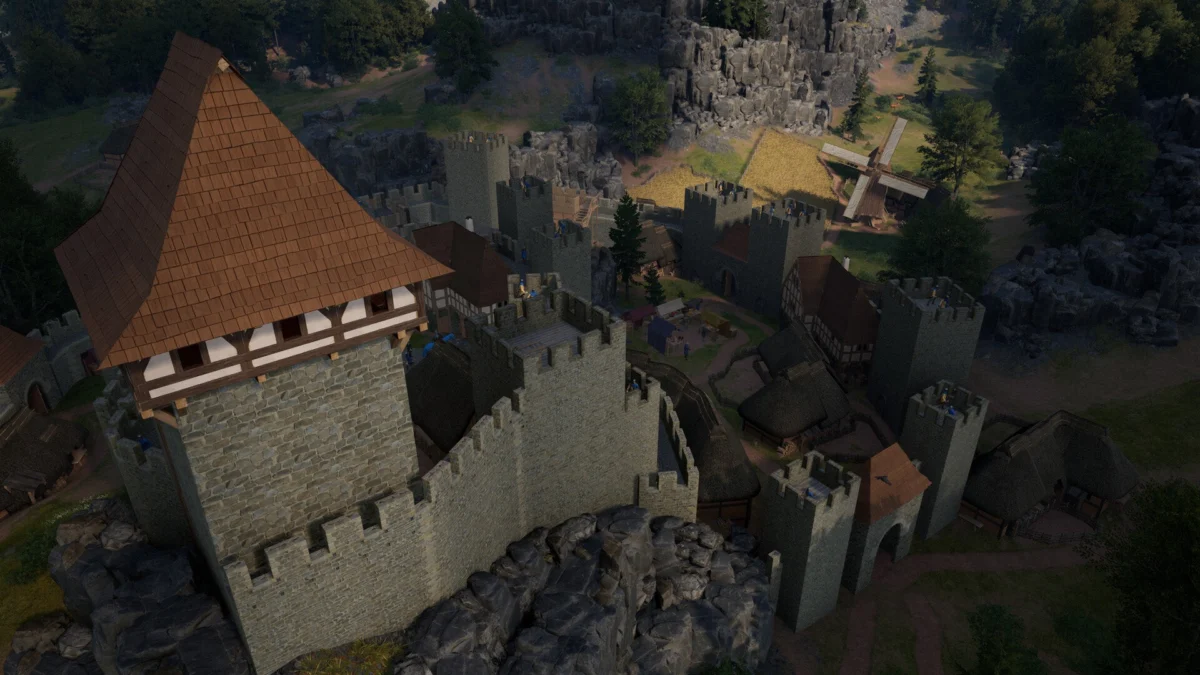
The genre of medieval strategy has long been defined by a dichotomy: players either focus on the macro-management of thriving metropolises or the micro-management of tactical battlefield skirmishes. Rarely do these two pillars intertwine with the level of architectural intimacy promised by Bergfried, a newly announced title from developer Quid Pro Games. By blending granular, free-form castle design with high-stakes tower defense mechanics, Bergfried seeks to challenge the conventions of the city-builder genre, offering players a historically resonant sandbox where every stone laid serves a strategic purpose.
The Core Concept: Designing History, One Brick at a Time
At its heart, Bergfried is a love letter to the rugged, irregular aesthetic of high and late medieval European fortifications. Unlike many strategy games that rely on pre-fabricated assets—where clicking a button drops a "level 1 barracks" onto a grid—Bergfried empowers the player with a design-centric philosophy.
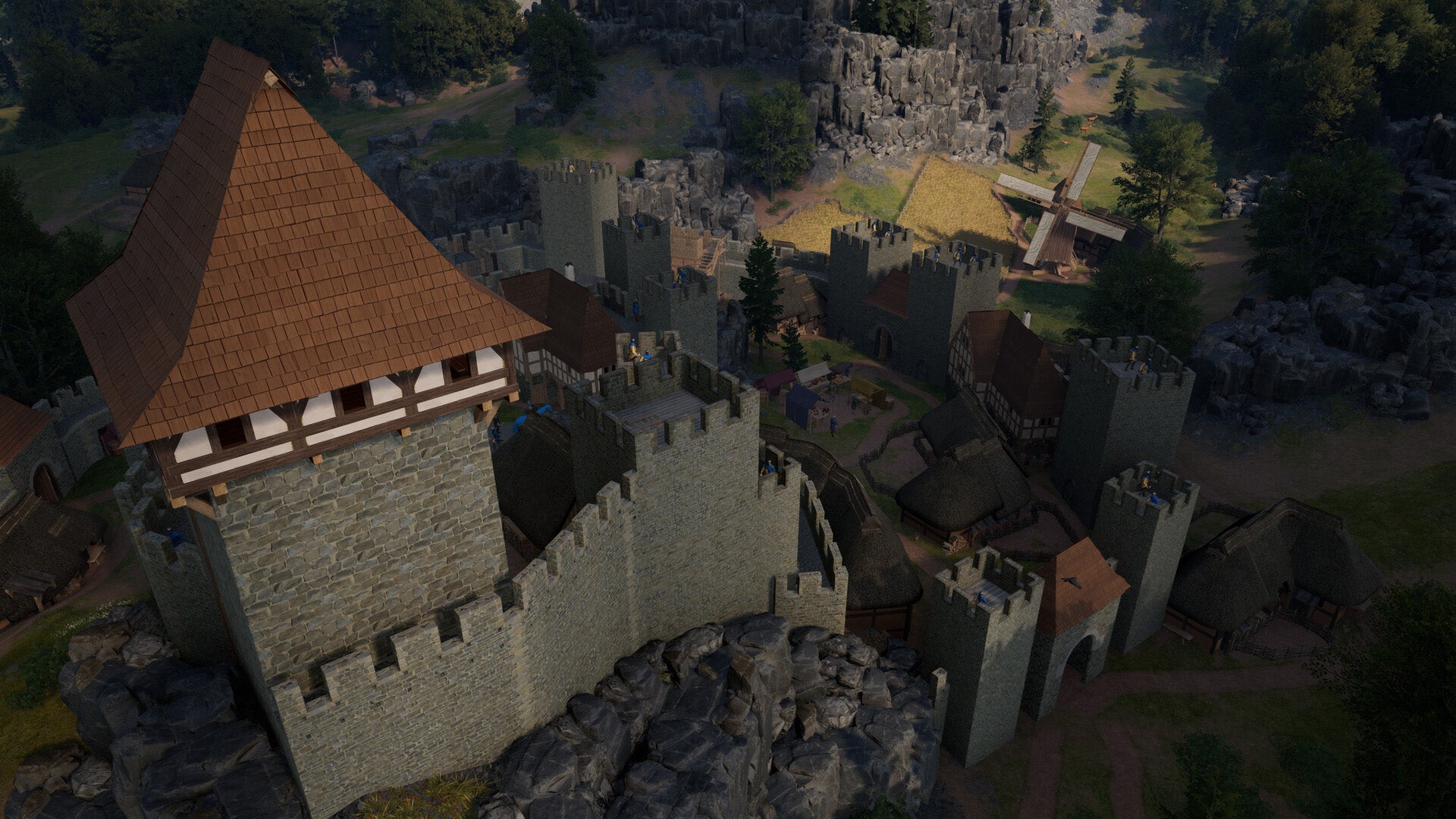
The game’s namesake, the "Bergfried" (a German term for a specific type of keep or defensive tower found in Central European castles), serves as the focal point of every settlement. Players are tasked with drafting the literal walls of their fortresses. This is not merely an aesthetic choice; the geometry of your walls dictates the sightlines for your archers, the funneling points for invading infantry, and the overall structural integrity of the keep. By utilizing a unique grid system specifically engineered to mimic the asymmetrical, organic layouts of genuine medieval ruins, the developers are moving away from the rigid, square-based city planning that has dominated the market for decades.
Beyond the ramparts, the game functions as a comprehensive city builder. Players must manage the lifeblood of their castle: the surrounding town. Your subjects are not just background noise; they are the engine of your economy, gathering resources, constructing buildings, and maintaining the infrastructure required to fund your ongoing military expansion. Balancing the needs of a growing population with the defensive requirements of an encroaching rival kingdom is the primary gameplay loop.
Chronology and Development Status
While Bergfried has only recently surfaced in the public consciousness, its reveal marks the culmination of an intensive development cycle focused on mechanics-first design.
- Early Conceptualization: Quid Pro Games began the project with a focus on historical accuracy, specifically regarding the "irregular" construction methods of the 12th through 15th centuries.
- Announcement: The official announcement trailer, released in late 2024, provided the first concrete look at the game’s UI and the fluid nature of its wall-building system.
- Playtesting Phase: Currently, the developers have opened doors for community engagement. Prospective players can register for upcoming playtests, a critical step for a game that relies so heavily on the balance of its intricate combat and construction systems.
- Steam Integration: The game is currently live on the Steam platform, where it has already begun garnering attention through its "Wishlist" function, which serves as a key indicator of interest for independent studios.
As of this writing, there is no official release date. The development team has opted for a "when it’s ready" approach, emphasizing that the complexities of the combat-to-construction transition require significant polish to ensure that the AI and pathfinding hold up under the pressure of custom-built, non-standard castle designs.
Supporting Data: Why "Bergfried" Matters for Strategy Fans
To understand why Bergfried is generating buzz, one must look at the current market landscape for strategy titles. Recent years have seen a resurgence in "cozy" city builders, but the appetite for "hardcore" defensive strategy remains high.
The Complexity of Tactical Defense
In Bergfried, the defense phase is not a scripted event or a wave-based nuisance; it is a tactical simulation. Once your town is constructed, rival knights—driven by their own territorial ambitions—will lay siege to your gates. The game allows for granular unit positioning. Instead of simply commanding a "blob" of soldiers to attack a location, players can dictate specific movements, engagement zones, and defensive postures.
- Strategic Micro-management: Players can assign specific knights to hold specific sectors of the wall.
- Economic Impact: A siege doesn’t just damage your walls; it disrupts your supply lines. If the town is pillaged, your ability to repair the castle or recruit new defenders is severely compromised.
- Historical Authenticity: By focusing on the Bergfried—a structure designed for the final stand—the game reinforces the theme of "the last line of defense."
The "European Irregularity" Factor
Most city builders utilize a strict grid that encourages optimization and symmetry. Bergfried’s departure from this standard is its greatest technical challenge and its most compelling feature. By allowing for irregular, organic walls, the game forces players to adapt to the terrain rather than forcing the terrain to adapt to them. This mirrors the real-world history of European castles, which were often built on treacherous, uneven outcroppings to maximize defensive advantages.
Official Perspectives: The Philosophy of Quid Pro Games
While direct quotes are limited, the messaging from Quid Pro Games underscores a dedication to player agency. In their communications, the team has emphasized that they want to move away from "predictable" strategy tropes.
"We wanted the player to feel the weight of their decisions," a representative noted during the reveal. "When you build a wall in Bergfried, you are deciding where the enemy will be trapped, where your archers will stand, and where your townspeople will seek shelter. It isn’t just a decoration; it’s a living part of the battlefield."
This developer-led approach highlights a growing trend in indie game development: the "systems-driven" game. By creating a robust set of rules governing how walls are built and how troops react, the developers are essentially creating a physics-and-logic playground. They are less concerned with linear storytelling and more concerned with the emergent stories players will tell about the time their castle held off a superior force due to a clever bottleneck design.
The Implications: A New Standard for Hybrid Strategy
The release of Bergfried carries several implications for the strategy genre at large:
1. The Death of the "Prefab" Builder
If Bergfried proves successful, it may force other developers to rethink the way they handle construction. Players are becoming increasingly fatigued with "template-based" building. The demand for creative freedom—the ability to place a wall at an angle, or build a tower that fits the contour of a hill—is at an all-time high.
2. The Integration of Macro and Micro
For years, strategy games have been forced into boxes: SimCity for building, Total War for fighting. Bergfried is part of a wave of "hybrid" games (much like Manor Lords) that suggest players want the experience of building a civilization and the visceral experience of defending it. The implication is that the future of the genre lies in the seamless transition between the two modes.
3. Community-Driven Iteration
The decision to utilize playtests rather than rushing to an Early Access launch suggests a mature approach to development. By inviting the community into the fold early, Quid Pro Games is insulating itself against the common pitfalls of the genre, such as poor AI pathfinding or economy-breaking exploits.
Conclusion: A Castle in the Clouds
Bergfried represents a bold attempt to marry the creative satisfaction of a city builder with the high-octane thrill of a siege defense game. By focusing on the granular, historical, and the "irregular," Quid Pro Games is crafting a title that feels less like a game and more like a simulation of medieval life and death.
Whether you are a fan of historical architecture, a veteran of tower defense games, or simply someone who finds satisfaction in a well-placed stone wall, Bergfried is a title to watch. As the development continues and the playtesting phase expands, the potential for this title to become a defining entry in the strategy genre is significant. For now, the best way to support this vision is to engage with the community, keep an eye on the upcoming playtests, and prepare to design the fortress of your dreams—and then defend it with everything you’ve got.