Introduction: A Convergence of Passions
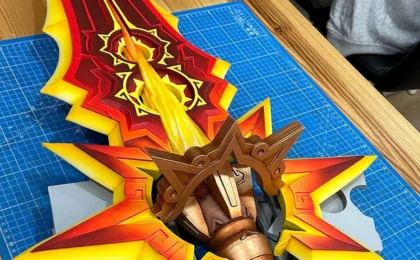
In the intricate world of high-end cosplay, the line between digital fantasy and physical reality is increasingly blurred by master artisans. Among the most prominent figures in this craft is Kamui Cosplay, whose latest project—a life-sized recreation of "A Thousand Blazing Suns," the massive claymore wielded by Mavuika, the Fire Archon from HoYoverse’s Genshin Impact—represents a masterclass in engineering, material science, and artistic dedication.
This project is more than a display of skill; it is the result of a symbiotic relationship between a creator and a global gaming titan. Following her acclaimed work on characters like Yelan and Beidou, Kamui was approached by HoYoverse to produce promotional content for the release of Mavuika. The resulting collaboration highlights how modern gaming companies are leveraging the expertise of the cosplay community to bridge the gap between in-game assets and real-world fan engagement.
The Architectural Blueprint: Translating 3D Data
The journey of bringing "A Thousand Blazing Suns" to life began not in a workshop, but at a computer terminal. For a prop of this magnitude—a weapon characterized by its explosive, rocket-engine aesthetic—precision is paramount.
The primary reference for the build was derived from official HoYoverse 3D models. Kamui utilized aplaybox.com, a critical repository for character and weapon assets. The process of acquiring these files is, in itself, a technical hurdle, often requiring the use of Chinese-language search queries and real-time translation tools. By extracting these 3D models, the team was able to generate accurate vector files, which served as the foundation for the structural blueprint.

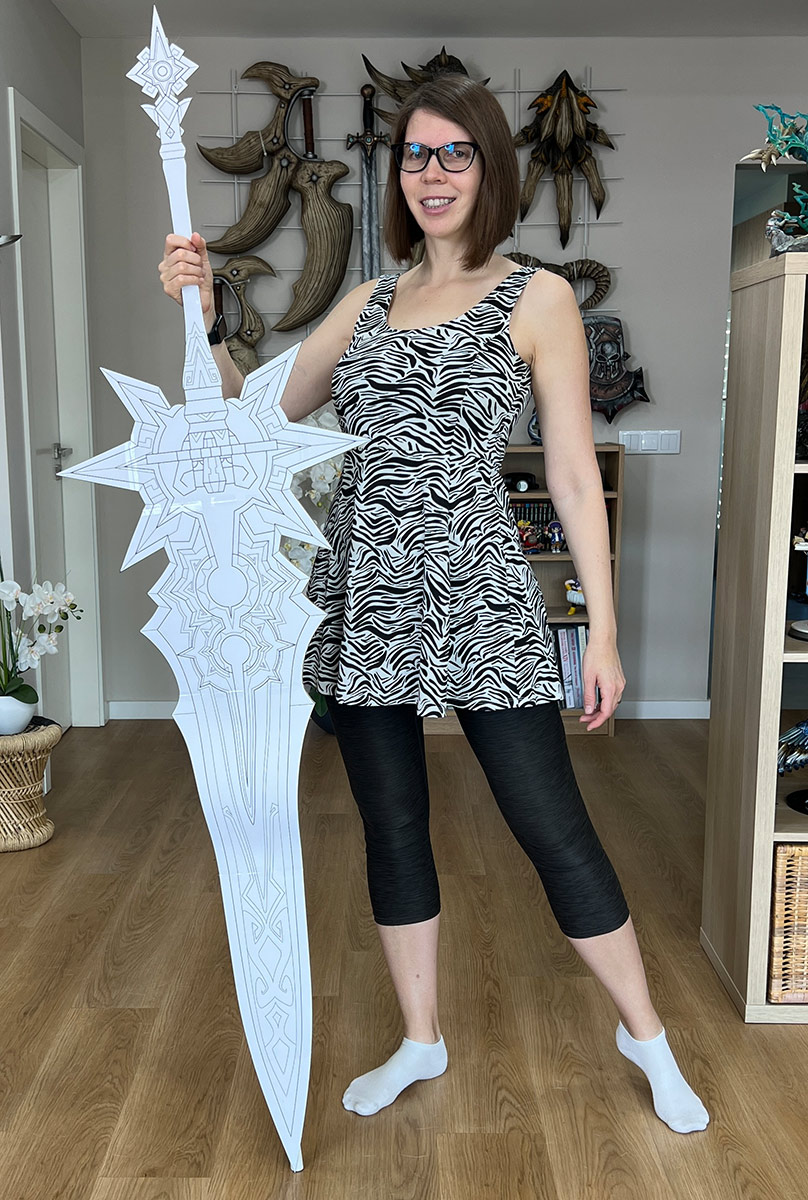
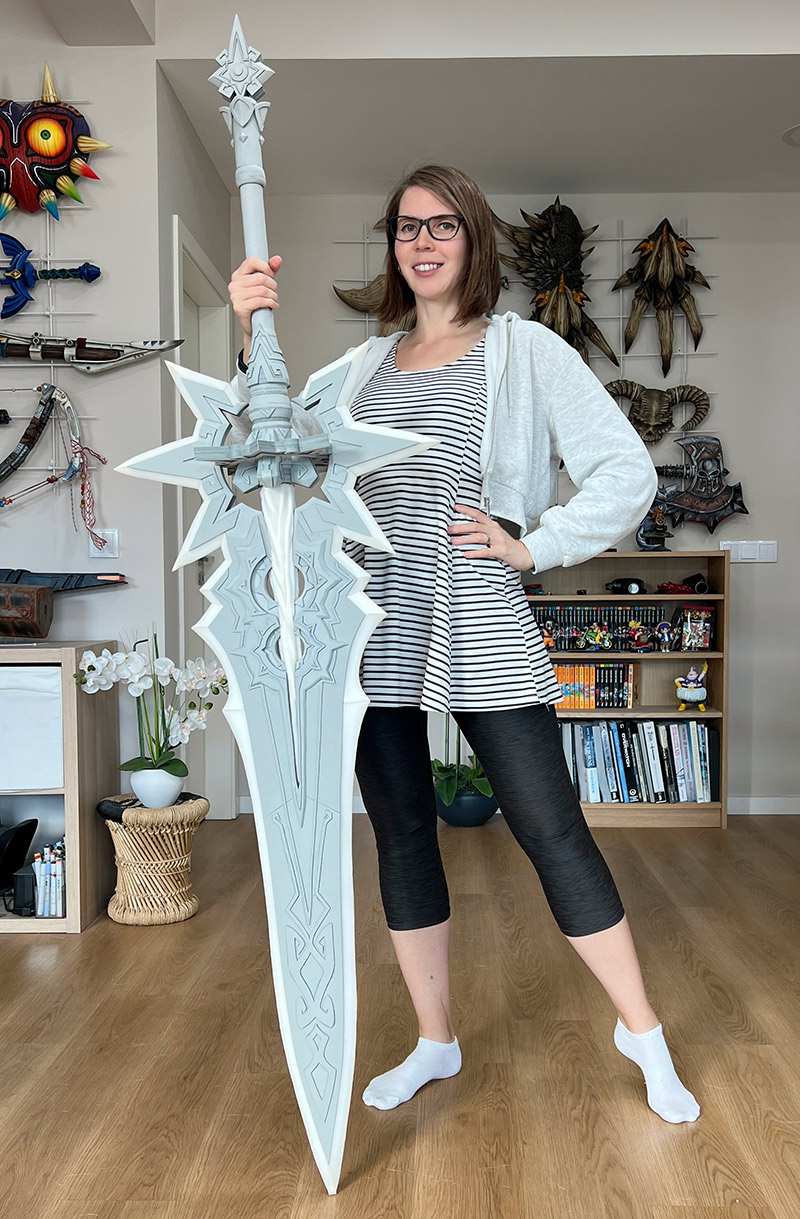
Scaling presented a unique philosophical and physical challenge. While the in-game sword is gargantuan, a direct 1:1 scale would have rendered the prop unwieldy for conventions and photoshoots. The team opted for a two-meter length—a choice that balances the "heroic" proportions of a fantasy weapon with the ergonomic realities of a wearable accessory. This decision underscores a recurring theme in professional prop-making: authenticity must sometimes yield to functionality.
The Engineering Phase: Foam and Fiber
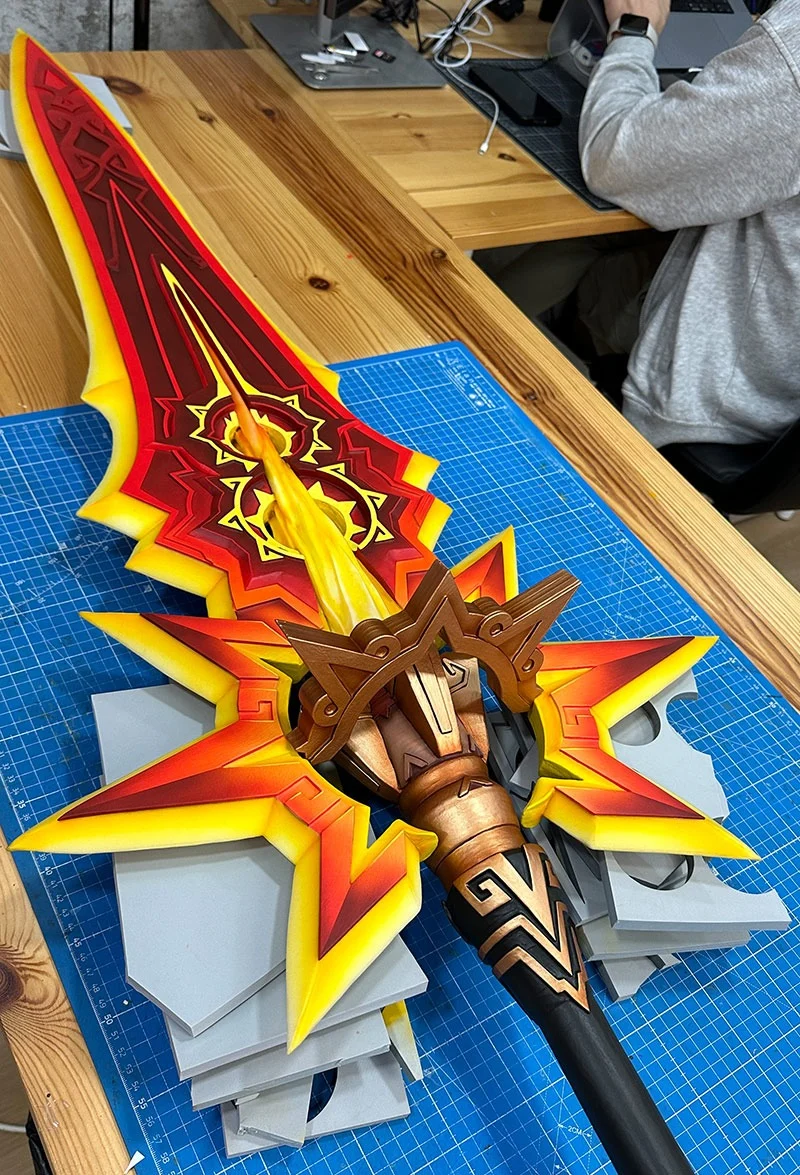
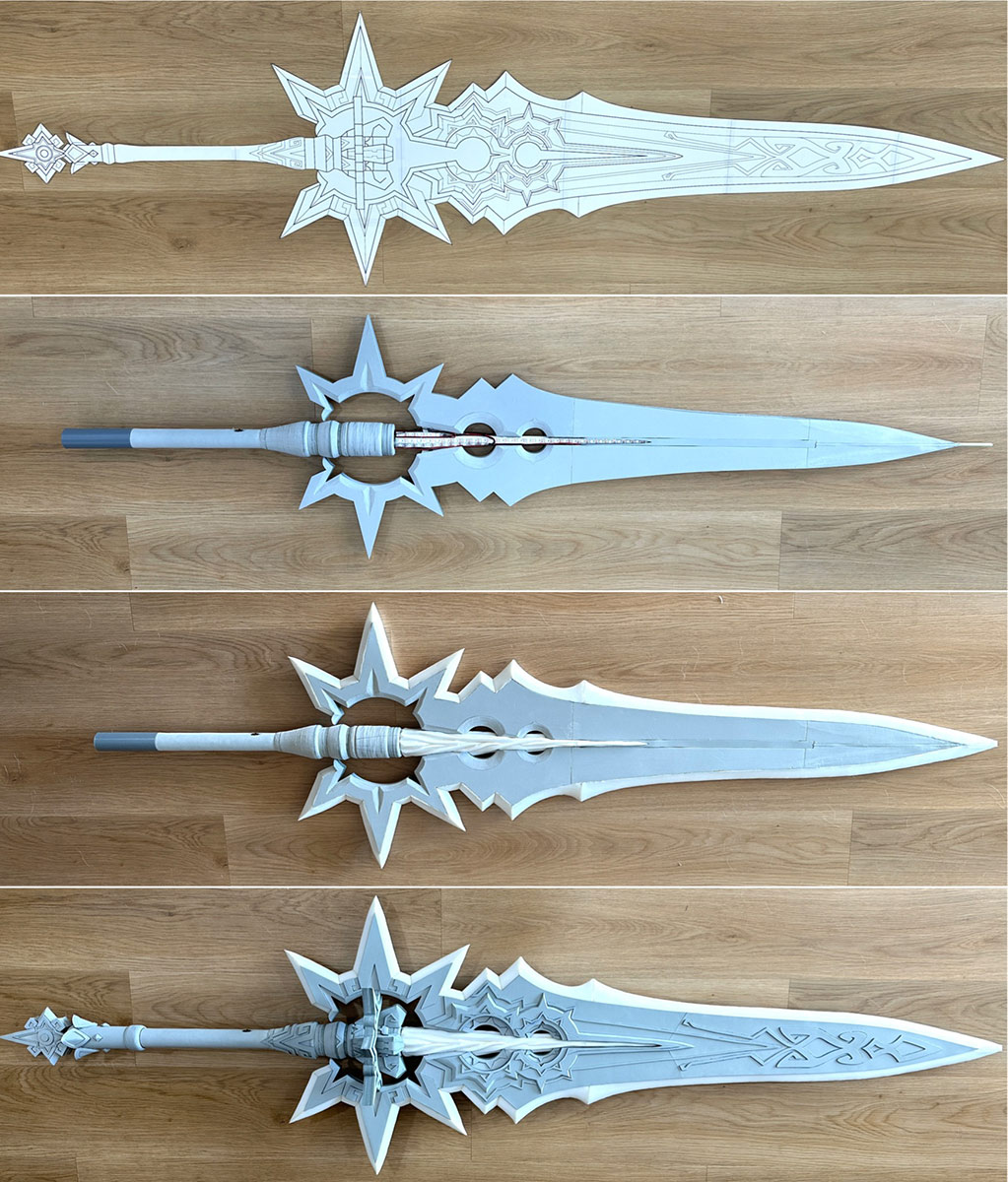
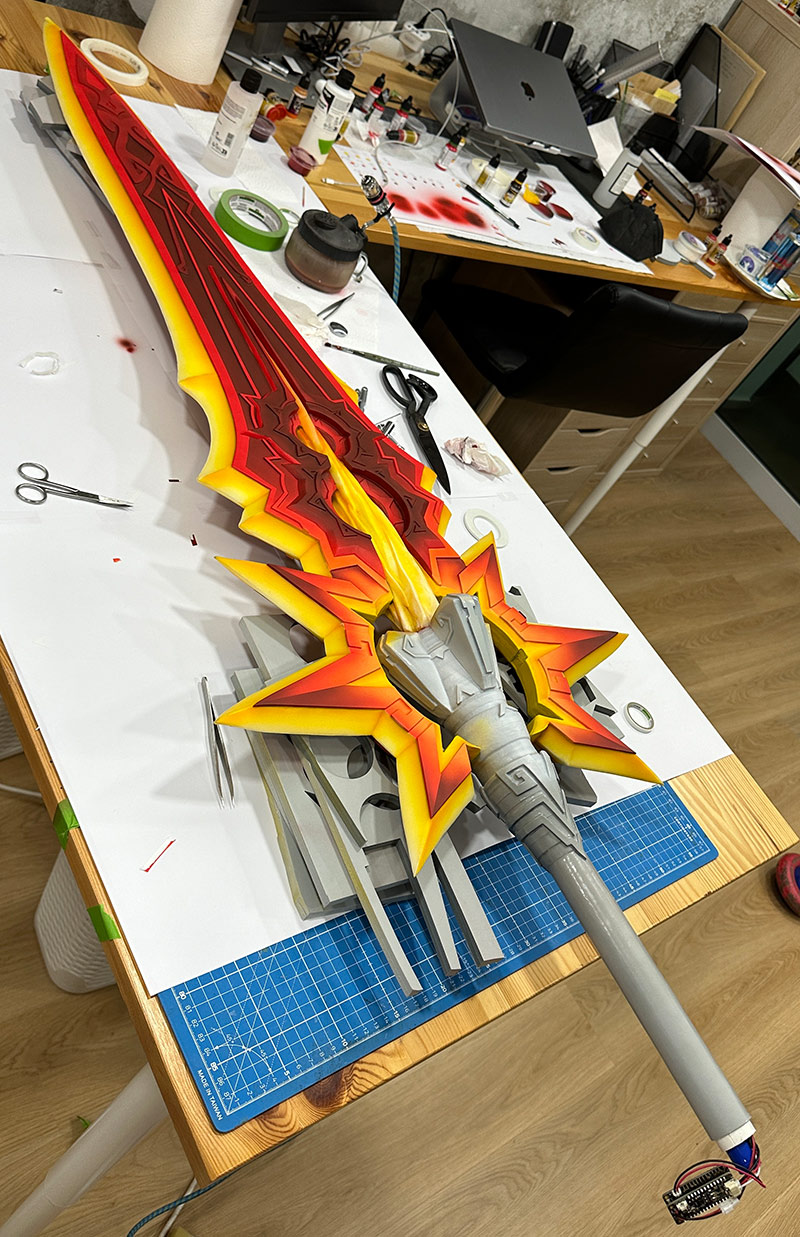
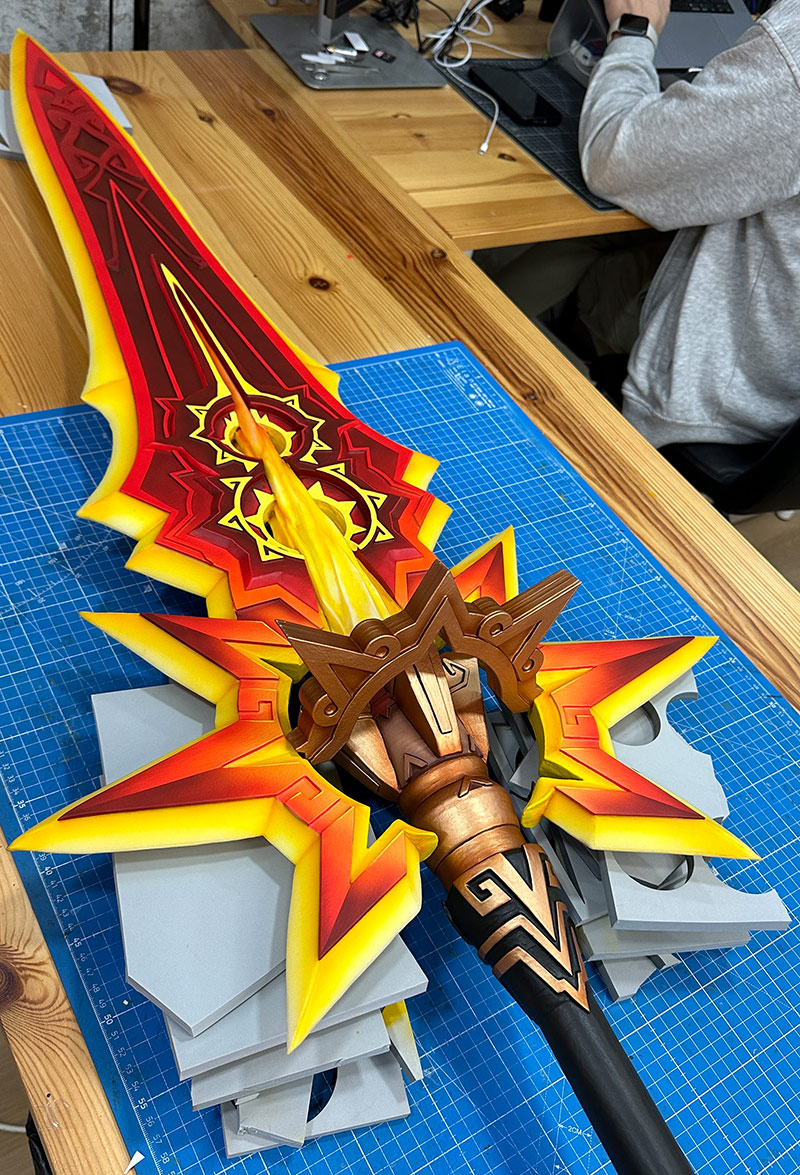
The core of the sword required significant structural integrity to prevent sagging or warping over its two-meter span. To achieve this, the team utilized a heavy-duty PVC pipe as a central skeleton. Surrounding this pipe, multiple layers of high-density EVA foam were layered to create the weapon’s iconic, aggressive silhouette.
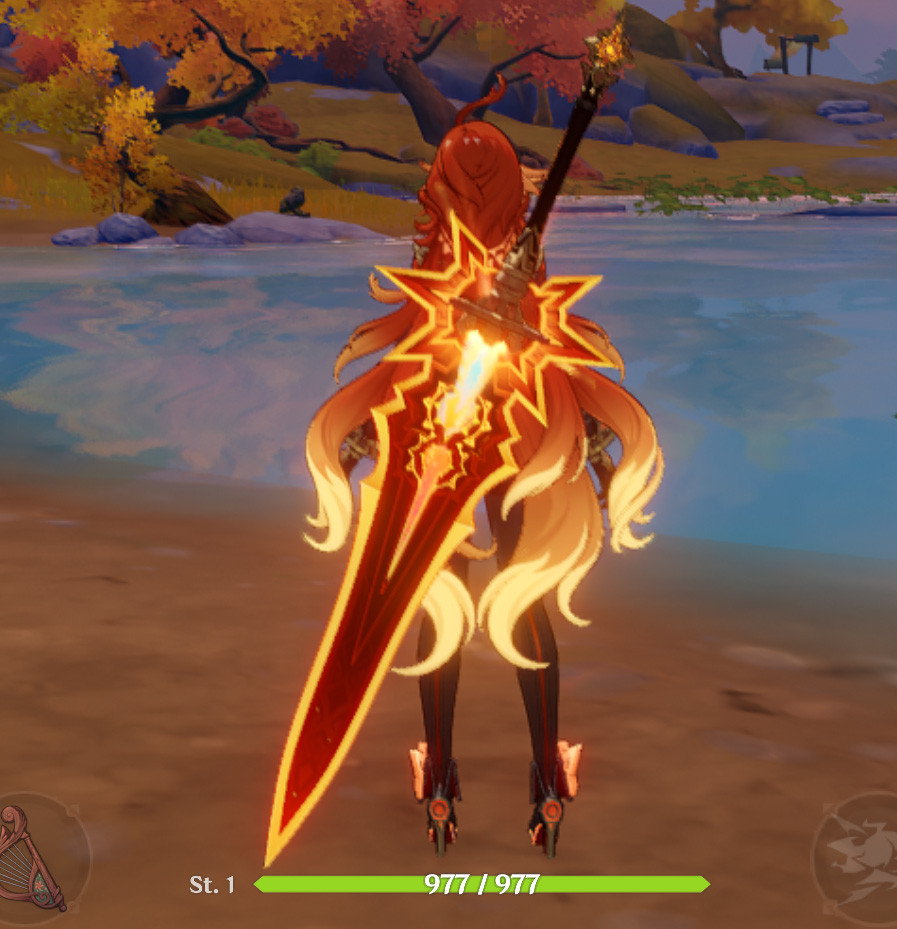
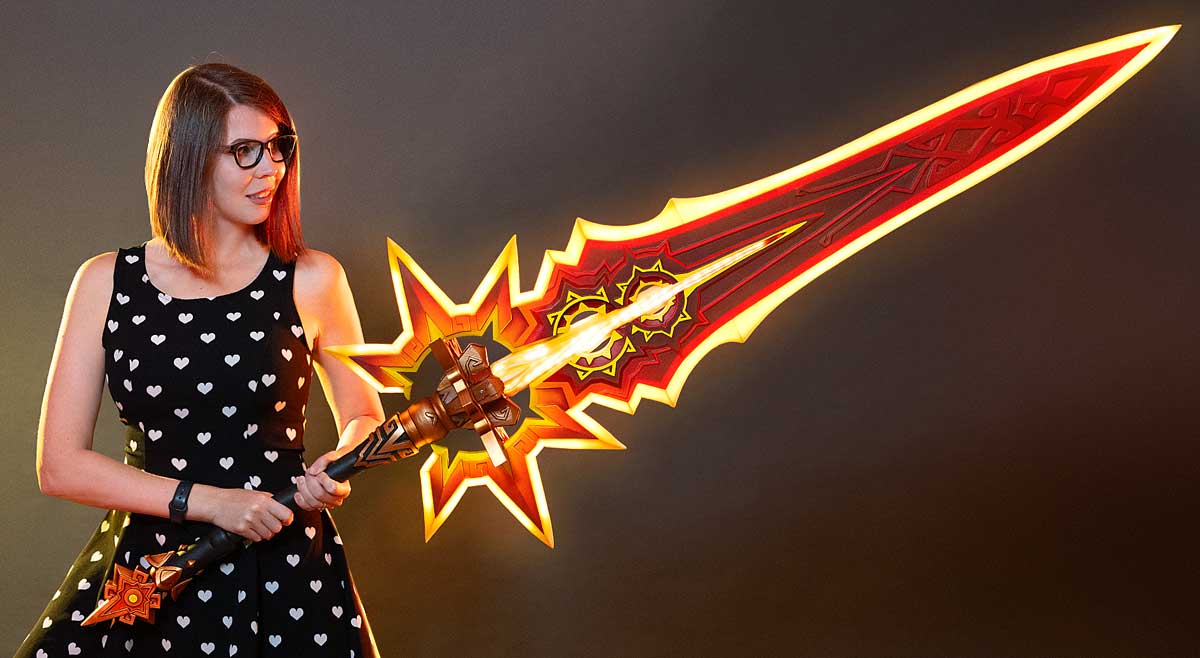
The rocket-engine core was perhaps the most challenging aspect of the fabrication. It required a delicate balance between structural density and light transparency. By installing nearly 300 individual LEDs, the team created a pulsing, fiery internal glow. The electronics, including the battery packs and micro-controllers, were cleverly integrated into the grip, ensuring the sword maintained a clean, seamless aesthetic while hiding the "magical" components within the handle.
For those attempting similar builds, the choice of materials remains crucial. Utilizing high-quality EVA foam, contact cement, and laser-cutting technology allowed the team to reduce the fabrication time to approximately seven days of intensive labor. While manual cutting remains a viable traditional technique, the integration of laser-cutting for complex vector designs has become the industry standard for those seeking perfect symmetry and sharp, geometric edges.
The Technical Symphony: Lighting and Sound
The "fire" effect of the blade is not merely a static glow but a programmable light show. Kamui utilized an Adafruit Prop-Maker FeatherWing, a standard in modern prop-making for its ability to handle complex LED animations and motion-triggered effects.
The sword is programmed with an interactive trigger: when the prop strikes a surface, the pulsing orange-and-yellow "fire" animation is momentarily interrupted by a brilliant, white-light flash. This level of interactivity elevates the prop from a static display piece to a functional performance tool. The complexity of these electronics is documented in Kamui’s Book of Light and Sound Effects, which provides a roadmap for creators to implement motion-sensitive, pixel-mapped lighting.
The Paintjob: A Marathon of Precision
If the build phase was a test of strength, the painting phase was a test of endurance. Applying the vibrant reds, oranges, and yellows that define Mavuika’s aesthetic required an extensive airbrushing process.
The team employed a layered painting technique, which required masking off sections with Tamiya tape. This process was particularly high-stakes: the tape had to be removed within a specific 12-hour window to avoid damaging the underlying paint layers. With two sides of the sword to cover, the process devolved into a 12-hour, overnight marathon. The final details—the intricate weathering and fine-line accents—were applied by hand, adding the necessary depth and "wear" to make the weapon look as though it had seen actual combat in the Natlan region.
Official Collaboration and Community Impact
The involvement of HoYoverse in this project is significant. By commissioning content creators to showcase the physical creation of in-game items, the developers are effectively validating the efforts of the fan community. This type of collaboration does more than just advertise a new character; it fosters a culture of creation.
The videos produced for this project, shared across platforms like TikTok and YouTube, provide educational value to the cosplay community, demystifying the process of prop-making and encouraging fans to attempt their own builds. It bridges the gap between passive consumption of digital content and active participation in the fandom.
Implications for the Future of Cosplay
The evolution of "A Thousand Blazing Suns" from a 3D digital model to a glowing, physical manifestation of art represents the pinnacle of modern cosplay. As materials become more accessible—such as the high-grade EVA foams available through specialized suppliers—and as electronics become easier to program, the standard for what is expected of a professional cosplayer continues to rise.
The success of this project also highlights the importance of shared knowledge. By offering blueprints and tutorials, creators like Kamui ensure that the barrier to entry for complex builds is lowered for newcomers.
Conclusion
The Fire Archon’s sword is more than just a prop; it is a synthesis of digital architecture, electrical engineering, and traditional fine art. For those interested in pursuing their own build, the project serves as a reminder that while the process is undoubtedly demanding—requiring long hours, technical precision, and significant energy—the result is a unique, tangible connection to the fictional worlds we admire.
As technology continues to integrate with traditional crafting methods, we can expect the next generation of cosplay to be even more immersive, with weapons and armor that look, move, and react with the same dynamism as the characters themselves. The collaboration between Kamui and HoYoverse stands as a shining example of this creative evolution, proving that with enough foam, patience, and 300 LEDs, any fantasy can be brought to life.