

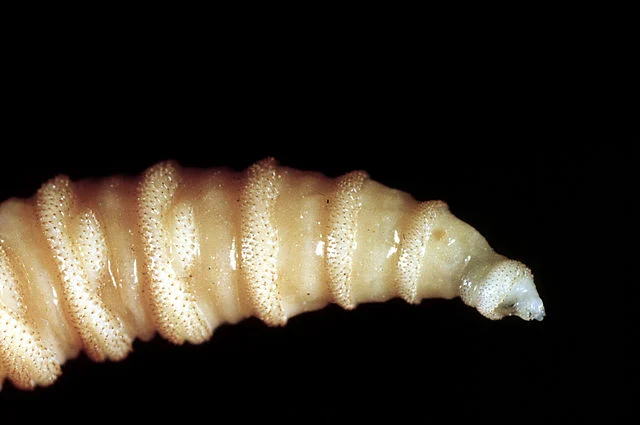
For decades, the American agricultural sector enjoyed a hard-won victory against one of the most grotesque and economically devastating pests in history: the New World screwworm (Cochliomyia hominivorax). Once a scourge that claimed the lives of thousands of livestock and plagued wildlife across the Southern United States, the parasite was declared eradicated in the 1960s following a legendary, decades-long biological warfare campaign.
However, the silence of that victory is being broken. After a successful, decades-long containment strategy at the Darién Gap, the biological barrier has been breached. The screwworm is marching northward, forcing the United States Department of Agriculture (USDA) to mobilize a massive, multi-million-dollar defense to prevent a full-scale return of a pest that nature seems intent on reviving.
Main Facts: The Anatomy of a Parasitic Nightmare
To understand the urgency of the USDA’s current mobilization, one must understand the biological nature of the New World screwworm. Unlike common houseflies that feed on decaying matter, the screwworm is an obligate parasite. The female fly lays her eggs in the open wounds of warm-blooded animals—including livestock, pets, and, in rare instances, humans.
When the eggs hatch, the larvae—the "screwworms"—burrow into the living flesh, feeding on the host’s tissue. As they eat, they create larger wounds, which attract more female flies to lay more eggs. If left untreated, the infestation is almost invariably fatal, leading to secondary infections, systemic shock, and death.
The primary defense against this organism is the Sterile Insect Technique (SIT). Because female screwworms mate only once in their lifetime, scientists developed a method to mass-produce male flies and expose them to ionizing radiation, rendering them sterile. When these "dud studs" are released in massive numbers, they overwhelm the fertile male population. They successfully mate with wild females, but no offspring are produced. Over several generations, the population collapses toward extinction.
A Chronology of Conflict: From Eradication to Breach
The history of the screwworm is a timeline of human ingenuity versus biological persistence.
- 1960s: The Great Purge: The United States launched a concerted effort to annihilate the screwworm population using SIT. The program was a resounding success, effectively clearing the pest from American soil.
- 1970s–2006: Pushing the Frontier: Emboldened by success, the eradication program expanded southward. Through a collaborative effort involving the US, Mexico, and Central American nations, the screwworm was systematically pushed back. By 2006, Panama was declared free of the pest.
- The Darién Gap Barrier: To ensure the pest would not re-invade, the USDA partnered with Panamanian authorities to establish a biological "buffer zone" at the Darién Gap—the dense, rugged rainforest bordering Colombia and Panama. A dedicated production facility was established to mass-release sterile flies, creating an impenetrable wall of infertility.
- 2022: The Barrier Fails: Despite years of stability, the barrier was breached. Whether through human transport, shifts in environmental conditions, or a failure in the biological buffer, the screwworm crossed the line.
- 2024: The Northern Migration: Since the breach, reports have confirmed the northward migration of the pest. The USDA has now shifted from a "containment" mindset to an active "suppression and eradication" war footing.
Supporting Data: The Logistics of Biological Warfare
The scale of the current response is staggering, reflecting the economic stakes of the agricultural industry. The USDA is not merely reacting; they are engaging in an industrial-scale biological operation.
The Numbers Behind the Defense
- Aerial Bombardment: Every week, the USDA disperses approximately 100 million sterile insects across Mexico and along the US-Mexico border.
- Targeted Deployment: In areas where infestations have been detected, the agency is deploying ground release chambers in addition to aerial drops. This week alone, 4 million flies were dropped by air in a specific detection zone to saturate the area with sterile males.
- Capital Investment: The federal government is currently constructing a state-of-the-art sterile fly production facility in South Texas. The price tag for this facility is $750 million, a figure that underscores the federal government’s assessment of the threat level.
- Surveillance Infrastructure: USDA officials have significantly expanded trapping efforts throughout Texas, utilizing advanced pheromone traps and biological monitoring to track the movement of the flies in real-time.
Official Responses: A Unified Front
The gravity of the situation has prompted a high-level response from agricultural authorities. The consensus among policymakers is that the screwworm is not a problem that can be managed—it must be eliminated.
Dudley Hoskins, Under Secretary for Marketing and Regulatory Programs at the USDA, issued a statement following the latest detections: "The United States has defeated this pest before, and we will do it again."
This confidence, however, is tempered by the complexity of the current landscape. The recent confirmation of an infection of New World screwworm has moved the situation from a "monitoring" phase to an "emergency response" phase. The USDA is working in close coordination with state agricultural departments in Texas, emphasizing that public vigilance—reporting any unexplained lesions on livestock to veterinarians—is a critical component of the defense strategy.
Implications: Why This Matters for the Future
The potential return of the screwworm poses existential threats to several sectors of the American economy and society.
1. Economic Devastation for Ranchers
The livestock industry, particularly in the Southern US, operates on thin margins. A screwworm outbreak would necessitate intensive labor for wound inspection and treatment, significantly increasing the cost of production. Furthermore, it could lead to international trade restrictions; countries that are screwworm-free are often hesitant to import livestock from regions where the parasite is present.
2. Wildlife and Conservation
The screwworm does not distinguish between a prize bull and an endangered species. The threat to wildlife, particularly in protected habitats and parks, is severe. Deer, elk, and other large mammals could see population declines if the parasite establishes a foothold, disrupting local ecosystems that have had no exposure to the screwworm for over half a century.
3. Public Health and Animal Welfare
While humans are not the primary host, human myiasis (the infestation of human tissue by larvae) is a real, albeit rare, danger. The primary concern remains the animal welfare crisis; untreated screwworm infestations are profoundly painful for animals. The potential for widespread suffering among domestic pets and livestock is a significant driver of the urgency behind the USDA’s intervention.
4. The Fragility of Biological Barriers
The 2022 breach of the Darién Gap highlights a broader concern in modern biology: the fragility of man-made environmental barriers. As climate patterns shift and human travel increases, the ability to "fence off" a continent from invasive species becomes increasingly difficult. The $750 million investment in the Texas facility is an acknowledgment that the biological barrier may need to be moved or significantly reinforced to handle the modern realities of global movement.
Conclusion: A Race Against Time
The battle against the New World screwworm is a stark reminder that the war against invasive species is never truly "won"—it is merely managed. The pest is resilient, adaptable, and opportunistic. While the USDA’s massive, multi-front strategy of aerial and ground-based sterilization is the most sophisticated tool available, the success of the mission depends on constant vigilance.
As the sterile flies continue to drop from the sky over South Texas and the borderlands, the hope is that the sheer volume of infertility will once again stifle the screwworm’s expansion. The coming months will be critical. If the population is not suppressed now, the pest could gain the momentum necessary to move further into the American heartland. For now, the USDA remains on the front lines, fighting a war against a microscopic enemy, determined to keep the American landscape free of a parasite that history has proven we cannot afford to live with.












No comments yet. Be the first to join the conversation!