In the grand tradition of cinematic archetypes, the "one-man-army" remains one of Hollywood’s most resilient staples. From the rugged individualism of John Rambo to the tactical precision of John Wick, the genre thrives on the promise of a lone protagonist correcting the world’s imbalances through sheer force of will. However, director William Eubank’s latest outing, Ghost Soldier, suggests that the well of inspiration for such tales may have finally run dry. Released on Veterans Day, the film arrives with the weight of patriotic intent, yet it collapses under the pressure of its own derivative construction, offering a sterile, gadget-heavy experience that fails to ignite the screen.
The Premise: A DARPA Operative in the American Heartland
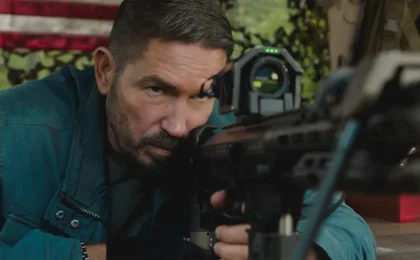
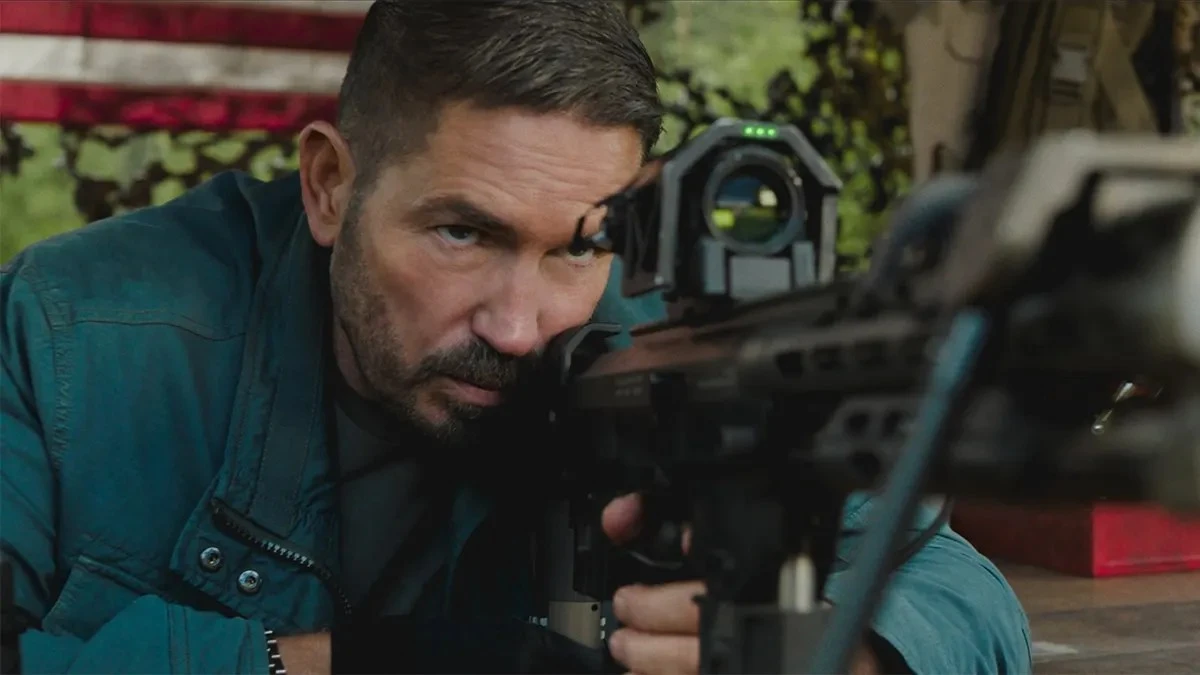
The narrative centers on Henry "Fitz" Fitzgerald (Jim Caviezel), a former Special Forces operator who has retreated to the quiet expanses of Valentine, Wyoming. Though he lives in self-imposed anonymity, Fitz is no mere retiree; he continues to serve the Department of Defense as a clandestine designer of advanced weaponry for DARPA.
The plot’s inciting incident arrives in the form of "Brownstone," a corporate entity specializing in water monetization. The company is systematically acquiring land surrounding the Midwest’s natural water sources, ostensibly to supply the insatiable cooling demands of burgeoning AI data centers. The CEO of Brownstone, portrayed by Mido Hamada, initiates a high-stakes campaign of coercion, tasking his U.S. representative, Ty Bell (Alexej Manvelov), with clearing out holdout landowners in Valentine.
When the local Hernandez family becomes a target for these predatory practices—suffering harassment that escalates from eminent domain threats to the arson of their home—Fitz feels compelled to intervene. His transition from passive observer to active defender is catalyzed by his bond with the family’s young son, Jack (Cameron Gayden). Utilizing a subterranean bunker filled with high-tech, futuristic armaments, Fitz prepares to wage a one-man war against Brownstone’s mercenary forces, led by the ruthless Mirko (Beau Knapp). With the reluctant assistance of a local gun dealer, Garry (Michael Ironside), and an embattled sheriff, Heidi (Olivia Thirlby), Fitz sets the stage for a showdown that promises to drive corporate interests out of the region for good.
A Chronology of Artistic Stagnation
The film’s trajectory is as predictable as the sunrise. Its opening minutes are saturated with the tropes of the action genre: hushed, reverent dialogue regarding the protagonist’s "unique set of skills," followed by an immediate pivot to a display of overwhelming firepower.
- Act I: The introduction of the idyllic but threatened town of Valentine and the establishment of Fitz’s dual identity as a civilian and a weapons genius. The corporate villainy is established with broad strokes.
- Act II: The escalation of conflict. Following the arson of the Hernandez property, Fitz engages in a series of tactical skirmishes. Here, the film replaces grit with gadgets, relying on night vision, adaptive camouflage, and "smart" bullets that defy the laws of physics.
- Act III: The inevitable confrontation. Fitz, having decimated the initial wave of corporate "security," finds himself the target of a professional mercenary squad. The film concludes with a display of retribution that feels less like a moral triumph and more like a mechanical resolution.
Throughout this sequence, the film abandons character development. Supporting players like Shea Whigham, acting as a government liaison, and Jaina Lee Ortiz, as the widowed mother of the boy Fitz protects, are relegated to roles that require them to do little more than observe or serve as objects of the protagonist’s protection.
Supporting Data and Thematic Friction
The casting of Jim Caviezel in the lead role carries significant weight, given his recent trajectory in independent, politically charged cinema. Caviezel has effectively become a face for conservative-leaning projects, such as Infidel and the commercially successful Sound of Freedom. His portrayal of Fitz—a morally upright, technologically superior soldier—serves as an extension of his public persona, yet it lacks the nuance necessary to ground the film’s increasingly outlandish combat sequences.
The film’s attempt to generate patriotic fervor is perhaps its most jarring element. While the script by Chris Papasadero pays lip service to the plight of the working-class American—a demographic frequently victimized by corporate overreach—the execution is riddled with xenophobic undertones. By casting a foreign CEO as the primary antagonist who employs mercenary soldiers to perform extrajudicial killings, the film utilizes a "good vs. evil" shorthand that lacks political or narrative depth.
Furthermore, the technological aspect of Fitz’s arsenal creates a tonal disconnect. By equipping the hero with weapons that bend around corners and track targets with algorithmic precision, the film moves away from the visceral, "boots on the ground" combat that one might expect from a tribute to the military. Instead, the film veers into the territory of high-concept superhero cinema, making Fitz feel more like an "Iron Man" figure than a grounded veteran. This undermines the intended message of the film, transforming a potential paean to service members into a glossy, hollow spectacle.
The Implications of the "Ghost Soldier" Universe
Despite its 90-minute runtime—a brevity that usually suggests a lean, efficient narrative—Ghost Soldier feels bloated with wasted potential. The film’s final act contains clear, thinly veiled implications that the studio intends to expand this property into a cinematic franchise. The suggestion that Fitz could be deployed to "resolve" international conflicts single-handedly feels like a miscalculation of the audience’s appetite for such content.
From a distributor’s perspective, the intent is clear: create a hero who can be dropped into any geopolitical hot zone, bypassing the complexities of diplomacy and international law. However, for a franchise to have legs, the audience must first care about the protagonist. As it stands, Fitz is a cipher—a silhouette upon which the audience is expected to project their own values, but one that offers nothing in return.
Critical Analysis and Cultural Context
The failure of Ghost Soldier is one of missed opportunity. It is a film that demands to be taken seriously as a tribute to the armed forces, yet it treats its characters as mere plot devices. The ensemble cast—featuring talent as significant as Garret Dillahunt and Olivia Thirlby—is largely squandered. When a film relies on the star power of such actors but gives them no meaningful dialogue or character arc, the result is a production that feels disconnected from its own human element.
Comparing this to the evolution of the action genre is instructive. When Walk Hard parodied the music biopic, it did so by exposing the formulaic nature of the genre’s rise-and-fall structure. When MacGruber took aim at the 80s and 90s action movie, it did so with a sharp, satirical awareness of its own absurdity. Ghost Soldier, conversely, plays its hand with total sincerity, seemingly unaware that it is repeating a sequence of events that the audience has seen hundreds of times before.
The film’s reliance on "dog whistle" politics is another point of concern. While such tactics may be common in the ecosystem of right-leaning media production companies like The Daily Wire, their presence in a wide theatrical release from a major studio like Sony Pictures marks a notable shift in the mainstream landscape. Whether this is an attempt to court a specific, underserved demographic or merely a lack of creative imagination, the result is the same: a film that feels dated on arrival.
Conclusion
Ghost Soldier is a film that aspires to be a rousing, patriotic thriller but ends up as a sterile, repetitive exercise in genre clichés. It offers high-tech weaponry and low-stakes drama, failing to provide the audience with a protagonist they can genuinely root for or a conflict that resonates beyond the screen. As an ode to the American soldier, it is insufficient; as an action movie, it is redundant. For viewers seeking a narrative that captures the true essence of service, sacrifice, or even the visceral thrill of a well-executed B-movie, Ghost Soldier serves as a stark reminder that a "certain set of skills" is not enough to carry a film that lacks a heart of its own.