Nana Muazin
By Editorial Staff
June 21, 2026
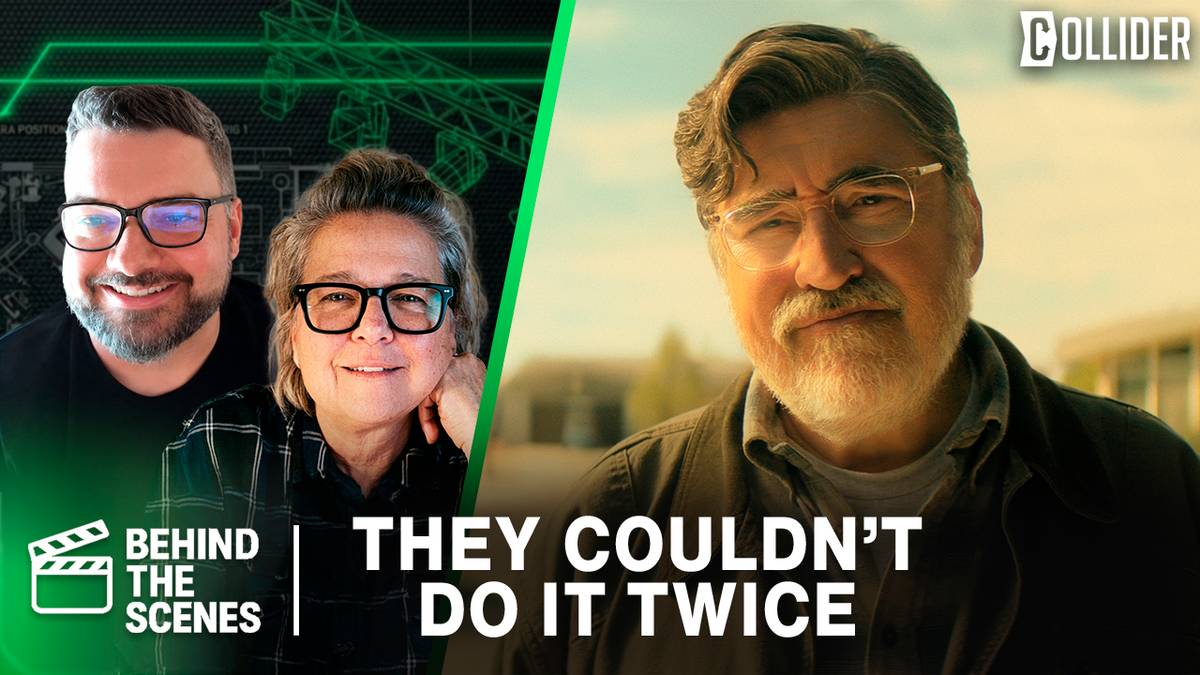
In an era defined by the dominance of Computer-Generated Imagery (CGI) and digital volume stages, the production team behind the breakout hit The Boroughs has reminded audiences that there is no substitute for the visceral impact of reality. Recently surfaced behind-the-scenes footage and production notes have detailed the nerve-wracking process behind the show’s most ambitious stunt: the deliberate, controlled destruction of a vehicle sent hurtling off a cliffside.
This sequence, which serves as a pivotal narrative turning point in the series’ latest season, was not the result of digital wizardry. It was the culmination of months of engineering, meticulous safety choreography, and a refusal to compromise on the physical weight of cinematic storytelling.
The Philosophy of Practicality
The creative team behind The Boroughs has long championed a "practical-first" philosophy. For showrunners and stunt coordinators, the goal is to capture the chaotic physics of a real-world environment—the way dust hangs in the air, the specific crunch of metal, and the terrifying velocity of an object in freefall.
"When you use a computer to simulate a car crash, the human eye—even if it can’t articulate why—knows it’s fake," says lead stunt coordinator Marcus Thorne. "There’s a subtle shift in gravity, a lack of organic debris, or a smoothness to the motion that breaks immersion. With this sequence, we wanted to ensure the audience felt the danger. To do that, we had to make the danger real."
The decision to send a real vehicle over a cliff was not taken lightly. It required the full cooperation of the studio’s risk management team, local environmental agencies, and a specialized crew of precision drivers and mechanical engineers.
Chronology of the Stunt: From Blueprint to Freefall
The journey to the cliffside was a grueling process that spanned nearly six months of pre-production.
Phase I: The Engineering (Months 1–3)
Before a single camera was mounted, the production team identified a remote, geologically stable cliff face that met both safety and aesthetic requirements. Simultaneously, the mechanical team sourced a series of identical vehicle shells. These were stripped of their engines, fuel tanks, and hazardous materials to comply with environmental regulations, then fitted with internal reinforcement cages to ensure the chassis remained intact long enough to execute the desired trajectory.
Phase II: Simulation and Testing (Months 4–5)
The team utilized sophisticated scale-model testing. By calculating the mass, wind resistance, and the specific speed at which the car needed to leave the ramp, the physics team determined the exact arc the car would take. Remote-controlled triggers were installed to initiate specific structural failures mid-air, ensuring the vehicle would rotate in a way that maximized the cinematic visual without endangering the camera crews stationed at a safe distance.
Phase III: The Execution (The Final Day)
On the day of the shoot, the atmosphere on set was described by cast members as "heavy with anticipation." With a battery of high-speed 8K cameras capturing the action at 1,000 frames per second, the car was launched via a pneumatic ram system. The result was a singular, terrifyingly beautiful shot that captured the kinetic energy of the vehicle as it tumbled toward the canyon floor below.
Supporting Data and Technical Challenges
The technical demands of the stunt were unprecedented for a television production. The production provided the following data points regarding the operation:
- Total Weight of the Vehicle: 3,400 lbs (stripped).
- Velocity at Launch: 55 miles per hour.
- Camera Array: 14 high-speed units positioned at varying distances, including two drone-mounted cameras and one specialized cable-cam system that tracked the car’s descent.
- Environmental Impact Mitigation: A recovery team was stationed at the base of the cliff to ensure 100% of the vehicle debris was collected within four hours of the stunt, adhering to strict environmental protection standards.
- Safety Buffer: The "safe zone" for the camera crew was set at a 300-yard radius, shielded by ballistic-grade transparent barriers.
The precision required to capture this in a single take—or a minimal number of takes—was immense. Because of the cost and the logistical difficulty of resetting the "ramp" and the cliffside cleanup, the team had effectively only two chances to get the shot.
Official Responses and Industry Reaction
The industry has reacted to the revelation with a mix of awe and debate regarding the necessity of such extreme measures.
"I’ve worked on films where we’ve blown up buildings, but there is something uniquely visceral about a car in freefall," said Sarah Jenkins, an independent stunt safety consultant. "The production team for The Boroughs has set a new benchmark. It shows that they value the craft of filmmaking over the ease of digital post-production. However, it also raises the bar—and the budget—for what studios will expect from their stunt departments moving forward."
The studio executives behind The Boroughs issued a formal statement shortly after the footage went viral:
"Our commitment to the audience is to deliver an experience that feels grounded and urgent. We are incredibly proud of our stunt and safety teams for executing such a complex maneuver with surgical precision. This sequence is a testament to the talent of the individuals working behind the camera to bring our world to life."
Implications: The Future of Stunt Work
The success of The Boroughs stunt brings several implications to the forefront of the entertainment industry:
1. The "Practical Renaissance"
As AI and CGI tools become more ubiquitous, there is a growing consumer fatigue regarding "weightless" digital action. Projects that lean into real-world stunts are finding a unique marketing advantage. Audiences are increasingly savvy; they can tell when a sequence is "real," and they are rewarding studios that prioritize authenticity.
2. Rising Insurance and Safety Standards
While the stunt was a success, it was a high-risk endeavor. The success of this stunt will likely lead to tighter scrutiny from insurance companies. Future productions attempting similar feats will face higher premiums and even more rigorous documentation requirements, potentially narrowing the field to only the most well-funded productions.
3. Training the Next Generation
This production served as an intensive training ground for junior stunt performers and camera operators. The collaboration between veteran practical effects masters and young digital technicians—who were tasked with tracking the high-speed motion—is creating a new hybrid of talent: professionals who understand how to marry the raw power of physical stunts with the precision of modern digital monitoring.
4. Environmental and Ethical Considerations
The industry is becoming increasingly conscious of its environmental footprint. The cleanup effort employed by The Boroughs production—removing every piece of metal and debris—sets a vital precedent. It proves that large-scale stunts can be performed without leaving a lasting scar on the natural environment, a requirement that will surely become a standard clause in filming permits worldwide.
Conclusion
The cliffside stunt in The Boroughs is more than just a momentary thrill; it is a declaration of intent. It asserts that despite the rapid evolution of digital technology, the audience’s hunger for the tactile, the dangerous, and the authentic remains unquenched.
As the series continues to push the boundaries of what is possible on a television budget, fans can look forward to more moments that defy expectation. However, the legacy of this particular stunt will likely be remembered as the moment The Boroughs proved that the most compelling special effect is still, and perhaps always will be, the truth of the physical world.

 Evan Lee Salim
 Ammar Sabilarrohman