Nila Kartika Wati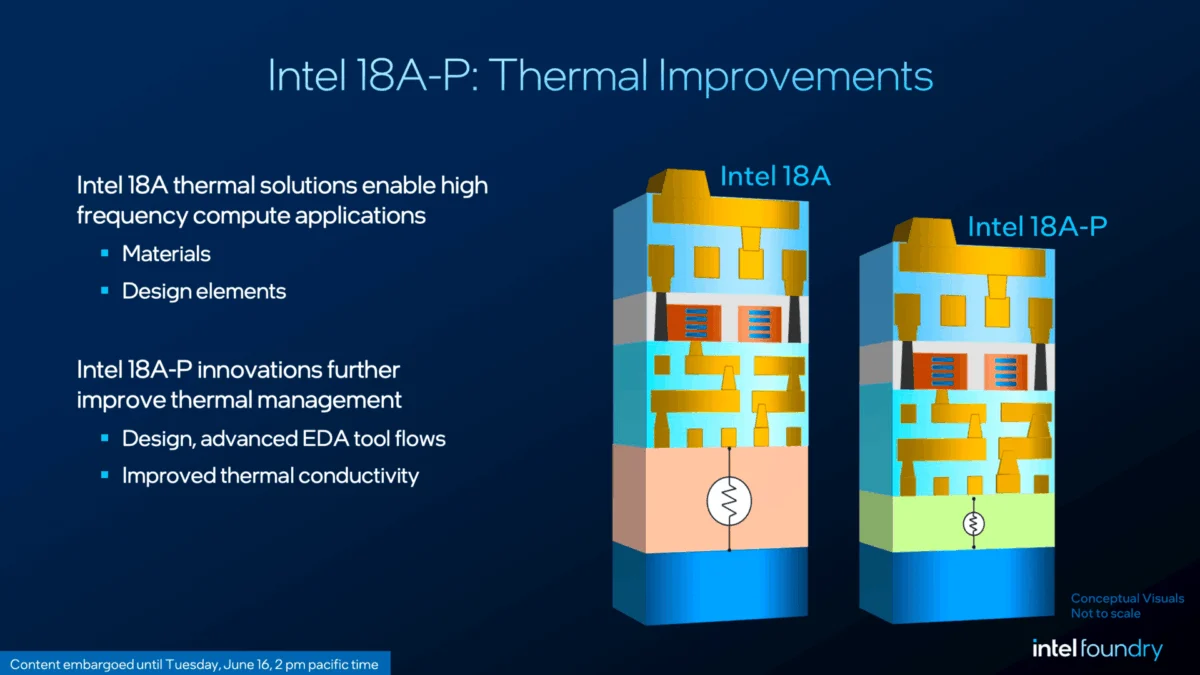
Intel Corporation has reached a pivotal juncture in its aggressive "IDM 2.0" strategy. With the semiconductor industry watching closely, the company has officially pulled back the curtain on Intel 18A-P, an evolutionary refinement of its foundational 18A process node. Currently in "risk production," this "Superset" technology is designed not just to improve performance, but to rebuild the fundamental trust between Intel and its foundry partners. Scheduled for a 2027 rollout, the process represents a calculated move to harmonize high-performance computing (HPC) demands with manufacturing reliability.
Main Facts: What is Intel 18A-P?
Intel 18A-P is positioned as an optimized, high-efficiency derivative of the base 18A process. In the world of semiconductor manufacturing, a "Superset" approach allows Intel to leverage the existing ecosystem, design rules, and intellectual property (IP) blocks developed for 18A, ensuring that the transition for internal and external chip designers is virtually seamless.

The core value proposition of 18A-P is its ability to offer designers a choice between two distinct paths:
- Energy Efficiency: Achieving the same performance level as the base 18A process while reducing total energy consumption by 18 percent.
- Performance Uplift: Maintaining the same power envelope while delivering a 9 percent increase in raw performance.
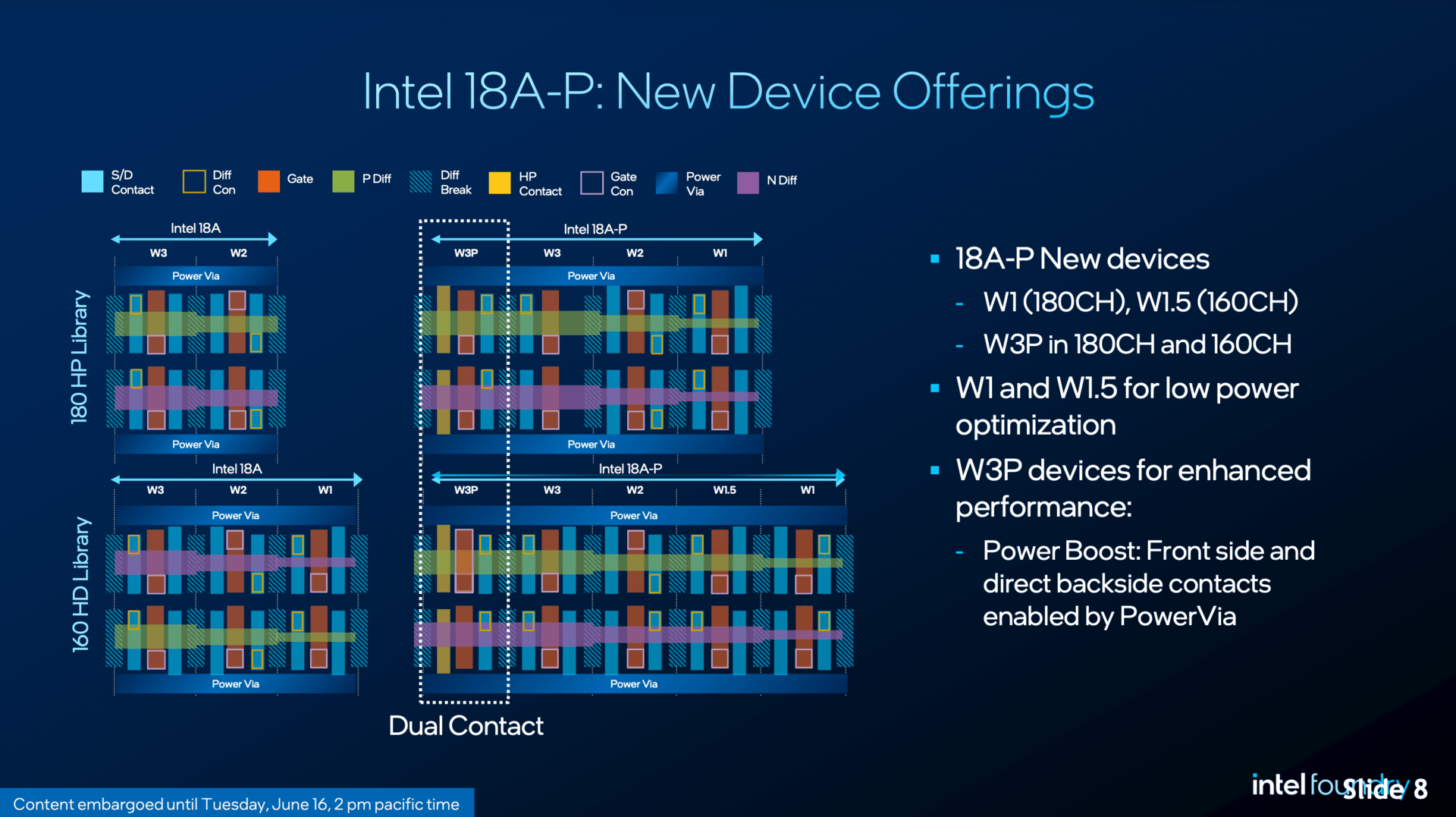
This dual-path optimization provides flexibility for high-performance computing architects, allowing them to balance thermal constraints against computational throughput. Furthermore, Intel has integrated a "Power Boost" feature, a specialized solution designed to squeeze additional clock speeds out of chips at the expense of higher power draw—a configuration specifically tailored for the demanding workloads of the server and data center markets.

Chronology: The Path to 2027
To understand the significance of 18A-P, one must look at the timeline of Intel’s recent manufacturing journey.
- April 2025: Intel officially transitioned its base 18A process into "risk production." This marked a critical milestone in CEO Pat Gelsinger’s turnaround plan.
- Late 2025 – 2026: The industry observed a steady ramp-up in production volumes, though Intel has since admitted that early yields were challenging, requiring iterative adjustments to the process.
- Present Day: Intel 18A-P enters risk production. The company is applying the lessons learned from the "yield curve" of 18A to ensure that the 18A-P ramp-up is significantly smoother and more predictable.
- 2027 Target: This is the year Intel expects the first high-volume commercial products to hit the market using 18A-P, most notably the upcoming Intel Diamond Rapids Xeon processors. These next-generation server chips will feature a P-core-only architecture, signaling Intel’s commitment to using this node as the backbone of its HPC strategy.
Supporting Data: Technical Optimizations and "Skew Corners"
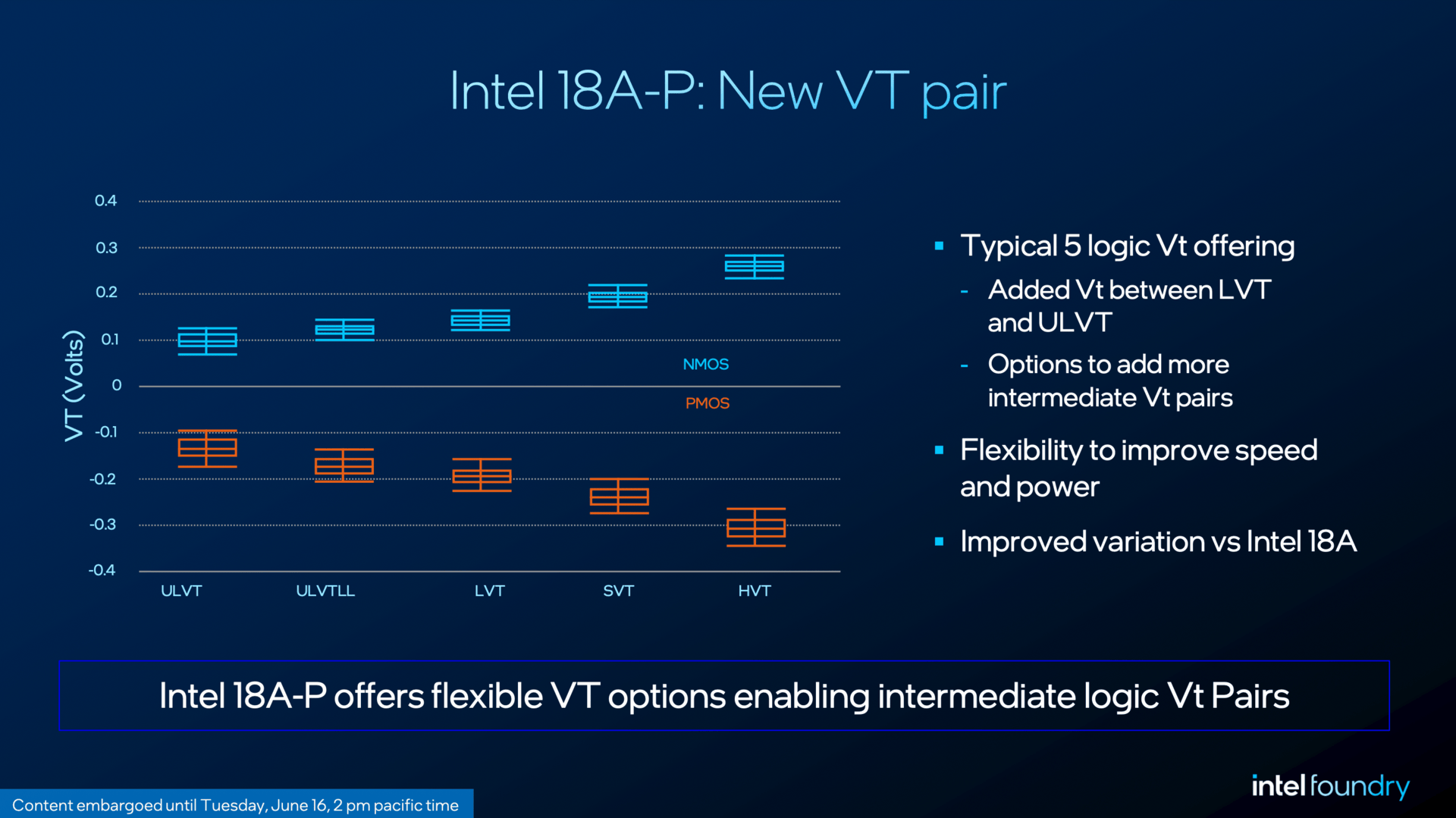
A significant portion of the technical refinement in 18A-P involves addressing long-standing, often unspoken challenges in silicon manufacturing. One of the most critical areas is the reduction of "Skew Corners."

Understanding Skew Corners
In semiconductor design, a "Skew Corner" represents the extreme boundary of process variation—the permissible range of fluctuations in voltage and temperature that a chip can tolerate while still functioning within spec. Historically, Intel’s processes have required designers to account for a wider range of these variations than the industry standard. By tightening these tolerances and moving closer to industry benchmarks, Intel 18A-P allows for a more stable design environment. Fewer variations mean fewer "worst-case" scenarios to design for, which inherently leads to better performance and more reliable yields.
Material Science and Power Delivery
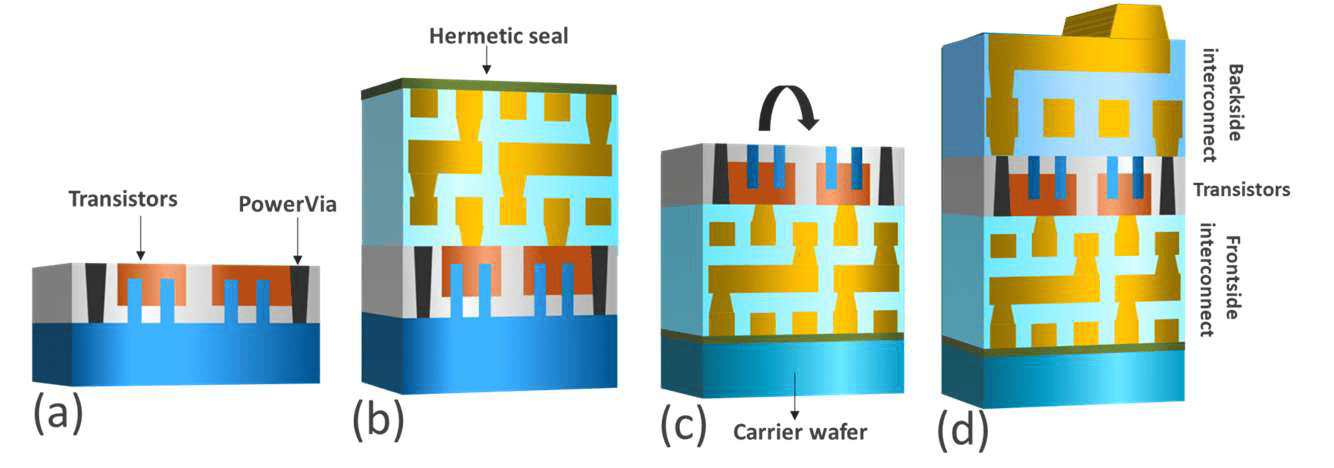
Intel has also overhauled its thermal management systems. The "Thermal Handler Wafer" used in the production process is now thinner and composed of a new, more efficient material. This is particularly relevant because 18A and 18A-P utilize Backside Power Delivery (PowerVia).
The manufacturing process involves a complex sequence:
- Front-side patterning: Initial integration of transistors and contacts.
- Carrier bonding: The wafer is bonded to a carrier and inverted 180 degrees.
- Wafer thinning: The backside is thinned to reveal the buried power rails.
- Backside interconnects: Finalization of the power delivery network.
By optimizing the thermal characteristics of the carrier wafer, Intel has improved the heat dissipation profile during this inversion process, addressing a major technical hurdle that previously limited clock speeds and thermal headroom in early 18A implementations.
Official Responses and the "Trust" Factor
Intel’s leadership is acutely aware that technical superiority is useless if it is not backed by execution. In the past, Intel struggled with shifting roadmaps and delays, which eroded the confidence of potential foundry customers.
When asked about the lack of specific external partners for 18A-P, Intel executives shifted the conversation to the concept of "Trust." They acknowledge that the industry requires predictable, on-time delivery of manufacturing milestones. Intel 18A-P is being presented as the first major "trust milestone" in this new era.

While rumors continue to circulate regarding potential partnerships with major industry players like Apple or Nvidia, Intel remains tight-lipped. The company’s focus is clearly on demonstrating that the 18A-P process is not just a theoretical advancement, but a production-ready reality that can be utilized by third parties for high-margin, high-complexity silicon.
Strategic Implications: Why 18A-P Matters
The decision to focus 18A-P specifically on the HPC segment—rather than mobile or consumer-grade hardware—is a strategic move to differentiate Intel from competitors like TSMC. By specializing, Intel avoids direct comparisons in markets where power-per-watt optimization looks vastly different than in the data center.
The HPC Focus
The confirmation of Diamond Rapids as an 18A-P product confirms that Intel is doubling down on the server market. In the AI era, where the demand for high-performance compute is insatiable, having a process node that can reliably deliver high clock speeds without catastrophic heat issues is a massive competitive advantage.
Learning from the Past
The transition from 18A to 18A-P is fundamentally a "lessons-learned" exercise. Intel has acknowledged that during the initial 18A rollout, yield curves were not as aggressive as initially projected. By implementing 18A-P, Intel is effectively "straightening" the yield curve, ensuring that the transition from risk production to volume manufacturing is shorter and more cost-effective.

Competitive Landscape
As TSMC and Samsung continue to push the boundaries of sub-2nm processes, Intel’s "Superset" strategy offers a more conservative, yet highly reliable, alternative for companies that cannot afford the risks associated with entirely new node architectures. By providing a stable, high-performance platform, Intel is attempting to capture the "trust" of large-scale chip designers who are tired of the volatility in the current foundry landscape.
Conclusion
Intel 18A-P is more than just an iteration of a chip-making process; it is a signal of maturity. By addressing the technical nuances of backside power delivery, tightening the tolerances of skew corners, and focusing on the specific, rigorous needs of the HPC market, Intel is attempting to rewrite the narrative of its foundry division.

While the 2027 release date may seem distant to some, the "risk production" phase currently underway suggests that the company is on a trajectory to move past its previous manufacturing stumbles. If Intel can successfully execute this transition and gain the trust of major industry players, 18A-P could well be the engine that propels them back to the forefront of the global semiconductor industry.
Note: This report contains technical data provided by Intel under a non-disclosure agreement, with the release timing strictly controlled to meet the company’s internal roadmap disclosures.

 Layla Zulfa
 Nana Muazin