Laily UPN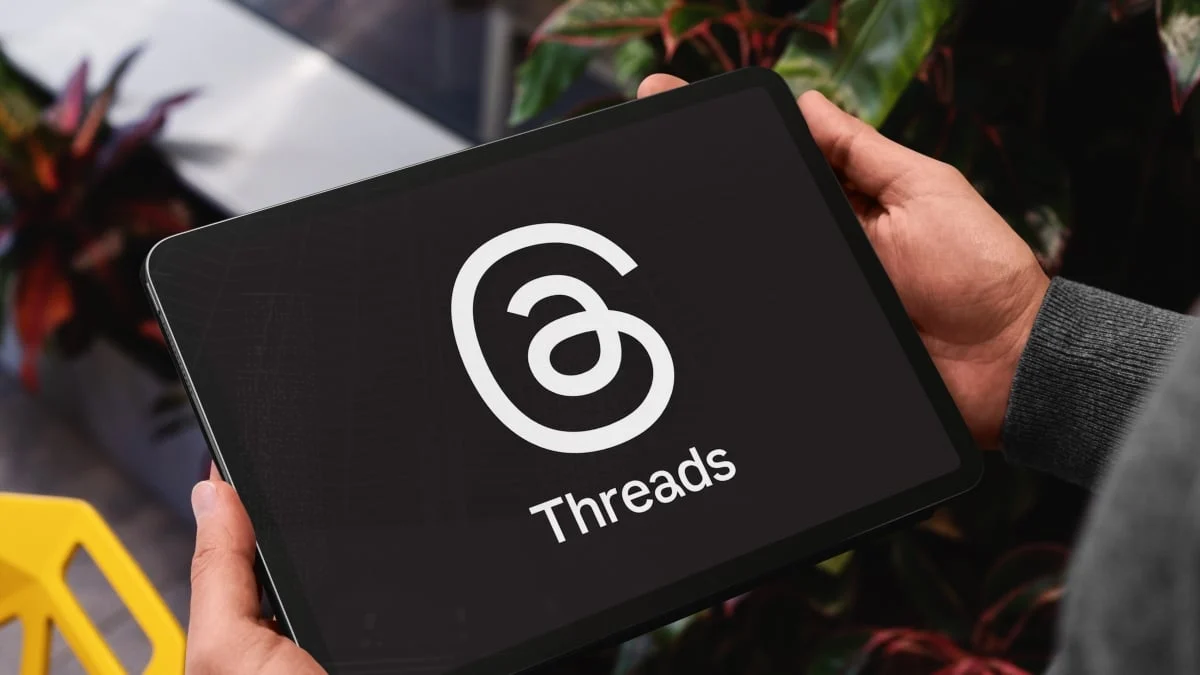
In a move that signals a significant shift in how social media platforms interact with generative intelligence, Meta has begun testing a feature that embeds its flagship AI directly into the public discourse of Threads. By introducing a dedicated account, @meta.ai, the company is inviting its users to tag the bot in posts and replies, effectively positioning the AI as a participant in real-time social commentary.
This development, while ostensibly designed to provide context and fact-checking, draws immediate and unavoidable comparisons to the "Grok" feature on X (formerly Twitter). As Meta expands its AI footprint across its entire ecosystem—including WhatsApp, Instagram, and Facebook—the integration into Threads represents the most public-facing deployment of its new "Muse Spark" model to date.
The Mechanics of Meta’s New AI Integration
The core of this new feature is simplicity: users can interact with Meta AI just as they would any other user. By typing "@meta.ai" into a post or a reply thread, a user can trigger the bot to provide additional context, summarize complex topics, or offer a fact-check on viral claims.
The implementation is currently in an early beta phase. According to reports, the rollout is being strategically phased, beginning in markets including Malaysia, Saudi Arabia, Mexico, Argentina, and Singapore. This regional testing allows Meta to observe how global audiences utilize the AI in diverse linguistic and cultural contexts before a wider, global deployment.
For users concerned about the intrusion of synthetic voices in their social feeds, Meta has included built-in control mechanisms. The @meta.ai account can be muted or blocked, and its public replies can be hidden, ensuring that the integration remains optional rather than mandatory for the average user.
Chronology of Meta’s AI Expansion
Meta’s journey toward this level of AI ubiquity did not happen overnight. It is the culmination of a multi-year pivot toward generative artificial intelligence under CEO Mark Zuckerberg.
- Initial AI Integration (2023): Meta began embedding AI chatbots into its messaging platforms, primarily focused on creative assistance and query-based search.
- The Muse Spark Announcement (April 2026): Meta officially unveiled the Muse Spark model, a super-intelligent suite of AI architectures designed to be "omnipresent" across all Meta applications.
- The Pilot Phase (Current): The testing of the @meta.ai handle on Threads serves as the "public stress test" for the Muse Spark model, moving it from private chats to public, high-velocity feeds.
- Cross-Platform Strategy: Simultaneously, Meta is rolling out "side chats" on WhatsApp, a feature that allows for private AI queries that do not interrupt the flow of group conversations, signaling a sophisticated, multi-modal approach to AI deployment.
Supporting Data and Technical Context
The Muse Spark model is not merely a chatbot; it is a fundamental infrastructure update to Meta’s backend. Unlike previous iterations of Meta’s AI, which were often siloed within specific query windows, Muse Spark is designed to interact with the "contextual stream" of social media.
Technical documentation from Meta’s research division suggests that Muse Spark utilizes a multi-layered verification protocol. When tagged in a public post, the model is designed to pull data from a curated set of reputable sources to provide objective context. However, the efficacy of this model in real-world scenarios remains the subject of intense scrutiny, particularly when dealing with "fast-moving" news where definitive facts may not yet be established.
Furthermore, the "side chat" functionality in WhatsApp demonstrates Meta’s commitment to "contextual privacy." By allowing users to query the AI without surfacing the answer to the entire group, Meta is attempting to solve the "interruptive AI" problem that has plagued earlier iterations of conversational bots.
Official Responses and Strategic Intent
Meta’s official stance, as articulated in their recent blog posts, is one of empowerment. The company frames the @meta.ai integration as a tool for "democratizing information access." By putting a sophisticated AI assistant in every user’s pocket, Meta aims to reduce the friction associated with verifying claims or seeking information during a heated social media debate.
"We believe that AI should be a companion, not a distraction," a Meta spokesperson noted in recent correspondence. The goal, according to the company, is to ensure that users have the tools necessary to navigate an increasingly complex information environment without having to leave the platform to perform manual searches.
The company has also been quick to emphasize its commitment to safety guardrails. Having observed the tumultuous rollout of competing models, Meta has invested heavily in "red-teaming"—a process where internal and external teams attempt to force the AI to produce harmful, biased, or incorrect content—to ensure that the public-facing version of @meta.ai adheres to strict community standards.
Implications: The "Grok" Comparison and Beyond
The comparison to X’s "Grok" is both inevitable and fraught with tension. On X, Grok has become a lightning rod for controversy. From surfacing pro-Nazi content to generating sycophantic praise for its owner, Elon Musk, Grok has served as a cautionary tale regarding the dangers of allowing large language models to operate in a largely unmoderated, high-velocity environment.
The Risks of Public-Facing AI
The primary risk for Meta lies in the "reply-guy" effect. If the @meta.ai account becomes a tool for trolling or if it is tricked into generating controversial output, it could severely damage the brand equity of the Threads platform. Unlike a private chatbot, a public AI reply is permanent, indexable, and capable of being screenshotted, shared, and scrutinized by millions.
The Regulatory Landscape
Meta is also operating under a microscope. With the European Union’s AI Act and various pending regulations in the United States, the deployment of an automated, public-facing intelligence puts Meta in the crosshairs of regulators who are increasingly wary of automated misinformation. If @meta.ai begins to consistently hallucinate or provide biased summaries of political events, the legal and public relations fallout could be catastrophic.
The Evolution of Social Interaction
Perhaps the most profound implication is the shift in human-to-human communication. When an AI is present in every conversation, the nature of "discourse" changes. Users may begin to defer to the AI as an arbiter of truth, effectively handing over the "fact-checking" role to a corporate entity. This centralized control of truth-verification is a power that carries immense societal responsibility.
Conclusion: A High-Stakes Bet
Meta is taking a massive, calculated risk by bringing AI into the open, public arena of Threads. While the potential for added value—such as immediate context on trending topics—is high, the potential for failure is equally significant.
As the rollout continues, the tech industry will be watching closely. Will @meta.ai prove to be the reliable, helpful assistant that Meta promises, or will it fall victim to the same pitfalls that have haunted its predecessors? The success of this experiment will likely determine the future of AI integration in social media for years to come. For now, the "Grok-like" experiment is underway, and the world is watching to see if Meta can succeed where others have stumbled, or if they are simply inviting a new, more complex set of problems into the heart of their digital community.


 Ammar Sabilarrohman
 Rifan Muazin