


For nearly a century, humanity has engaged in a high-stakes, perpetual arms race against the bacterial kingdom. In the early 20th century, the advent of antibiotics felt like a definitive victory, turning once-lethal infections into manageable inconveniences. However, we now understand that these drugs were never truly our own inventions; they were borrowed assets, harvested from the very microbes that have been waging turf wars for survival for eons.
Today, that arms race has reached a perilous stalemate. As bacteria evolve ingenious defenses against our current arsenal, the pipeline for new, effective antibiotics has dwindled to a trickle. Now, a groundbreaking study published in Nature offers a potential turning point. Researchers at McMaster University, led by biomedical scientist Eric Brown, have identified a sophisticated genetic "megacluster" that orchestrates a multi-pronged attack on a single bacterial metabolic pathway. This discovery not only promises a new category of treatments but fundamentally shifts the paradigm of antibiotic discovery from hunting for "magic bullets" to adopting nature’s own strategy of combination therapy.
The Evolution of the Microbial Arms Race
To understand the significance of this discovery, one must look at the history of modern medicine. More than 80 percent of the antibiotics currently used in clinical settings are "natural products"—compounds synthesized by soil-dwelling bacteria to eliminate their competitors. For decades, the pharmaceutical industry operated on a model of "mine and tweak": extracting these molecules, modifying them slightly to enhance their potency, and deploying them against human pathogens.
However, evolution is a relentless force. Bacteria have developed complex mechanisms to neutralize these drugs, ranging from enzymatic degradation to the active pumping of toxins out of their cells. As we have overused these precious resources, resistance has climbed to critical levels.
The primary weakness of our current approach is its reliance on single-molecule intervention. A pathogen often only needs a single genetic mutation to bypass the effect of a specific drug. By contrast, the newly discovered "megacluster" suggests that nature has developed a far more robust system: a coordinated, multi-stage siege that is significantly harder for bacteria to circumvent.
The Megacluster: A Symphony of Sabotage
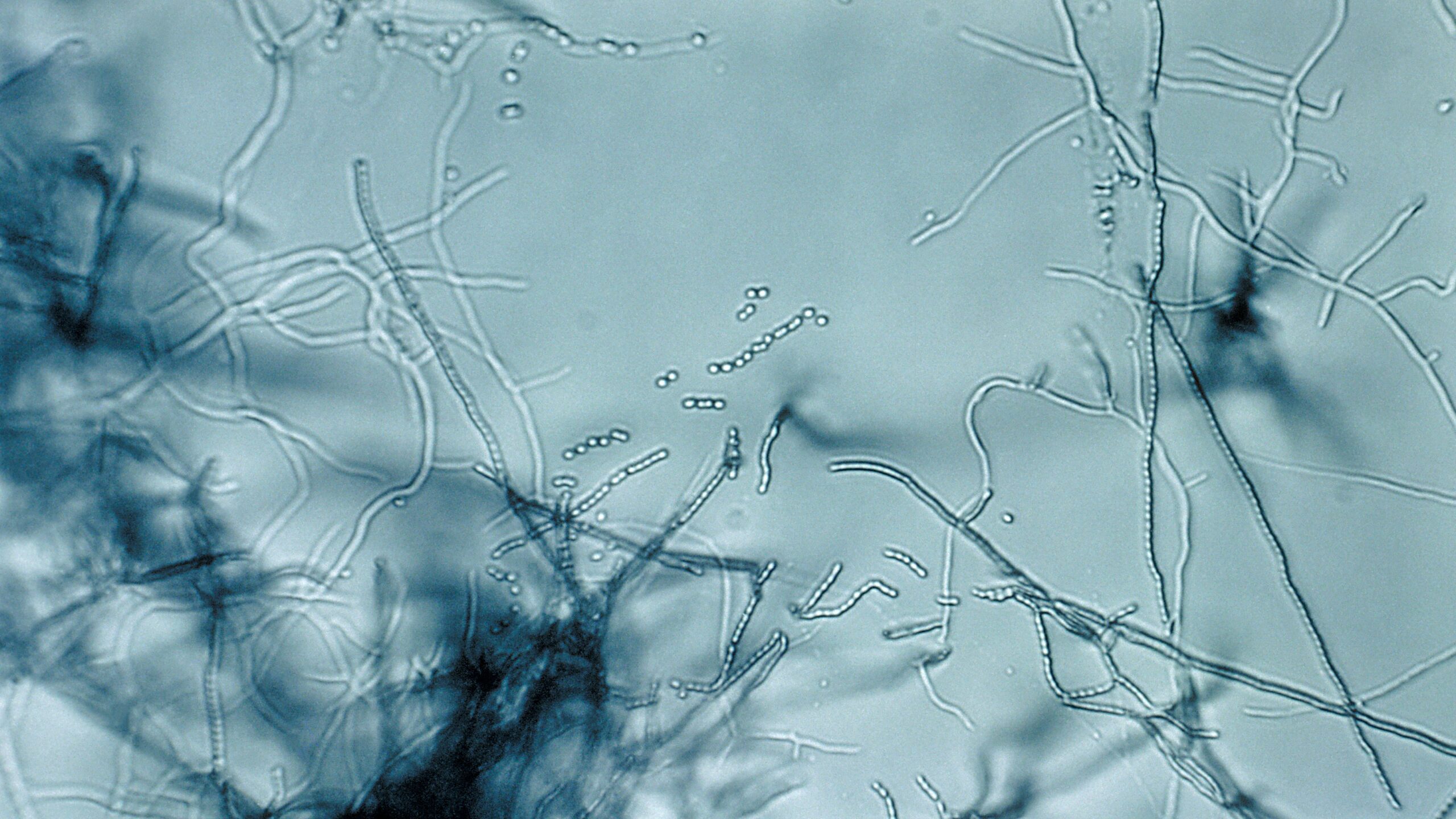
The discovery, made within Streptomyces—a genus of soil bacteria long celebrated as the "gold mine" of antibiotic research—centers on a massive, previously overlooked block of genes. While researchers traditionally scan genomes for individual Biosynthetic Gene Clusters (BGCs) capable of producing a single defensive molecule, Dr. Brown’s team identified a "megacluster": a cluster of four distinct genetic groups working in concert.
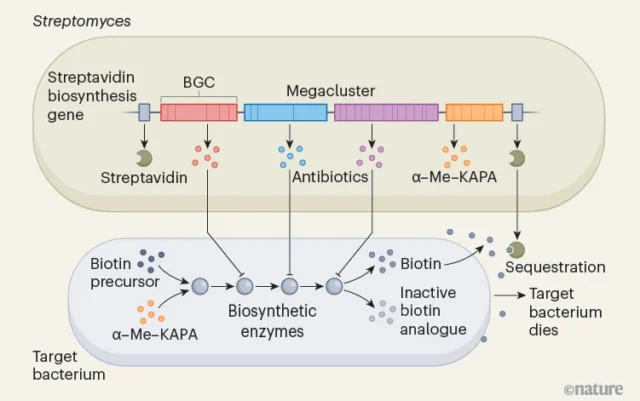
This megacluster targets the metabolic pathway bacteria use to synthesize biotin (Vitamin B7). Biotin is an essential cofactor for enzymes critical to cellular growth and virulence. While some bacteria can "scavenge" biotin from their environment, it is rarely available in sufficient quantities, forcing them to rely on an internal, evolutionarily conserved pathway to produce it.
The megacluster essentially sets a trap for this pathway:
- The Direct Inhibitors: Three of the gene clusters produce specific antibiotic molecules—stravidins, acidomycins, and dapamycins—each designed to inhibit a different enzyme within the biotin biosynthesis chain.
- The "Dummy" Molecule: The fourth cluster produces a compound known as α-Me-KAPA. This molecule acts as a decoy, masquerading as a precursor to biotin. It hijacks the pathway, effectively flooding the cell with a useless, non-functional biotin lookalike.
- The Sequestering Protein: Flanking this genetic machinery is the code for streptavidin, a protein that binds to and sequesters any trace of biotin, ensuring the cell remains starved of the nutrient even if it attempts to scavenge it from outside.
Chronology of the Discovery
The identification of this system did not happen overnight. The path to this discovery was paved by years of genomic data accumulation and a shift in how researchers approach bacterial cultivation.
- 1940s–1970s: The "Golden Age" of antibiotic discovery leads to the identification of streptomycin and other foundational drugs from Streptomyces.
- 1980s–2010s: Genomic mining becomes the standard. Researchers focus on identifying discrete BGCs to isolate single-molecule antibiotics. The complexity of gene interactions is often overlooked.
- 2023–2025: Dr. Eric Brown’s team at McMaster University begins utilizing advanced bioinformatics to look for higher-order genetic architecture, specifically questioning why certain genes in Streptomyces are consistently found in close proximity.
- June 2026: The study is published in Nature, detailing the functional synergy of the anti-biotin megacluster. Experimental validation in both test tubes and mice demonstrates that the combination of these four molecules is significantly more potent than any single component.
Supporting Data and Technical Implications
The potency of the megacluster lies in its synergy. In laboratory testing, individual molecules produced by the cluster showed moderate antibacterial activity. However, when the full suite of molecules was applied, the effect was exponential.
The researchers noted that the megacluster is a masterclass in "evolutionary engineering." By hitting a critical metabolic pathway at four distinct points, the bacteria ensure that even if a target microbe evolves resistance to one molecule, the other three—plus the decoy molecule and the sequestering protein—continue to exert lethal pressure. This makes the development of resistance not just difficult, but statistically improbable for the pathogen.
This discovery highlights a significant flaw in historical research methods: most bacteria are grown in nutrient-rich media in the lab. In such environments, they do not need to deploy these complex, energy-intensive "siege" systems. By studying Streptomyces in conditions that better mimic the competitive, resource-scarce environment of the soil, the McMaster team was able to unlock a system that has been hiding in plain sight for decades.
Official Responses and Scientific Consensus
The scientific community has received the findings with a mixture of excitement and cautious optimism. Steven Rutherford, a microbial sciences expert at Genentech, provided an authoritative commentary accompanying the study.
"The discovery of a natural megacluster that encodes the production of synergistic biotin-synthesis inhibitors suggests that evolution has already identified effective combinations of antibacterials that act through distinct mechanisms," Rutherford stated. He emphasized that the work provides a "road map" for future genome mining, moving the field away from the hunt for individual "hits" and toward the reconstruction of native, synergistic systems.
However, experts remain grounded. While the discovery is a scientific breakthrough, it is not an immediate clinical solution. The journey from identifying a genetic cluster to developing a safe, mass-produced antibiotic is fraught with hurdles.

The Path Ahead: From Discovery to Clinical Reality
While the potential of the megacluster is clear, several challenges remain:
- Optimization: Researchers must determine how to deliver these molecules effectively within the human body. The pharmacokinetics of four distinct molecules, potentially working in combination, require precise calibration to ensure safety.
- Manufacturing: Recreating the biosynthetic output of a megacluster in a laboratory or industrial setting is significantly more complex than synthesizing a single molecule.
- Clinical Trials: Before any such treatment can reach patients, it must undergo rigorous, multi-phase clinical trials to establish safety, dosage, and efficacy against diverse, human-infecting pathogens.
Despite these hurdles, the shift in strategy is arguably the most significant outcome of the study. If we can learn to mimic these natural "combination therapies," we could fundamentally reset our relationship with antibiotic resistance.
"The architecture of the anti-biotin megacluster provides a paradigm for naturally evolved combination therapies," Dr. Brown and his colleagues concluded. As genomic sequencing technology continues to improve, the ability to identify similar megaclusters across the microbial world could open a vast, untapped vault of pharmaceutical innovation.
In our ongoing battle against superbugs, we have spent decades trying to outsmart nature. With this discovery, it appears that the most effective path forward is to stop fighting and start learning from the masters of the arms race itself. By identifying these pre-evolved, synergistic weapon systems, we may finally be able to restock our antibiotic arsenal and gain the upper hand in the struggle for human health.











