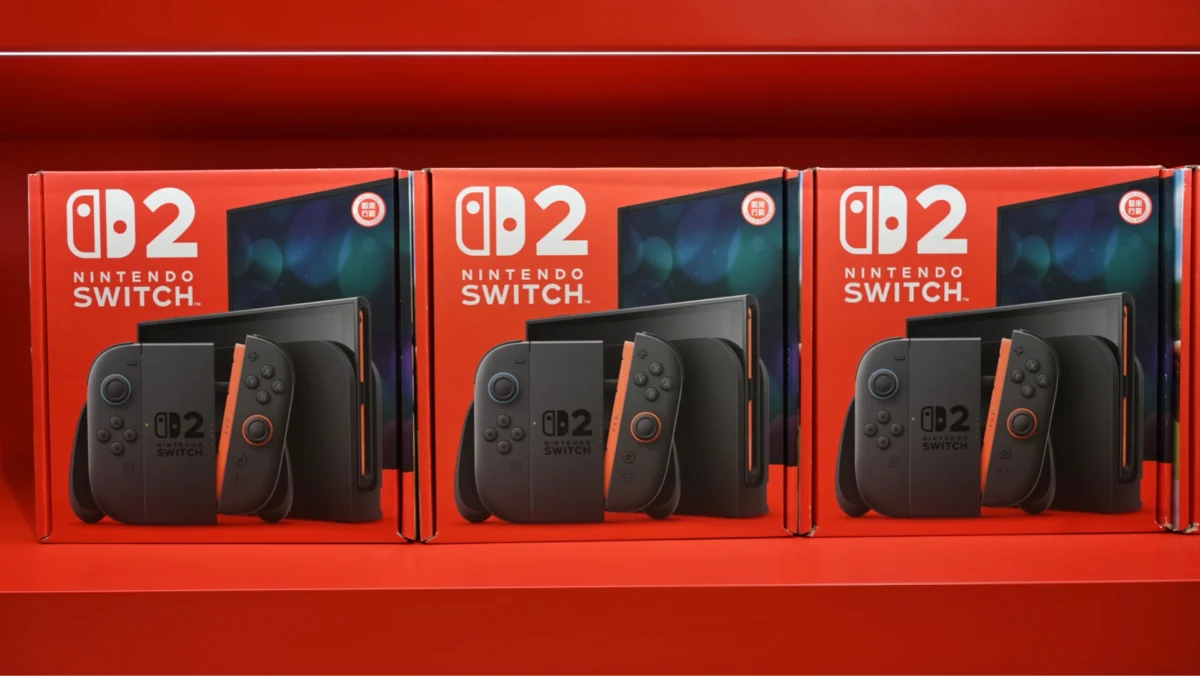
The gaming landscape is currently grappling with a significant reality check from Kyoto. Nintendo, the titan of interactive entertainment, has reported a startling 41% decline in Nintendo Switch 2 sales for the second fiscal quarter (July 1 to September 30, 2026) compared to the same period in the previous year. According to data provided by CNBC, the company managed to move only 2.67 million units during this three-month window. This performance, while reflective of a cooling market, has sent ripples through the investor community, prompting urgent questions about the console’s long-term viability and Nintendo’s strategy for the remainder of the fiscal year.
Chronology: From Anticipation to Adjustment
To understand the current state of Nintendo’s hardware sales, one must look back at the trajectory of the Switch 2 since its launch. The console entered the market with immense fanfare, serving as the successor to one of the best-selling gaming systems of all time. However, the path to sustained dominance has been anything but linear.
The Warning Signs (June 2026)
As early as the beginning of June 2026, industry analysts were already sounding the alarm. Serkan Toto, CEO of Kantan Games Inc.—a consultancy specializing in the Japanese gaming industry—predicted that Nintendo’s aggressive pricing strategy would inevitably encounter resistance. At the time, Nintendo was navigating a complex global economic environment characterized by inflation and fluctuating currency values. Toto noted that the hardware’s pricing, particularly when coupled with the lack of a "killer app" release cadence, would likely stifle adoption rates during the summer months.
The Summer Stagnation (July – September 2026)
As predicted, the second fiscal quarter proved to be a difficult stretch. During these months, sales figures plummeted to 2.67 million units. This dip was exacerbated by a series of price adjustments implemented in key territories. Having already raised the price in Japan earlier in the year, Nintendo expanded these hikes to the United States and Canada. The move was designed to protect margins in the face of rising manufacturing and logistics costs, but the consumer response was immediate and negative. The intersection of higher price tags and a maturing early-adopter base resulted in the 41% year-over-year decline that now dominates financial headlines.
Supporting Data: Dissecting the Decline
The 41% drop is not merely a number; it is a reflection of shifting consumer behavior and macroeconomic pressure. When evaluating the health of the Switch 2, several data points warrant closer inspection.
Territorial Impact and Pricing Sensitivity
The price hikes in the U.S., Canada, and Japan represent a fundamental shift in Nintendo’s philosophy. Historically, Nintendo has been hesitant to raise the barrier to entry for its consoles, preferring to rely on software attach rates to drive profitability. By opting for a hardware price increase, the company signaled that it could no longer subsidize the console as heavily as it did with the original Switch.
However, the data suggests that the hardware price elasticity is higher than Nintendo anticipated. In Japan, where the economic climate remains sensitive, the cumulative impact of multiple price hikes has clearly dampened demand among casual gamers. While core fans may be willing to absorb these costs, the "mass-market appeal" that defined the original Switch’s success is proving more difficult to replicate at the current price point.
The Fiscal Year Forecast
Despite the dismal Q2 performance, Nintendo has stubbornly maintained its forecast of 16.5 million units sold by March 31, 2027. This represents an aggressive target for the second half of the fiscal year. To reach this goal, Nintendo must move approximately 13.8 million units between October 2026 and March 2027—a feat that will require a massive uptick in sales velocity during the upcoming holiday season and the subsequent spring quarter.
Official Responses and Investor Pressure
Nintendo’s management has adopted a posture of cautious optimism, though the tone is increasingly tempered by the demands of its shareholders.
Corporate Assurance
In official statements following the earnings report, Nintendo executives emphasized that the 16.5 million unit target remains achievable. The company pointed to a robust software pipeline and the cyclical nature of hardware sales as primary drivers for the expected recovery. They argued that the second quarter is traditionally a "quiet" period for hardware, and that the concentration of major releases scheduled for the end of the year will naturally drive console adoption.
The Investor Perspective
Investors, however, remain unconvinced by internal assurances alone. There is palpable pressure on Nintendo to accelerate its release schedule. Shareholders are calling for more "big hits"—flagship titles that leverage Nintendo’s premier intellectual properties (IP)—to act as hardware sellers. The sentiment on Wall Street is that the Switch 2’s success is currently too reliant on legacy excitement and not enough on new, compelling experiences that justify the higher hardware cost. Without a major software catalyst, investors fear the 16.5 million unit goal is more aspirational than realistic.
Implications for the Future
The current situation presents a pivotal moment for Nintendo. The company is at a crossroads where it must balance its commitment to high-margin hardware with the necessity of maintaining a broad user base.
The "Content-First" Strategy
The primary implication of this earnings report is that Nintendo must pivot toward a "content-first" sales strategy. If hardware is no longer the primary draw at a higher price point, software must become the anchor. This suggests that the remainder of the fiscal year will be defined by an intense focus on software marketing and perhaps a shift in promotional strategies, such as console-game bundles that offer perceived value to the consumer.
Competitive Positioning
Furthermore, Nintendo must keep an eye on the broader market. With competitors continuing to iterate on their own hardware and digital offerings, the Switch 2 cannot afford to lose momentum for too long. If the console remains stagnant, it risks ceding ground to platforms that offer more competitive pricing or a more consistent flow of new experiences.
The Long-Term Outlook
Despite the current turbulence, it is important to view this through the lens of Nintendo’s long-term history. The company has navigated fiscal dips before, often emerging with a renewed focus on innovation. Whether the Switch 2 can overcome its current slump depends on three critical factors:
- The Holiday Window: The console’s performance in the November-December shopping season will be the ultimate test of its market appeal.
- Software Execution: The quality and quantity of major titles released in Q3 and Q4 will determine if the "attach rate" can compensate for the lower hardware sales.
- Consumer Sentiment: Nintendo must successfully communicate the value proposition of the Switch 2 to a wider audience, moving beyond the core fan base that has already made their purchase.
As we move toward the close of the 2026-2027 fiscal year, all eyes will be on Kyoto. The industry remains hopeful that Nintendo can course-correct, but the path ahead is undeniably steep. The 41% drop serves as a stark reminder that even the most successful gaming companies are not immune to the realities of market saturation and price sensitivity. Whether this is merely a temporary speed bump or the beginning of a more protracted period of decline remains to be seen, but the urgency within the company is now, for the first time in this generation, palpable.