Evan Lee Salim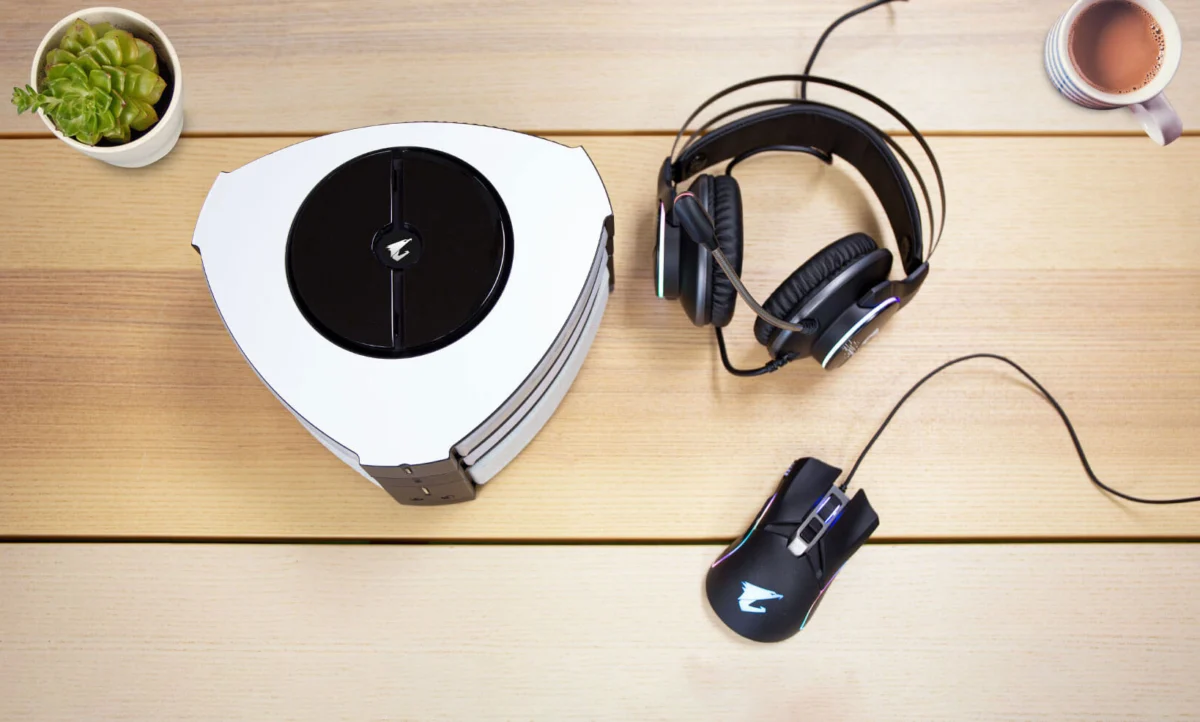
In the ever-evolving landscape of high-performance computing, the "desktop PC" has remained a remarkably static form factor for decades. While internal components have shrunk and efficiency has soared, the fundamental chassis—a monolithic tower housing a motherboard, GPU, and power supply—has persisted. Aorus, the gaming-centric arm of industry giant Gigabyte, has recently attempted to disrupt this orthodoxy with "Project Cielo." A concept PC that looks more like a piece of avant-garde architecture than a gaming rig, Cielo challenges our very definition of what a gaming PC should be. However, as the industry dissects its modular, 5G-enabled design, questions are emerging: Is this the future of gaming, or merely a solution in search of a problem?
The Main Facts: Deconstructing the Cielo Concept
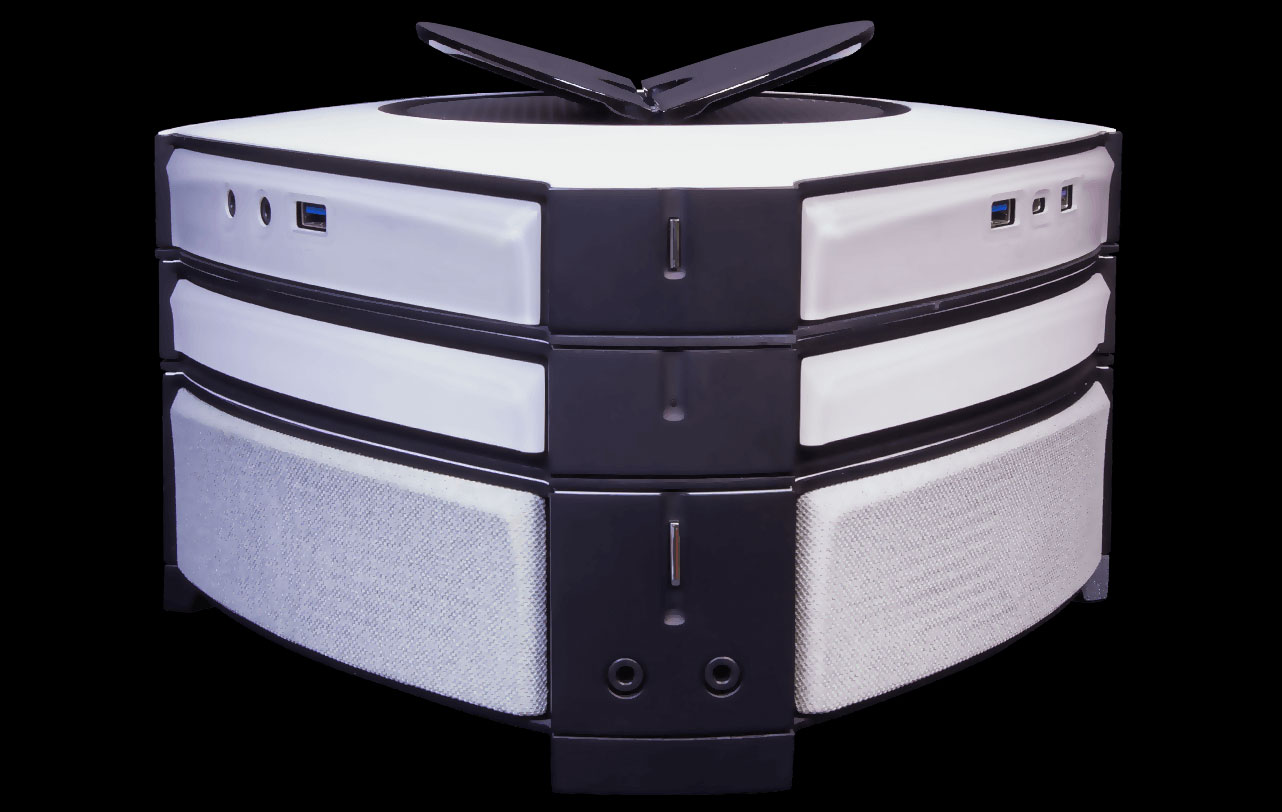
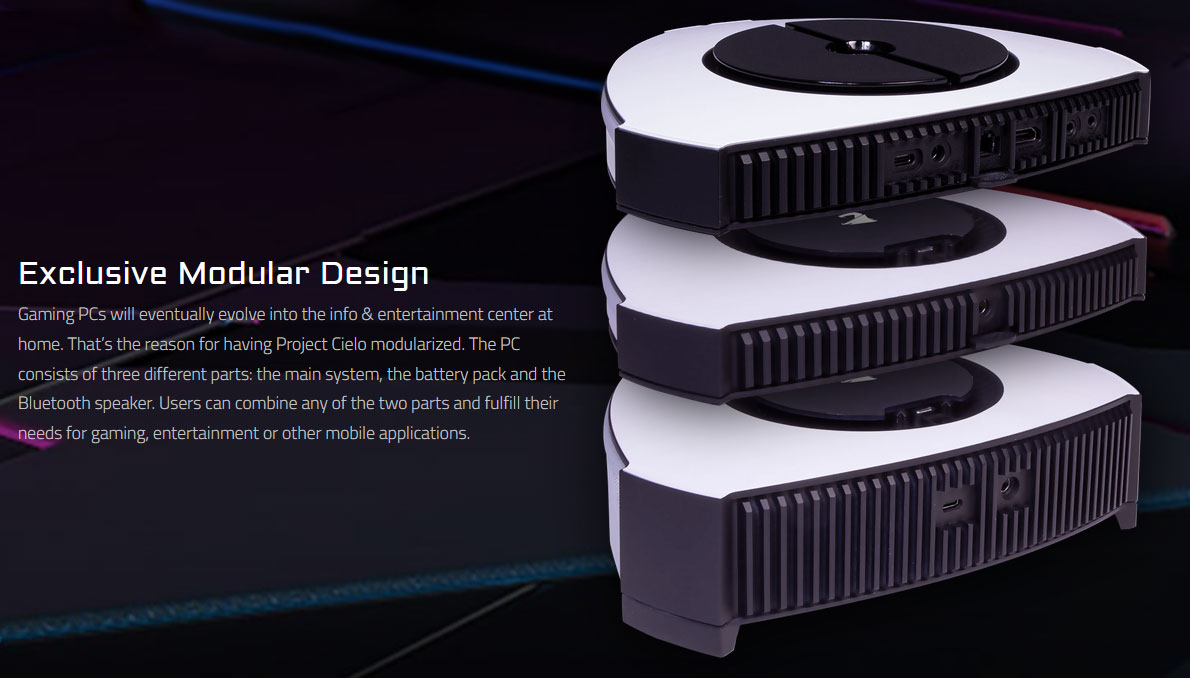
Project Cielo is a conceptual modular system characterized by its striking, triangular, stacked aesthetic. Unlike traditional gaming towers, which prioritize raw thermal headroom and ease of upgradeability, Cielo opts for a bifurcated, segmented approach.
The system consists of three distinct modules:
- The Main System Unit: Occupying the top position, this is the "brain" of the operation. It houses the primary computing architecture required to drive games.
- The Battery Pack: Situated in the middle, this module suggests that Aorus is moving toward a semi-portable desktop experience, allowing the system to operate independent of a wall outlet for a limited duration.
- The Bluetooth Speaker: The base module functions as an audio component, rounding out the vertical stack.
Perhaps the most visually arresting feature of the top unit is the inclusion of "angel cake-like" wings—a pair of retractable 5G antennas. This inclusion signals that Aorus is not merely interested in hardware performance, but in network-integrated computing. By design, the system is meant to be highly adaptable; Aorus suggests that users can mix and match these segments depending on their immediate needs, whether that be high-fidelity local gaming, portable entertainment, or cloud-based streaming.
Chronology: The Road to Project Cielo
The emergence of Project Cielo came as a surprise to the tech community in late 2021. While Gigabyte has historically focused on incremental improvements to motherboards and GPUs, the announcement marked a pivot toward experiential design.
- October 2021 (The Announcement): Aorus officially unveiled Project Cielo via a press release, positioning it as a vision for the "future of gaming." The marketing materials emphasized flexibility, mobility, and the integration of next-generation connectivity.
- The PR Campaign: Aorus leaned heavily into the concept of "5G-enabled PC gaming." They argued that the traditional barriers to mobile gaming—latency and bandwidth—would soon be relics of the past.
- The Feedback Loop: Following the initial reveal, the tech press began to scrutinize the utility of the device. Critics noted the conspicuous absence of technical specifications, such as processor architecture, GPU capabilities, or battery life metrics.
- The Road to CES: As the industry looked toward CES 2022, speculation mounted regarding whether a functional prototype would appear. To date, the project remains a "concept," leaving it in a state of suspended animation—part visionary ambition, part marketing exercise.
Supporting Data: The Case for 5G Integration
Aorus’ argument for Project Cielo rests on the transformative potential of 5G technology. According to their official statements, the shift from traditional wired or 4G networks to 5G offers a "near-instant access" experience for cloud gaming.
The Connectivity Shift
In theory, 5G provides:
- Ultra-low Latency: Essential for competitive gaming where milliseconds determine the outcome.
- High Bandwidth: Allowing for high-resolution streaming from cloud servers directly to the device.
- Mobility: By detaching the PC from a physical Ethernet port, the user is theoretically free to move the "system" around a living space or between locations.
However, the supporting data for this shift remains contentious. While 5G speeds are impressive, they are highly dependent on environmental variables and infrastructure saturation. Furthermore, the "mobility" argument is hindered by the physical form factor of the Cielo, which—despite its modularity—is not a tablet or a laptop. It lacks an integrated screen, forcing the user to tether the system to an external display, which largely defeats the purpose of "portable" gaming.
Official Responses and Strategic Intent
Aorus has been notably guarded regarding the technical specifications of Project Cielo. In their official communication, the company stated: "Users can combine any of the two parts and fulfil their needs for gaming, entertainment or other mobile applications."
This statement is the crux of the project’s identity crisis. By suggesting that users might not even need the "Main System" module to achieve their goals, Aorus is essentially decoupling the concept of a "gaming PC" from the PC itself. Industry analysts interpret this as a strategic attempt by Gigabyte to stay relevant in a world where local hardware is increasingly bypassed by streaming services like Xbox Cloud Gaming or NVIDIA GeForce Now.
However, the response from the consumer base has been mixed. While many admire the aesthetic bravery of the triangular stack, the lack of a clear value proposition—why buy a modular, 5G-enabled tower when a high-end laptop or a handheld gaming PC provides a superior all-in-one experience?—has led to a skeptical reception.
Implications: The Future of the Desktop PC
Project Cielo raises fundamental questions about the direction of the PC gaming industry.
The Death of the "Desktop"
If Aorus is correct, the future of the desktop is not in the hardware—it is in the connectivity. The implication here is that the physical "chassis" will become a peripheral, a modular box that facilitates cloud-based experiences rather than raw local processing. This is a radical departure for a company like Gigabyte, which has built its empire on selling internal components like motherboards and GPUs.
The Modular Fallacy
The concept of a "modular PC" has been attempted many times, most notably with projects like Razer’s Project Christine. These projects often fail because of proprietary connectors, thermal management issues, and the sheer complexity of maintaining inter-module communication. Cielo risks falling into the same trap. If the battery module is not compatible with the next iteration of the main system, the "modular" promise evaporates, leaving the user with expensive, proprietary e-waste.
The Competition
Perhaps the most damaging implication for Project Cielo is the rise of the specialized handheld gaming device. Devices like the Steam Deck or the ASUS ROG Ally have proven that consumers want portability, but they want it with an integrated screen and controls. A modular, triangular stack that requires a power outlet, an external display, and a stable 5G connection to function seems to be solving a problem that the market has already addressed with more elegant, integrated solutions.
Conclusion: A Visionary Concept or a Misguided Prototype?
Project Cielo is a fascinating study in design, yet it struggles to find its footing in the practical realities of 2024. As a piece of industrial design, it is arguably one of the most interesting concepts to emerge from a major manufacturer in recent years. It breaks the "black box" monotony of the gaming industry and dares to ask if the PC can be something more than a static tower.
However, as a functional product, it faces an uphill battle. The reliance on 5G as a core pillar of a "desktop" experience is a gamble on infrastructure that is not yet universally reliable. Furthermore, the modularity feels like a solution to a problem that most gamers do not have. Most users prefer the stability of an integrated system over the "Lego-like" assembly of components, especially when that assembly offers no clear performance advantage.
As we look toward the future, Aorus may find that while Project Cielo is a wonderful conversation starter, the path forward for the gaming PC lies in refinement rather than radical, untested modularity. Whether this project makes it to retail or remains a footnote in the history of CES, it serves as a stark reminder that in the race to define the future of gaming, sometimes the most "futuristic" ideas are the ones that lose sight of what made the PC great in the first place: performance, reliability, and simplicity. For now, the verdict remains: a bold attempt, but one that leaves us hoping for more substance beneath the sleek, triangular exterior.

 Nila Kartika Wati
 Nana Muazin