

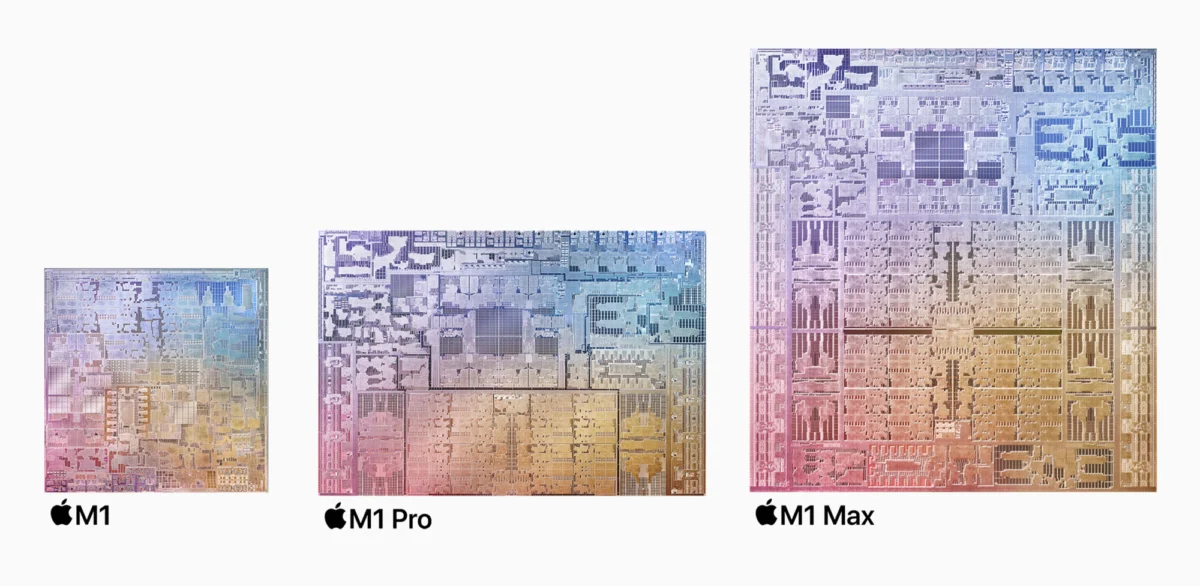
At its "Unleashed" event in Cupertino this past Monday, Apple took a definitive step toward completing its silicon independence. By unveiling the M1 Pro and M1 Max, the tech giant has not only expanded its proprietary chip portfolio but has fundamentally challenged the long-standing dominance of x86 architecture in the high-performance professional laptop segment. Built on an advanced 5nm process, these chips are engineered to serve as the heart of the completely redesigned 14-inch and 16-inch MacBook Pro models, signaling a new era for content creators, developers, and power users alike.
The Architecture of Power: Main Facts and Specifications
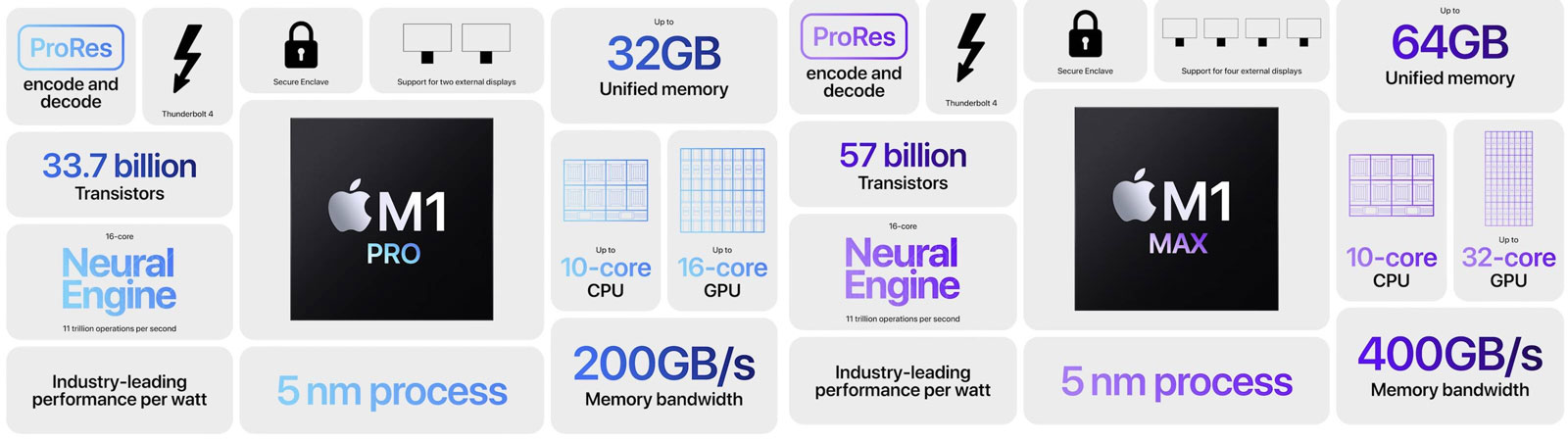
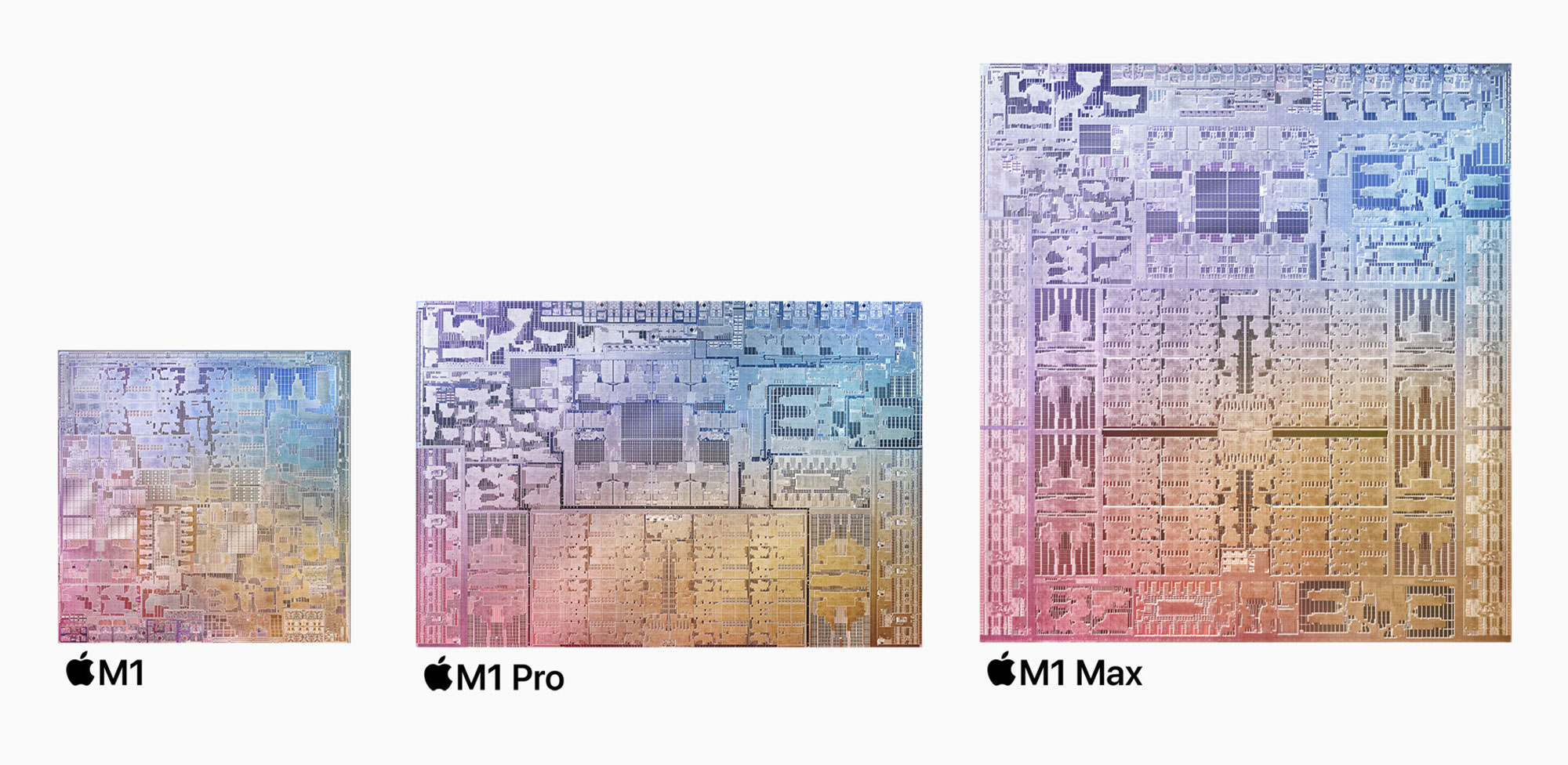
The M1 Pro and M1 Max represent the most ambitious silicon projects in Apple’s history. Packing up to 57 billion transistors—a staggering density that highlights the maturity of Apple’s silicon design team—these chips are designed to bridge the gap between portable convenience and workstation-grade capability.
At the core of these SoCs is a sophisticated architecture. The processors utilize a standard configuration of 8 high-performance (P) cores and 2 high-efficiency (E) cores, ensuring that the machine can handle intense multi-threaded workloads while maintaining battery longevity during lighter tasks. Graphics performance is equally robust, with GPUs ranging from 14 to 32 cores, paired with a unified memory architecture that scales from 16GB up to 64GB of high-bandwidth RAM. Furthermore, the inclusion of a 16-core Neural Engine provides dedicated acceleration for AI and machine learning tasks, a necessity in the modern creative workflow.
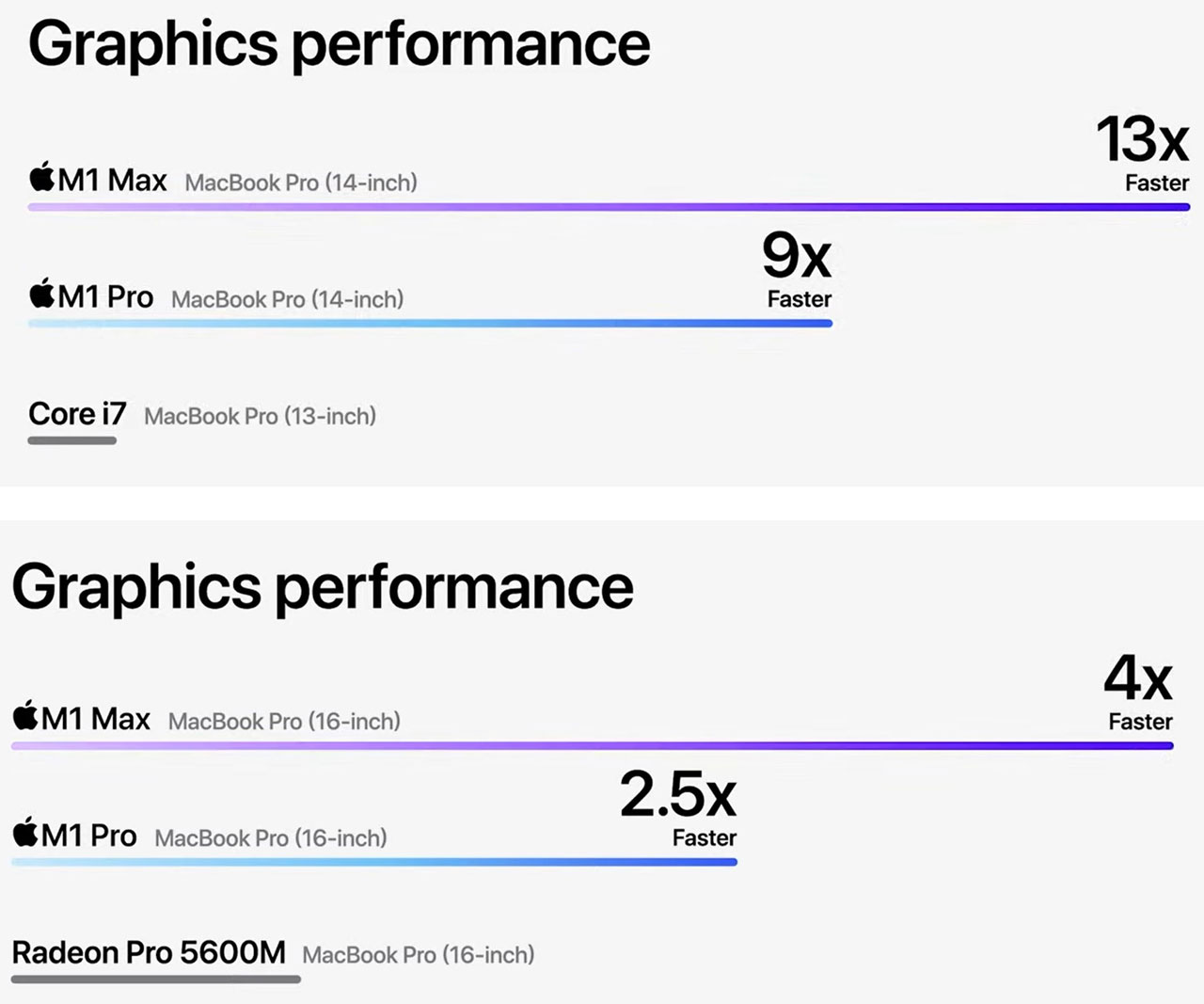
Apple’s performance benchmarks are nothing short of ambitious. The company claims these SoCs deliver up to 70 percent faster CPU performance compared to the original M1 chip and a massive 4x leap in GPU performance. These figures represent more than just incremental gains; they represent a fundamental architectural shift that redefines what a laptop can achieve in terms of thermal and computational efficiency.
A Chronological Shift: The Transition from Intel to Apple Silicon
The introduction of the M1 Pro and M1 Max is the latest milestone in Apple’s two-year roadmap to transition its entire Mac lineup away from Intel processors. This journey began in late 2020 with the launch of the original M1 chip, which debuted in the MacBook Air and 13-inch MacBook Pro. That initial move surprised the industry by delivering performance-per-watt metrics that Intel struggled to match in thin-and-light form factors.
Following the success of the M1, the arrival of the M1 Pro and M1 Max marks the halfway point of this transition. By addressing the "pro" segment, Apple is directly attacking the high-end workstation market—a space historically guarded by Intel and, more recently, bolstered by AMD’s Ryzen mobile lineup. The timeline of this transition has been aggressive, and with the release of these chips, Apple has effectively signaled that its internal engineering prowess is now sufficient to power its most demanding hardware, leaving the era of Intel-powered Macs to the history books.
Supporting Data and Performance Metrics
During the "Unleashed" keynote, Apple provided a dense array of charts and graphics designed to visualize the performance delta between its new silicon and the competition. While these internal benchmarks require external validation, the numbers provided are eye-opening.
The GPU Revolution
Apple’s comparisons against mobile discrete GPUs, such as the AMD Radeon RX 5600M, suggest that the M1 Max can achieve higher frame rates and faster rendering times while consuming significantly less power. The integration of a "Media Engine" is perhaps the most critical addition for professionals. This dedicated hardware acceleration for ProRes video codecs allows editors to playback and cut multiple streams of 8K video in real-time without stuttering. Apple notes that the M1 Max can transcode ProRes video in Compressor up to 10x faster than the previous generation of Intel-based 16-inch MacBook Pros.
Power Efficiency and Battery Longevity
Perhaps the most impressive aspect of the M1 Pro and M1 Max is not their raw power, but their efficiency. Johny Srouji, Apple’s SVP of Hardware Technologies, highlighted that the new chips offer up to six times the memory bandwidth of their predecessors. This efficiency translates to tangible real-world benefits: users of the new 16-inch MacBook Pro can expect up to 21 hours of video playback on a single charge. In a professional setting, this means the ability to render complex 3D scenes or compile massive codebases while on battery power—a feat that has historically been the "Achilles’ heel" of high-performance Windows laptops, which often throttle significantly when unplugged from the wall.
Official Responses and Industry Outlook
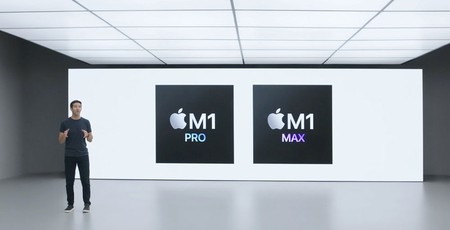
The industry response has been one of cautious excitement. Johny Srouji’s statement during the event underscored Apple’s philosophy: "M1 Pro and M1 Max represent a massive step forward for Apple silicon and are another huge leap for the Mac." He emphasized that these chips were built with specific industry bottlenecks in mind, such as memory bandwidth and hardware-accelerated video encoding.
Industry analysts are currently watching to see how these claims hold up in the wild. While the internal marketing materials are polished, the professional community—particularly in gaming and engineering—remains interested in seeing how these chips handle thermal throttling under sustained loads and how they perform in cross-platform benchmarks. The inclusion of these chips in the fifth-generation MacBook Pros suggests that Apple is not just interested in maintaining its market share, but in aggressively courting the creative professional sector that has historically relied on specialized desktop workstations.
Implications for the Future of Computing
The release of the M1 Pro and M1 Max has profound implications for the broader PC ecosystem.
The Death of the "Mobile Workstation" Trade-off
For years, the term "mobile workstation" was synonymous with heavy, bulky laptops that sacrificed battery life for performance. Apple has effectively challenged this paradigm. If the M1 Max delivers as promised, the need for massive, power-hungry thermal solutions in laptops may diminish, forcing other manufacturers to innovate in chip architecture rather than simply relying on increasing wattage.
The Ecosystem Moat
By controlling the entire vertical stack—from the silicon design to the macOS optimization and the final hardware assembly—Apple has created a significant "moat." Developers who build apps specifically for these chips, leveraging the Neural Engine and the ProRes Media Engine, will be able to offer user experiences that are virtually impossible to replicate on general-purpose hardware. This creates a powerful lock-in effect, where the performance gains for professionals are tied directly to the Apple ecosystem.
The Challenge to Intel and AMD
Intel and AMD now face a formidable competitor that is not just a customer, but a direct rival in chip design. The M1 Pro and M1 Max prove that ARM-based architecture, when properly optimized and scaled, can compete with the most advanced x86 chips on the market. This will likely accelerate the development of competitive architectures from Qualcomm and Microsoft, potentially leading to a new "golden age" of laptop innovation as the industry pivots away from the power-inefficient designs of the last decade.
Conclusion
The launch of the Apple M1 Pro and M1 Max marks a pivotal moment in the history of personal computing. By successfully migrating its most powerful hardware to its own proprietary silicon, Apple has demonstrated that its design philosophy—prioritizing efficiency, integration, and custom-tailored hardware—can yield performance results that defy conventional expectations.
As these devices reach the hands of developers, cinematographers, and engineers starting next week, the real-world performance data will undoubtedly provide a clearer picture of the impact these chips will have on the industry. However, one thing is already clear: the landscape of the professional laptop market has shifted, and the race to match Apple’s silicon performance is now the primary challenge for the rest of the computing world. For the end-user, this represents the beginning of a new chapter where portability no longer comes at the expense of power, and the limits of what a mobile computer can do are being rewritten by the team in Cupertino.











No comments yet. Be the first to join the conversation!