

The landscape of modern cinema is paved with the footprints of visionary directors—Spielberg, Scorsese, Lucas, and Coppola. Yet, behind the celluloid myth-making of the "New Hollywood" era stood an architect whose precision, emotional intuition, and narrative rigor fundamentally altered the DNA of the blockbuster. Marcia Lucas, the Academy Award-winning editor who passed away last week at the age of 80, was far more than a technician. She was the narrative heartbeat of the films that defined a generation.
While the public often associates her with the iconic space opera that changed the world, her influence extends far beyond a galaxy far, far away. From the gritty, documentary-style urgency of 1960s political dramas to the psychological intensity of the 1970s character study, Marcia Lucas was the silent hand that translated raw, messy footage into the polished, poignant masterpieces we revere today.
A Career Forged in the Cutting Room
Born Marcia Griffin, her ascent began not in the director’s chair, but in the trenches of the Sandler Film Library in the 1960s. It was here, amidst reels of stock footage, that she cultivated an extraordinary ability to see the "invisible" connections between disparate images. She learned that film was not merely recorded performance, but a rhythmic dialogue between viewer and screen.
Her transition to professional editing was accelerated by the mentorship of the legendary Verna Fields. Under Fields’ tutelage, Lucas moved from finding stock footage to shaping the narrative flow of feature films. Her early work on Haskell Wexler’s Medium Cool (1969) serves as a masterclass in synthesis. By weaving real-world, chaotic footage from the 1968 Democratic National Convention into a fictionalized narrative about a morally conflicted cameraman, Lucas helped pioneer a form of hybrid storytelling that felt dangerously real. It was this early project that solidified her philosophy: the edit is where the truth of a scene is found.
Chronology of an Influential Career
Marcia Lucas’s filmography reads like a syllabus for the most important era in American filmmaking.
- 1969 – The Rain People: Working alongside Francis Ford Coppola, Lucas demonstrated a profound understanding of character pacing. Her ability to discern when to cut for tension—as seen in the volatile exchanges between Shirley Knight and Robert Duvall—and when to let a moment breathe, such as the quiet intimacy between Knight and James Caan, showcased a maturity well beyond her years.
- 1973 – American Graffiti: When Verna Fields departed the project to work on What’s Up, Doc?, the editorial heavy lifting fell to Marcia Lucas and Walter Murch. Faced with a sprawling, multi-narrative structure, Lucas’s precise cuts transformed a low-budget experiment into a nostalgic blockbuster, earning her an Academy Award nomination.
- 1976 – Taxi Driver: Collaborating with Martin Scorsese, Lucas helped craft one of the most psychologically complex portraits in cinema history. She understood that Travis Bickle was a man defined by his own fragmented reality. Through frantic, jarring cuts and strategic dissolves, she and her co-editors externalized Bickle’s descent into madness, creating a rhythm that mirrored the claustrophobia of New York City.
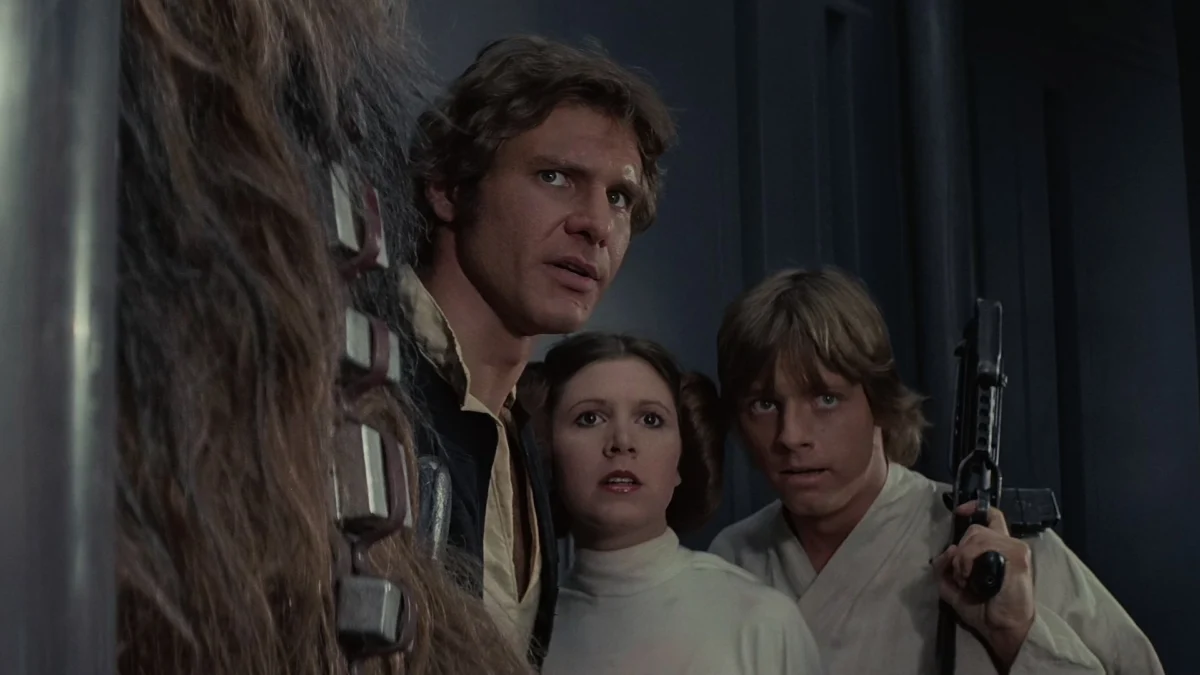
- 1977 – Star Wars: This remains her most famous contribution. George Lucas’s initial cut of A New Hope was famously described as "stuffy" and "plodding." Marcia Lucas’s editorial intervention was not merely technical; it was structural. She reconfigured the pacing, pruned the exposition, and sharpened the emotional stakes, transforming a dense sci-fi concept into a kinetic, character-driven adventure.
The Human Element: Shaping the Narrative
Perhaps the most compelling aspect of Marcia Lucas’s legacy is her insistence on the "human element." In an industry dominated by male auteurs often obsessed with technical spectacle or cynical realism, Lucas consistently advocated for the emotional core of a scene.
Her fingerprints are all over the most iconic moments of the 20th century. When George Lucas struggled with the mid-point of Star Wars, it was Marcia who suggested that Obi-Wan Kenobi should die. This single, decisive narrative choice shifted the film from a standard space serial into a story about generational growth, sacrifice, and the emotional weight of legacy.
In Alice Doesn’t Live Here Anymore (1974), she championed the use of an unscripted, improvised scene between Ellen Burstyn and young actor Alfred Lutter. She recognized that the raw, imperfect dialogue contained a depth of character that polished, scripted lines could never replicate. Similarly, in Raiders of the Lost Ark, she famously questioned the film’s abrupt, bureaucratic ending. Her insistence that the audience needed a moment with Marion Ravenwood provided the romantic closure that the film desperately needed, cementing the chemistry between Indiana Jones and his leading lady.

Official Responses and Industry Recognition
The industry has been quick to acknowledge the void left by her passing. Peers and film historians alike have noted that while George Lucas is often viewed as the sole visionary of the Star Wars universe, the "Lucas" in the credits was always a partnership.
"Marcia didn’t just cut the film; she understood the people in it," one industry colleague noted. "She was the filter through which the director’s grand ambitions were made human."
Critics and scholars have begun a re-evaluation of her work, moving away from the "unsung hero" narrative and toward a more accurate framing: she was a co-author of the blockbuster era. Her Oscar for Star Wars was not a token of her husband’s success, but a recognition of a singular editorial vision that prioritized narrative fluidity over technical self-indulgence.
Implications for Future Filmmakers
The legacy of Marcia Lucas serves as a vital reminder to the next generation of editors and directors: editing is not the final step in the process; it is the final act of writing.
Her work suggests that the greatest cinematic moments are often born from the quiet decisions made in a dark room: knowing when to cut away from a scream to show the reaction of a bystander; knowing when to let a long, uncomfortable silence persist; and knowing when a hero’s sacrifice is necessary for the audience to truly invest in the journey.
As modern cinema moves further into an era of digital manipulation and relentless pacing, the "Marcia Lucas method"—a blend of rhythmic precision and profound empathy—feels more relevant than ever. She proved that a film’s success isn’t measured by the scale of its explosions or the budget of its production, but by the ability of its editor to connect with the audience on a deeply human level.
Marcia Lucas leaves behind a world that is, in many ways, a product of her own cutting room floor. She taught us that heroes aren’t just the ones on the screen; sometimes, they are the ones holding the scissors, ensuring that every frame matters. While she may no longer be here to refine the final cut, her contributions remain etched into the history of film, a permanent testament to the power of the edit.











No comments yet. Be the first to join the conversation!