

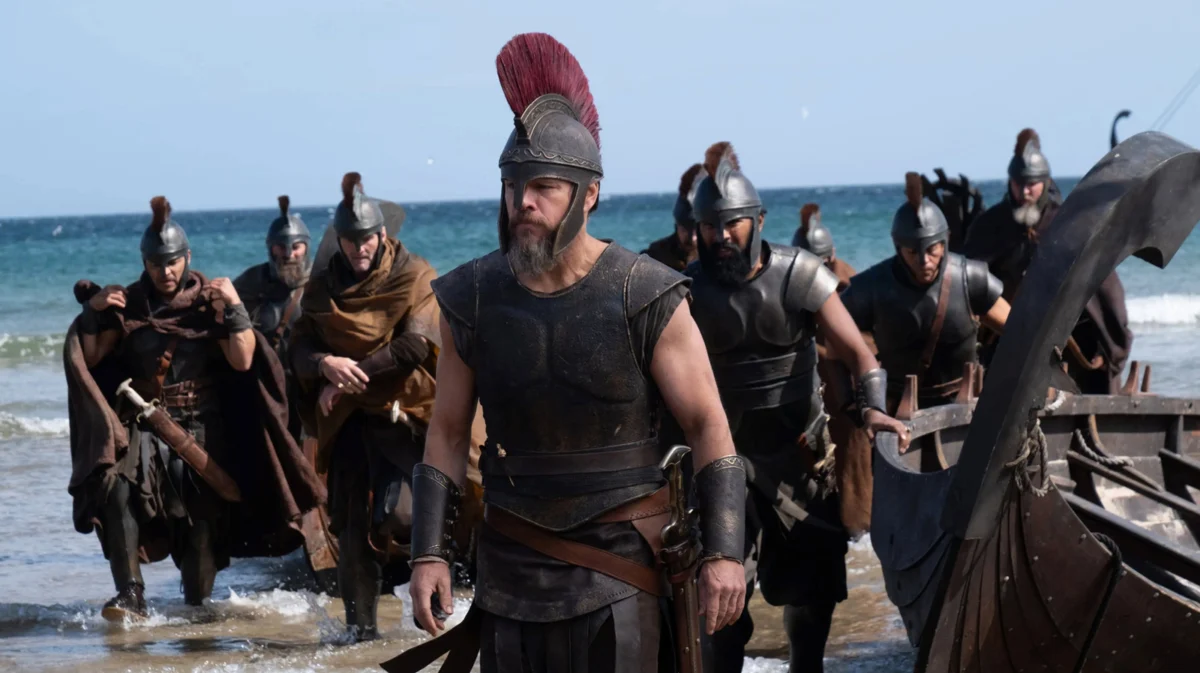
The release of Christopher Nolan’s The Odyssey has ignited a firestorm of discourse that extends far beyond the typical metrics of box office performance and critical reception. As audiences flock to theaters to witness Matt Damon’s transformation into the legendary King of Ithaca, a central point of contention has emerged: the film’s treatment of the divine. For decades, the Homeric epic has been synonymous with literal manifestations of Olympian power—raging storms summoned by Poseidon, Athena appearing in shimmering disguises, and the overt hand of fate guiding mortals to their doom.
However, Nolan’s interpretation, true to his signature directorial style, offers a starkly different experience. By grounding the supernatural in the psychological and the ambiguous, the filmmaker has crafted a narrative that prioritizes the existential weight of human decision-making over the spectacle of divine intervention. For purists who arrived expecting a high-fantasy odyssey, the result is a polarizing departure from tradition.
The Chronology of an Epic Reimagining
To understand the controversy, one must look at the trajectory of the production. From the moment the project was announced, speculation mounted regarding how the director of Inception and Oppenheimer would handle source material so deeply rooted in the miraculous.
- Pre-Production (2022-2023): Rumors circulated about Nolan’s desire to "demystify" the Greek pantheon. The casting of Matt Damon as Odysseus and Zendaya as Athena suggested a focus on character-driven drama rather than CGI-heavy deity battles.
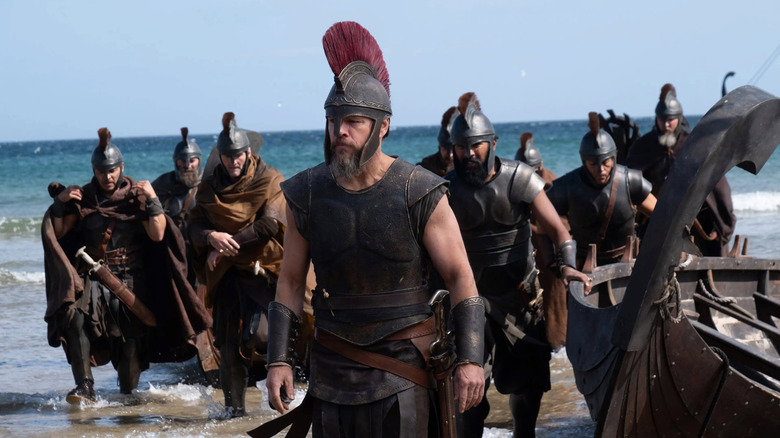
- The Production Phase: On-set reports and early footage emphasized practical effects and location shooting in the Mediterranean, reinforcing the "grounded" aesthetic.
- The Release (2024): Upon the film’s debut, the "modern dialogue" debate dominated initial reviews, but the discourse quickly pivoted to the film’s treatment of the gods. The film’s opening title card, "In a time of apparent magic," set a tone of skepticism that would define the entire viewing experience.
- Post-Release Reaction: Audiences are now grappling with a film that treats the gods not as literal, thunderbolt-wielding entities, but as manifestations of the protagonist’s fractured psyche and moral decay.
Supporting Data: The "Grounded" Methodology
Christopher Nolan has long been a proponent of physical reality over digital artifice. In his Dark Knight trilogy, he famously eschewed excessive green screen, opting for practical stunts that made Gotham City feel like a tangible urban center. Applying this philosophy to The Odyssey—a text defined by its impossible geometry and divine meddling—was always going to be a high-wire act.
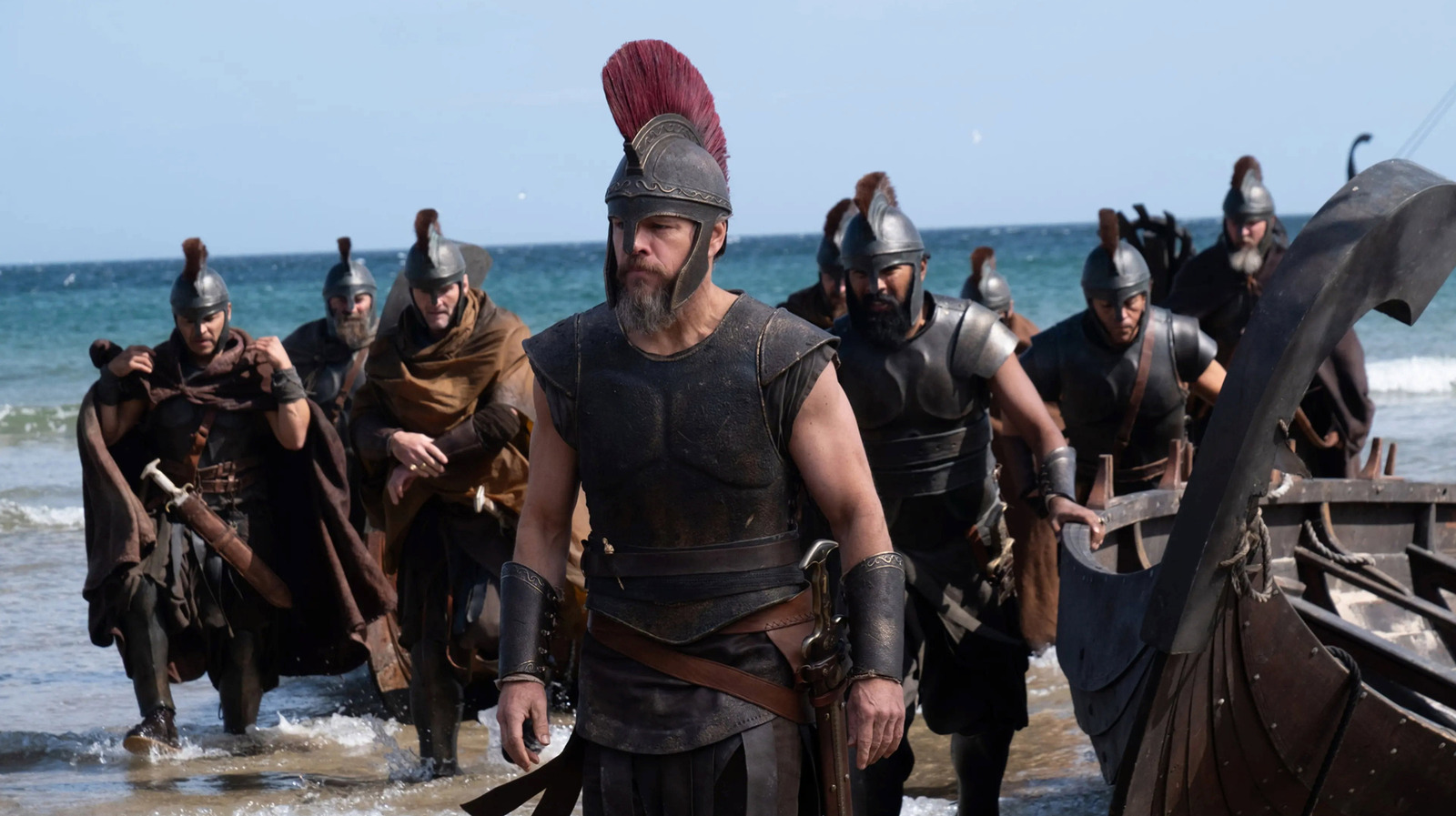
According to behind-the-scenes interviews with the production design team, the film utilizes lighting and cinematography to create "perceived divinity." When Odysseus faces the wrath of Poseidon, the audience sees a violent, unforgiving sea, but the camera refuses to show the god himself. The film forces the viewer to ask: Is this divine punishment, or is it merely the chaos of the natural world reacting to the hubris of men who have lost their way?
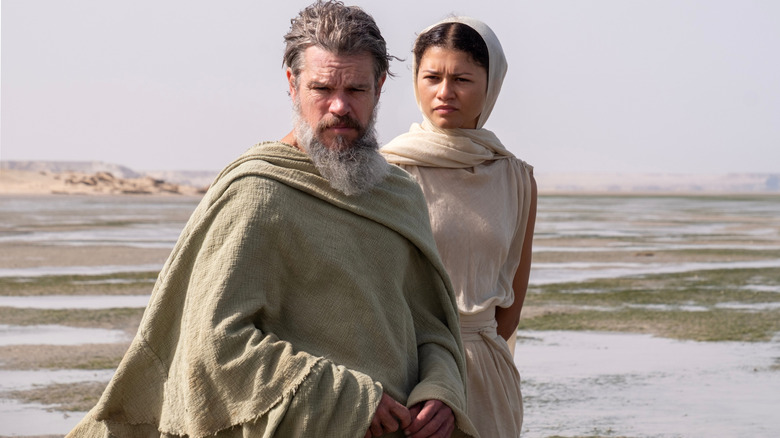
Furthermore, the characterization of Athena (Zendaya) acts as a case study for this approach. She is framed as a specter, appearing only in moments of extreme emotional duress for Odysseus. By keeping her presence ambiguous—never confirming whether she is a goddess or a projection of his own subconscious guilt—Nolan strips the myth of its comfort, replacing it with the cold, hard reality of trauma.
Official Responses and Creative Justification
In recent press junkets, Christopher Nolan has defended the "human-first" approach. "The Odyssey is not about the gods; the gods are merely the lens through which humans understand their own failures," Nolan remarked during a recent screening event. "If you take away the literal, supernatural element, you are left with the core of the story: a man trying to reconcile with his past, his violence, and his humanity."
The studio, Universal Pictures, has supported this vision, positioning the film as a "psychological epic." While some executives initially feared the lack of traditional "fantasy" elements might alienate a younger demographic raised on superhero cinema, the film’s early performance suggests that a more cerebral, grounded approach to classic literature has a dedicated and vocal audience.
Implications: The Death of the Literal Myth?
The success or failure of The Odyssey carries significant implications for the future of mythological adaptations in Hollywood.
The Shift Toward Psychological Realism
For years, the "Snyder-esque" style—characterized by slow-motion action, stylized aesthetics, and explicit depictions of the supernatural—has been the gold standard for Greek myths on screen. Nolan’s pivot suggests a potential shift toward "psychological realism." If The Odyssey succeeds, it could pave the way for other directors to treat ancient texts not as action-adventure vehicles, but as deep-dive character studies.
The Audience Divide
The current backlash highlights a fundamental divide in modern film culture. On one side are the "purists," who believe that an adaptation of The Odyssey is fundamentally broken if it does not include the literal intervention of the gods. They view the removal of the divine as an erasure of the poem’s soul. On the other side are the "thematicists," who argue that the essence of Homer’s work is the human journey, and that stripping away the literal magic actually reveals the underlying truth of the narrative more clearly.
Recontextualizing the "Hero"
Perhaps the most significant implication is how the film treats the heroism of Odysseus. By removing the gods as external puppet masters, the film places the entire burden of morality on Odysseus himself. He is no longer a hero driven by fate; he is a man driven by choice. This creates a much more uncomfortable, modern protagonist—one who must account for the destruction he has wrought at Troy and the lives lost on his journey without the convenient excuse of divine destiny.
The Final Act: Is the Disappointment Valid?
Is it fair to call the film a disappointment? That depends entirely on what the viewer seeks. If the goal is a faithful, beat-for-beat translation of the Homeric experience—including the sirens, the Circe transformations, and the literal presence of the Olympians—Nolan’s film will undoubtedly frustrate. It is a work of interpretation, not a work of documentation.
However, if we view the film as a dialogue with the source material, it becomes a profound, if challenging, piece of cinema. The climax, in which Odysseus witnesses the destruction of Athena’s effigy, serves as a poignant metaphor for the film’s central thesis: the death of the old gods of myth in the face of the emerging, brutal realities of the human condition.
As we look toward the future of epic filmmaking, The Odyssey serves as a stark reminder that some stories are too big to be contained by literalism. Whether this adaptation is remembered as a stroke of genius or a misguided attempt to force high art into a low-fantasy box remains to be seen. What is certain, however, is that Nolan has once again forced the audience to look at a familiar story with fresh, albeit skeptical, eyes.
"Defy the gods… at your own peril," the marketing warns. In Nolan’s case, he has defied the gods of traditional storytelling, and in doing so, he has invited the audience to decide for themselves whether the myth still holds power when the magic is stripped away. The Odyssey is currently in theaters, and for better or worse, it demands that you bring your own gods—or lack thereof—to the table.










