

The landscape of speculative fiction and science continues to evolve at a breakneck pace. From the shores of Barbados to the high-stakes legal battles in Manhattan, and even further into the debris-cluttered reaches of geostationary orbit, this month’s developments reflect a community in transition. As authors navigate the challenges of AI, horror writers formalize their poetic legacy, and cinema continues to push the boundaries of dystopian storytelling, the intersection of art and reality has never been more vibrant—or more volatile.
1. The Wayward Wormhole: An Epochal Shift in Barbados
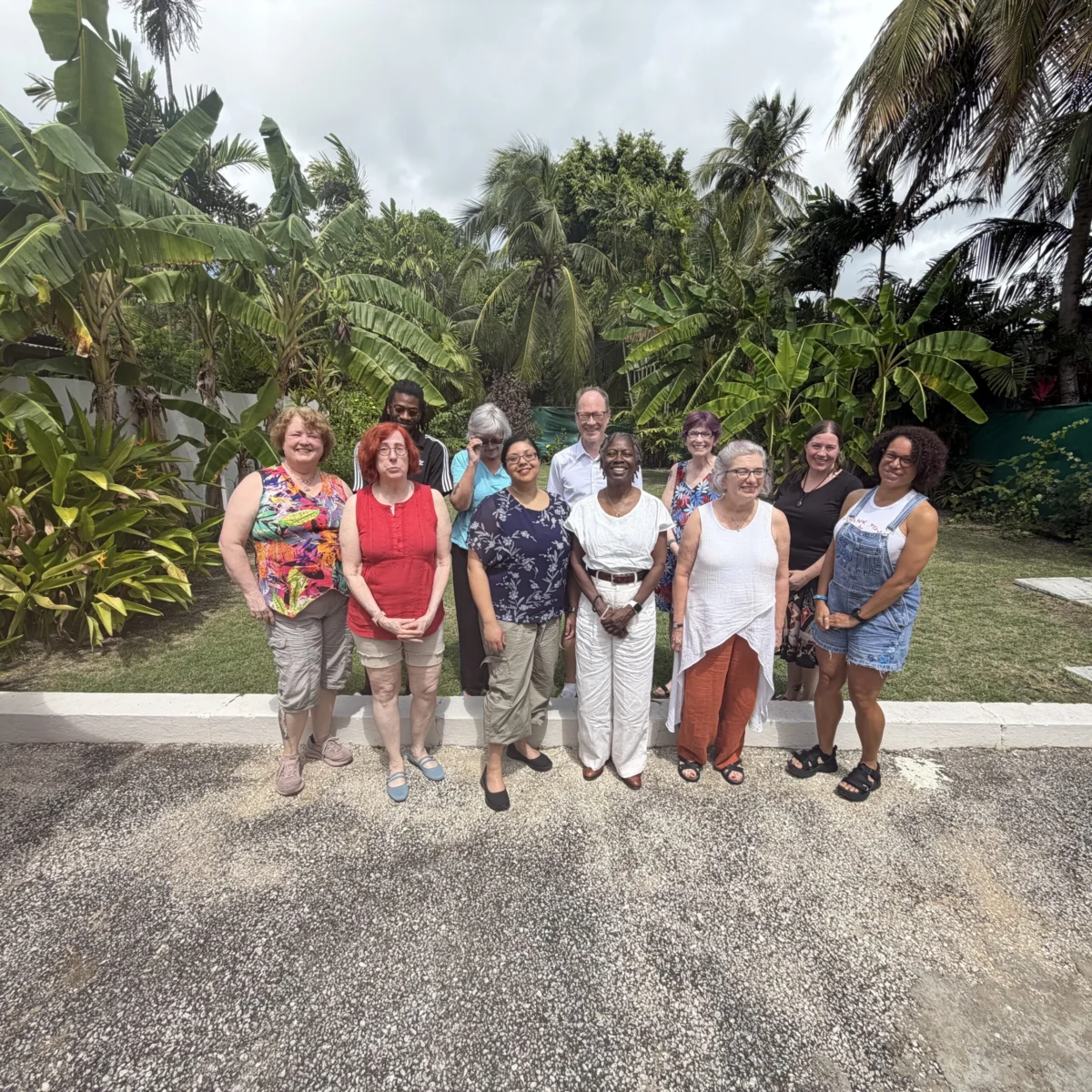
The writing community recently concluded a landmark retreat in Oistins, Barbados, hosted by the esteemed author Karen Lord. Organized under the banner of "The Wayward Wormhole," the event brought together a diverse group of instructors and students for an immersive experience that participants are describing as an "epochal shift" in their professional trajectories.
The Synergy of Space and Story
Cat Rambo, the primary organizer, noted that the success of the retreat was found in the unique synthesis of its components. Beyond the structured workshops and mentorship sessions, the physical environment of Barbados—characterized by its crystal-blue waters, rich marine life including sea turtles and stingrays, and the presence of local culinary staples like flying fish—provided a restorative backdrop that fostered a level of camaraderie rarely seen in digital-first writing circles.
A Community-Focused Pedagogy
The event underscored the mission of The Rambo Academy for Wayward Writers, which aims to transition authors from the frustration of "promising rejections" to the professional milestone of publication. By combining virtual campus resources, such as daily co-working sessions and Discord-based critique groups, with the high-touch, in-person mentorship provided in Barbados, the organization is setting a new standard for writing education. Rambo emphasized that accessibility remains a cornerstone of this model, with a specific focus on accommodating neurodivergent writers and those with varying disability statuses through tailored communication protocols.
2. Literary Legalism: The AI Copyright Frontier
In a significant escalation of the ongoing conflict between creators and big tech, a new class-action lawsuit has been filed in the U.S. District Court for the Southern District of New York. The plaintiffs—a coalition including Hachette Book Group, Cengage Learning, Elsevier, and author Scott Turow—allege that Google has engaged in massive, systematic copyright infringement during the training of its Gemini AI models.
The Shift in Strategy
This lawsuit represents a tactical evolution. Previously, publishers had attempted to join existing litigation brought by illustrators and writers in 2023. However, due to concerns regarding the statute of limitations, Hachette and Cengage opted to withdraw from the earlier suit and launch this independent action. The move is designed to protect claims that might otherwise fall outside the scope of the original class-action filing.

Corporate Accountability
Perhaps most damaging to Google’s defense is the inclusion of internal documentation in the court filings. The documents suggest that Google executives were not only aware that their plans to ingest copyrighted books could be construed as illegal but also explicitly calculated the potential financial risks—ranging from $10 billion to $100 billion—before proceeding with the data scraping regardless. This "calculated risk" narrative positions the tech giant in a difficult legal light, as it implies a knowing disregard for intellectual property rights.
3. Dark Poetry and the HWA Partnership
The Horror Writers Association (HWA) has announced a strategic partnership with Raw Dog Screaming Press (RDSP) to steward the "HWA Poetry Showcase" series. This collaboration marks a formalizing of the HWA’s commitment to dark, speculative, and horror-themed poetry.
Preserving the Art of the Macabre
For over a decade, the Showcase has served as a vital platform for both emerging and established voices. By bringing in RDSP—an award-winning independent press—the HWA aims to expand the distribution and professional reach of the annual volumes. The partnership will kick off with the publication of Volume XIII, scheduled for release in October 2026 to coincide with "Dark Poetry Month," an annual observance that celebrates the artistry and enduring cultural relevance of horror-inspired verse.
4. Cinematic Dystopias and the "Coyote" Factor
In the realm of film, critics are re-evaluating the 21st-century dystopian subgenre, while long-awaited projects finally reach fruition.
The Enduring Appeal of the Dystopia
ScreenRant recently published a definitive ranking of the best dystopian science fiction films of the century, with Rian Johnson’s Looper (2012) earning top-tier recognition. The analysis highlights a critical shift in the subgenre: while dystopian films once focused heavily on the mechanics of societal collapse, modern iterations like Looper are increasingly interested in the active agency of characters attempting to alter the trajectory of the future, rather than simply documenting the decay.
The "Coyote vs. Acme" Production
The long-delayed hybrid film Coyote vs. Acme is nearing its release, providing a unique case study in animation technology. Director Dave Green has detailed a complex, multi-stage production process that blends 2D animation sensibilities with 3D execution. By utilizing a "sketch-vis" approach where 2D artists draw over live-action footage, the production team has managed to preserve the "cartoon joy" of the original Looney Tunes while grounding the narrative in the tension of a live-action courtroom drama.

5. Scientific Milestones: The Chemistry of Asteroid Bennu
Space exploration has yielded a breakthrough in our understanding of the solar system’s chemical origins. Recent analyses of samples returned from the asteroid Bennu have confirmed the presence of ribose and glucose.
The Building Blocks of Life
The significance of this discovery cannot be overstated. With phosphate and every RNA nucleobase previously identified in the same asteroid material, the presence of these sugars completes the inventory of components necessary to build RNA. Scientists are careful to note that this is not proof of extraterrestrial life, nor evidence that RNA formed on Bennu. Instead, it demonstrates that the "raw molecular pieces" required for life on Earth were present in the early solar system long before life could have possibly emerged on our planet.
6. The "Minefield" Above: Geostationary Debris
While the scientific community looks outward to asteroid chemistry, a study from the University of Warwick has highlighted a more immediate crisis in our own backyard. Researchers have discovered a cloud of previously invisible, tiny pieces of space junk—roughly two inches in diameter—cluttering geostationary orbit.
The Economic and Safety Implications
This region, located 22,000 miles above Earth, is critical for global telecommunications, weather monitoring, and internet delivery. Stuart Eves, a co-author of the study, warned that the orbit is effectively a "minefield" for the world’s most expensive satellites. The discovery was made by re-examining existing telescope data through advanced image-processing algorithms, suggesting that our current monitoring of orbital traffic may be significantly undercounting the risks to vital infrastructure.
7. A Cultural Legacy: Harrison Ford at 84
As we look back on the month, we also celebrate the birthday of Harrison Ford, whose impact on science fiction remains unparalleled. From the roguish charm of Han Solo to the complex, noir-infused weariness of Rick Deckard, Ford’s performances have defined the archetypes of the modern hero. Paul Weimer notes that Ford’s portrayal of Indiana Jones—transitioning from a cynical mercenary in Temple of Doom to a man seeking higher meaning in Last Crusade—reflects the evolution of the actor’s own craft. Despite the changing tides of film franchises, Ford’s ability to anchor high-concept speculative narratives in human frailty and charisma remains a gold standard for the industry.
Summary of Implications
The events of July 2026 illustrate a period of intense institutional and technological recalibration. The legal struggle between publishers and Google represents the frontline of the intellectual property wars, while the discovery of debris in geostationary orbit underscores the physical vulnerability of our digital age. Simultaneously, the success of the Wayward Wormhole retreat and the continued dedication of the HWA demonstrate that even as the landscape of "how" we create and distribute content changes, the human desire to build community and explore the "what ifs" of our existence remains the constant, driving force of speculative culture.










