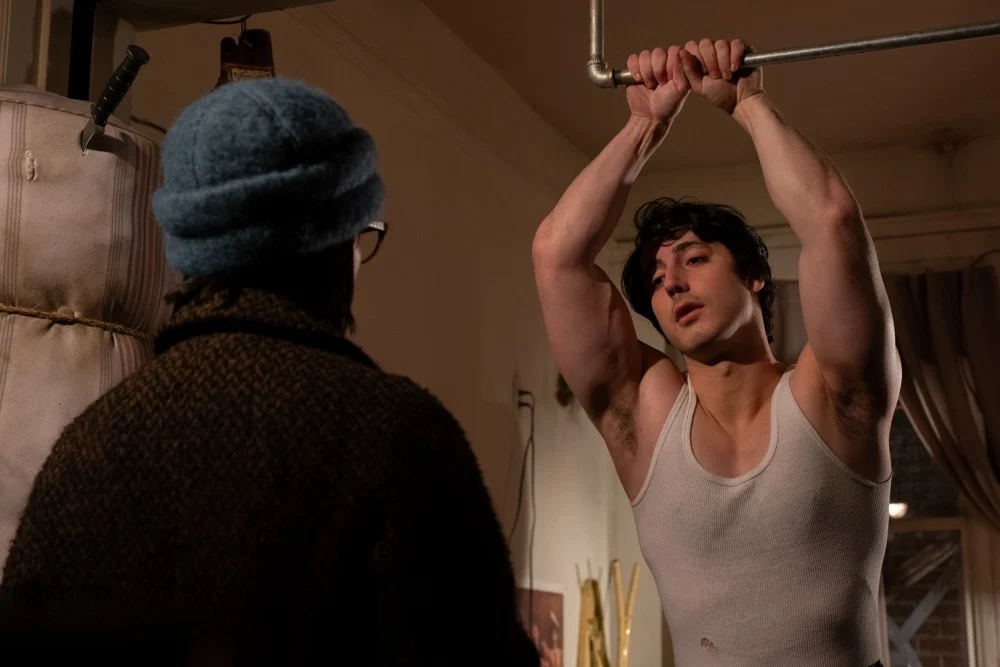
Sylvester Stallone famously penned the screenplay for Rocky in a whirlwind three-day burst of inspiration in 1976. Nearly half a century later, the process of defining the creative origins of a film about that very achievement is proving to be a much more protracted and bureaucratic ordeal.
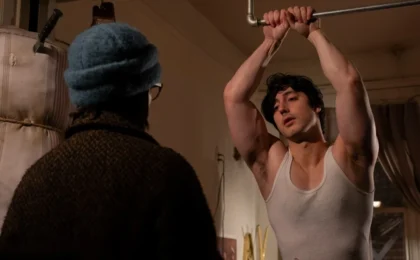
As the awards season machinery shifts into high gear, Amazon MGM Studios finds itself at the center of a complex debate involving the Writers Guild of America (WGA), the Academy of Motion Picture Arts and Sciences, and the film’s own creative team. The subject of this contention is I Play Rocky, a biographical drama chronicling the meteoric rise of the underdog writer-turned-star. The central question: Should Peter Gamble’s script be categorized as an "Original Screenplay" or an "Adapted Screenplay" for the 99th Academy Awards?
The Core Conflict: Originality vs. Preexisting IP
The categorization of a screenplay is rarely just a matter of semantics; it is a tactical decision that can significantly alter a film’s path to an Oscar. For I Play Rocky, the arguments for both sides are compelling, yet contradictory.
Proponents of the "Original" designation point to the fact that Gamble wrote the script on spec—meaning he wasn’t hired to adapt an existing work. The project was discovered via the Black List, the industry-renowned survey of the most liked unproduced scripts, eventually landing in the hands of producer Toby Emmerich and director Peter Farrelly. Crucially, Gamble did not base his script on any book, memoir, or article. He conducted his own research, synthesized various accounts of Stallone’s life, and crafted a narrative from the ground up. By the Academy’s traditional definition, a script is considered original if it tells a story—even a true one—in which the writer performed original research and relied on multiple sources rather than a single piece of published IP.
However, the opposition argues that the very subject matter—the Rocky franchise—is one of the most recognizable pieces of intellectual property in cinematic history. Rocky Balboa, Adrian, and Apollo Creed are iconic, preexisting characters. Furthermore, the film features reenactments of scenes from the 1976 original. Skeptics within the Academy’s voting body argue that a film so deeply embedded in the DNA of a legacy franchise cannot truly be "original," as it relies on the audience’s pre-existing emotional connection to the Rocky brand.
A Chronology of Uncertainty
The race against the clock is now intensifying. Thursday, Nov. 12, serves as the final deadline for studios to submit Official Screen Credits (OSC) forms to the Academy for the 99th Oscars. Following this date, no further films will be considered for the Best Picture or general entry categories.
- September 2026: I Play Rocky premieres at the Toronto International Film Festival (TIFF), generating significant buzz and positioning itself as a major contender.
- October 2026: The film begins its festival run, picking up awards and critical praise, including a breakthrough honor for Anthony Ippolito at the SCAD Savannah Film Festival.
- November 6, 2026: The film opens in a limited theatrical release, posting an impressive per-theater average of $49,200, signaling strong commercial potential.
- November 12, 2026: The deadline for OSC submissions to the Academy.
- January 8, 2027: The WGA is scheduled to announce its screenplay nominees, though they have no jurisdiction over I Play Rocky as it was not produced under a WGA signatory agreement.
- January 11, 2027: Nominations voting for the Oscars opens.
- January 21, 2027: Official Oscar nominations are announced.
- March 14, 2027: The 99th Academy Awards ceremony.
The WGA Paradox and Academy Discretion
A unique wrinkle in this year’s awards cycle is the status of the film’s production. Because I Play Rocky was not produced under a WGA signatory agreement, the guild cannot technically classify the screenplay, even though Peter Gamble is a member.
Typically, the Academy’s Writers Branch executive committee defers to the WGA’s classification. However, when the WGA has not classified a film, or when that classification is deemed controversial, the Academy reserves the right to make its own, final determination. This places the burden of proof squarely on Gamble and Amazon MGM. The committee may request a statement from the credited writers regarding the creative process and research methods. Once they render a decision, the ruling is final—there is no appeals process and no additional evidence can be submitted.
This situation has occurred before, often resulting in "category reversals" that leave studios scrambling. In the past, the Academy has famously shifted films like Moonlight, Whiplash, and The Ballad of Buster Scruggs from the WGA’s "original" classification into the "adapted" category.

Precedents and the "Barbie" Effect
The industry is still reeling from the Barbie saga of 2024. Despite Warner Bros. campaigning the film as an original screenplay, the Academy ultimately moved it to the adapted category, citing the fact that Barbie and Ken were pre-existing Mattel properties with a long history of media iterations. Barbie ultimately earned an adapted nomination, but the shift highlighted how fluid—and often frustrating—the definition of "adapted" has become.
Conversely, there is a strong argument for I Play Rocky to remain in the original category. Biographical dramas have historically occupied a gray area. For instance, Dustin Lance Black won an original screenplay Oscar for Milk, despite the existence of the acclaimed documentary The Times of Harvey Milk. Similarly, Darkest Hour was considered an original screenplay, despite focusing on a well-documented chapter of Winston Churchill’s life.
Films about the "making of" movies occupy a similarly nebulous space. Saving Mr. Banks (about Mary Poppins) and Mank (about Citizen Kane) were both submitted as original screenplays. However, if a "making-of" film is based on a specific, underlying nonfiction book—such as The Disaster Artist—it is almost automatically relegated to the adapted category. Because I Play Rocky is not based on a specific biography or book, its legal and creative standing as an "original" work remains technically intact.
Implications for the Awards Race
The final category assignment will have seismic implications for the competitive landscape. If I Play Rocky remains in the "Original" category, it must face off against a powerhouse slate of contenders, including Jesse Eisenberg’s The Debut, Mike Leigh’s Tender Loving Care, and Martin McDonagh’s Wild Horse Nine.
Should it be moved to "Adapted," the road does not get any easier. It would be forced to contend with heavyweights such as Denis Villeneuve’s highly anticipated Dune: Part Three, Drew Goddard’s Project Hail Mary, and the work of Christopher Nolan.
The studio’s own strategy reflects this uncertainty. I Play Rocky has already been submitted to the Golden Globes in the "Musical or Comedy" category, where rules regarding screenplay classification are far more lenient, as the Globes do not separate screenplays into original and adapted categories.
Conclusion: The Final Verdict
As the 99th Academy Awards approach, the I Play Rocky debate serves as a microcosm of the evolving nature of storytelling in Hollywood. In an era dominated by intellectual property and shared cinematic universes, the line between an "original" vision and an "adapted" narrative has become increasingly blurred.
For Peter Gamble, the outcome is more than a trophy; it is a validation of his original creative labor. For the Academy, it is a test of their internal guidelines—a struggle to balance the rigid rules of the past with the fluid, cross-pollinated nature of modern filmmaking. Whether the film is classified as original or adapted, its journey has already cemented its place as one of the most talked-about scripts of the season, proving that the story of the writer is often just as compelling as the story they are writing.