

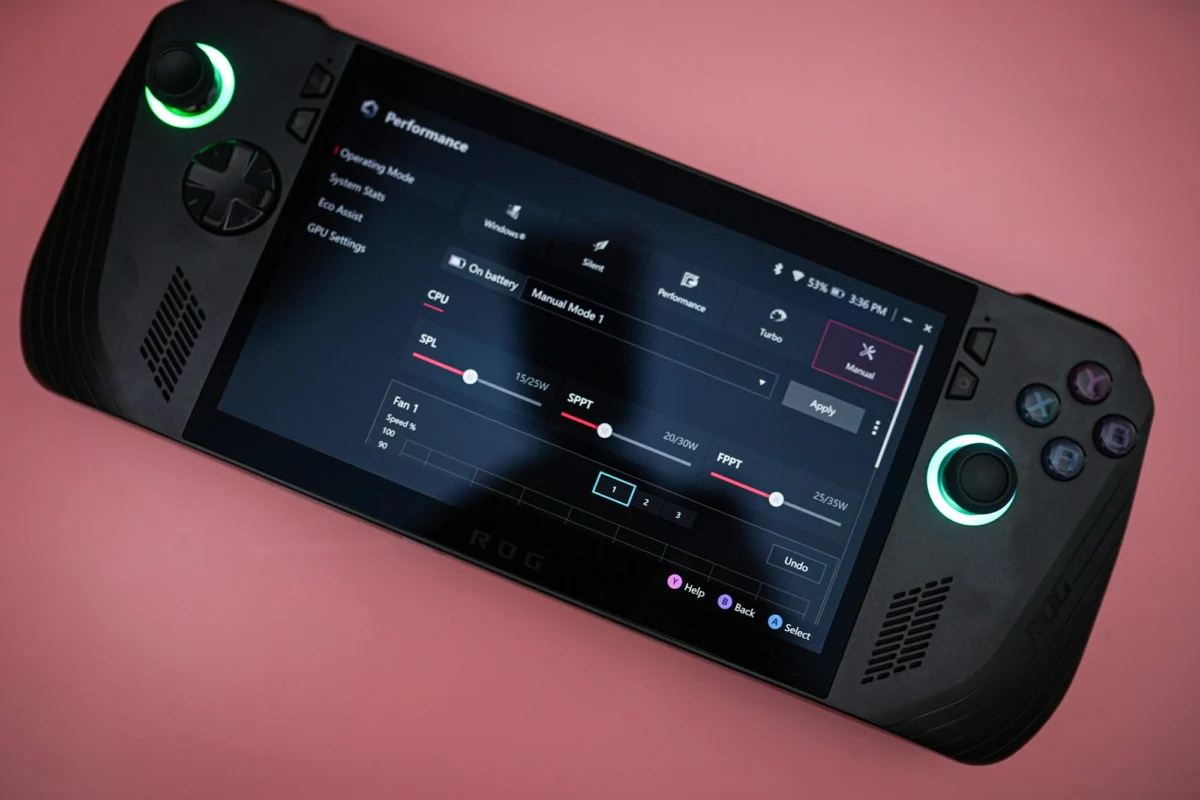
The handheld gaming landscape has shifted from a niche enthusiast playground to one of the most fiercely contested sectors in the technology industry. Since the advent of the Steam Deck, manufacturers have scrambled to capture the "PC-in-your-pocket" market. Among the most prominent contenders is ASUS, whose ROG Ally series has been a cornerstone of Windows-based handheld gaming. However, a recent leak regarding an upcoming iteration of the device has sparked a debate among enthusiasts: is ASUS preparing a true evolution, or are we witnessing a cautionary tale of hardware stagnation?
Fresh listings suggest that ASUS is readying a successor to the ROG Ally, but the initial specifications point toward a "mid-generation refresh" rather than a groundbreaking redesign. At the heart of this mystery is the AMD Ryzen Z2 Extreme processor. While the prospect of a more efficient, powerful chip is always welcome, the current climate of the industry demands more than just a raw performance bump.
The Chronology of a Handheld Giant
To understand the weight of this upcoming release, one must look at the trajectory ASUS has traveled over the past two years.
The Original ROG Ally (2023)
When ASUS launched the original ROG Ally, it was positioned as a "Steam Deck Killer." It boasted a superior 1080p display, a powerful AMD Ryzen Z1 Extreme chip, and the flexibility of the Windows operating system. It brought the power of a desktop-class APU into a portable form factor, marking a significant milestone for mobile gaming.

The ROG Ally X (2024)
ASUS quickly realized that the original device had shortcomings, most notably in battery life and ergonomics. The ROG Ally X arrived as a corrective measure—a "plus-sized" version that doubled the battery capacity, refined the joysticks, and increased the RAM. It was a masterclass in responding to user feedback, solidifying the device’s place in the market.
The Rumored "Z2" Refresh (Present Day)
The current narrative centers on a product identifier leak that points to the inclusion of the AMD Ryzen Z2 Extreme. Unlike the transition from the base Ally to the Ally X, which involved chassis redesigns and battery optimizations, current evidence suggests this new unit is focusing almost exclusively on the silicon upgrade. This follows a long-standing tradition in the laptop industry: keeping a proven chassis and updating the internal engine to keep the product line relevant for another 12 to 18 months.
Supporting Data: What the Silicon Tells Us
The shift to the AMD Ryzen Z2 Extreme is the pivot point of this entire story. The Ryzen Z1 Extreme was built on the Zen 4 architecture, which provided immense performance but struggled with power efficiency at lower wattages—a critical metric for a device that relies on a battery.
Architectural Improvements
The Z2 Extreme is rumored to leverage newer architectural advancements that prioritize performance-per-watt. For the end-user, this means better frame rates during high-intensity gaming, but more importantly, it offers the potential for longer battery life without needing to physically increase the battery size. If ASUS can achieve the same thermal performance as the Z1 Extreme while pushing higher clocks, the device will be a formidable competitor.

The RAM and Storage Dilemma
One of the key lessons learned from the ROG Ally X was the necessity of higher RAM capacities. Modern AAA titles, particularly those requiring heavy texture streaming, are pushing the limits of 16GB of system memory. If the new device launches with only 16GB of RAM, it will likely be viewed as a failure, regardless of how fast the processor is. Consumers are now looking for 24GB or 32GB of LPDDR5X memory as the new "Gold Standard" for high-end handhelds.
The Display: A Make-or-Break Opportunity
If there is one area where the handheld market has moved forward, it is in screen technology. The Valve Steam Deck OLED set a new benchmark for what portable gamers expect: infinite contrast ratios, deeper blacks, and vibrant color gamuts.
The 7-Inch Ceiling
Reports indicate that ASUS may be sticking with a 7-inch LCD panel for this next iteration. In a market where 8-inch, 9-inch, and even ultra-wide OLED panels are becoming standard, a 7-inch LCD feels like a relic of 2023. While the 7-inch form factor is praised for its portability, the lack of an OLED option is a glaring omission.
Resolution and Refresh Rates
Gamers are no longer satisfied with just high frame rates; they want visual fidelity. A 120Hz refresh rate is a great starting point, but without the color accuracy of an OLED panel, the gaming experience feels flat compared to the competition. If ASUS intends to retain its crown, it must address the display panel’s limitations, even if it results in a higher price point.

Official Responses and Corporate Strategy
ASUS has maintained a characteristically tight-lipped approach regarding the leak. In the past, the company has emphasized a "consumer-first" philosophy, often citing that their hardware decisions are heavily influenced by community sentiment on forums like Reddit and Discord.
The company’s challenge is balancing the cost of R&D with the speed of market cycles. Designing a new chassis from the ground up costs millions of dollars and requires extensive supply chain coordination. By refreshing the internals, ASUS maintains a presence on store shelves without the risk of a full-scale redesign that may not be financially viable given the current state of the PC handheld market.
However, the "safe" route may be a dangerous one. With competitors like Lenovo, MSI, and various Chinese handheld manufacturers (such as Ayaneo and GPD) releasing new hardware at a rapid pace, ASUS runs the risk of being perceived as a company that is resting on its laurels.
Implications: The Future of Handheld Gaming
What does this potential release mean for the average consumer?

For Existing Owners
If you currently own an ROG Ally or an ROG Ally X, the jump to a Z2 Extreme-based device might be negligible. Unless you are chasing the absolute highest frame rates in the most demanding titles, the performance gains of a single generation of mobile APUs are rarely transformative enough to justify a $600–$700 purchase.
For Potential Buyers
For those looking to enter the market, the decision becomes more complex. If the new device launches at a premium price point but retains the old display and chassis, it may be more prudent to look for a heavily discounted ROG Ally X, which offers nearly the same user experience.
The "Windows" Factor
The elephant in the room remains the operating system. No matter how fast the processor is, the ROG Ally still runs on Windows 11. While the Armoury Crate software has improved significantly, the underlying OS is still not optimized for a handheld, controller-driven experience. ASUS’s commitment to improving the software layer—specifically the UI and the driver support—will ultimately be more important than the raw speed of the Z2 chip.
Final Thoughts: The Path Forward
The leaked ROG Ally refresh represents a critical juncture for ASUS. By opting for a spec-bump rather than a complete overhaul, the company is betting that the current form factor still has life left in it. While there is logic in this approach—maintaining consistency and reliability—it risks alienating the enthusiast base that drives the handheld industry.

The hardware is only one half of the equation; the software, the display, and the price-to-performance ratio will dictate the success of this device. If ASUS can deliver a "Z2" device that includes a higher-quality display and a more refined software ecosystem, it will remain a titan in the space. However, if it delivers a marginal upgrade in a familiar package, the company may find itself struggling to keep up with a market that has already moved toward bigger, brighter, and more efficient horizons.
As we wait for official confirmation, the message from the community is clear: gamers want innovation. They want to see the boundaries of what is possible in a handheld device pushed further, not just by an incremental increase in clock speed, but by a holistic improvement in the total gaming experience. Whether ASUS listens to this call will be the defining story of their next product launch.












No comments yet. Be the first to join the conversation!