
 Layla Zulfa
Warning: This article contains major spoilers for "Silo" Season 3, Episode 1, "Who Are You?"
The landscape of Apple TV+’s hit dystopian drama Silo has shifted dramatically. As viewers return to the claustrophobic, steel-encased reality of the subterranean bunker, they are greeted not with the explosive resolution of the Season 2 cliffhanger, but with a haunting, eerie sense of normalcy. The transition from the high-stakes fervor of the previous season—where the population was on the precipice of a total structural collapse—to the controlled, muted atmosphere of the Season 3 premiere is a narrative masterstroke that invites audiences to question the true nature of power, memory, and resistance.
The State of the Silo: A Narrative Reset
When we last left Juliette Nichols (Rebecca Ferguson), the Sheriff-turned-Mayor was attempting the impossible: warning the inhabitants of Silo 18 that their foundational beliefs about the "outside world" were a orchestrated lie. The tension had reached a fever pitch, with characters like the steadfast revolutionary Patrick Kennedy (Rick Gomez) rallying the masses against the iron-fisted rule of the IT department.
However, the Season 3 premiere, "Who Are You?", utilizes a jarring time jump. We do not see the immediate aftermath of the incinerator sequence where the former IT head Bernard (Tim Robbins) met his end. Instead, months have passed. The status quo has been reset with terrifying efficiency. The rebellion that once threatened to tear the silo apart has been effectively neutralized, replaced by a veneer of calm that feels as synthetic as the recycled air the characters breathe. This narrative choice forces the audience to inhabit the same confusion as Juliette, who awakens in this new reality with no memory of her past, her mission, or the woman she used to be.
Chronology: From Uprising to Induced Amnesia
To understand how the rebellion vanished, one must look at the timeline of events leading into the current season.

- The Culmination of Season 2: Juliette returns to Silo 18, armed with the knowledge of the "Safeguard" protocol—a catastrophic fail-safe designed to eliminate the population if the status quo is threatened. Her primary objective is to expose the truth and prevent the total annihilation of her people.
- The "Great Reset": Following the violent conclusion of the previous arc, the governing powers of the Silo, now under the influence of the new IT head, Camille (Alexandria Riley), take drastic measures. Recognizing that killing Juliette would turn her into a martyr, they pivot to a more insidious tactic: psychological subjugation.
- The Chemical Cage: It is revealed that Juliette is being systematically medicated. These memory-wiping drugs serve a dual purpose: they erase the trauma of her journey and, more importantly, they strip her of the knowledge that would topple the Silo’s hierarchy.
- The Puppet Mayor: With her memories suppressed, Juliette is coerced into the role of Mayor. She is a figurehead, repeating lines scripted by the IT department, effectively acting as the very tool of oppression she previously fought to dismantle.
The Role of the "Safeguard" and the Algorithm
The core conflict of the series remains the existence of the "Safeguard" protocol. Initially discovered through the help of Jimmy (aka "Solo," played by Steve Zahn), this protocol represents a systemic threat to every living soul in the Silo. The brilliance of the Season 3 setup lies in the fact that while the audience is fully aware of this impending doom, the protagonist is effectively lobotomized, unable to act on the very intelligence that could save her people.
This dynamic is further complicated by the introduction of the "Algorithm"—a shadowy, disembodied entity that appears to be the true architect of the Silo’s societal control. Much like the strings pulled by Bernard in earlier seasons, the Algorithm now dictates the actions of Camille, ensuring that the population remains docile and ignorant. The revelation that this entity exists as a layer of control above even the highest-ranking human officials adds a layer of cosmic dread to the series, suggesting that the Silo is not just a prison, but a controlled experiment.
The Lingering Embers: Resistance in the Shadows
Despite the apparent total success of the IT department’s suppression efforts, the premiere provides subtle, persistent glimmers of hope. A regime can control the mind, but it struggles to extinguish the spirit of those who have seen the truth.
The Missing Revolutionaries
While Juliette remains a pawn, the key figures of the previous rebellion have vanished. Patrick Kennedy and the defiant Lukas Kyle (Avi Nash) are conspicuously absent from the public eye. Their disappearance is not a sign of defeat, but rather a strategic retreat. The show posits that the resistance has moved underground, evolving from an open uprising into a guerrilla movement.
The "Outsiders" and the Persistence of Truth
A new faction has emerged: the "Outsiders." These individuals, who reject the official narratives of the Silo, continue to act as the conscience of the bunker. Their activities—hanging cryptic messages from bridges and spreading whispers of the world beyond the steel—serve as the only remaining link to the truth. These characters represent the audience’s surrogate, keeping the spirit of Juliette’s original mission alive even when she cannot.

Implications: The Psychological Toll on Leadership
The implications of this season’s direction are profound. By stripping Juliette of her memories, the writers are exploring the concept of identity as a revolutionary tool. If you take away a person’s history, do you take away their capacity to change the world?
The flashes of memory Juliette experiences—the cryptic notes, the sudden, sharp pangs of recognition—suggest that the human mind is inherently resistant to total erasure. The "truth" is becoming an itch she cannot scratch. The psychological warfare being waged against her is arguably more intense than the physical threat of the incinerator. She is being forced to betray her own values every day that she serves as Mayor, creating an internal dissonance that acts as a ticking clock for the plot.
Critical Analysis: Why This Approach Works
Critics have noted that the "amnesia" trope is a dangerous narrative path, often used to stall character growth. However, in Silo, it is used to heighten the stakes. By placing the "truth" in the hands of a character who cannot access it, the show forces the supporting cast to take agency. The audience is no longer just waiting for Juliette to save the day; we are waiting for her to remember herself.
The production design continues to emphasize this theme of confinement. The pristine, orderly, and sterile aesthetic of the Silo in the early episodes of Season 3 reflects the "clean" narrative the IT department is trying to force upon the population. The contrast between this artificial order and the gritty, chaotic flashbacks of the rebellion creates a visual language of conflict that perfectly mirrors the internal battle occurring in Juliette’s mind.
Looking Ahead: The Path to Redemption
As the season progresses, the trajectory seems clear: the muzzled rebellion will eventually find its voice again. The cracks in Camille’s control are already showing. The Algorithm may be all-knowing, but it is not infallible.
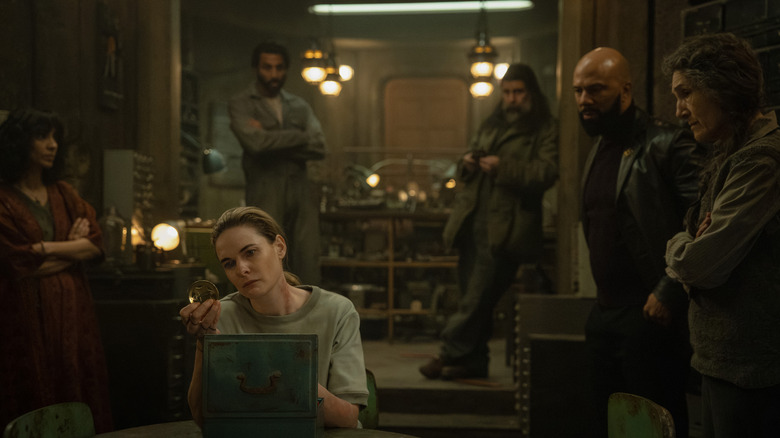
For the viewers, the anticipation lies in the moment of "re-awakening." When Juliette eventually pieces together the fragments of her identity—the memory of Martha Walker’s kindness, the wisdom of Knox, and the brutal reality of the outside world—the resulting explosion of truth will likely be far more dangerous to the powers-that-be than any riot could have been.
Silo continues to be a masterclass in dystopian world-building, and as the mystery of the Algorithm deepens, it becomes clear that the fight for freedom is not just about opening the doors to the outside; it is about reclaiming the right to one’s own history. New episodes of Silo continue to stream every Friday on Apple TV+, and if the premiere is any indication, the most critical battles for the future of the human race are only just beginning.


 Raul Delapena Setiawan
 Nana Wu





