

For decades, the standard lifecycle of a baseball card has been depressingly predictable: a child pulls a pack, marvels at the glossy finish, maybe sticks it in a plastic sleeve, and eventually relegates it to a dusty shoebox or a forgotten binder in the back of a closet. They remain there, gathering dust as "investments" that rarely pay off, while the thrill of the game itself stays trapped on the television screen.
Baseball Card GM, the brainchild of designers Matthew and Garrett Weaver and published by Weaver Media Group, dares to ask a transformative question: What if your collection was the game? By bridging the gap between historical sports memorabilia and modern tabletop mechanics, this simulation game is turning passive collections into active, high-stakes battlegrounds.
Main Facts: The Concept of the "Living" Roster
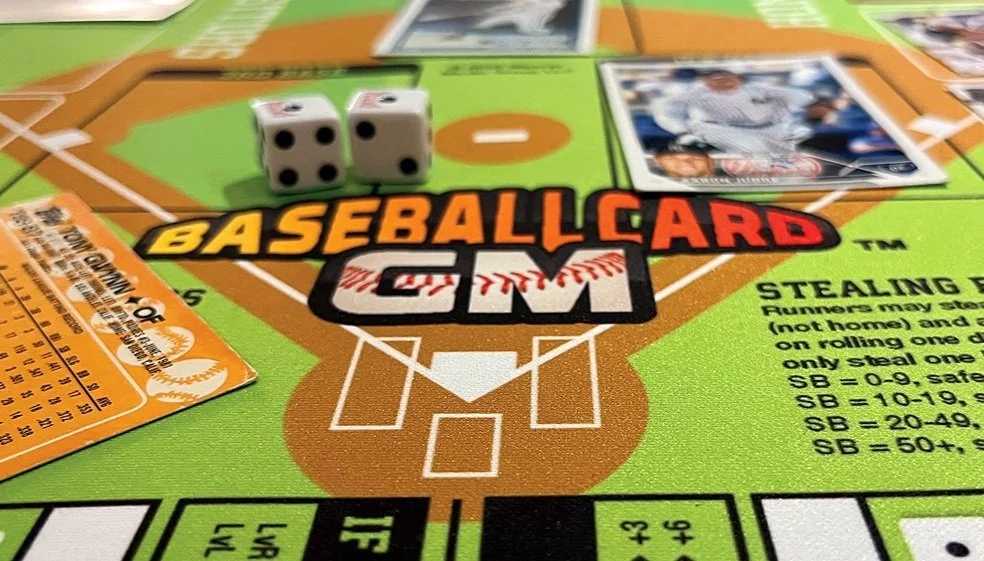
Baseball Card GM is a streamlined, 1-2+ player sports simulation that utilizes the physical statistics found on the back of genuine baseball cards to determine the outcome of an at-bat. Instead of relying on proprietary decks or predetermined character abilities, the game forces players to curate their own rosters from their personal collections.
The core premise is elegant in its simplicity. Whether you are pulling from a collection of modern-day superstars, 1980s cult heroes, or bulk commons destined for the donation bin, every card possesses a "value" based on its real-world performance metrics—batting averages, home run totals, ERAs, and stolen base counts. These numbers interact with a custom neoprene playmat and two six-sided dice to resolve gameplay.
The game is designed for accessibility, with a playtime of roughly 30 minutes, allowing for a quick "game of ball" that captures the tension of the sport without the multi-hour commitment required by traditional, heavy-weight sports board games.
A Chronology of the Experience: From Opening Packs to Game Day
The journey of a Baseball Card GM player follows a distinct path, beginning well before the first pitch is thrown.
Phase 1: The Roster Build
The experience begins in the "Front Office." Players must evaluate their physical inventory, selecting a lineup that balances power hitters with contact specialists and building a bullpen that can handle high-leverage situations. This is where the game excels as a hobbyist tool; suddenly, that "junk wax" card from 1991 that has been sitting in a closet for thirty years is no longer trash—it is a situational specialist needed to get out of a bases-loaded jam.
Phase 2: The Setup
Players lay out the neoprene playmat, which serves as the central hub of the game. It functions as a baseball diamond, a dice-check chart, and an inning tracker. The physical nature of the setup is intentional, designed to mirror the tactile satisfaction of holding a baseball card.
Phase 3: The Matchup
Once the lineups are submitted, the game unfolds in real-time. Players roll the dice, cross-reference the result with the specific stats on the card currently at bat, and determine the outcome. A strong batting average might increase the likelihood of a single, while a high ERA pitcher will statistically yield more runs against a potent lineup.
Phase 4: The Inning Close
The game moves with a rapid, rhythmic pace. As the innings progress, the management aspect kicks in. Players must decide when to pull their starting pitcher, when to deploy a pinch hitter, and how to manage the fatigue of their roster. The game concludes after nine innings, mirroring the traditional structure of Major League Baseball.
Supporting Data: Why the Stats Matter
The brilliance of Baseball Card GM lies in its reliance on the "truth" of the cards. By using the statistics printed on the back of the cards, the game creates an organic simulation that feels grounded in reality.
- Statistical Integrity: Because the stats are real, the game is inherently balanced by the quality of the players in your collection. If you build a team of Hall of Famers, your dice outcomes will naturally favor high-performance results. If you play with a "shoebox special" team, you are tasked with finding the "hidden gems" that perform better than their rarity suggests.
- The Neoprene Mat Advantage: The playmat is not merely a board; it is a probability engine. By consolidating the rules and charts into a single, durable surface, the Weavers have removed the "lookup fatigue" that often plagues complex sports simulations.
- Time-Efficiency: In a market saturated with "crunchy" simulations that take hours to play, Baseball Card GM occupies a unique niche. By boiling down the mechanics to a simple dice-plus-stat check, the game maintains a brisk, 30-minute average, making it an ideal choice for a casual Tuesday night or a tournament-style weekend.
Official Perspectives and Philosophy
In interviews regarding the game’s development, the Weaver brothers have emphasized that their goal was never to replace the feeling of watching a real game, but to complement the collector’s hobby.
"We wanted to give these cards a purpose beyond the binder," Matthew Weaver noted in recent discussions about the game’s release. "The hobby of collecting is often about potential value, but there is an inherent joy in the players themselves—what they meant to the fans, and how they performed on the field. This game brings that performance back to life."
The philosophy behind the game is one of "sandbox design." The developers have consciously avoided rigid, restrictive rule sets in favor of a flexible system that allows players to implement their own "house rules." Whether groups want to engage in a rigorous draft-style format or simply recreate the 1927 Yankees, the system is designed to accommodate the user’s specific vision of baseball.
Implications for the Hobby and Industry
The success of Baseball Card GM has broader implications for both the gaming industry and the trading card market.
Bridging the Gap Between TCGs and Sports
For years, the Trading Card Game (TCG) market has been dominated by fantasy games like Magic: The Gathering or Pokémon. These games rely on complex, evolving meta-games. Baseball Card GM creates a similar level of engagement but uses real-world athletes as the "cards." This creates an entry point for sports fans who have never played a TCG, as well as a gateway for gamers who have never cared for baseball statistics.
A New Life for "Bulk" Inventory
One of the most significant impacts of this game is its ability to revitalize the market for "bulk" cards—those that are not valuable enough to be graded or sold individually but are too nostalgic to throw away. By giving these cards utility in a game setting, the Weavers have effectively increased the "play value" of the millions of cards currently sitting in storage globally.
The Future of "Analog" Gaming
In an increasingly digital world, where fantasy sports are largely automated and managed by algorithms, Baseball Card GM represents a shift back toward the analog. It encourages face-to-face interaction, physical handling of components, and the shared excitement of the "roll of the dice." It is a reminder that the best gaming experiences often come from the simplest interactions.
Final Verdict: Is It Right for You?
If you are a collector who has ever felt a twinge of guilt about how much money or space your collection occupies, Baseball Card GM is a necessary acquisition. It transforms the act of "collecting" into the act of "managing."
However, players should be aware of the game’s limitations. If you are looking for a deep, high-fidelity managerial simulation—the kind that tracks salary caps, player injuries over an entire season, or complex tactical play-calling—you may find the experience too streamlined. The game is intentionally designed to be a sandbox; it provides the engine, but the player provides the depth.
Ultimately, Baseball Card GM is a triumph of design minimalism. It does not need fancy miniatures or hundreds of pages of rules because it relies on the rich, historical data already printed on the cards you own. It is a love letter to the sport, a clever use of existing resources, and perhaps the most fun you will ever have with that shoebox in your closet.











No comments yet. Be the first to join the conversation!