

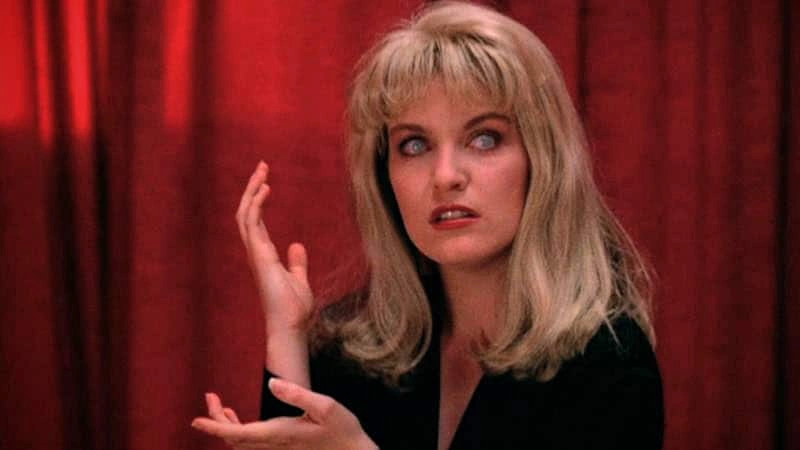
The music of Twin Peaks does not merely accompany the screen; it breathes with it. To those unacquainted with David Lynch’s seminal television masterpiece, the warning remains consistent: the score is not background noise—it is a haunting, omnipresent entity that will linger in your consciousness long after the television is turned off. Twin Peaks is a complex tapestry of supernatural horror, soap-operatic melodrama, slapstick humor, and surrealist police procedural. That these disparate genres coalesce into a singular, coherent vision is a testament to the show’s unparalleled sound design and musical score.

The Auteur’s Vision: Sound as Narrative
For creator and director David Lynch, the distinction between "picture" and "sound" is non-existent. "I always say that cinema is sound and picture, flowing together in time," Lynch once noted. "To me, the director is supposed to guide what people see from beginning to end and what people hear from beginning to end, to fulfill the ideas. When all the elements come together, you can get this thing where the whole is greater than the sum of the parts."

This philosophy reached its zenith in the collaboration between Lynch, composer Angelo Badalamenti, and vocalist Julee Cruise. Building upon the atmospheric foundations laid in Lynch’s 1986 film Blue Velvet, the trio crafted a sonic identity for the town of Twin Peaks that felt both nostalgic and alien. The soundtrack is a curated collision of jazz, 1950s teen pop, 1980s synthesizers, and modernist dissonance. It is this specific melange that lends the show its "uncanny" quality—a sense of comfort derived from familiar sounds, immediately undermined by strange, dissonant clarinet lines or unsettling ambient wind.

A Chronology of Sound: From ABC to Showtime
The musical journey of Twin Peaks spans nearly three decades.

- 1990–1991 (Seasons 1 & 2): The original ABC run established the "Twin Peaks sound." Angelo Badalamenti’s iconic themes, such as "Laura Palmer’s Theme," utilized slow, mournful synth chords and delicate piano to modulate between extremes of gloom and melodrama.
- 2017 (The Return): Premiering on Showtime, the third season marked a seismic shift. As music supervisor Dean Hurley noted, the "finger-popping jazz quirk" of the original was largely abandoned in favor of darker, more avant-garde soundscapes. The focus shifted toward atmospheric dread, utilizing contributions from a wider array of contemporary artists, signaling the evolution of the show from a quirky mystery to an existential nightmare.
Supporting Data: The Anatomy of Iconic Scenes
While "Laura Palmer’s Theme" is arguably the most famous composition in the series, the show’s brilliance lies in its specific, localized uses of sound to blur the line between the diegetic (sounds within the story world) and the non-diegetic (the score).

The Return of Agent Cooper
In Episode 16 of The Return, the audience finally witnesses the return of the "old" Agent Cooper. The scene begins in near silence, focusing on the sounds of hospital life and the rustle of a suit. At the precise moment of Cooper’s realization—"I am the F.B.I."—the opening theme, "Falling," swells. By utilizing the credits music within the scene itself, Lynch creates an emotional payoff that serves as a cathartic "homecoming" for the audience, perfectly synchronizing the musical swell with the character’s psychological resolution.

The Birth of BOB (Episode 8)
Perhaps the most ambitious musical sequence in the entire series occurs during the depiction of the 1945 Trinity nuclear test. Rather than traditional horror music, Lynch employs Krzysztof Penderecki’s Threnody to the Victims of Hiroshima. Composed for 52 string instruments, the piece uses extended playing techniques to create a wall of dissonant, piercing sound. By pairing this with the abstract, metaphysical birth of the malevolent entity BOB, Lynch elevates a simple origin story into a grand, terrifying meditation on the nature of evil.

Audrey’s Dance
A defining moment of the series is Audrey Horne’s dance at the Double R Diner. The scene is a masterclass in musical manipulation. Audrey selects a song on the jukebox—a slinky, dreamy vamp—and the ambient sounds of the diner (clinking dishes, conversations) are slowly faded out until only the music remains. This transition traps the viewer in Audrey’s subjective reality, making it impossible to determine if the music is actually playing in the diner or if it is a manifestation of the "dream" world of Twin Peaks.

Official Responses and Industry Impact
The musical success of Twin Peaks has been widely documented by musicologists and critics alike. Scholars such as Brooke McCorkle have pointed to the show’s "Lynchian aesthetic" as a turning point in modern television, arguing that the sound design punctures the boundary between the "real" and the "fantastic."

Despite its critical acclaim, the show has often been overlooked by mainstream awards bodies. The Return, for instance, received nine Emmy nominations but zero wins. This lack of traditional hardware, however, has not dampened the fervor of the show’s cult following. The internet remains a hive of speculation regarding a potential Season 4, largely driven by fans who remain haunted by the sonic and narrative loose ends left by the 2017 finale.

Implications: The Legacy of a Haunting
The implications of the Twin Peaks sound design are profound. It proved that television could function as a medium for high-art, avant-garde sonic experimentation without alienating a mainstream audience. By demanding that viewers pay attention to the "moaning wind" as much as the dialogue, Lynch and Badalamenti changed the expectations for television scores.

The music of Twin Peaks serves as an emotional anchor in a world that is frequently untethered from logic. It guides the viewer through the humor of a bizarre police investigation, the tragedy of a murdered teenager, and the metaphysical terror of the Black Lodge. Whether it is the playful, square finger-snapping of Agent Cooper or the terrifying dissonance of the Woodsmen, the music provides a narrative language that transcends the script.

As we look back, it is clear that Twin Peaks succeeded not just because of its mystery, but because it created a world that felt fundamentally "other." That feeling is almost entirely due to the soundscape. As Daniel DiPaolo noted in his analysis, the music is "frightening, delicate, droll," and it continues to haunt as it enthralls. In the end, the music of Twin Peaks is the show’s heartbeat—a rhythm that, once heard, can never truly be silenced.










No comments yet. Be the first to join the conversation!