

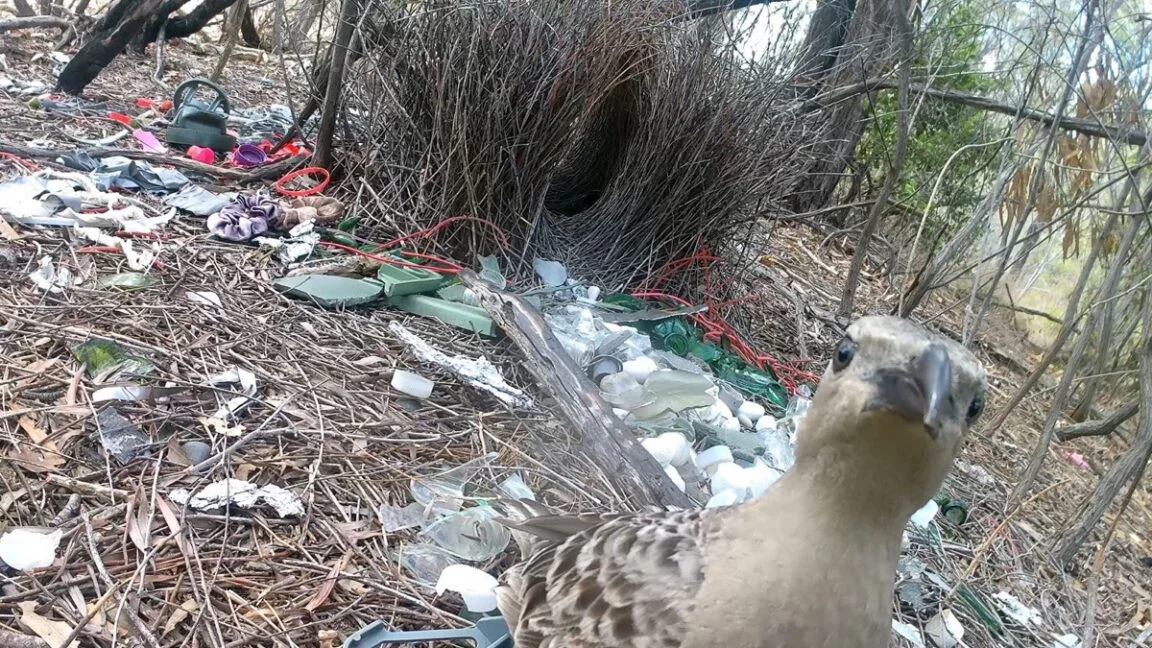
In the remote wilderness of northern Queensland, Australia, the great bowerbird (Chlamydera nuchalis) is engaged in a sophisticated, centuries-old game of architectural seduction. The male of the species is an avian interior designer, constructing intricate, tunnel-like structures—known as bowers—that serve as the stage for elaborate courtship displays. To entice a mate, he must curate a collection of decorative objects that prove his worth, his taste, and his resourcefulness.
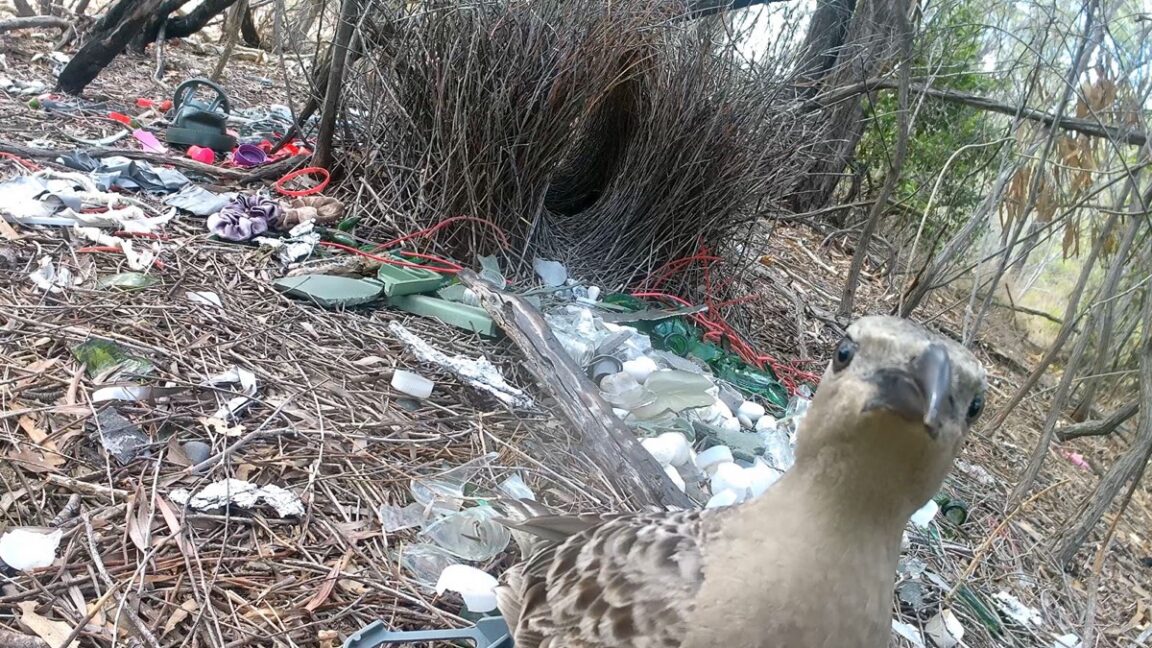
However, a new study published in the journal Royal Society Open Science suggests that the rules of this game are changing. As urban sprawl encroaches on the Australian landscape, these birds are increasingly abandoning their traditional, natural materials in favor of the colorful, discarded artifacts of human civilization. From discarded plastic toys to hospital medicine jars and even lost handcuffs, the "bower" has become a reflection of the Anthropocene, forcing scientists to confront how human activity is subtly, yet fundamentally, altering the evolutionary behaviors of the natural world.
The Ritual of the Bower: An Evolutionary Stage
To understand the significance of this shift, one must first appreciate the biological imperative of the bower. Unlike many bird species that rely solely on song or plumage to attract a female, the great bowerbird utilizes an "extended phenotype"—an external structure that acts as an extension of the male’s own fitness.
During the breeding season, which typically runs from September to December, a male will spend hours meticulously arranging twigs into a dual-walled avenue. The structure itself is not a nest; it is a display area. Once the bower is complete, the male adorns the surrounding "arena" with carefully selected objects. When a female arrives to inspect the display, the male engages in a high-stakes performance, tossing his finest items, vocalizing, and flashing his violet-pink nuchal crest.
Historically, these decorations were limited to the bounty of the bush: green leaves, seeds, fruit, and small pebbles. These items were not chosen randomly; they were selected for their color and contrast against the brown of the twigs. However, as urbanization provides a new, endless supply of "trash," the criteria for what constitutes a "high-value" decoration have been completely rewritten.
Chronology of the Investigation
The study, conducted by researchers at the University of Exeter, took place during the 2023 breeding season. The team sought to determine whether the proximity of human settlements directly influenced the decorative choices of male bowerbirds.
Phase 1: Site Selection and Baseline Assessment
The researchers focused on two distinct environments in northern Queensland: the rural Dreghorn Cattle Station and the urban sprawl of Townsville City. By comparing these two sites, the team aimed to identify whether the differences in bower decor were purely a result of availability—the "easy pickings" of the city—or a shift in aesthetic preference.
Phase 2: The "Slush Pile" Experiment
To test the birds’ preferences, the researchers performed a controlled intervention. They monitored 61 male great bowerbirds, documenting their original bower collections. After establishing a baseline, the team removed all existing decorations from the bowers.
The researchers then created a standardized "slush pile"—a collection of 10 items sourced from urban sites and 10 items from rural sites. This pile was placed in the vicinity of each bird. Crucially, the birds were never offered items from their own original collection, ensuring that they had to make a new choice based on the available materials. The team then left the sites undisturbed for three days to allow the males to re-adorn their arenas.
Phase 3: Analysis and Documentation
When the team returned, they analyzed which items were reclaimed and where they originated. The decorations were photographed in both visible and UV light—a necessary step, as bowerbirds possess tetrachromatic vision, allowing them to see colors and patterns that are invisible to the human eye.
Supporting Data: A Landscape of Plastic
The results of the study were striking. The data clearly indicates that the "urban aesthetic" has taken hold among the bowerbirds of Townsville.
- The Dominance of Human Artifacts: Urban bowers contained more than 10 times the amount of human-made materials compared to their rural counterparts.
- The "Overachiever" Factor: While rural birds averaged about 20 items per bower, urban birds averaged 90. One particularly industrious urban male was found with a staggering 300 individual items decorating his display.
- The Color Palette Shift: Rural birds maintained a preference for natural green glass, seeds, and leaves. In contrast, urban birds showed a distinct preference for red wire, brightly colored plastics, and, in some cases, bizarre human remnants. The researchers noted the presence of handcuffs, medicine jars, and even fluorescent mouth guards collected from a site near a local football pitch.
- Vividness and Contrast: The study found that red decorations in urban bowers were notably more vivid than the natural items found in the bush, while the green items in urban bowers were perceived as "duller" compared to the fresh foliage used by rural birds.
Official Perspectives from the Research Team
The authors of the study, including Caitlin Evans and Laura Kelley, suggest that these findings are not merely a case of birds picking up whatever is lying on the ground. Instead, they posit that this represents a form of behavioral adaptation.
"Our results suggest that the display produced by urban males may represent an adaptive change to a more attractive display," the authors wrote in their paper. By utilizing the bright, durable materials discarded by humans, urban males may be able to create a more permanent and eye-catching display than those limited to the seasonal availability of fruit and leaves.
Furthermore, there is a logistical benefit to this behavior. "The ready availability of human items to urban birds may reduce the energetic costs and risks associated with leaving the bower unguarded," notes co-author Caitlin Evans. In the rural wilderness, gathering high-quality, rare items often requires long, energy-intensive forays. In the city, the "trash" is effectively brought to the bird, allowing him to spend more time defending his territory and practicing his courtship dance.

Implications for Sexual Selection
The most profound question raised by this study concerns the long-term impact on the species’ reproductive success. Sexual selection relies on the female’s ability to assess a male’s quality based on his display. If the criteria for a "good" display are shifting from the ability to find rare natural objects to the ability to scavenge human plastic, are the females changing their standards?
The researchers acknowledged that they did not measure direct mating success in relation to the use of human materials. However, previous studies have suggested that urban bowerbirds generally experience higher rates of display and mating compared to their rural counterparts. While this could be attributed to higher population density in cities, it remains a possibility that urban females are being actively swayed by the "bling" of human-made objects.
If female preference is indeed plastic—meaning it can shift to accommodate new environmental realities—we may be witnessing the rapid, real-time evolution of a species’ mating ritual.
A Reminder of Human Influence
As the study concludes, the broader takeaway is one of ecological humility. The great bowerbird is a sentinel species, its behaviors serving as a barometer for the health and composition of its environment.
"We don’t yet know whether this has any negative or positive impact on them," said co-author Laura Kelley. "But it’s a reminder of how human activity is changing the natural world in unanticipated ways."
Whether this shift leads to a more robust population of bowerbirds or creates a dependency on an unsustainable supply of plastic waste remains to be seen. What is clear is that the "bower" is no longer just a construct of the forest. It has become a permanent fixture of our shared geography, a testament to the fact that even in the deepest corners of Australia, the shadow of human consumption is impossible to escape. As these birds continue to incorporate our medicine jars and mouth guards into their most intimate rituals, we are forced to see our own refuse through their eyes—as objects of beauty, status, and, ultimately, survival.












No comments yet. Be the first to join the conversation!