Introduction: A Seismic Shift in Silicon Valley
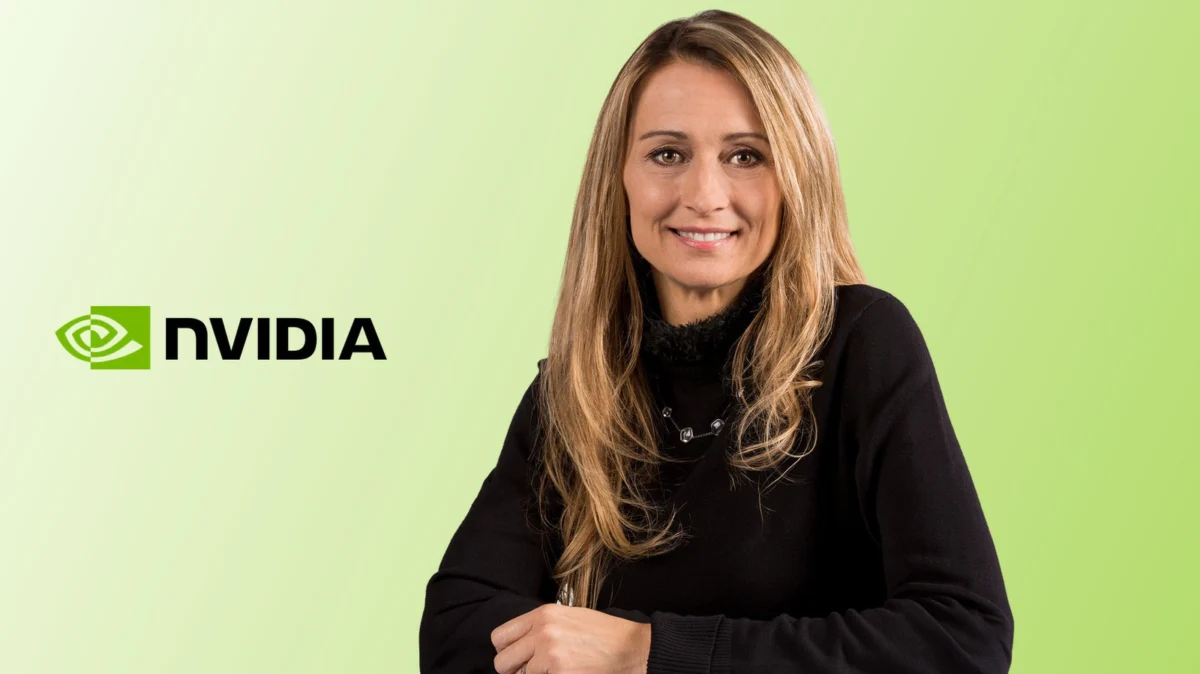
In a move that has sent shockwaves through the global technology sector, NVIDIA—the world’s foremost architect of the AI revolution—has announced the immediate resignation of Jensen Huang, its iconic founder and CEO of 33 years. The announcement, delivered by the company’s board of directors on Thursday, marks the end of an era for the Silicon Valley titan. Stepping into the void left by Huang is Colette Kress, the company’s long-standing executive vice president and chief financial officer.
Kress, who has been instrumental in managing the company’s explosive financial growth over the past decade, now finds herself in the most challenging position in the tech industry. She assumes the role of interim CEO at a moment of profound vulnerability for the company, as it navigates the fallout from a dual-pronged scandal involving its former leader’s personal conduct and potential national security entanglements.
The Catalyst: A Leadership Collapse
The sudden departure of Jensen Huang was not a planned transition but a desperate reaction to a mounting crisis. The unraveling began earlier this week when the company’s board of directors initiated an internal investigation into reports regarding Huang’s personal life. The probe followed explosive admissions from Huang regarding an affair with a former tech executive who has been identified as a potential target of Chinese intelligence operations.
The situation worsened significantly when The New York Times reported that Huang had also engaged in an undisclosed affair with an NVIDIA executive who reported directly to him. These revelations shattered the company’s corporate governance image and left the board with little choice but to secure his immediate exit. With no formal succession plan in place—a common oversight in companies dominated by "founder-figure" CEOs—the board turned to the one individual who has effectively been the company’s financial backbone: Colette Kress.
Chronology: From Texas Instruments to the AI Throne
To understand the gravity of Colette Kress’s appointment, one must look at the path that led her to the center of the AI revolution.
Early Career and Foundational Finance
Kress’s trajectory is defined by a deep-seated proficiency in financial operations and corporate strategy. Before arriving at NVIDIA, she spent eight years at Texas Instruments, honing her understanding of the semiconductor industry’s unique capital intensity. In 1997, she joined Microsoft, where she spent over a decade navigating the massive growth of the software giant. By 2006, she had risen to CFO of Microsoft’s Server and Tools division—a critical role during a period of massive infrastructure expansion for the company. In 2010, she moved to Cisco, serving as the senior vice president and CFO of their Business Technology and Operations Finance unit, further cementing her reputation as a steady hand in complex global organizations.
The "Whiteboard" Pitch: Joining NVIDIA
Kress’s move to NVIDIA in 2013 was a calculated risk. In interviews, she has often recalled the moment Jensen Huang recruited her, sketching out a vision for a company that would move beyond gaming graphics to become the engine of the entire AI ecosystem. At the time, NVIDIA was a significantly smaller entity, earning roughly $4.28 billion in annual revenue. Kress, encouraged by her two young sons who were already avid fans of NVIDIA’s gaming prowess, saw the potential. She became the CFO in 2013, effectively becoming the architect of the financial discipline required to scale the company into the $200-billion-plus revenue machine it is today.
Supporting Data: The Financial Trajectory
The tenure of Colette Kress is inextricably linked to the meteoric rise of NVIDIA’s market valuation. Under her financial leadership, the company evolved from a hardware supplier into the cornerstone of modern computing.
- Fiscal 2013: Revenue stood at $4.28 billion, with the company primarily focused on gaming and professional visualization.
- Strategic Pivot: Kress managed the massive R&D spending required for the development of CUDA and the subsequent hardware architectures (Pascal, Ampere, Hopper) that made modern LLMs possible.
- Fiscal 2026: The company reported a record-breaking $215.9 billion in revenue, a testament to the dominance of its data center and AI chip segments.
Kress has been the personification of "steady growth." While Huang was the visionary, Kress was the pragmatist who ensured that the company’s balance sheet could support the astronomical costs of cutting-edge AI development.
Official Responses and Internal Sentiment
The transition has been handled with a focus on stability. Harvey Jones, the newly minted chair of the NVIDIA board, issued a statement designed to soothe nervous investors and customers. "The Board has full confidence in Colette and the leadership team," Jones stated. "We expect the company’s operations, customer commitments, and product roadmap to continue without interruption."
In her first communication to the company’s global workforce, Kress sought to acknowledge the pain and uncertainty caused by the rapid change in leadership. According to reports from CNBC, she wrote: "The Board, executive staff, and I recognize that this has been an extraordinarily difficult period, and I want you to know how grateful we are for your resilience, professionalism, and continued dedication."
The message was clear: the company must focus on the "product roadmap" and ignore the noise surrounding the previous CEO. However, internal morale remains a significant question mark as employees process the sudden downfall of a leader who defined the corporate culture for over three decades.
Implications: The Road Ahead
The challenges facing Colette Kress are not merely internal; they are geopolitical and legal.
The Congressional Scrutiny
Perhaps the most pressing concern is the political firestorm awaiting the company. Jensen Huang has agreed to testify before the House of Representatives regarding his conduct and the security implications of his personal associations. The House Foreign Affairs Committee, led by Representative Brian Mast, has signaled that this is just the beginning. There is a high probability of further public hearings as the new administration takes control of Congress in early 2025.
The "Tim Cook" Comparison
Industry analysts are already drawing parallels between Kress and Apple’s Tim Cook. When Cook took over from Steve Jobs, there were doubts about whether a "finance person" could maintain the creative intensity of a visionary. Similarly, Kress is now tasked with proving that she can lead a technology powerhouse that relies on constant innovation, not just efficient accounting.
The Search for a Permanent Successor
The board has indicated it is considering both internal and external candidates for the permanent CEO position. Kress is effectively in a "prove-it" phase. If she can successfully stabilize the company, navigate the upcoming congressional investigations, and maintain the company’s AI dominance, she may well shed the "interim" label.
The Geopolitical Risk
NVIDIA sits at the center of the U.S.-China technology war. With the former CEO having been implicated in potential ties to Chinese intelligence, the scrutiny on NVIDIA’s export controls and supply chain security will be unprecedented. Kress must lead the company through a period of intense regulatory pressure, ensuring that NVIDIA remains compliant with federal mandates while continuing to serve a global customer base.
Conclusion: A New Chapter for the AI Giant
The exit of Jensen Huang marks the end of the "Founder Era" for NVIDIA. While the circumstances are undeniably dark, the appointment of Colette Kress represents the board’s desire for institutional stability. She is a known quantity—a leader who understands the company’s DNA, its financial constraints, and its strategic goals better than almost anyone else.
As the company enters this new, tumultuous chapter, the focus will be on whether the systems and processes Kress helped build are robust enough to withstand the loss of its visionary founder. For now, the world’s most important AI company is being guided by a steady hand in a time of chaos, facing a future that is as uncertain as it is consequential. Whether Kress is the bridge to a new generation of leadership or the long-term solution for NVIDIA’s next evolution remains to be seen, but the stakes could not be higher.