Nana Wu
Published June 16, 2026, 10:00 PM EDT
By Jacob Kleinman
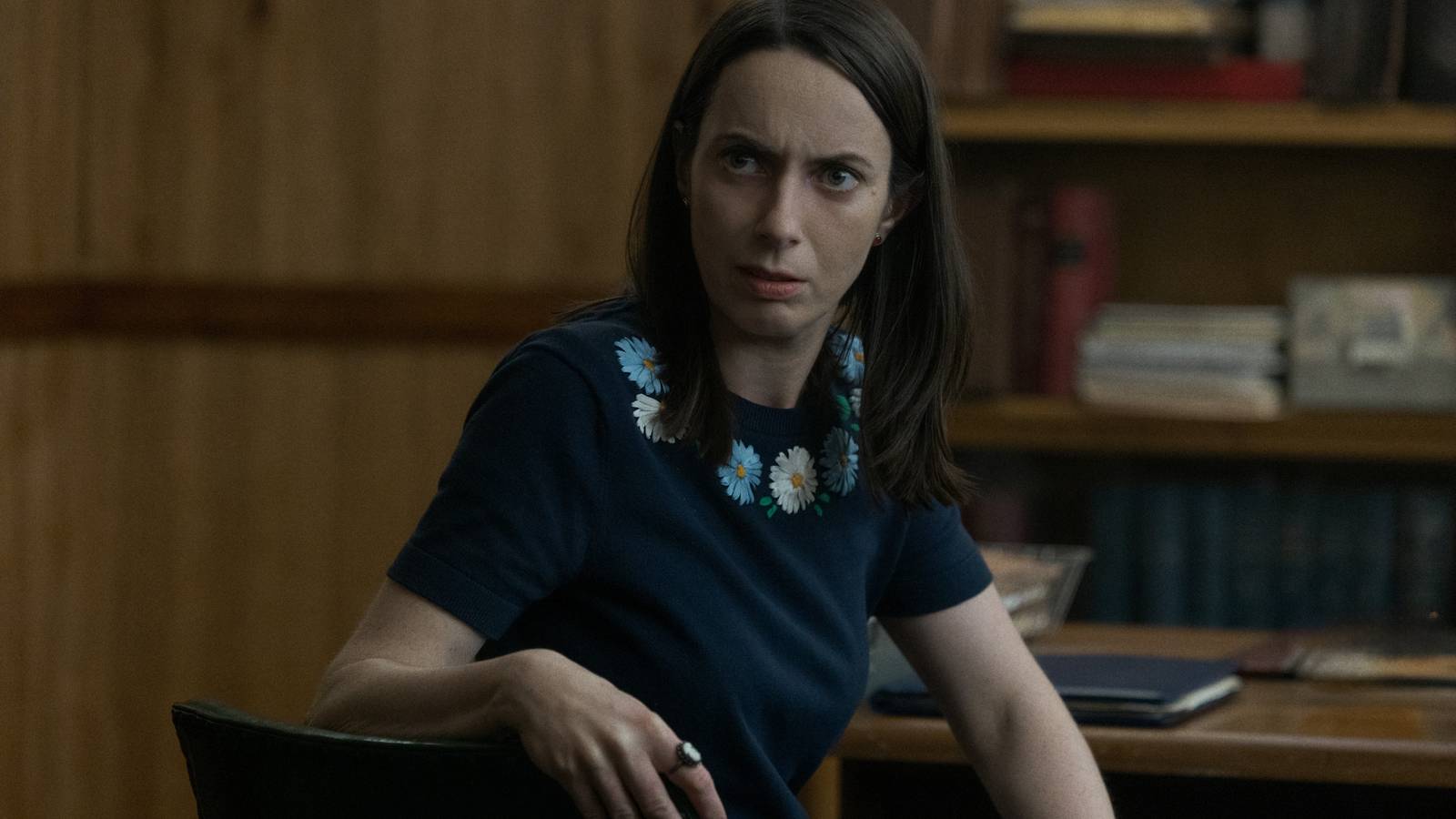
The inaugural season of Apple TV’s breakout horror-comedy sensation, Widow’s Bay, concluded its enthralling run with an episode provocatively titled "We Hope You Enjoyed Your Time!" While the residents of the titular cursed island town, particularly those who fell prey to Mayor Tom Loftis’ (Matthew Rhys) ill-fated tourism initiatives, likely found little enjoyment amidst the cults, sea hags, and slasher threats, audiences worldwide have unequivocally responded with a resounding "yes." Hailed by critics as a formidable contender for the best new show of 2026, Widow’s Bay has captivated viewers with its unique blend of dread and dark humor, culminating in a season finale that solidified its status as a genre-bending triumph.
In an exclusive interview with Polygon, executive producer and director Hiro Murai, who helmed five pivotal episodes including the two-part finale, offered profound insights into the intricate tapestry of Widow’s Bay‘s narrative, its unexpected twists, and the compelling character evolutions that have defined its debut season. Murai delved into the creative choices behind the shocking conclusion and offered tantalizing glimpses into what lies ahead for the series, which was recently renewed for a highly anticipated second season.
Unraveling the Curse: A Chronology of Dread and Deception
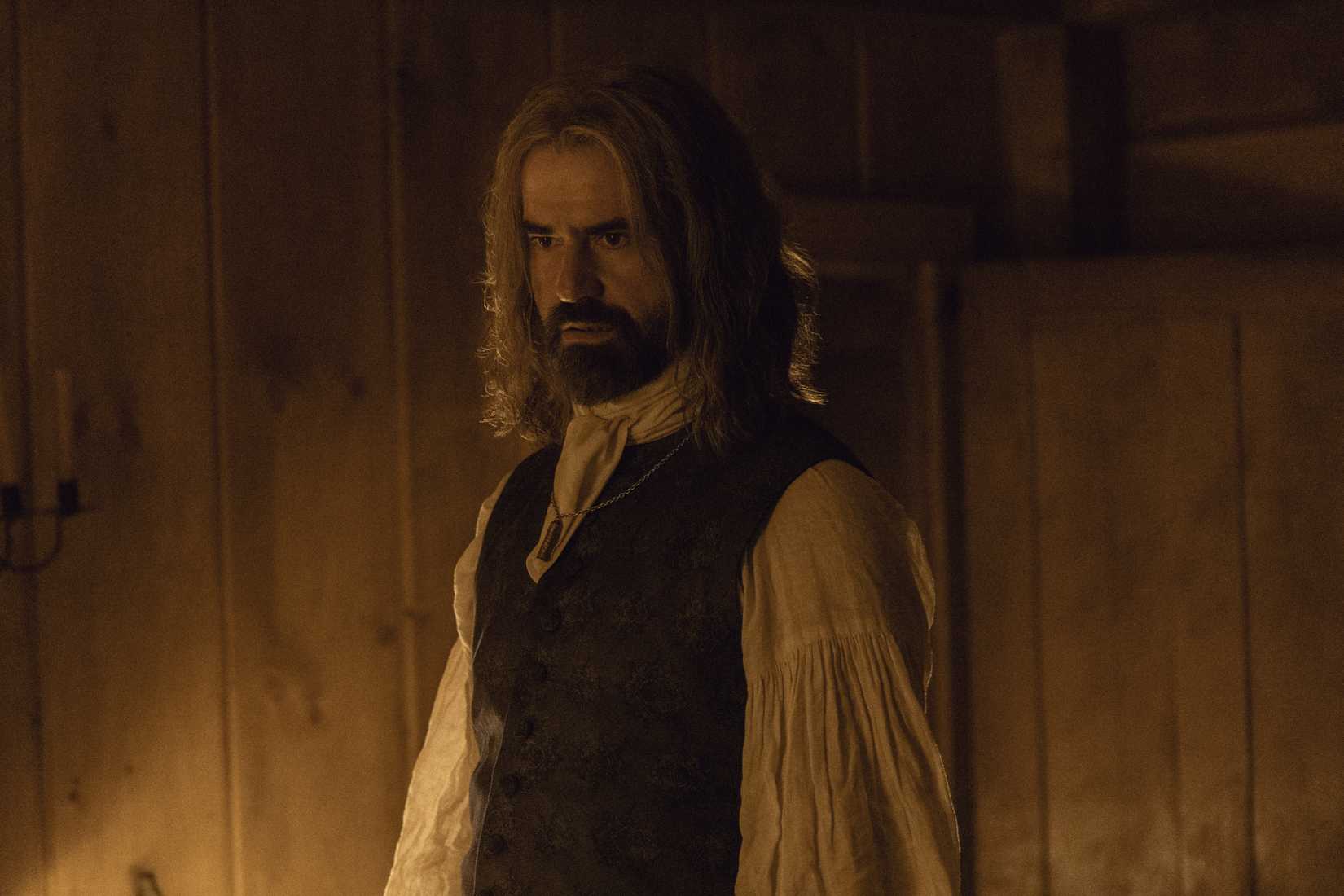
Widow’s Bay quickly established itself as more than just a standard spooky tale. The island’s pervasive horrors, from unsettling local legends to outright supernatural assaults, were revealed by episode 6 to stem from a 400-year-old pact. This ancient, infernal deal, struck between the Devil and the town’s original, morally dubious founder, Richard Warren (Hamish Linklater), granted Warren an insidious form of immortality, binding his lineage to the island’s perpetual torment.
The initial belief that breaking this curse was as simple as eliminating its progenitor propelled much of the season’s latter half. Mayor Loftis, driven by a desperate desire to sanitize his town’s image and revive its economy, partnered with the eccentric Wyck Crawford (Stephen Root) to exhume and ostensibly dispatch Warren’s undead remains in episode 7. This act, they believed, would finally sever the demonic tether and free Widow’s Bay from its centuries of affliction. The lifting of the immediate horrors offered a fleeting moment of hope, a false dawn for the beleaguered community.
However, Widow’s Bay thrives on subverting expectations, and this apparent victory proved to be another layer in the island’s elaborate deception. The true nature of the curse, it turned out, was far more deeply entrenched: it was tied not just to Warren himself, but to his very bloodline. As long as a descendant of Richard Warren drew breath, the curse would persist, dormant or active, a ticking time bomb waiting to reignite the island’s supernatural chaos.
This revelation propelled Mayor Loftis into a frantic genealogical investigation, meticulously tracing the convoluted branches of the Warren family tree. His search led him to a seemingly innocuous figure: his elderly, unassuming secretary, Ruth Livingston (K Callan), who was believed to be the last living descendant and, crucially, without progeny of her own. The stage was set for what Loftis hoped would be the definitive end to the curse.
The finale, "We Hope You Enjoyed Your Time!," plunged viewers into a maelstrom of revelations and moral compromises. On a night of ferocious storms, with the town’s terrified residents huddled in an eerie, makeshift shelter, Loftis confronted Ruth in her home, prepared to commit the ultimate act to save his town. But before he could, Ruth delivered a gut-wrenching twist: she revealed that she did have a child – Loftis’s deceased wife, making his own son, Evan (Kingston Rumi Southwick), the unwitting, last living descendant of Richard Warren.

In a moment of profound tragedy and dramatic irony, Sheriff Bechir Clemmons (Kevin Carroll) then arrived, unaware of Ruth’s shocking confession. Believing Ruth to be the final link in the cursed chain, Clemmons shot her, ostensibly to break the curse and protect his own imperiled wife. Loftis, confronted with the unbearable truth that his son was now the nexus of the island’s horrors, made a chilling decision: he concealed Evan’s true lineage. As the storm dramatically abated, and a fragile peace descended upon Widow’s Bay, the town believed itself saved. But the audience knew better.
"A Satisfying Character Arc": Official Responses and Thematic Depths
Murai reflected on the profound conclusion of the season, emphasizing that while it left a significant cliffhanger, it also delivered a complete narrative arc for its central protagonist. "I’ve always thought about this show as a story about Tom’s relationship to the town," Murai explained. "The throughline for the whole season is Tom accepting that this place is what it is."
This acceptance marks a radical departure for Mayor Loftis. Initially, he was the quintessential outsider, a slick, self-serving developer-turned-politician who saw Widow’s Bay as a problem to be solved, a brand to be repackaged for tourist consumption. His ambition blinded him to the island’s deep-seated malevolence, dismissing its horrors as mere folklore or solvable civic issues. His journey through the season, however, has been a brutal education, forcing him to confront the grim realities of his adopted home.
"So even though we don’t get into the minutia of what ultimately that thing is underneath the island, and whether we’re gonna save this town or not, really the arc is whether Tom can accept the reality of this place, and if he’s willing to do what it takes to sort of protect it," Murai elaborated. "To me, it felt like a satisfying character arc." Loftis’s final act of deception, born out of a desperate love for his son and a nascent, albeit morally compromised, commitment to the town, signifies his transformation. He is no longer trying to change Widow’s Bay; he is now actively participating in its dark traditions, becoming an integral part of the very cycle he sought to break.
Murai further elucidated the cyclical nature of the island’s torment, suggesting that the "ending" of the curse might be a temporary reprieve rather than a definitive resolution. "This island has gone through cycles," he noted. "There were periods that were really bad, and then it settled down and it would become mythology, and then it would rear its head again. So even if we ended the story here, it was about this cycle of haunts." This perspective underscores a core thematic element of Widow’s Bay: the indelible stain of history and the idea that some evils are not easily eradicated but merely ebb and flow, waiting for the opportune moment to resurface. The town’s fate, much like its past, seems to be trapped in an eternal loop of terror and deceptive calm.
Implications for a Second Season: Secrets, Alliances, and Lingering Shadows
With the official renewal for Widow’s Bay season 2 confirmed, the finale’s seismic shifts lay the groundwork for a compelling continuation. The immediate aftermath leaves a town basking in a fragile peace, unaware of the Sword of Damocles hanging over it in the form of young Evan. Mayor Loftis carries a crushing secret, one that places his own son at the heart of the island’s potential rebirth of horror. This moral quandary, the tension between paternal love and the well-being of an entire community, promises to be a central conflict.
When pressed for details on the future, Murai deferred to the show’s architect. "You’re going to have to ask Katie [Dippold] because I’ve been trying not to bother her about it," he said with a laugh, referring to the showrunner. "I know she’s been kind of tooling around with different ways to extend this universe and pick up where we left off." This suggests that Dippold and the writing team are actively exploring innovative ways to expand the lore and deepen the existing character dynamics.
Despite the showrunner’s tight lips, Murai couldn’t help but tease some of the "obvious loose plot threads" he’s eager to explore. "By the end of the season, we’re kind of resetting the table," he observed, "but Tom has the secret that he has to kind of keep from the rest of the town and, and he and Bechir have this sort of relationship now. There’s a lot to play with."
The newly forged, complex bond between Mayor Loftis and Sheriff Clemmons is ripe for exploration. Clemmons, believing he saved the town by killing Ruth, now carries the weight of that act, while Loftis silently harbors the truth that implicates his son. This shared, yet fundamentally different, burden could either bind them in a twisted alliance or create a fissure of mistrust that threatens to unravel the fragile peace. The implications of Evan’s lineage are enormous. Will the curse manifest through him? Will new factions emerge, perhaps cults seeking to harness or control the last descendant? Or will the island’s "cycles" of horror simply begin anew, irrespective of the current human drama? The possibilities are as vast and terrifying as Widow’s Bay itself.
The Craft of Tension: Behind the Scenes of a Claustrophobic Climax
Beyond the narrative brilliance, Murai also offered a rare glimpse into the intense production challenges and creative ethos that shaped the season finale. He spoke to the deliberate choice to pivot from overt spectacle to a more psychological, character-driven horror in the concluding episodes.

"Through the course of the season, we had so many set pieces and horror benchmarks we were playing with," Murai recounted. "We were doing the Halloween episode or we’re doing the Jaws episode. So there was something kind of daring but fun about making the last two episodes about the horrors of what these characters are willing to do." This strategic shift allowed the show to explore a different, perhaps more insidious, form of terror – the internal conflicts, moral compromises, and desperate acts born from fear and survival.
This "anti-spectacle" approach demanded a heightened focus on performance and atmosphere. "In some ways, it’s like anti-spectacle. It’s very character based and very psychological," Murai explained. "But from a performance standpoint, that was really exciting, to just kind of trap all these characters in these confined places and then add pressure until they sort of pop." The claustrophobic settings of the finale – the eerie shelter where the townspeople hid from the storm, and Ruth’s house where the ultimate confrontation unfolded – served as pressure cookers for the characters, amplifying their anxieties and forcing their hidden truths to the surface.
The immersive nature of the filming environment further contributed to the on-screen tension. Murai vividly described the challenging conditions faced by both cast and crew. "It created this very claustrophobic atmosphere for the actors and for the crew, because the crew was stuck in the shelter and Ruth’s house for like two weeks straight with the rain effects happening outside. It was very immersive TV-making," he revealed. "I think everybody felt a little tense. These scenes are tense, these locations are tense, and being in a set with like 200 other people is tense. So that’s in the show as well." This palpable sense of unease, born from the grueling and immersive production, undoubtedly translated into the raw, visceral performances and the unsettling atmosphere that made the finale so impactful. It’s a testament to the show’s creative team that the physical demands of filmmaking were harnessed to enhance the very emotional and psychological horror Widow’s Bay aimed to portray.
Widow’s Bay has carved out a distinctive niche in the crowded television landscape, merging the macabre with genuine humor and crafting a deeply human story amidst supernatural chaos. Its season 1 finale not only delivered a shocking conclusion but also deftly set the stage for a continuation that promises even deeper dives into the darkness that permeates this cursed island and the complex characters caught in its grip. As the town breathes a sigh of relief, unaware of the brewing storm, audiences eagerly await what new horrors and hilarious predicaments await in season 2.
Widow’s Bay is streaming now on Apple TV.


 Lina Irawan
 Sagoh
Sagoh