

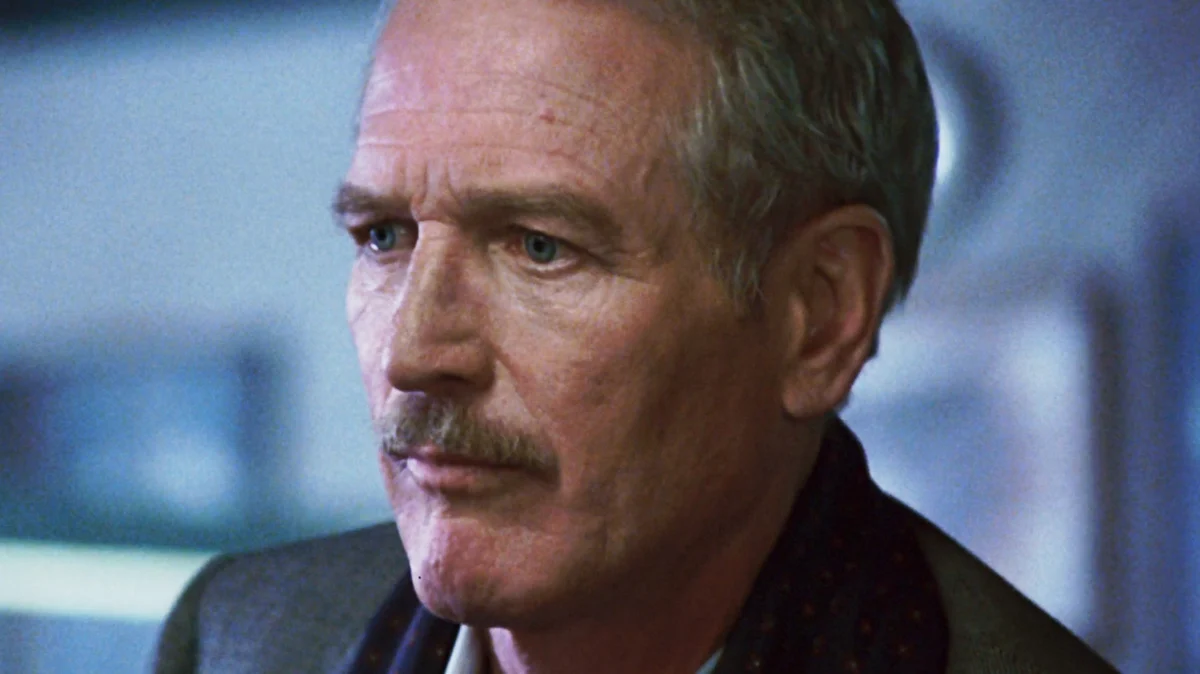
It is a curious quirk of Hollywood history that some of its most luminous stars often find their greatest accolades arriving long after their peak cultural dominance. For Paul Newman, the blue-eyed icon who defined "cool" for generations, the journey toward formal recognition was famously protracted. While the world remembers his long-awaited Academy Award victory for The Color of Money in 1986—a win that felt like a collective correction by the film industry—a similar narrative played out in the realm of television. In 2005, the twilight of his career, Newman finally secured his first and only Primetime Emmy Award for his role in the star-studded, yet strangely forgotten, HBO miniseries Empire Falls.
The Context: A Titan in Transition
By the mid-2000s, Paul Newman was a living monument. Having retreated from the relentless pace of blockbuster filmmaking, he had transitioned into a stage of his career defined by selective, character-driven work. When he signed on for Empire Falls, an ambitious two-part adaptation of Richard Russo’s 2001 Pulitzer Prize-winning novel, the industry took notice.
The project was not merely a television production; it was a testament to the era when HBO was cementing its reputation as the gold standard for prestige drama. The miniseries boasted an ensemble cast that reads like a masterclass in acting: Ed Harris, Helen Hunt, Philip Seymour Hoffman, and Joanne Woodward all featured prominently. Despite this, Empire Falls has curiously drifted into the ether of "prestige television that time forgot," overshadowed by the seismic cultural impact of HBO’s other offerings from that period, such as The Sopranos or The Wire.
Chronology: The Road to Recognition
To understand the significance of Newman’s win in 2005, one must look at his sparse but meaningful history with the Academy of Television Arts & Sciences. Unlike his film career, which saw him nominated for Academy Awards across four different decades, his relationship with the Emmys was far more sporadic.
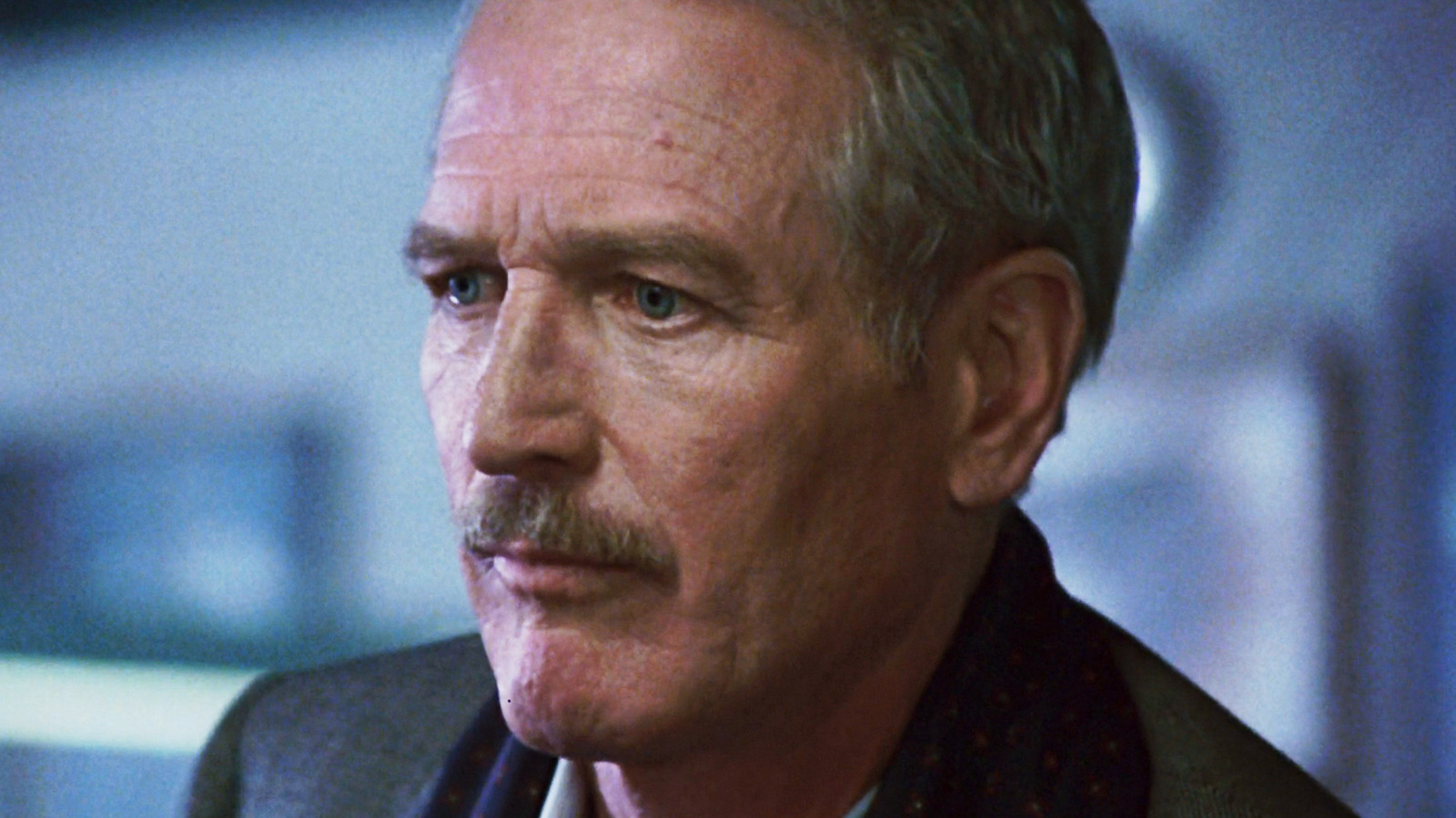
A History of Nominations
Before Empire Falls, Newman’s relationship with the Television Academy was defined by near-misses and niche recognition:
- 1981: Nominated for Outstanding Directing in a Limited Series or Special for The Shadow Box.
- 1996: Nominated for Outstanding Graphic Design and Title Sequences for Central Park West.
- 2003: Received an Outstanding Lead Actor nomination for his performance in Showtime’s Our Town. He was widely considered the frontrunner, yet the award went to William H. Macy for Door to Door.
The 2005 Emmy cycle felt different. Newman was nominated twice: once as an executive producer for Empire Falls and once for his supporting performance as Max Roby. When he finally walked away with the statue for Outstanding Supporting Actor in a Miniseries or a Movie, it was a moment of long-overdue closure for a man who had already conquered the silver screen. He bested a formidable field that included Randy Quaid, Christopher Plummer, Brian Dennehy, and his own co-star, Philip Seymour Hoffman.
Supporting Data: The Character of Max Roby
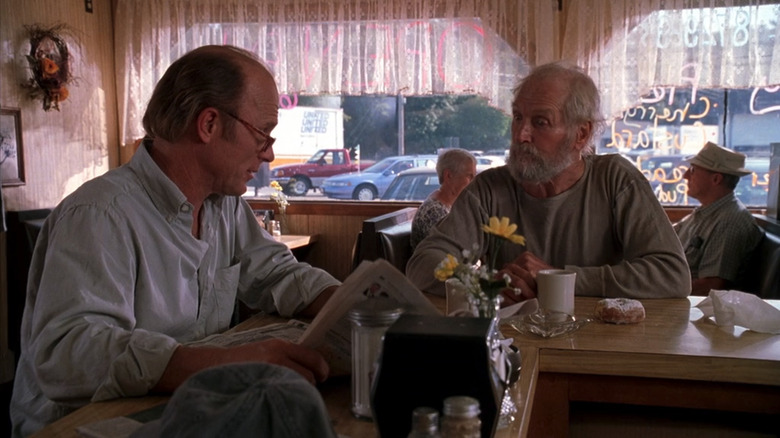
At the heart of Empire Falls is the fictional, decaying Maine town of the same name. Ed Harris portrays Miles Roby, a man tethered to the town through his role as manager of the Empire Grill. Miles is a man of quiet resignation, a stark contrast to his father, Max Roby.
Max, played by Newman, is a character study in disheveled charm and irascible volatility. He is a vagabond, a man who has burned every bridge he ever crossed, yet he possesses a magnetism that is impossible to look away from. For audiences who grew up on the sleek, controlled charisma of Cool Hand Luke or The Hustler, seeing Newman as the unkempt, aging Max was jarring. He embraced the role with a lack of vanity that only a legend of his stature could afford.
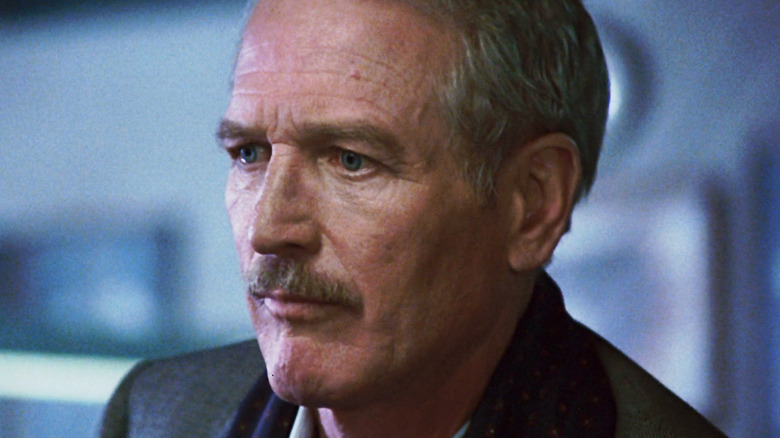
The production itself was a massive undertaking, split into two distinct parts that functioned as a three-hour film. It was written by Richard Russo, ensuring the dialogue remained faithful to the Pulitzer-winning source material. The series delved deep into the socio-economic rot of a dying mill town, using the relationship between the cynical, aging father and his weary son as its emotional anchor.
Critical Reception: The Weight of Expectations
The legacy of Empire Falls is complicated by the mixed critical reception it received upon its release. While the performances were universally lauded, the structure of the piece became a point of contention.
The "Slow-Paced" Dilemma
Critics of the time, such as Virginia Heffernan of The New York Times, acknowledged the "meticulous performances" but took issue with the pacing. Her critique highlighted the miniseries as "mannered, creaky, and overwritten." Similarly, Brian Lowry of Variety noted that while the script contained "modest gems," the overall product felt like a series that would be "more written about than actually watched."
This critical hesitation likely contributed to the show’s eventual slide into obscurity. In the hyper-competitive landscape of mid-2000s television, being "good but slow" was often a death sentence for a program’s long-term legacy. Some critics, such as John Leonard of New York Magazine, went as far as to suggest that Newman’s performance felt like a retread of his work in Nobody’s Fool, another Russo adaptation. This "been there, seen that" sentiment arguably robbed the series of the momentum it needed to become a staple of the prestige TV canon.
Implications: Why We Should Revisit the "Forgotten" Miniseries
Despite the lukewarm critical reception regarding its pacing, Empire Falls remains a vital piece of the Paul Newman filmography. It stands as his final on-screen performance—a poignant swan song for an actor whose career spanned over half a century.
The Case for Rediscovery
In the age of streaming, where content is consumed in rapid bursts, the "slow-burn" nature of Empire Falls might actually be its greatest asset. It is a character piece, not a plot-driven thriller. It demands patience, rewarding the viewer with nuanced interactions between titans of acting. The chemistry between Newman and Harris is palpable; it captures a complex, fraught father-son dynamic that feels deeply authentic.
Furthermore, the miniseries serves as a historical document of a specific era of HBO. It represents a time when the network was willing to invest heavily in literary adaptations, betting on the prestige of the cast rather than the spectacle of the production. Today, those who are willing to look past the pacing complaints will find a masterclass in acting. There is a profound joy in watching Newman, in his final role, relish every line of dialogue, snapping at his co-stars with a mischievous glint in his eye that reminds us why he remained the most beloved actor of his generation until his very last performance.
Conclusion: A Legacy Secured
Paul Newman’s only Emmy win was not just an award; it was a final validation from the industry he had shaped. While Empire Falls may never be mentioned in the same breath as The Sopranos or The Wire, it holds a distinct, quiet importance. It is the record of an icon choosing to spend his final professional hours exploring the complexities of human frailty in a small, forgotten town. For fans of great acting, and for those who wish to see the final brushstrokes of a legendary career, Empire Falls is not merely a show worth remembering—it is a show worth watching.











No comments yet. Be the first to join the conversation!