

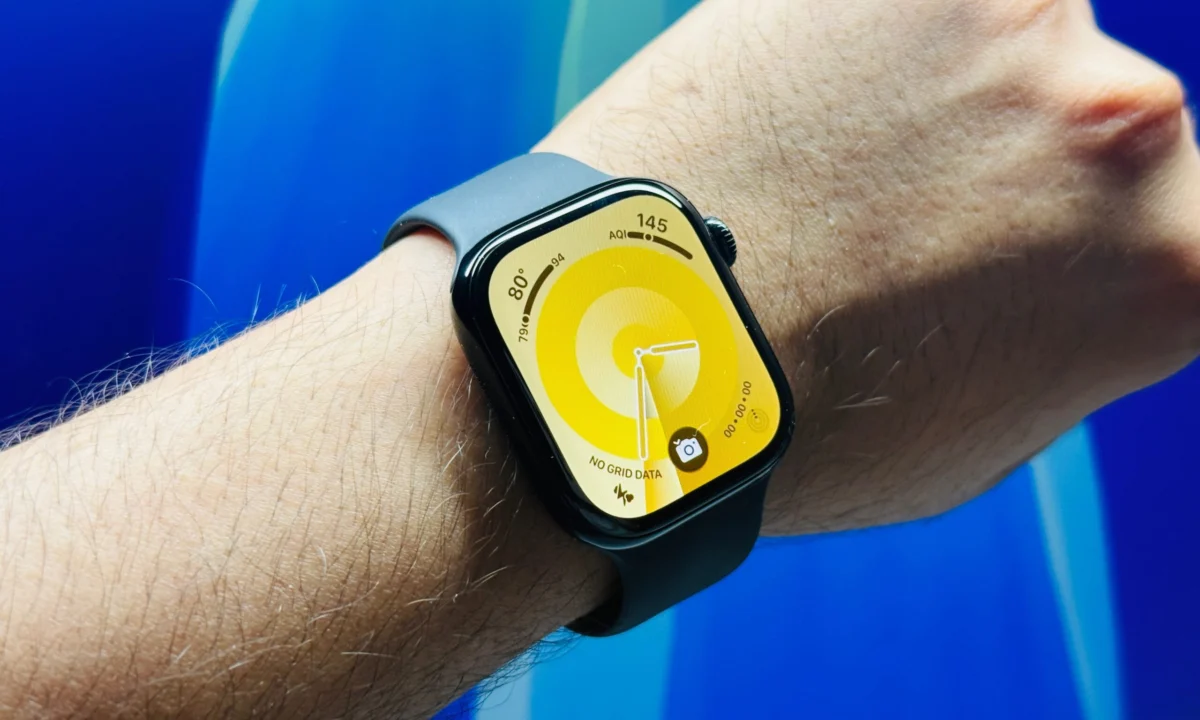
The Apple Watch has long held the title of the industry benchmark for smartwatch displays. Its combination of vibrant OLED panels, high peak brightness, and deep contrast ratios has made it the gold standard for wearables. However, as consumers demand longer battery life without sacrificing performance, Apple is reportedly turning to a sophisticated new display architecture to push the limits of power efficiency: High-Mobility Oxide (HMO).
Industry reports originating from The Elec suggest that LG Display is actively developing and validating this new backplane technology on its sixth-generation OLED production lines. This shift signals a potential pivot away from the current market-leading LTPO (Low-Temperature Polycrystalline Oxide) technology, hinting at a future where our wrists can stay powered for days rather than hours.
Understanding the Backplane: The Engine Behind the Pixels
To understand why HMO is such a significant development, one must first understand the role of the "backplane." In any modern OLED display, the backplane is the underlying layer of transistors that manages the flow of electricity to each individual pixel. It acts as the brain of the screen, determining which pixels turn on, which turn off, and exactly how much brightness each emits.

For years, Apple has relied on LTPO technology to achieve its industry-leading energy management. LTPO’s primary advantage is its ability to dynamically modulate the display’s refresh rate—dropping it as low as 1Hz when the screen is idle or displaying a static "Always-On" watch face. By reducing the number of times the screen updates per second, the display consumes significantly less power.
However, LTPO is not without its drawbacks. The manufacturing process is notoriously complex, requiring advanced techniques like laser crystallization and ion implantation to achieve the necessary electron mobility. These steps are not only time-consuming but also expensive, driving up the cost of production for each unit.
The Promise of High-Mobility Oxide (HMO)
HMO represents a departure from this complex, multi-stage manufacturing process. By leveraging the inherent low-power advantages of oxide transistor technology, HMO aims to deliver similar—if not superior—energy efficiency without the heavy reliance on the intricate manufacturing steps required for LTPO.

How HMO Changes the Equation:
- Manufacturing Simplification: Because HMO technology does not require the same level of laser crystallization and ion implantation as current LTPO panels, the production process becomes more streamlined.
- Reduced Power Draw: By optimizing the transistor architecture, HMO panels can operate with lower voltage requirements. This reduction in electrical demand at the pixel level directly translates to increased battery longevity for the end user.
- Cost Efficiency: With a less complex manufacturing footprint, Apple could theoretically reduce the overhead associated with display production, potentially improving margins or allowing for more advanced components elsewhere in the device.
In essence, if the transition to HMO is successful, future Apple Watch models could achieve significantly better battery endurance while maintaining the high-resolution, high-refresh-rate experience that users expect from Apple’s ecosystem.
A Chronology of Apple’s Display Evolution
Apple’s journey toward the "perfect" wearable display has been a decades-long effort of strategic iterations. Understanding the timeline of these advancements highlights why the move to HMO is a natural progression.
- The Early Days (2015–2017): The initial Apple Watch iterations utilized standard LTPS (Low-Temperature Polycrystalline Silicon) OLED panels. These screens were vibrant but lacked the advanced power-saving features required for true "Always-On" functionality.
- The LTPO Revolution (2018–Present): With the introduction of the Series 4, Apple began the transition to LTPO. This was the turning point that allowed the company to introduce the Always-On display in the Series 5, as the technology allowed the watch to remain visible without draining the battery in a few hours.
- The Refining Phase (2020–2024): Apple continuously refined the LTPO backplane, improving pixel density and brightness levels (climbing to 3,000 nits in the Apple Watch Ultra) while maintaining the 1Hz idle refresh rate.
- The HMO Development (2025–Present): According to recent supply chain reports, LG Display has been tasked with developing the HMO backplane, aiming to overcome the limitations of current oxide-based panels.
- The Deployment Window (2027–2028): While the technology is currently in the validation phase, analysts expect the first commercial rollout in an Apple wearable to occur no earlier than 2027, with a 2028 launch being a more conservative, and likely, estimate.
The Technical Hurdle: Speed and Stability
Despite the promise of HMO, the transition is not guaranteed to be seamless. The primary challenge lies in the "mobility" of the electrons within the oxide transistors.

"High-mobility" refers to how quickly these transistors can switch on and off to update the screen. Current mass-produced oxide panels are often criticized for their slower switching speeds compared to LTPS. For a high-resolution display that requires smooth scrolling, fluid animations, and high-frame-rate interaction, slow switching speeds are unacceptable.
LG Display is currently tasked with the difficult job of closing this gap. To make HMO viable for an Apple-grade product, the transistors must be able to switch fast enough to support modern UI fluidity without sacrificing the energy-saving benefits of the oxide structure. Achieving this level of performance across a full-sized, mass-produced panel, while maintaining high reliability and longevity, remains the single largest obstacle for the project.
Official Responses and Industry Outlook
As is standard practice, neither Apple nor LG Display has officially commented on these reports. Apple is notoriously tight-lipped regarding its supply chain and future hardware specifications, and its partners are bound by strict non-disclosure agreements.

However, market analysts view the pivot to HMO as a "well-worn playbook" for the tech giant. Apple consistently identifies bottlenecks in current technology—in this case, the manufacturing complexity and power constraints of LTPO—and funds or incentivizes its display partners to develop a proprietary, more efficient alternative.
If HMO succeeds on the Apple Watch, the implications are vast. The technology is modular and scalable. Should LG prove that HMO can handle the demands of a high-end wearable, it is almost certain that Apple will seek to integrate the technology into the iPhone lineup. An iPhone with an HMO-based OLED display could see an immediate boost in battery life, addressing one of the most frequent consumer complaints regarding modern smartphones.
Broader Implications for the Wearable Market
The move toward more efficient display technology is part of a larger, broader trend in the wearable sector. As devices move away from being simple notification mirrors and toward becoming independent health-tracking powerhouses, the display remains the biggest power draw.

The Power-Performance Balance
The industry is currently caught in a tug-of-war between screen brightness and battery life. Devices like the rumored Acer Aspire Badge represent a shift toward "ambient" wearables—screens that are always there but serve specific, low-power functions. Apple’s approach, however, remains focused on the "all-in-one" device. By investing in HMO, Apple is betting that it can keep the Apple Watch a full-featured, high-performance computer while simultaneously solving the battery anxiety that plagues the wearable market.
Competitive Pressure
Competitors such as Samsung and Google have also invested heavily in display technology, but Apple’s vertical integration of software and hardware often gives it a distinct advantage in managing power consumption. If Apple successfully implements HMO, it will set a new barrier to entry for competitors who are currently limited by standard display architectures.
Conclusion: The Long Road to 2027
While the prospect of an Apple Watch that lasts significantly longer on a single charge is an exciting prospect for consumers, patience is required. The transition from lab-proven technology to mass-produced consumer electronics is fraught with potential for delay.

For now, the development of HMO remains a behind-the-scenes engineering feat. It represents the ongoing, invisible labor that defines the modern tech industry—the constant search for more efficient ways to illuminate the screens that govern our daily lives. Whether it arrives in 2027 or 2028, the shift to High-Mobility Oxide looks to be the next major chapter in the evolution of the Apple Watch, ensuring that as the device becomes more capable, it remains as reliable and enduring as ever.












No comments yet. Be the first to join the conversation!