Laily UPN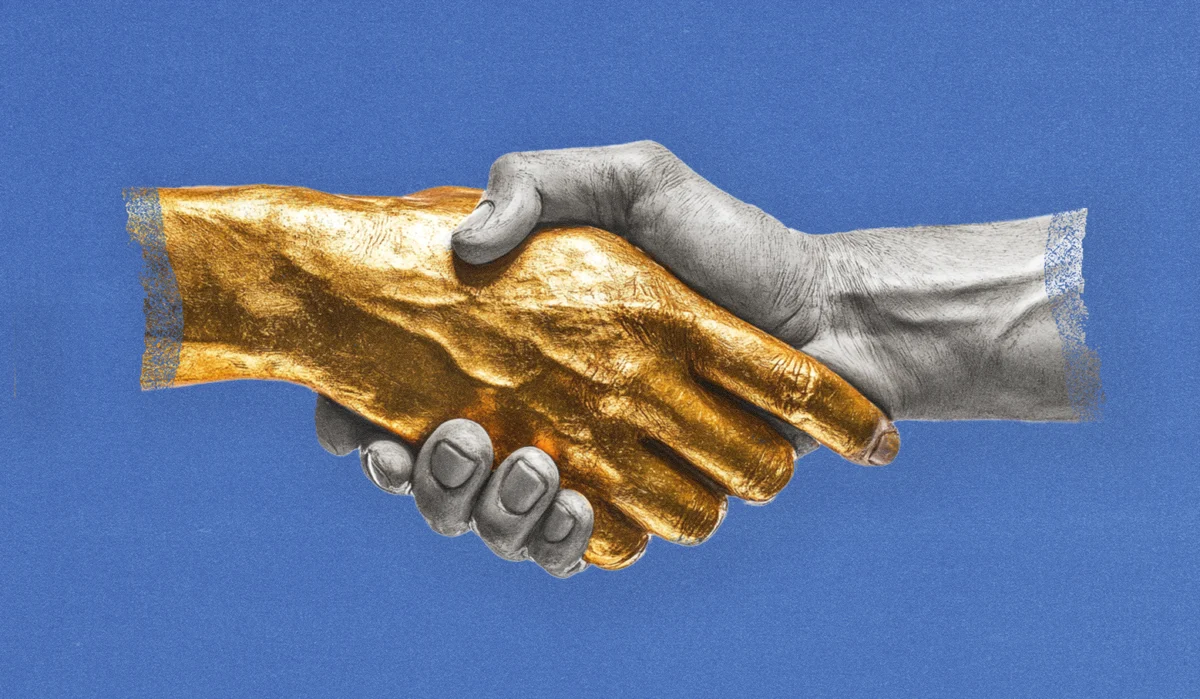
By Editorial Staff
June 12, 2026
In a move that has left the advertising industry oscillating between relief and cynical bewilderment, Publicis Groupe and The Trade Desk (TTD) have officially buried the hatchet. The resolution, announced in a terse, joint statement on June 12, 2026, effectively ends a three-month standoff that once threatened to upend the delicate ecosystem of programmatic media buying.
The reconciliation comes after a high-stakes power struggle that saw one of the world’s largest advertising holding companies explicitly instruct its clients to pivot away from the industry’s most prominent independent Demand-Side Platform (DSP). Now, just 90 days after Publicis "went nuclear," the two giants are back in business, leaving industry observers to wonder if the entire ordeal was a calculated negotiation tactic, a genuine corporate correction, or a temporary ceasefire in an inevitable structural war.
The Chronology of a Corporate Standoff
The conflict, which dominated headlines throughout the spring of 2026, followed a predictable arc of escalation and quiet de-escalation.
- March 2026: The friction hit a breaking point when Publicis Groupe completed an internal audit of its programmatic spend. The audit allegedly uncovered “irregularities” in how The Trade Desk applied its service fees. Specifically, Publicis accused the DSP of “fee stacking”—applying ad-tech fees on top of other charges in a manner the agency group claimed violated their existing contractual agreements.
- Late March 2026: Publicis took the unprecedented step of removing The Trade Desk from its "recommended" list of DSPs. This move was not merely a administrative change; it was a directive to clients to halt spending on the platform. The market reacted violently: The Trade Desk’s stock plummeted by approximately 13% as investors panicked over the potential loss of a primary revenue driver.
- April–May 2026: Throughout the spring, both parties engaged in a war of nerves. Publicis briefed the press on the importance of transparency and agency-led audits, while simultaneously squashing rumors that it intended to build a rival DSP. Meanwhile, The Trade Desk maintained a posture of defensive confidence, emphasizing its commitment to client outcomes and the efficiency of its automated supply chain.
- June 12, 2026: The "round trip" concluded. A joint statement confirmed that the differences identified in the audit had been addressed to the satisfaction of both parties. Publicis restored The Trade Desk to its recommended status, and the public sparring abruptly ceased.
Unpacking the “Fee Stacking” Allegations
At the heart of the dispute was the complex, often opaque nature of ad-tech economics. Fee stacking is a persistent grievance in the programmatic space. Advertisers frequently struggle to track the "take rate" of various intermediaries, and when a major DSP adds layers of fees that are not transparently disclosed or contractually approved, it creates a massive friction point.
For Publicis, the audit was a signal to its clients that it was acting as a vigilant steward of their capital. By challenging The Trade Desk, Publicis wasn’t just disputing a few basis points; it was asserting its right to audit the “black box” of programmatic buying. However, the speed of the resolution suggests that the "irregularities" were perhaps less about systemic malfeasance and more about contractual interpretation—a disagreement over definitions that was eventually solved behind closed doors.
Official Responses and the Vacuum of Transparency
The joint statement released by the two firms was a masterclass in corporate brevity:
"Publicis and The Trade Desk were able to address previous differences as identified in the audit and can now recommend TTD to our clients along with other DSP partners. Publicis and The Trade Desk are now focused on moving forward and continue to maintain a mutual commitment to delivering measurable outcomes for advertisers."
The lack of detail regarding how the differences were addressed has left a vacuum filled by industry analysts. Steve Boehler, founder of the agency consultancy Mercer Island Group, noted the absurdity of the rapid pivot. "It’s interesting that Publicis went nuclear, accused The Trade Desk of an assortment of bad practices including non-transparency, and in less than 90 days they are friends again," Boehler said. "While there undoubtedly is a made-for-TV movie lurking somewhere in this story, my guess is that the advertiser is not the party that wins here."
The sentiment reflects a broader cynicism. When two multi-billion-dollar entities announce a resolution without clarifying the terms, the market assumes the resolution was driven by mutual economic necessity rather than a sudden alignment of corporate ethics.
Implications: A Truce, Not a Peace
While the immediate crisis has passed, the structural tensions that birthed it remain very much alive. The Publicis-Trade Desk standoff was, in many ways, a proxy for the shifting power dynamics between holding companies and the ad-tech vendors that facilitate their business.
1. The Power Struggle for the Middle Layer
The modern agency model is under constant pressure from automation. As platforms like The Trade Desk continue to build tools that allow for more direct-to-advertiser relationships, the role of the agency as a media buyer becomes increasingly marginalized. By auditing—and briefly banning—a major DSP, Publicis was effectively trying to assert its relevance as the ultimate gatekeeper of client spend.
2. The Limits of Agency Leverage
The fact that this dispute ended in a reconciliation highlights the "sticky" nature of the ad-tech ecosystem. Clients do not shift platforms overnight. The operational burden of migrating billions of dollars in programmatic campaigns is immense, and the lack of viable alternatives to a player as dominant as The Trade Desk meant that the agency was effectively handcuffed. As Karsten Weide, principal and chief analyst at W Media Research, observed: "When billions of dollars are on the table, business wins out over grievances."
3. The Future of Transparency
The audit proved that agencies can force a conversation about fee structures. Even if the resolution was quiet, the precedent has been set. Future contracts between holdcos and DSPs will likely include much stricter language regarding fee disclosure, as the "Publicis model" of aggressive auditing has now been stress-tested.
The Advertiser’s Perspective
Perhaps the most neglected party in this entire saga is the advertiser. Throughout the three-month standoff, clients were caught in the middle of a proxy war they did not initiate. For many, the "shrug" that greeted the news in March proved that clients are increasingly focused on results rather than the underlying infrastructure of the programmatic pipes.
However, if the "fee stacking" issue was real, then advertisers have been paying for the silence that followed the resolution. If the fees were truly illegitimate, did the clients get a refund? Was the "fix" retroactive? These are questions that neither Publicis nor The Trade Desk are likely to answer, keeping the advertiser in a state of managed ignorance.
Conclusion: A Ceasefire in the Programmatic War
As the dust settles, the industry is left with a sense of déjà vu. The standoff was a potent reminder that the programmatic supply chain is built on a foundation of tangled incentives. While this specific dispute has been resolved, the structural misalignment between those who buy media and those who provide the software to do so is unlikely to disappear.
"They’ve agreed to move forward, but the underlying tension remains," said Weide. "This may well be a ceasefire, not a permanent peace."
For now, the two titans are back at the table. The stock prices have stabilized, the client mandates have resumed, and the industry continues its march toward an increasingly automated future. But for those watching closely, the 90-day war between Publicis and The Trade Desk serves as a cautionary tale: in the high-stakes game of modern advertising, the loudest arguments are often resolved in the quietest rooms, and the most dramatic public rifts are often just business as usual.


 Pevita Pearce
 Sagoh
Sagoh