Nana
Nana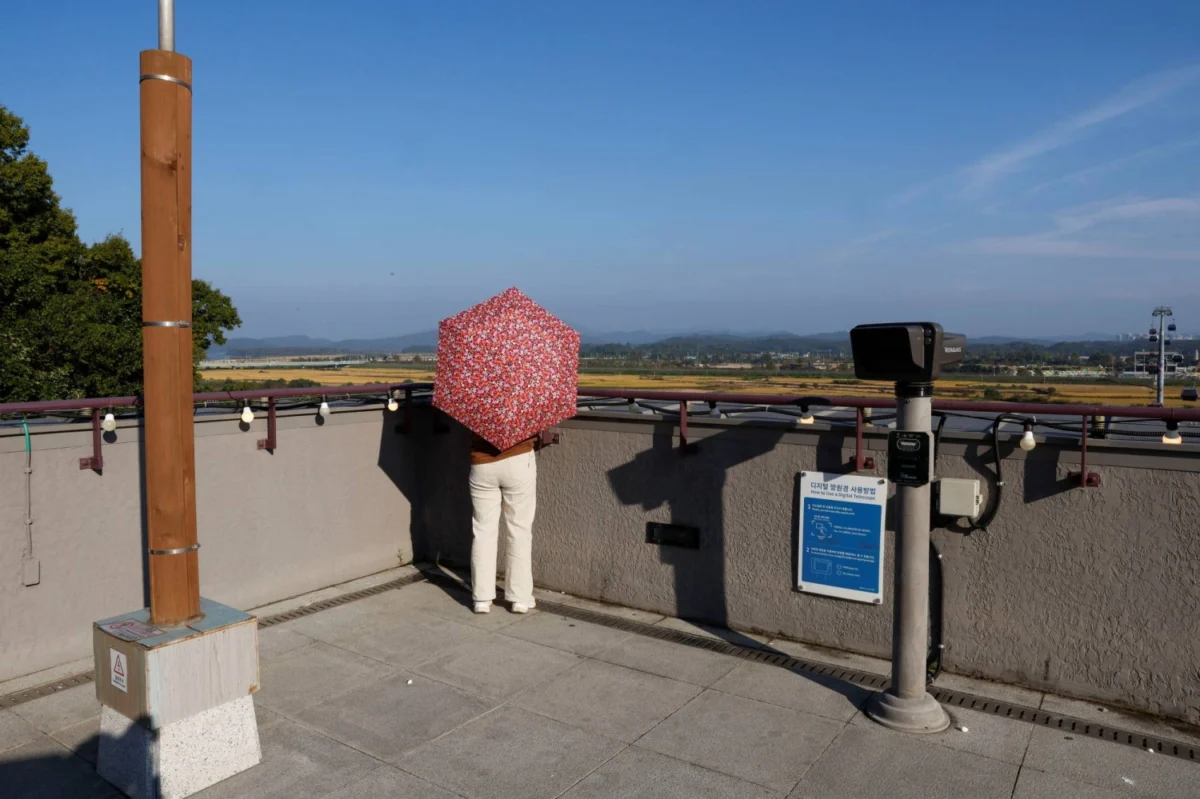
SEOUL – In a significant recalibration of border policy, South Korea’s Ministry of National Defense announced on Wednesday a strategic initiative to shrink the Civilian Control Line (CCL), a heavily restricted buffer zone that has long separated the public from the world’s most militarized frontier. By 2027, the restricted area will be reduced from its current 10-kilometer reach to an average of six kilometers, effectively opening vast tracts of land to farmers, residents, and the burgeoning tourism sector.
This policy shift represents more than a bureaucratic adjustment; it signals a fundamental change in how Seoul manages its security architecture. As the nation faces a shrinking pool of military conscripts, the government is transitioning from a strategy of manpower-intensive, physical barriers to one defined by artificial intelligence, advanced surveillance, and digital integration.
The Landscape of the Conflict
The Korean Peninsula remains caught in a suspended state of hostility. The 1950-1953 Korean War concluded with an armistice—a temporary cessation of hostilities—rather than a formal peace treaty. The resulting Demilitarized Zone (DMZ), a 250-kilometer-long strip of land, acts as a physical scar across the peninsula, flanked by the CCL, which was established decades ago to create a secondary layer of protection for military facilities and to regulate access to sensitive front-line regions.
For generations, the CCL has acted as an economic and social chokehold. Ordinary South Korean citizens wishing to reside, farm, or even renovate property within this zone have been subjected to stringent military oversight. The restrictions have historically turned these border counties into "frozen zones," where economic development was stifled by the requirements of national security.
Chronology of a Shifting Frontier
- 1953: The Korean Armistice Agreement establishes the DMZ, leading to the gradual implementation of the Civilian Control Line to manage the immediate hinterlands.
- Late 20th Century: The CCL remains a rigid, static line, strictly enforced to prevent espionage and maintain readiness for potential rapid mobilization.
- 2018-2019: The administration of then-President Moon Jae-in engages in a period of high-level diplomacy, leading to the removal of propaganda loudspeakers and temporary de-escalation measures.
- 2022-2023: The administration of President Yoon Suk Yeol adopts a more hawkish posture, leading to a resurgence of psychological warfare, including North Korean "noise provocations" that rattled local border residents.
- 2024: Defense Ministry officials conclude that advancements in surveillance technology allow for a smaller physical footprint.
- 2027 (Target Date): The full implementation of the reduced six-kilometer CCL becomes effective, marking the first major structural change to the border zone in years.
Official Responses: Balancing Security and Prosperity
Defense Minister Ahn Gyu-back, speaking at a press briefing in Seoul, emphasized that the decision was a calculated effort to modernize the nation’s defense-in-depth strategy. "We will enable regional development to the extent that it does not interfere with military operations," Ahn stated. "The goal is to enhance the convenience of local residents while ensuring the effectiveness of military operations."
The ministry’s plan goes beyond simply redrawing a line on a map. It includes a long-awaited modernization of administrative procedures. Notably, the government will simplify flight approval processes for agricultural drones—a technology that has become essential for modern farming but was previously hampered by the military’s strict "no-fly" zones near the border.
The Local Perspective
For the residents of border counties like Yeoncheon and Ganghwa, the news is a welcome reprieve from decades of administrative paralysis.
Kim Deok-hyeon, the mayor of Yeoncheon County, lauded the decision. "The measures will significantly alleviate the inconvenience faced by local farmers," he noted. For years, the reality of living on the "front line" meant that simple tasks, such as constructing a barn or expanding a greenhouse, required multi-layered military approval.
Councillor Park Heung-yeol of Ganghwa County highlighted the frustration surrounding private property rights. "Local residents have long harbored complaints due to inconveniences regarding access procedures and the inability to exercise their property rights," added Kim Seok-in, a local official. The relaxation of these rules is expected to stimulate regional growth, providing an incentive for younger populations to remain in or return to these rural, border-adjacent communities.
Technological Shifts: The AI-Driven Border
The decision to pull back the CCL is not merely a political concession to border residents; it is a tactical response to demographic and technological realities. With South Korea’s birth rate plummeting, the military faces a shrinking pool of personnel to staff traditional guard posts.
"South Korea is increasingly relying on technologies such as CCTV and mobile apps to secure front-line areas," says Lim Eul-chul, a North Korea expert at Kyungnam University. "The move reflects a view that the AI era has made traditional, manpower-intensive border patrols obsolete."
By integrating high-definition, AI-monitored camera arrays, ground sensors, and automated drone reconnaissance, the South Korean military can now monitor broader swathes of territory with a fraction of the human resources previously required. This "smart border" approach allows for a thinner physical presence while maintaining—or even increasing—the ability to detect infiltrations or provocations.
Geopolitical Implications
Analysts suggest that the move is unlikely to trigger a significant backlash from Pyongyang. Because the land being "opened" lies entirely on the southern side of the border, it does not violate any existing inter-Korean agreements regarding the DMZ.
However, the atmosphere of the border remains volatile. The region has recently seen North Korea deploy balloons filled with trash, and the South has responded with renewed psychological broadcasts. Despite this, the South Korean government appears determined to decouple local economic policy from the cyclical nature of North-South tensions.
By empowering local governments and residents to develop their own land, Seoul is effectively signaling a long-term commitment to normalizing life in the border provinces. It is an acknowledgment that the "security state" model of the 20th century is no longer sustainable in a modern, democratic South Korea.
Conclusion: A New Era for the Borderlands
The reduction of the Civilian Control Line is a milestone in the normalization of South Korea’s northern regions. By moving from a policy of exclusion to one of managed integration, the government is attempting to solve a dual problem: providing economic relief to rural populations and optimizing national security through modern technology.
As 2027 approaches, the success of this initiative will be measured not just by the distance the line moves, but by the ability of local communities to thrive in the shadow of one of the world’s most dangerous borders. For the farmers of Yeoncheon and the residents of Ganghwa, the shift represents the first tangible step toward reclaiming their land from the frozen conflict that has defined their lives for seventy years.
The integration of AI and surveillance into the border defense apparatus ensures that while the physical fence may move closer to the DMZ, the "digital fence" remains as formidable as ever. It is a pragmatic compromise for a nation that must continue to guard against an unpredictable neighbor while simultaneously striving to improve the quality of life for its own citizens.


 Neng Nana
 Asro
Asro