Raul Delapena Setiawan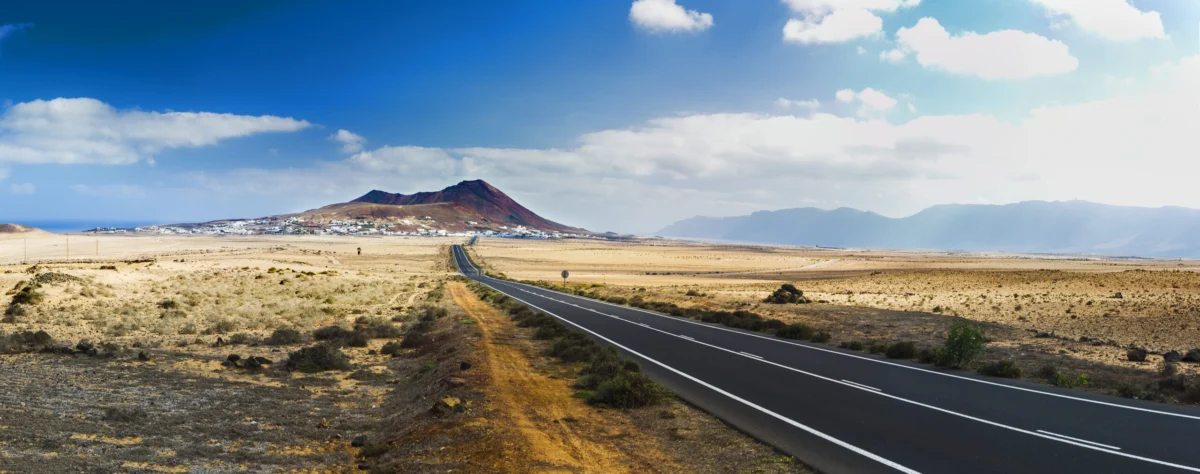
When soccer icon Pelé knelt to tie his shoelaces just seconds before kickoff at the 1970 World Cup, he created one of the most enduring images in sporting history. The deliberate exposure of his Puma boots was a masterstroke of sports marketing—a moment of calculated commercial genius. Yet, behind this global spectacle lay a secret: the strategy was engineered not by a multinational agency in New York or London, but by a mastermind from the Canary Islands.
This hidden history, centered on the life of Hans Henningsen, is the subject of The Puma King, a documentary currently making waves at the Sunny Side of the Doc. It is a story that encapsulates the Canary Islands’ new ambition: to transition from being a picturesque filming location for international blockbusters to becoming a powerhouse of original, homegrown intellectual property (IP).
The Strategic Pivot: A New Era for the Archipelago
For 17 years, the Canary Islands have been meticulously diversifying their economy, moving away from a traditional reliance on mass tourism toward the high-value, creative world of screen production. While the archipelago has already solidified its reputation as a premier hub for live-action filming, animation, VFX, and video games, it has spent the last three years aggressively drilling into the documentary sector.
Pablo Hernández, president of the Canary Islands Special Zone (ZEC), describes the archipelago as a "goldmine of stories pending development." For Hernández, the strategy is clear: "The opportunity is no longer simply to come and film in the Canary Islands. It is to build projects from the Canary Islands. If you come and set up here to manage the IP, you are going to have an amazing amount of stories at your fingertips."
A Chronology of Growth: From Landscapes to Narratives
The evolution of the Canarian documentary industry has been rapid. A few years ago, the local production landscape was dominated by small-scale projects with budgets in the low hundreds of thousands of euros. Today, that narrative has shifted significantly.
- Phase 1: The Location Era: The islands leveraged their unique volcanic landscapes and favorable climate to attract international crews, primarily serving as a service hub for foreign productions.
- Phase 2: Infrastructure Building: Over the last decade, the government implemented aggressive incentive packages, including a 45%–54% tax rebate and a 4% corporate income tax rate, which can increase net profits by 30%–40%.
- Phase 3: The Content Boom: The last five years have seen an exponential rise in local production companies developing their own IP. Projects now boast budgets in the millions and have secured distribution deals with global giants like HBO, Amazon Prime Video, ESPN, Disney+, and Movistar+.
"The sector has experienced exponential growth over the last five years," notes Pilar Guerrero, whose Videoreport Canarias is a joint venture between Secuoya Studio and Izen. This growth is not merely quantitative; it is qualitative. Local producers are now crafting narratives that compete on the global stage.
Supporting Data: Why Documentaries Thrive in the Islands
While narrative features often require massive budgets, the documentary format is proving to be a perfect match for the Canarian industrial model. "Documentaries make more with less budget, and it’s more organic," explains Hernández.
The economic metrics supporting this growth are robust:
- Tax Incentives: The combination of the 45%–54% rebate and the low corporate tax rate creates a highly competitive environment for international co-productions.
- Market Reach: Sales of Canarian-produced documentaries have reached markets as diverse as Switzerland and Sweden, proving that local stories hold universal appeal.
- Talent Pipeline: Industry partnerships, such as the one between the powerhouse Buendía Estudios and local vocational schools, ensure a steady influx of trained professionals in cinematography, sound, and post-production.
Diverse Genres: The New Canarian Canon
The breadth of subject matter currently being produced in the Canary Islands reflects a sophisticated understanding of global market demands.
Historical Re-readings
Production companies like Las Hormigas Negras are focusing on the archipelago’s place in Atlantic history. Their doc-series, Insulae: Crónica de nuestra historia, challenges traditional narratives, proving that local history can serve as a conduit for universal storytelling.
Science and Nature
Given the islands’ unique geography, nature and science are natural pillars. Videoreport’s The Last Volcano documented the 2021 eruption on La Palma, while their project The Last Great Colony tackles the delicate ecosystem of the Atlantic monk seal.
Social and Cultural Impact
Disaster narratives are also finding a home here. Macaronesia’s Line of Defense offers a harrowing reconstruction of the 2023 Tenerife wildfires, focusing on the human element of survival. In the realm of sports, WAP Media Group’s Dream, Play, Win—a feature on FC Barcelona Femení—marked a breakthrough deal with ESPN, demonstrating the islands’ ability to document global cultural movements.
Auteurism and Crime
The artistic tradition remains strong, with David Baute’s Black Butterflies earning Goya recognition and his latest, Benigno, premiering at the Shanghai Film Festival. Simultaneously, the industry is pivoting toward true crime and investigative journalism, with projects like The Sensei’s Web—a deep dive into a major European sexual-abuse scandal—showcasing a new editorial maturity.
Official Perspectives: The Road Ahead
Despite the optimism, industry leaders remain pragmatic about the hurdles. The consensus among producers is that while the talent is abundant, the "consistent industrial infrastructure" is still catching up.
"The challenge is not a lack of talent, but a lack of consistent industrial infrastructure," says the team at Las Hormigas Negras. "There is still a lingering perception of the islands as a beautiful filming location, but not always as a place capable of generating strong, complex editorial projects."
Furthermore, institutions like DOCanarias—which has been training filmmakers for two decades—point out that the complex fiscal incentives, while generous, remain daunting for smaller, independent documentary producers who lack the administrative capacity of larger studios.
Future Implications: The "Epic" Potential
The future of Canarian documentary production looks remarkably bright, anchored by a deep scientific research base. The Instituto de Astrofísica de Canarias, for instance, provides a wealth of potential for high-concept science docs, having been one of the first locations to register the signature of the Big Bang.
The history of the islands—ranging from their near-British status during the Napoleonic era to the influence of Canarian settlers on the development of San Antonio, Texas—offers a treasure trove of "epic biopic" potential.
As Pablo Hernández suggests, the goal is to align these homegrown stories with the global value chains of documentary distribution. By fostering partnerships, investing in vocational training, and shifting the focus from "servicing" to "creating," the Canary Islands are well on their way to becoming a permanent fixture in the global content landscape.
The transition from a service-based economy to an IP-generating creative hub is no longer a "what if"—it is a matter of time. For the Canary Islands, the script is already written; they are now simply waiting for the world to watch.


 Asro
Asro
 Basiran