Raul Delapena Setiawan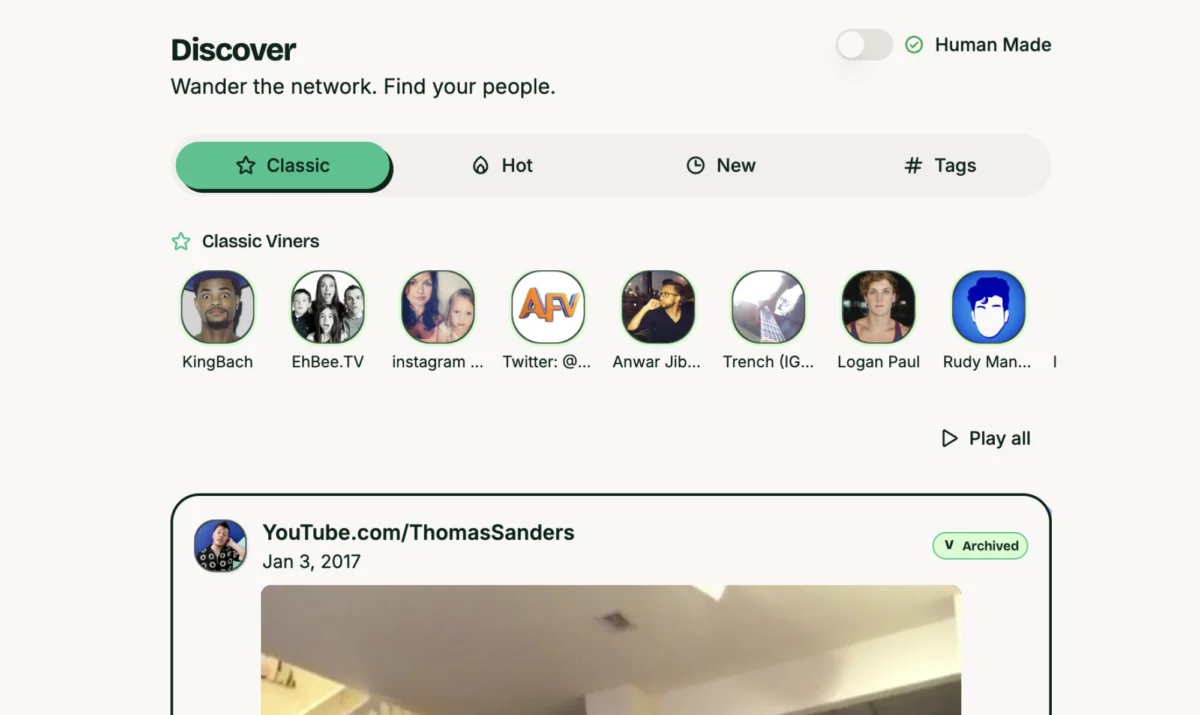
It is a sentence that feels lifted from a fever dream of 2015: Vine is back.
In the rapidly shifting digital landscape of 2026, the return of the platform that defined the early era of short-form mobile video is both a nostalgic gut-punch and a radical act of defiance. The platform, rebranded as "Divine," arrives not as a corporate cash grab, but as an experiment in human-centric technology. Perhaps most ironically, the app has been brought back from the dead by the very architect of its demise: former Twitter CEO Jack Dorsey.
Nearly a decade after the original six-second video app was shuttered in 2017, Divine has officially launched, serving as both a time capsule for 500,000 legacy Vine videos and a sanctuary for a new generation of creators tired of the algorithmic noise that dominates modern social media.
The Chronology of a Digital Phoenix
To understand the significance of Divine, one must first look at the trajectory of its predecessor. Launched in 2013, Vine was an overnight cultural phenomenon. It democratized comedy, gave birth to the modern "influencer" economy, and fostered a specific brand of hyper-compressed, high-creativity humor. Yet, by 2017, Twitter—under the leadership of Jack Dorsey—made the controversial decision to shut down the app, citing mounting operational costs and the inability to monetize the platform effectively.
The vacuum left by Vine was quickly filled by Musical.ly, which eventually morphed into TikTok, and later by Instagram Reels and YouTube Shorts. These platforms scaled the six-second concept into an algorithmic juggernaut, prioritizing engagement metrics over community connection.
The path to "Divine" began in late 2025, when a beta version of the project emerged. Spearheaded by Evan Henshaw-Plath, a veteran software developer and former Twitter engineer famously known in tech circles as "Rabble," the project was born from a simple desire: to preserve the cultural history of the original Vine. With the financial backing of Dorsey’s nonprofit organization, "and Other Stuff"—a group dedicated to funding open-source social media initiatives—the archive project quickly evolved into a fully functional social platform.
A Stance Against the "AI Slop"
The most striking feature of Divine is its philosophical commitment to "freedom from AI slop." In an era where generative AI can produce high-definition, convincing, yet entirely synthetic video content in seconds, Divine has positioned itself as an "anti-algorithm" fortress.
The app enforces this through a rigorous technical framework. To maintain the integrity of its feed, Divine requires that all new uploads be either recorded directly through the app’s camera or processed through a human-verification tool. This tool, developed in partnership with the human rights nonprofit the Guardian Project, ensures that the content originates from a living, breathing human being rather than a machine-learning model.
This is not merely a feature; it is the platform’s core value proposition. In a landscape saturated with "brainrot" content—videos generated or curated by algorithms designed solely to maximize watch time—Divine is betting that users are suffering from "content fatigue." By stripping away the AI-driven recommendation engines that characterize TikTok and Reels, Divine aims to return to a model of authentic, creator-led discovery.
The Architecture of Ownership
Beyond the technical anti-AI safeguards, Divine is built on the principles of digital sovereignty. In his statements to the press, Jack Dorsey has been transparent about the errors made during the original Vine era. He acknowledged that the platform’s failure to provide adequate tools for creators to monetize their work or maintain a direct relationship with their audience was a fatal flaw.
Divine is designed to rectify this. The platform is built on open-source protocols, meaning that creators theoretically "own" their content and their follower lists. Unlike TikTok, where a creator’s entire livelihood can vanish due to an unexplained shadowban or a sudden algorithmic pivot, Divine intends to grant creators greater autonomy. This includes integrated revenue-sharing models that allow users to monetize their videos directly, without the unpredictable whims of an opaque corporate ad-server.

The Competitive Landscape: A David vs. Goliath Scenario
Divine enters a market that is fundamentally different from the one Vine left behind in 2017. Today’s landscape is dominated by three giants:
- TikTok: The incumbent king of short-form, currently facing global scrutiny regarding data privacy and the addictive nature of its "For You" feed.
- Instagram Reels: A massive utility that has successfully integrated short-form content into the daily lives of billions, though often at the cost of the platform’s original aesthetic.
- YouTube Shorts: A behemoth that leverages the world’s largest video library, boasting over 200 billion daily views.
Against this backdrop, the proposition of a "six-second" app seems quaint, perhaps even dangerously small. Critics argue that the short-form market has evolved past the limitations of the six-second loop; modern audiences have become accustomed to the "infinite scroll," where videos transition seamlessly into one another for hours on end.
However, Henshaw-Plath and the Divine team argue that the "six-second" limitation is actually a feature, not a bug. It forces brevity, wit, and high-impact storytelling. By limiting the length and removing the AI-driven "doomscroll" experience, Divine hopes to foster a more intentional user experience.
Supporting Data and Market Implications
The financial viability of such a platform remains the biggest question. While Dorsey’s nonprofit backing provides a runway for the app’s initial launch, sustained growth will require a model that can support servers and developers without relying on the very ad-based, engagement-hungry models Divine claims to despise.
The shift toward "human-verified" content is also a significant development in the broader tech industry. As deepfakes and synthetic media become more prevalent, the ability to verify that a video was captured by a human on a physical device may become a premium, or even necessary, standard. By integrating the Guardian Project’s verification technology, Divine is essentially positioning itself as a leader in the "authentic media" verification space, a market that is likely to grow as users become increasingly distrustful of what they see online.
Implications for the Future of Social Media
The return of Vine via Divine represents a broader cultural reaction to the "enshittification" of the internet. For years, social media users have watched as their favorite platforms became increasingly cluttered with advertisements, bot-generated content, and aggressive algorithmic steering.
If Divine succeeds, it could prove that there is a viable market for "boutique" social media—platforms that value the health of their community over the scale of their user base. It could force a conversation among the giants of Silicon Valley: if users are willing to flock to an app that explicitly limits their ability to consume AI-generated, algorithmically-fed content, then the current industry standard of "maximum engagement at all costs" may finally be reaching a breaking point.
However, the road ahead is treacherous. The graveyard of tech startups is littered with projects that attempted to challenge the status quo, only to be crushed by the sheer inertia of the incumbent platforms. Divine is not just fighting against TikTok; it is fighting against the habits of a generation that has been conditioned to consume content at a breakneck pace.
Conclusion
Whether Divine becomes a true competitor or remains a niche digital museum depends on its ability to sustain its "human-first" promise as it grows. The app is available now on both the Google Play Store and the Apple App Store, and the initial wave of downloads suggests a strong, nostalgic curiosity.
In 2026, we are learning that some things, like the six-second loop of a perfectly timed joke, have a timeless quality that algorithms cannot replicate. Jack Dorsey, in his attempt to correct a decade-old mistake, has provided a blank canvas. Whether the creators of today can fill that canvas with the same magic as the creators of yesterday is the ultimate test. The loop has restarted—this time, with human hands at the wheel.

 Pevita Pearce
 Asro
Asro