

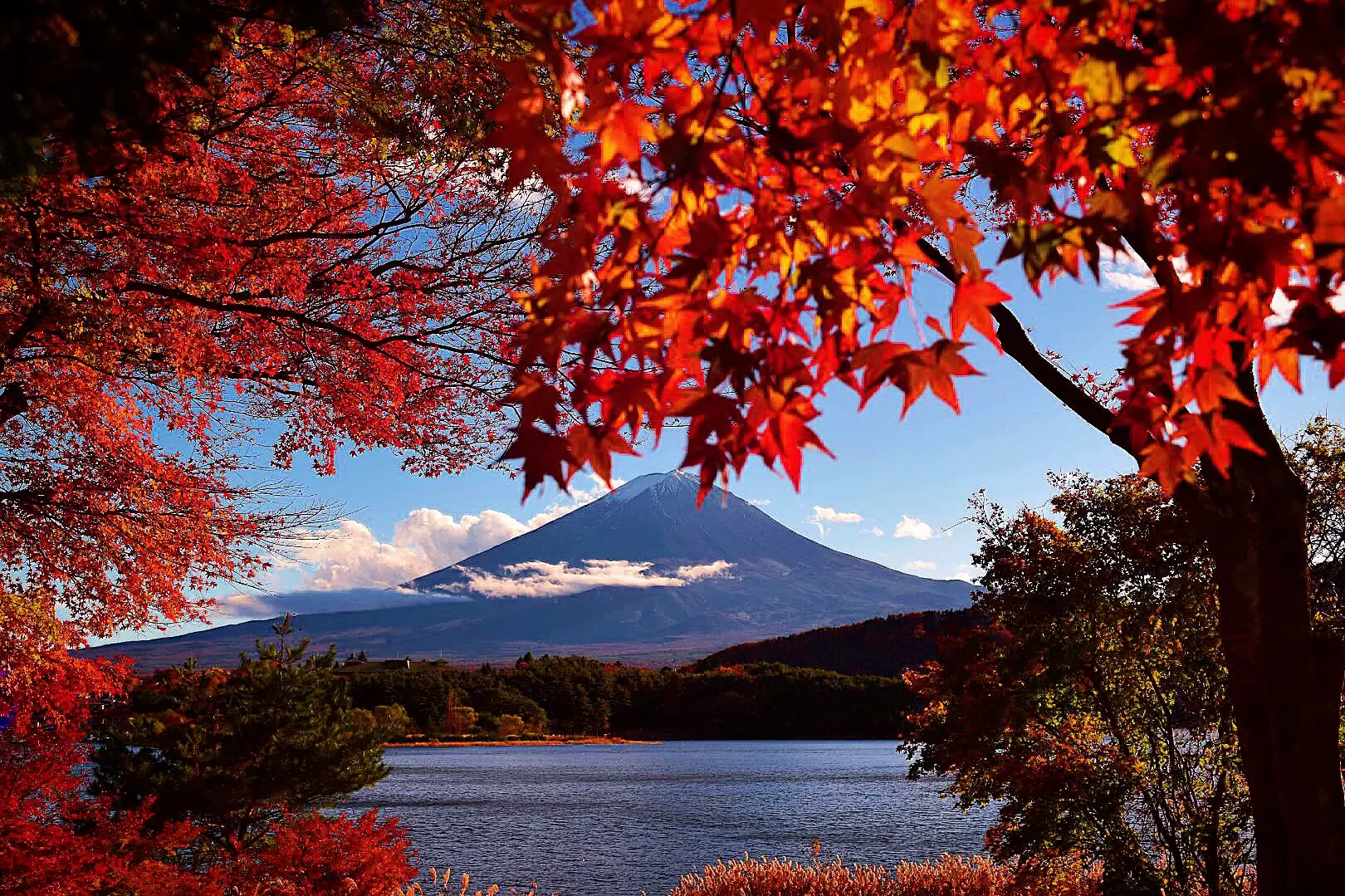
As the crisp air of autumn descends upon the Yamanashi Prefecture, the foothills of Mt. Fuji undergo a breathtaking transformation. From early October through late November, the region—collectively known as the Fuji Five Lakes—becomes a canvas of vibrant crimsons, burnt oranges, and golden yellows. For travelers and photography enthusiasts alike, this period offers the most iconic vistas of Japan’s most sacred peak framed by the fleeting beauty of seasonal foliage.

Main Facts: The Seasonal Phenomenon at the Foothills
The Fuji Five Lakes region, perched at an altitude of over 800 meters, experiences a unique microclimate that intensifies the brilliance of its autumn colors. The significant temperature differential between day and night serves as the primary catalyst for the vivid hues that characterize the region’s deciduous forests.

For those planning a visit in 2026, understanding the seasonal timeline is crucial. The progression of autumn leaves begins at the higher altitudes, specifically around the fifth station of Mt. Fuji, as early as October. Simultaneously, the lower-lying parks and lake shores, such as Oishi Park, begin their transition. By mid-to-late November, the focus shifts to the iconic tunnels and corridors surrounding Lake Kawaguchiko, where the maple trees create a dense, fiery canopy.

Essential Weather and Packing Tips
Preparation is paramount when visiting this high-altitude destination. In October, visitors can expect an average high of 18°C (64°F) and a low of 7°C (45°F). By November, the climate becomes significantly more austere, with average highs of 13°C (55°F) and lows dropping to a chilling 1°C (34°F).

Travelers should adhere to the "layering principle." A high-quality windbreaker or down jacket is non-negotiable for evening outings, particularly when visiting light-up events, where temperatures can plummet rapidly once the sun dips below the horizon.

Chronology of Festivals and Prime Viewing Spots
The autumn season is punctuated by a series of regional festivals that celebrate the harvest and the landscape. While 2026 scheduling is subject to final confirmation, the following locations remain the primary hubs for cultural and visual engagement.

The Fujikawaguchiko Autumn Leaves Festival
Held near the Nashi River on the northern shore of Lake Kawaguchiko, this event is the crown jewel of the season. Featuring 60 giant maple trees, the area is transformed after sunset with dramatic illumination. The festival grounds serve as a cultural epicenter, hosting local craft vendors and food stalls that offer regional delicacies.

The Sunset Beach Autumn Leaves Festival (Lake Yamanakako)
Located at Asahigaoka Lakeside Park, this venue offers a 1,000-meter-long corridor of autumn foliage. Recognized as one of Japan’s "100 Most Beautiful Beaches," the site provides a serene backdrop for evening strolls under the artificial lights that illuminate the leaves.

The Yoshida Autumn Leaves Festival
Following a four-year hiatus, the Yoshida festival has reclaimed its place on the calendar. Centered at the Fujisan Museum Park, the festival highlights the Iroha Momiji Corridor, which stretches toward the historic Kaneyama Falls. The event is noted for its cultural programming, including traditional tea ceremonies and local artisanal markets.
Supporting Data: Navigating the Top Vantage Points
To capture the quintessential photograph of Mt. Fuji, visitors must position themselves at key geographic landmarks.

- Lake Kawaguchiko Momiji Tunnel: Named for the way the maple trees arch over the road, this remains the most popular spot for automotive-based photography. Best viewed in late November.
- Arakurayama Sengen Park: A globally recognized landmark, famously featured on the cover of the Michelin Green Guide Japon. It offers an unparalleled view of the five-story pagoda, the city of Fujiyoshida, and the snow-dusted peak of Mt. Fuji.
- The 5th Station & Okuniwa Natural Park: For those seeking an alpine perspective, this area (altitude 2,200m–2,400m) offers a stark contrast between the crimson ground-level foliage and the snowy, barren upper reaches of the mountain.
- Koyo-dai and Sankodai: These observation points provide a 360-degree panorama of the "sea of trees" (Aokigahara) and the surrounding lakes. They are accessible via a moderate hike, suitable even for novices.
- Tenkachaya: A historic tea house at Misaka Pass. Beyond its connection to the literary master Dazai Osamu, it remains a vital stop for those seeking traditional hoto noodles while observing the seasonal change.
Logistics and Transportation: The Case for Cycling
Given the surge in tourism, vehicular congestion is a common challenge during peak weekends. To maximize time efficiency, many travelers are opting for bicycle rentals, specifically electric-assisted models.

Recommended 2026 Cycling Itinerary
A well-planned day can be achieved by renting a bicycle near Lake Kawaguchiko Station:

- 10:00 AM: Depart with an e-bike, heading toward the Lake Kawaguchiko Bridge.
- 10:30 AM – 12:30 PM: Explore the Fujikawaguchiko Autumn Leaves Festival.
- 12:45 PM – 1:30 PM: Visit Oishi Park for the kochia bushes, enjoying local soft-serve ice cream.
- 1:40 PM – 2:30 PM: Cycle the Momiji Tunnel, taking advantage of the lake breeze.
- 2:40 PM – 3:15 PM: Visit the Fuji Omuro Sengen-jinja Shrine, the oldest shrine dedicated to Mt. Fuji.
- 3:30 PM: Return to the station.
Implications for Travelers: A Sustainable Stay
For those wishing to extend their visit to a two-day experience, the "Fuji Midori no Kyuka Mura" in Narusawa Village serves as a strategic base. Its proximity to the Fuji Five Lakes and the 5th Station makes it an ideal hub.

The Post-Excursion Recovery: Hot Springs
No autumn trip to the Fuji region is complete without a visit to a yurari (hot spring). The "Fuji View Hot Spring Yurari" is particularly recommended for its 16 distinct baths. The ability to soak in carbonated or cave-style baths while gazing at the peak of Mt. Fuji provides a necessary physical recovery after a day of cycling or hiking.

Official Responses and Strategic Recommendations
Local tourism boards and the Fujikanko Travel agency emphasize that while the region is well-equipped for high-volume tourism, planning is essential. By utilizing the "Sightseeing Taxi" services for more rugged terrain—such as the Okuniwa Natural Park—and reserving accommodation well in advance, visitors can circumvent the logistical stresses of the peak season.

The 2026 autumn season promises to be a vibrant testament to the natural beauty of the Fuji region. Whether you are a photographer seeking the perfect light or a casual hiker looking to immerse yourself in the colors of the season, the combination of accessible infrastructure, cultural festivals, and unparalleled natural vistas ensures that the Fuji Five Lakes remains a premier destination for the discerning global traveler.

Note: As dates for certain festivals are tentative, it is strongly advised to check the official websites of the Fujikawaguchiko Tourism Association and local municipalities closer to your departure date.











