

Valentine’s Day in Japan has long been defined by a rigid social structure. For decades, the season has been dominated by the tradition of giri-choco—the "obligation chocolate"—gifted to colleagues and acquaintances to maintain social harmony. However, as cultural attitudes shift and consumer tastes evolve, the Japanese culinary landscape has begun to push the boundaries of what constitutes a "Valentine’s treat."
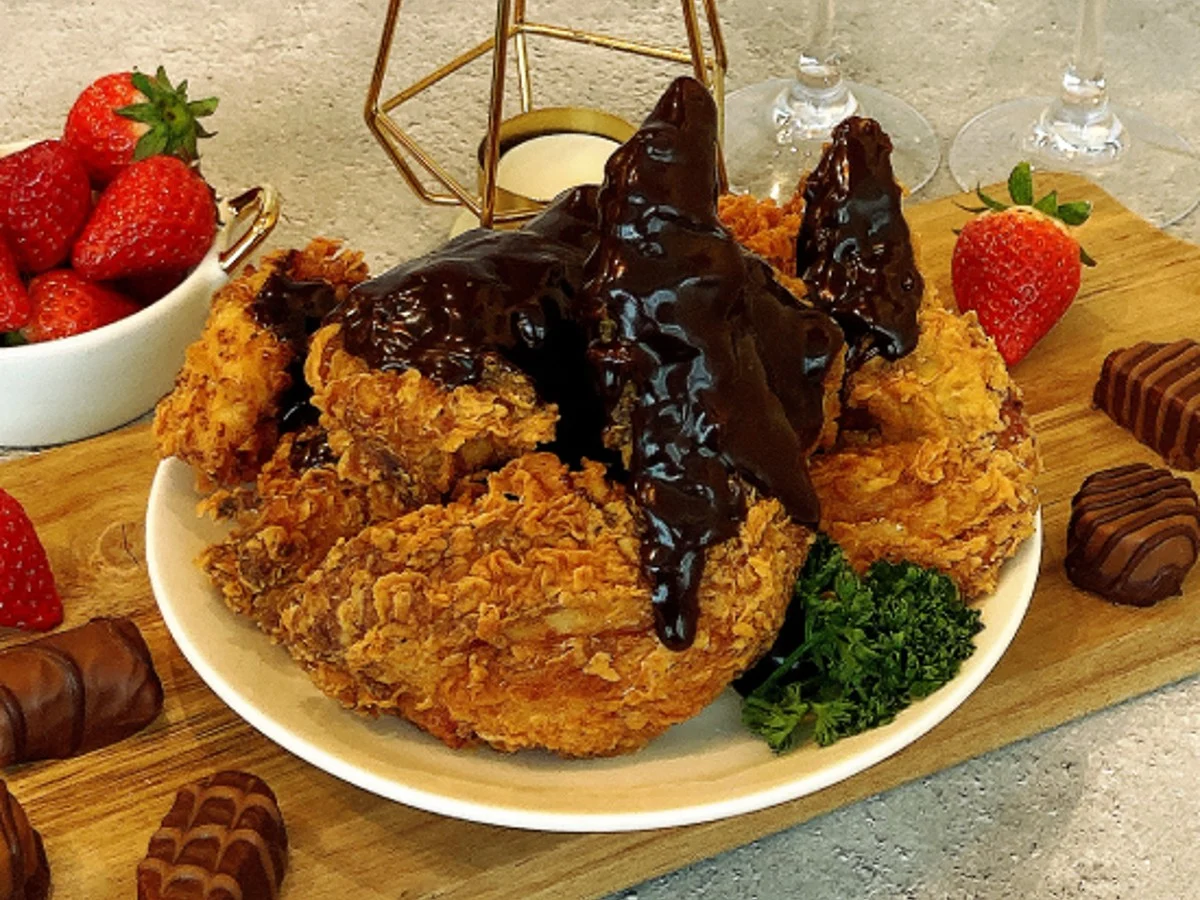
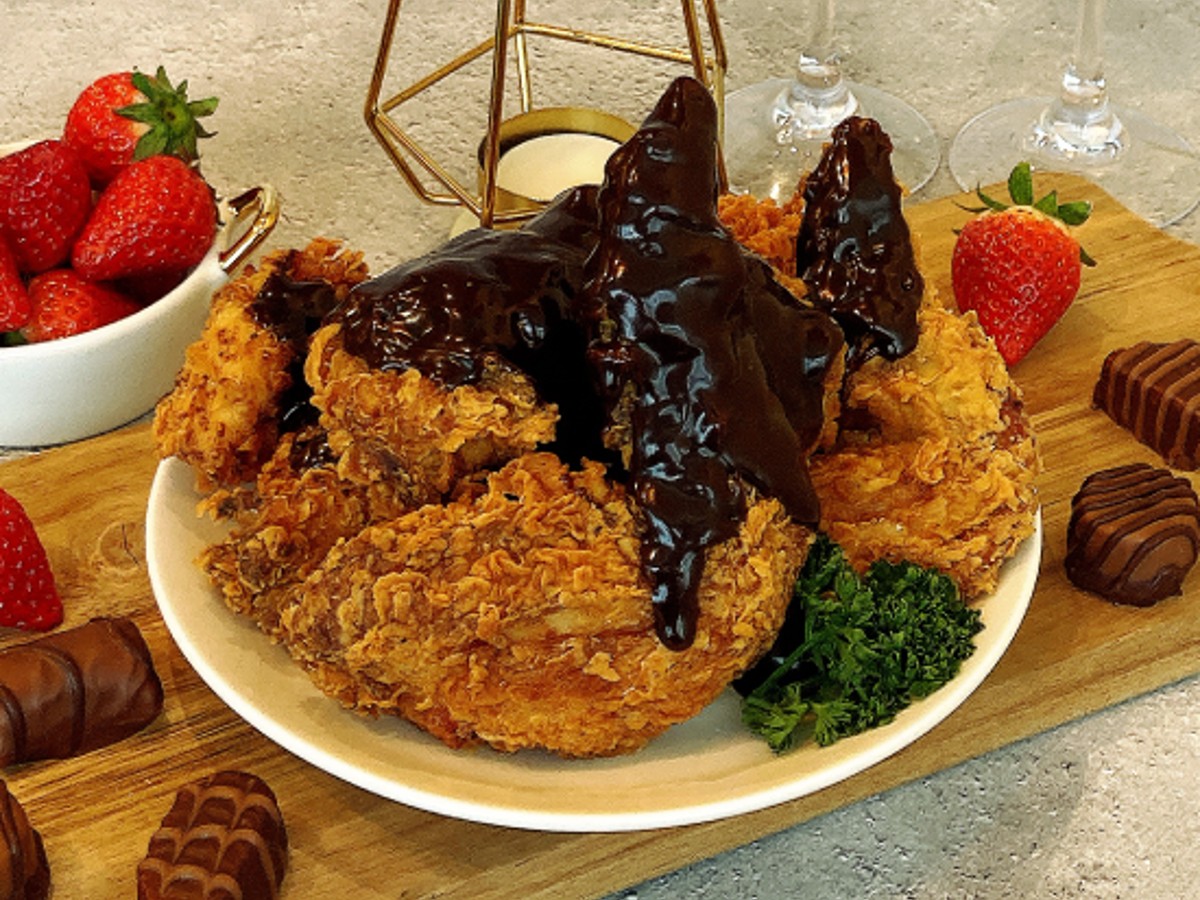
This February, the avant-garde spirit of Tokyo’s dining scene is reaching new heights. From high-concept pop-culture collaborations like Demon Slayer confectioneries to the polarizing indulgence of chocolate-infused ramen, the market is diversifying. Standing at the forefront of this culinary experimentation is the Shibuya branch of the Korean-style fried chicken chain, Chicken Street, which has unveiled a provocative limited-time offering: chocolate-covered fried chicken.
Main Facts: The Intersection of Crunch and Cocoa
The phenomenon of "savory-sweet" fusion is not entirely new to Japan, but the application of chocolate to deep-fried poultry represents a significant departure from standard confectionery norms. Beginning February 1st and concluding on Valentine’s Day, February 14th, the Shibuya outpost of Chicken Street is pivoting away from traditional spice-heavy marinades to introduce a decadent, bittersweet cocoa coating to its signature Korean-style fried chicken.
The product is designed for the adventurous palate. According to company representatives, the dish relies on the stark textural contrast between the chain’s notoriously crispy, double-fried skin and a smooth, rich chocolate glaze. By marrying the high-sodium, umami-rich profile of Korean fried chicken with the complexity of dark chocolate, Chicken Street is positioning itself as a destination for those seeking an unconventional Valentine’s experience that defies the standard box of truffles.
Chronology of a Culinary Trend
The evolution of Valentine’s Day in Japan has occurred in three distinct waves, leading to the current state of "anything-goes" innovation.
- 1950s–1970s (The Foundation): The inception of Valentine’s Day in Japan was largely driven by confectionery companies. It was during this period that the social expectation of giri-choco became firmly entrenched in corporate culture.
- 1980s–2000s (The Expansion): The rise of tomo-choco (friend chocolate) and jibun-choco (chocolate for oneself) began to dismantle the strictly romantic focus of the holiday, allowing for greater variety in how chocolate was marketed.
- 2010s–Present (The Avant-Garde): This era has seen a departure from traditional gift-giving toward "experiential" Valentine’s. The emergence of chocolate ramen, chocolate-dipped savory snacks, and pop-culture branded collaborations marks a shift toward novelty and social media shareability.
Chicken Street’s entry into this space is the latest marker of a trend that prioritizes "shock value" and unique dining experiences over traditional etiquette. By launching their campaign at the start of February, they have strategically aligned themselves with the peak of the Japanese chocolate-buying frenzy.
Supporting Data: The Savory-Sweet Market Dynamics
The appetite for unconventional flavor pairings in Japan is backed by a growing market segment. Market research indicates that Japanese consumers—particularly those in the 18-to-35 demographic—are increasingly drawn to "fusion" foods that offer high "Instagrammability."
- The Umami-Chocolate Factor: Food scientists have long noted that the saltiness in fried chicken can actually enhance the bitterness of dark chocolate, creating a flavor profile known as koku (a sense of depth or richness).
- Market Growth: The Japanese chocolate market is valued at over 500 billion JPY annually. While traditional chocolate remains the leader, the "gourmet and novelty" sector is the fastest-growing sub-category.
- Location Strategy: Shibuya remains the epicenter of trend-driven food culture. By situating the campaign within five minutes of the Hachiko exit of Shibuya Station, Chicken Street is capitalizing on the high foot traffic of one of the world’s busiest urban hubs. The proximity to the iconic Shibuya Crossing ensures that the product reaches a diverse audience of commuters, tourists, and trend-seekers.
Official Responses and Culinary Philosophy
In an official statement regarding the release, Chicken Street representatives emphasized that the product was developed after extensive testing to ensure the flavor profile was not merely "novel," but genuinely palatable.
"The signature of our Korean-style fried chicken is its exceptionally crunchy, light batter," the spokesperson noted. "When we experimented with adding a bittersweet chocolate sauce, we found that the deep, roasted notes of the cocoa complemented the seasoning of the chicken rather than clashing with it. We wanted to offer a Valentine’s meal that felt like a true departure from the expected—a gift for people who prefer savory satisfaction over traditional sugar-heavy desserts."
The brand has also addressed potential skepticism, noting that the chocolate used is specifically selected for its lower sugar content and higher cocoa percentage, ensuring that the savory components of the chicken—such as garlic and soy-based marinades—are not overwhelmed by sweetness.
Implications: The Future of Valentine’s Day in Japan
The introduction of chocolate-covered fried chicken serves as a microcosm for the broader transformation of Japanese holiday traditions. As the population becomes increasingly individualistic and less tethered to the rigid social obligations of the past, the "gifting" culture is being replaced by "experiential consumption."
1. The Decline of Social Obligation
The rise of such products suggests that the stigma once associated with not participating in giri-choco is fading. Consumers are opting for products that reflect personal tastes rather than corporate expectations. Whether it is a Demon Slayer themed box or a hunk of chocolate-coated poultry, the choice is now about personal expression.
2. The Power of "Limited-Time" (Gentei) Marketing
The Japanese market is uniquely susceptible to gentei (limited-edition) culture. By restricting the availability of the chocolate chicken to just two weeks, Chicken Street creates a sense of scarcity that drives consumer interest. This model is likely to become even more prevalent as restaurants compete for the attention of a distracted, social-media-focused audience.
3. The Globalization of Flavor Profiles
The fusion of Korean-style fried chicken—a global phenomenon—with a holiday traditionally centered on European confectionery traditions illustrates how global food trends are synthesized within Japan. The "Chocolate Chicken" is not just a snack; it is a synthesis of global influences, local tastes, and a willingness to break culinary taboos.
4. Impact on the Hospitality Sector
For restaurants, the implications are clear: success in the modern Japanese market requires agility. Restaurants that can successfully pivot their menus to cater to seasonal events—even in ways that seem "adventurous" or "bizarre"—are more likely to capture the attention of the younger demographic.
Conclusion: A New Era of Indulgence
As February 14th approaches, the streets of Shibuya will once again be filled with those navigating the complexities of modern romance and social interaction. For those who find the traditional offerings of boxed chocolates and floral arrangements to be stale or outdated, the option to indulge in a piece of chocolate-covered, crispy fried chicken offers a refreshing, albeit unconventional, alternative.
Whether the "Chocolate Chicken" becomes a seasonal staple or remains a one-year experiment, its existence signals a broader shift in the Japanese culinary psyche. It is a reminder that in an age of digital saturation, the most effective way to celebrate a holiday—or to capture a customer—is to challenge their expectations. For those in Tokyo this February, a trip to Chicken Street may be the most memorable Valentine’s experience of the year, provided one has the courage to pair their cocoa with a side of crunch.
By – Grape Japan Editorial Staff.











