As the United States hurtles toward a pivotal midterm election cycle, the epicenter of the artificial intelligence revolution, OpenAI, is quietly orchestrating a sophisticated influence campaign designed to reshape public perception. According to recent reports, the San Francisco-based AI giant is preparing to deploy a massive public relations offensive aimed at softening the image of the infrastructure that powers its models. At the heart of this strategy is a curious linguistic shift: the rebranding of massive, energy-hungry data centers as "AI Compute Campuses."
This initiative, which comes as the company faces mounting scrutiny over environmental impact, job displacement, and the existential risks posed by generative AI, is not merely a branding exercise. It is a calculated move to secure a favorable regulatory environment ahead of the 2028 presidential election, positioning OpenAI as a foundational pillar of American national interest.
The Evolution of the "AI Compute Campus" Narrative
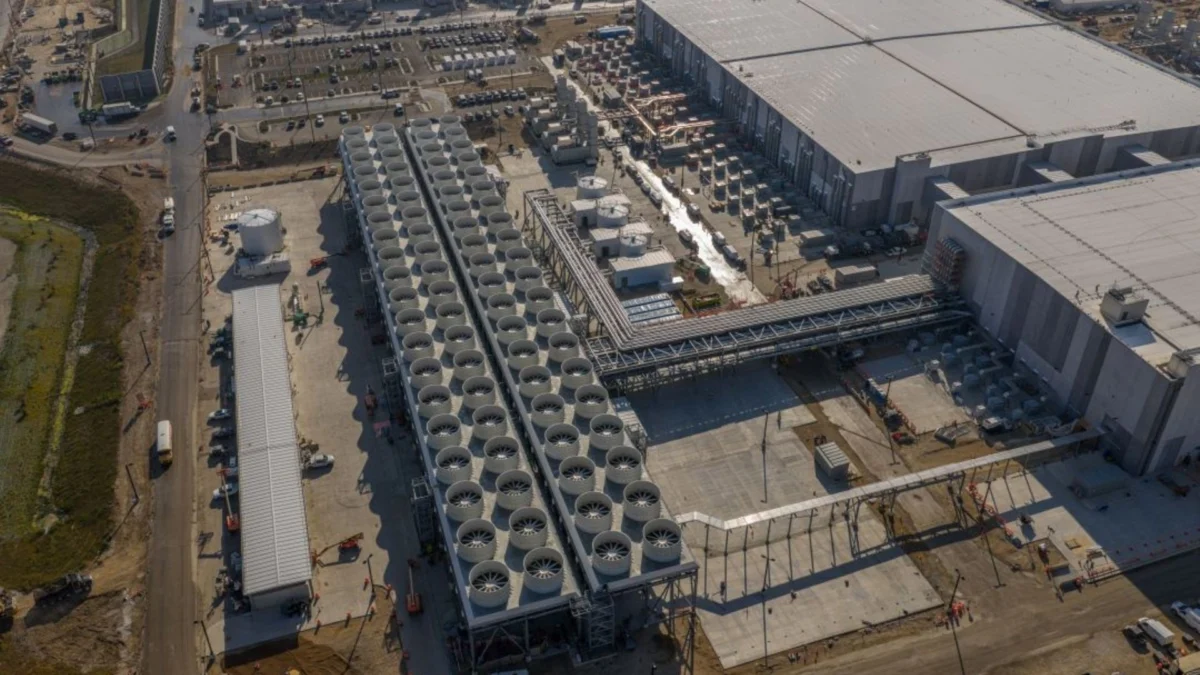
The transition from "data center" to "AI Compute Campus" is a masterclass in corporate reframing. In the public consciousness, data centers are often perceived as sterile, industrial fortresses—massive consumers of electricity and water that contribute to urban sprawl and carbon emissions. By rebranding these sites as "campuses," OpenAI and its partners are attempting to shift the imagery toward innovation, education, and community development.
Chris Lehane, OpenAI’s chief global affairs officer, has been instrumental in framing this shift. In recent discussions, Lehane characterized the upcoming midterm elections as a "movie trailer" for the 2028 presidential race. The implication is clear: OpenAI recognizes that AI will soon graduate from a tech-sector niche issue to a central plank of federal platform debates. By softening the public’s encounter with the physical reality of AI, the company hopes to build a "social license to operate" that can withstand political volatility.
Chronology: From Silicon Valley Darling to Political Powerhouse
To understand why OpenAI is pivoting to such a aggressive PR stance, one must examine the timeline of its rapid ascent and the subsequent cooling of public sentiment.
- 2022–2023: The Boom Phase: Following the public release of ChatGPT, OpenAI enjoyed a period of near-universal acclaim. The narrative was one of human-centric progress, productivity gains, and democratization of information.
- 2024: The Scrutiny Cycle: As the models grew more capable, the conversation shifted toward risks. Concerns regarding deepfakes, copyright infringement, and potential misinformation began to dominate the headlines.
- 2025: Infrastructure Pressures: As the physical requirements of training Large Language Models (LLMs) became clear, the environmental cost of AI moved to the forefront. Public protests over water consumption and electrical grid strain began to impact site-selection efforts for new data centers.
- Late 2026: The Strategic Pivot: With the midterm elections acting as a catalyst, OpenAI initiates its "Compute Campus" branding campaign. The objective is to decouple the concept of "AI infrastructure" from "industrial burden" in the eyes of voters.
- 2027–2028: The Political Horizon: The campaign is expected to culminate in a lobbying effort aimed at federal policy makers, ensuring that the "AI Compute Campus" is viewed as a critical utility, similar to energy or telecommunications, deserving of federal subsidies and streamlined zoning.
Supporting Data: The Infrastructure Gap
The urgency behind OpenAI’s branding efforts is supported by the stark reality of the physical infrastructure required to run modern AI. The energy demands of modern "compute" are unprecedented.
A standard hyperscale data center can consume between 50 to 100 megawatts of electricity—enough to power tens of thousands of homes. As OpenAI and its competitors push for more advanced models, the demand for high-density compute power is scaling exponentially.
According to industry analysts, the capital expenditure on AI infrastructure is projected to exceed $200 billion annually by 2027. However, this growth is currently meeting resistance. In several U.S. regions, local municipalities have blocked new data center permits due to concerns over noise pollution, water usage (for cooling systems), and the strain on local power grids.
OpenAI’s PR campaign seeks to address these friction points by highlighting the "community benefits" of these campuses. This includes promises of high-paying local jobs, investments in local STEM education, and commitments to carbon-neutral energy sourcing. By rebranding these facilities as "campuses," OpenAI is leaning into the university-like image of research and development rather than the warehouse-like image of a server farm.
Official Responses and Stakeholder Perspectives
The industry’s reaction to OpenAI’s campaign has been mixed. Supporters argue that the terminology is simply an evolution of language that reflects the changing function of these buildings.
"If a site includes a visitor center, a research laboratory, and an onsite renewable energy plant, is it really just a data center?" asked one industry analyst. "The terminology should match the reality of a multi-purpose, high-tech facility."
However, critics, including environmental activists and data-transparency advocates, view the move as a form of "greenwashing." They argue that no matter the name, the environmental footprint remains the same.
"Calling a massive, water-guzzling energy sink a ‘campus’ doesn’t change the fact that it is an industrial facility," says Dr. Aris Thorne, a policy researcher specializing in sustainable technology. "This is a classic public relations tactic designed to neutralize local opposition by using aspirational language to hide the reality of resource consumption."
OpenAI has maintained that its efforts are aimed at transparency. In statements released following the reports, the company emphasized that their infrastructure investments are designed to support the "national competitiveness of the United States" in the global AI arms race.
Implications for the 2028 Presidential Race
The implications of this campaign extend far beyond corporate branding. By positioning AI infrastructure as a national priority, OpenAI is effectively setting the terms of the debate for the 2028 presidential election.
1. The Economy and Jobs
Candidates in 2028 will be forced to grapple with the "AI divide." OpenAI’s campaign will likely frame AI compute capacity as the "new oil"—an essential resource that the U.S. must produce in greater quantities than its global competitors. This will put pressure on politicians to streamline environmental and zoning regulations to allow for faster data center construction.
2. Environmental Policy
The energy debate will become a cornerstone of the 2028 election. Expect to see candidates debating whether the federal government should mandate nuclear energy or carbon-neutral grids specifically to support the growing AI compute demand. OpenAI’s "campus" branding is a preemptive strike to ensure that these facilities are viewed as green-friendly initiatives rather than environmental hazards.
3. National Security
By framing their infrastructure as vital to the nation, OpenAI is aligning itself with the defense sector. The message to the next administration will be clear: "To maintain technological supremacy over our adversaries, we need these compute campuses." This narrative makes it politically difficult for any candidate to oppose the expansion of this infrastructure without appearing to compromise national security.
Conclusion: The New Face of AI
The campaign to rename data centers as "AI Compute Campuses" is a significant indicator of how the technology industry is maturing. It signals a shift from the "move fast and break things" ethos of the early 2010s to a more calculated, long-term political strategy.
As we approach the 2028 presidential cycle, the language used to describe AI will become as important as the technology itself. OpenAI’s pivot suggests that they have recognized a fundamental truth of modern governance: in a polarized political climate, the most effective way to influence policy is not just through lobbying, but through the shaping of the cultural vocabulary.
Whether this effort succeeds in shifting public opinion remains to be seen. However, as the physical footprint of AI continues to expand across the American landscape, one thing is certain: the debate over how we power the future will be one of the most consequential issues of the decade. For OpenAI, the "Compute Campus" is more than just a name—it is a foundation for their long-term vision of an AI-integrated society.