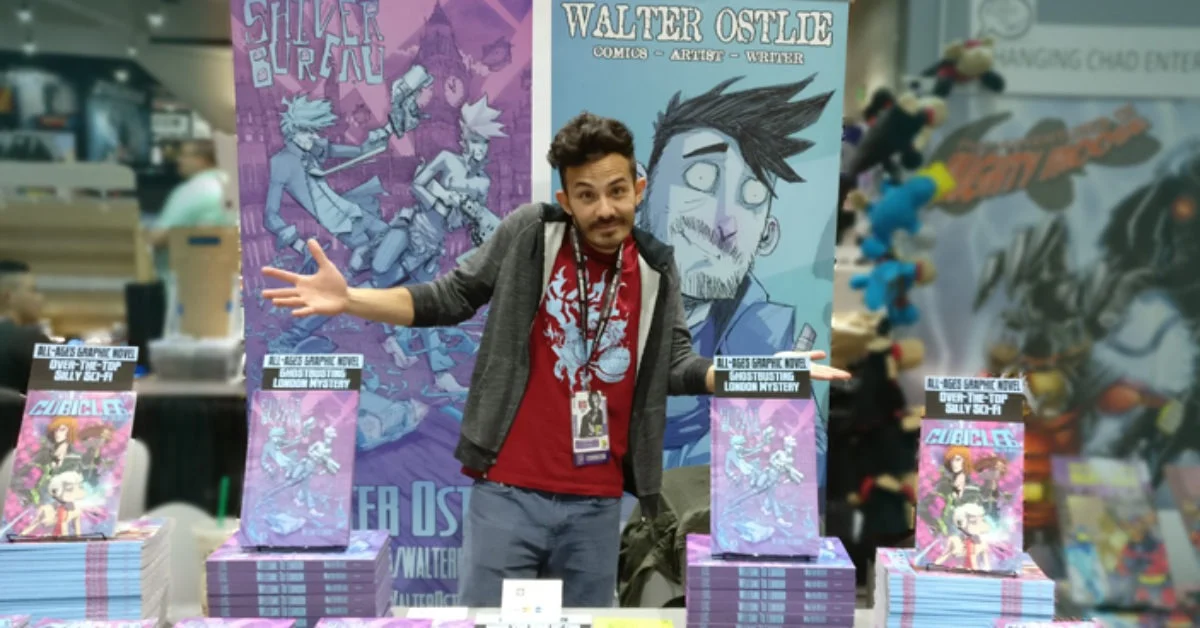
In the ever-shifting landscape of modern independent comics, few creators have managed to bridge the gap between traditional print graphic novels and the burgeoning digital frontier of webtoons as effectively as Walter Ostlie. A multidisciplinary artist, writer, and educator, Ostlie has spent over a decade refining his craft, transitioning from a self-taught enthusiast to a full-time professional whose work has been distributed by major industry players like Scout Comics and hosted on the global platform Webtoon.
A Chronology of Artistic Growth: From 2008 to the Present
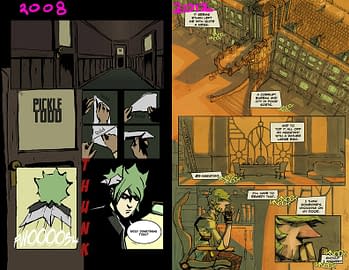
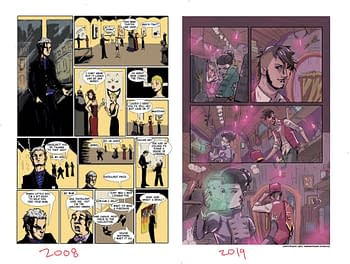
The journey of Walter Ostlie is a testament to the persistence required to succeed in the modern independent comic scene. His professional trajectory began in 2008, a period he describes as foundational, characterized by the rigorous process of teaching himself the mechanics of sequential storytelling.
The Early Years and Breaking into Print
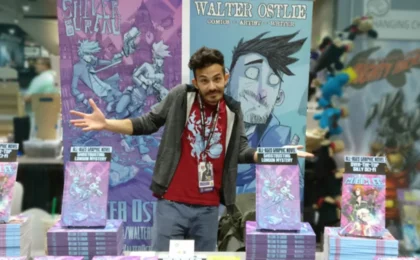
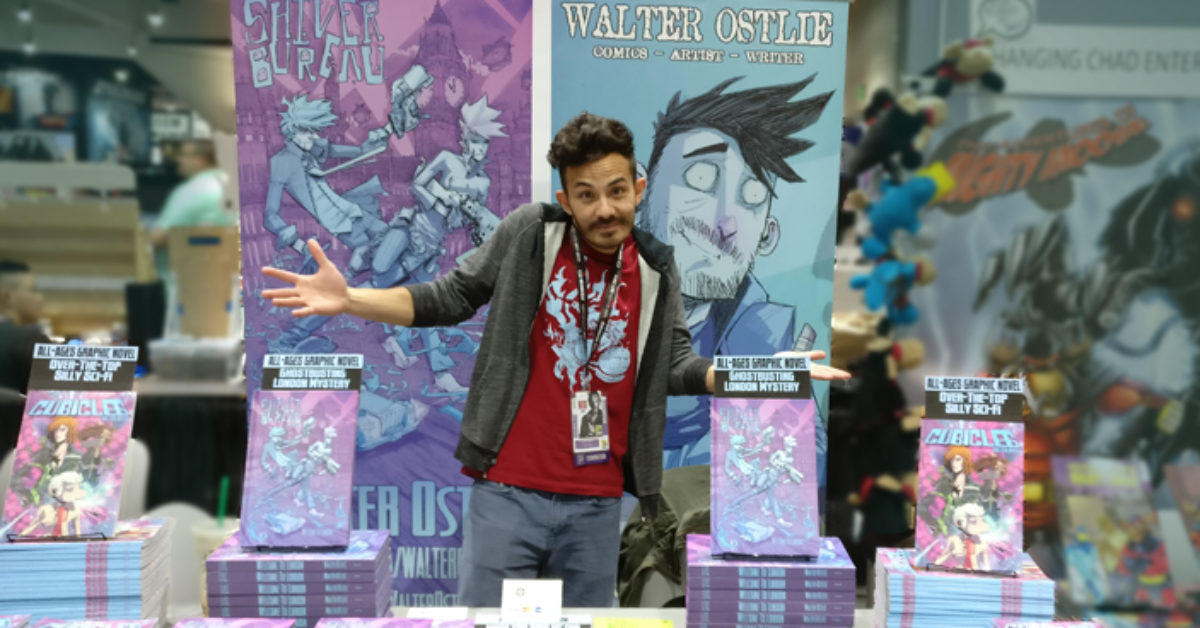
By 2011, Ostlie had achieved his first major milestone with the publication of Cubicles via Red5 Comics. This success served as a springboard for his sophomore project, Shiver Bureau. The latter proved to be a pivotal moment for Ostlie’s career; by leveraging the power of crowdfunding, he raised over $13,000 on Kickstarter. This project was not only a triumph in self-publishing but eventually attracted the attention of Scout Comics, which picked up the title for wider Diamond distribution.
The Webtoon Revolution
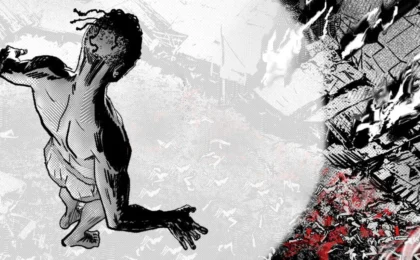
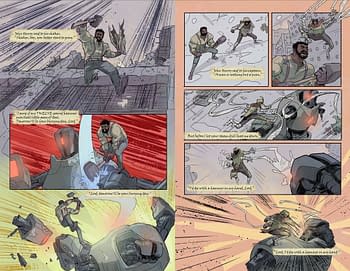
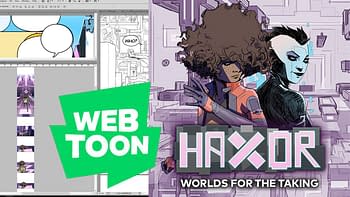
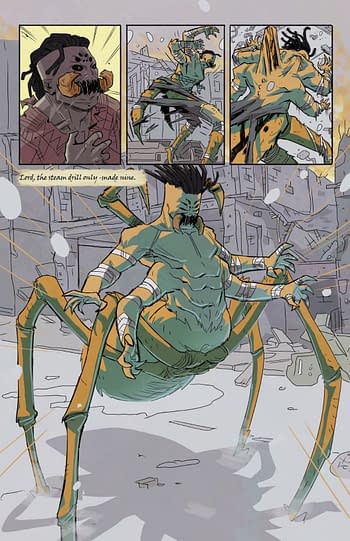
Following his success in the physical market, Ostlie turned his gaze toward digital distribution. His work on titles like Is’nana: The Were-Spider—a series created by Greg Anderson Elysee—further solidified his reputation as a versatile artist. However, it was his transition to Webtoon as a featured creator for the series Haxor that truly redefined his career. This move allowed him to transition from a "side-hustle" creative to a full-time, self-employed artist.
The Financial and Creative Shift to Full-Time Freelancing
For many artists, the decision to leave a traditional 9-to-5 job is a daunting prospect fraught with financial instability. For Ostlie, the catalyst was the intense production schedule demanded by the Webtoon platform.
"The schedule for Webtoon is pretty intense," Ostlie explains. "They release a new episode every week. An episode equates to about 6-8 traditional American comic pages, which is nuts. That’s writing, drawing, coloring, lettering."
Facing the choice between maintaining his day job or fully committing to his craft, Ostlie opted for the latter. Since November 2020, he has been entirely self-employed, a milestone he marks as a significant turning point in his life. He notes that the transition has been successful, allowing him to produce two creator-owned comics while maintaining the financial viability necessary to sustain his household.
Understanding the "Webtoon" Model: A Paradigm Shift
In an industry often tethered to the traditional "Diamond distribution" model, Ostlie views Webtoon as a radical departure. He likens the platform to YouTube—a place where anyone can post and monetize through ad revenue—but notes that it also functions like Netflix, as the platform actively funds "Originals."
The "Infinite Scroll" and Narrative Architecture
One of the most interesting aspects of Ostlie’s work is his adaptation to the vertical, infinite-scroll format of webcomics. Unlike traditional 32-page comic books, which rely on rigid panel structures, the vertical format provides a canvas for unique pacing.
"It’s an infinite vertical scroll, so I have a ton of room to play with," says Ostlie. "I could use ten panels of the same face, slowly changing the expression from confusion to horror if I wanted. Which really allows for a lot of character building."
However, he acknowledges that this format comes with its own limitations. Splash pages and wide-angle establishing shots, staples of the American comic book tradition, often lose their impact when viewed on a mobile device. Therefore, creators must rethink how they guide the reader’s eye, focusing on panel density and the rhythm of the scroll.
Supporting Data: The Power of Crowdfunding
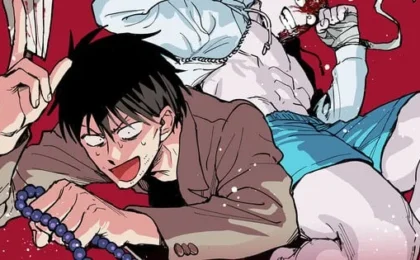
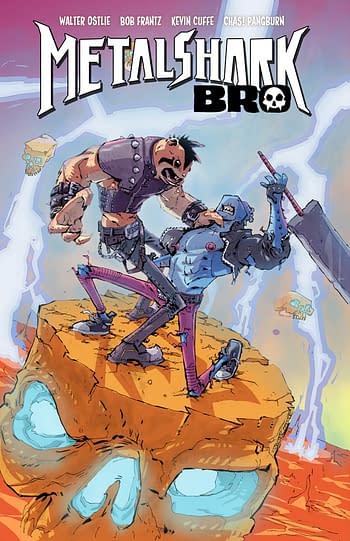
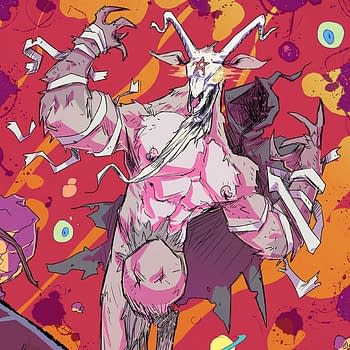
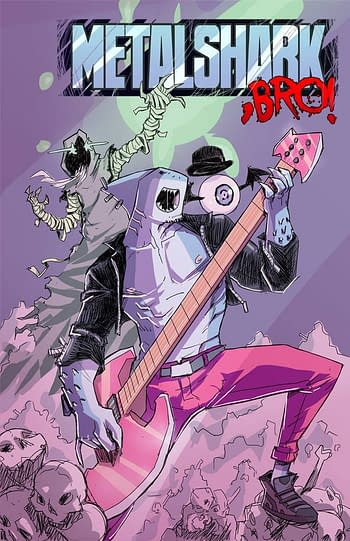
Ostlie’s success is not merely anecdotal; it is backed by significant financial support from his readership. His recent project, Metalshark Bro, a story about a were-shark battling demons, raised over $50,000 via Kickstarter. This figure is a testament to the power of niche, high-concept storytelling.
When asked about the bizarre premise of Metalshark Bro, Ostlie laughs. "It’s a project that doesn’t really make sense. We raised over $50,000 to make a story about a shark man-killing possessed donuts. It’s just a fun, ridiculous story, completely stupid in all the best way."
This success highlights a broader trend in the industry: readers are increasingly willing to support creators who lean into unique, high-concept, or "quirky" ideas, provided the execution is of high quality.
Insights into Creative Collaboration and Workflow
Despite his individual success, Ostlie emphasizes that comics are inherently collaborative. Whether working with Greg Anderson Elysee on Is’nana or with writers Bob Frantz and Kevin Cuffe on Metalshark Bro, Ostlie maintains that the relationship between writer and artist is paramount.
The Challenges of Vision Translation
One of the most profound insights Ostlie offers concerns the difficulty of "translation"—the process by which an artist takes a writer’s script and turns it into a visual reality. When writing for himself, Ostlie has a clear internal image of the environment, lighting, and texture. When working from another writer’s script, that clarity is absent.
"The most simplistic way to put is… let’s say there’s a script, and it reads, ‘there’s a box,’" Ostlie explains. "If I had written that line, I know what the box looks like… Now, if someone else wrote it, I don’t know jack squat. Working through that makes me see things in a different light, which I think makes me a stronger and more versatile artist."
Technical Advice for Creators
Ostlie’s commitment to the community is evidenced by his YouTube channel, which has garnered over 4,500 subscribers. His content focuses on the technical, "mundane" aspects of comic creation that are often overlooked by other tutorial channels. He aims to remove the "overwhelming" barrier to entry, allowing aspiring creators to focus on their stories rather than the mechanics of lettering or page formatting.
Implications for the Future of Comics
The industry is currently at a crossroads. As traditional brick-and-mortar sales face challenges, digital-first platforms like Webtoon are providing new avenues for career sustainability. Ostlie’s career serves as a roadmap for modern creators:
- Diversification of Skills: By mastering both traditional graphic novel formats and vertical-scrolling webcomics, artists can reach larger, more diverse audiences.
- The Rise of Independent Funding: Crowdfunding has become a primary pillar for creator-owned work, allowing niche projects like Metalshark Bro to thrive outside of traditional corporate gatekeeping.
- Community-Led Education: By sharing his process on YouTube, Ostlie is not just building a brand; he is cultivating a new generation of creators, ensuring the medium continues to evolve.
Looking ahead, Ostlie is keeping his cards close to his chest regarding his next major project, noting that he has signed contracts that will keep him busy well into 2021. While he admits to a desire to return to his ghoul-hunting series, Shiver Bureau, he remains disciplined about his workload.
"I made a promise to myself not to take on any more freelance work for a year at least," he says.
For a creator who has moved, navigated the highs and lows of the convention circuit, and successfully transitioned from a 9-to-5 to a full-time comic career, this discipline is likely the key to his continued growth. Whether he is drawing demons, were-spiders, or shark-men, Walter Ostlie has proven that there is a sustainable path forward for those willing to adapt to the changing tides of the comic book world.