Ali Ikhwan
Published Jun 21, 2026, 8:01 AM EDT
The long-anticipated release of Ravenloft: The Horrors Within has sent ripples of excitement through the global Dungeons & Dragons community. As players and Dungeon Masters prepare to brave the chilling Domains of Dread, seeking out mind-bending horrors and confronting the melancholic darklords ensnared by their own wickedness, the new tome offers a wealth of updated and novel options. Among these additions, from horror-themed subclasses to an innovative take on Dark Gifts, one particular revision stands out for its profound impact on player experience: the long-awaited overhaul of the College of Spirits bard. This 5.5 edition update to a subclass that previously caused significant frustration among players is a testament to the evolving design philosophy of Dungeons & Dragons, demonstrating a commitment to refining mechanics for enhanced playability.
The challenge of integrating randomness meaningfully into a tabletop role-playing game (TTRPG) is a perennial one for designers. While unpredictability can inject excitement and narrative spontaneity, unchecked randomness, particularly when tied to core class features and valuable resources, can quickly devolve into frustration. The original College of Spirits bard, first introduced in Van Richten’s Guide to Ravenloft, exemplified this precarious balance. Its signature ability, Spirits from Beyond, was criticized for its inconsistent and often unhelpful outcomes, nearly leading one player at my table to abandon their character entirely. The latest Ravenloft expansion, however, brings a much-needed rectification, transforming a once-problematic subclass into a far more engaging and strategically viable option.
The Genesis of Spirits: A Promising Concept in 5e
The College of Spirits bard first emerged as a captivating concept in Van Richten’s Guide to Ravenloft, the 5th Edition (5e) sourcebook dedicated to the gothic horror setting. The subclass was designed for bards who drew their power from the spiritual world, channeling the essence of legendary tales and departed souls to influence reality. Thematically, it held immense potential, promising a unique blend of bardic performance with an eerie, supernatural flair. The initial description in Van Richten’s Guide even hinted at a deeper connection, portraying these bards as those who "seek the power inherent to stories; they literally bring tales to life," a more evocative portrayal than the later, more generalized "Bards of the College of Spirits conjure legendary spirits to change the world." Both versions, however, consistently stressed the bard’s partial control over these spectral powers, an element intended to add flavor but which, in practice, became a significant mechanical hurdle.
At its core, the third-level class feature, Spirits from Beyond, was meant to be the subclass’s defining characteristic. In its original 5e incarnation, this ability required the bard to expend a bonus action and one use of their precious Bardic Inspiration resource. Upon doing so, the player would roll on a dedicated table, Spirit Tales, to determine a random effect. These effects ranged widely, from dealing damage to enemies to providing healing or utility to allies. Crucially, these effects were not immediate. The bard had to mentally retain the "spirit tale" and then, in a subsequent turn, expend a full action to activate it, or lose it if they used the feature again before activation. This multi-step, resource-intensive process, coupled with the inherent randomness, created a substantial barrier to effective gameplay.
The Perils of Unbridled Randomness: Player Frustration and Design Challenges
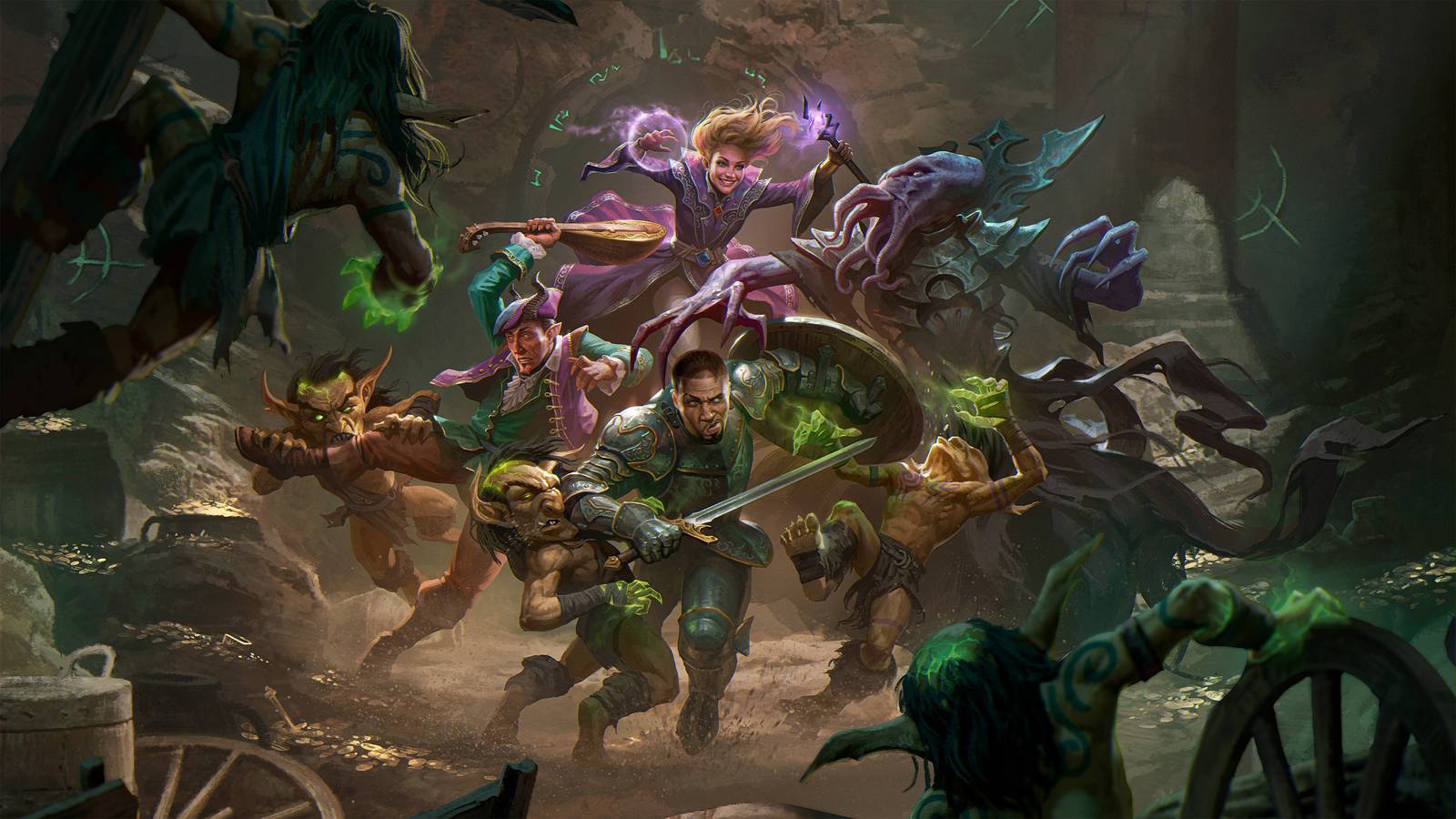
The design of the original Spirits from Beyond presented numerous tactical and psychological challenges for players. The combination of a significant resource cost (a bonus action and a Bardic Inspiration die), a random outcome, and a delayed activation requiring another action often rendered the ability impractical or even detrimental in combat scenarios.
During a prolonged Rime of the Frostmaiden campaign I ran, one of my players chose to multiclass into warlock and, later, the College of Spirits bard. The narrative arc for their character was compelling: starting as a warlock masquerading as a bard to conceal a pact with a sinister patron, they eventually sought to distance themselves from their dark ties, embracing the bardic path fully. This transition was a moment of significant character development, symbolizing a redemption arc and a newfound commitment to altruism. However, the mechanical realities of the College of Spirits subclass quickly undermined this powerful role-playing progression.
Every combat encounter became a source of palpable frustration for the player. The Spirits from Beyond feature, intended to be a cornerstone of their character’s abilities, consistently underperformed. Imagine a scenario where a player spends a bonus action and a Bardic Inspiration die, rolls on the Spirit Tales table, and receives a healing effect – only for the party to be at full health. Or perhaps they get a powerful melee damage effect, but their character is positioned far from any enemies, supporting from the backline. To then spend a full action on a subsequent turn to activate this unhelpful effect felt like a waste, doubling down on the initial poor outcome. More often than not, it was simply more efficient to use Bardic Inspiration as intended, providing immediate, tangible boosts to allies, rather than gamble on Spirits from Beyond.
The player’s exasperation reached a point where they seriously considered killing off their beloved character to create a new one, a stark indicator of how significantly suboptimal mechanics can impact player engagement and enjoyment. It required considerable effort and "DM diplomacy" – a blend of encouragement and creative narrative framing – to convince them to stick with the character, hoping for future revisions. This anecdote vividly illustrates the critical importance of ensuring that a character’s mechanical capabilities align with their thematic promise and contribute meaningfully to the party’s success. As my player aptly summarized, using the old College of Spirits often felt like "playing a gacha machine, praying you would get the five-star prize." While such unpredictable chaos might find a fitting home in systems like Mörk Borg, where unpredictability is a core design pillar, it clashes starkly with Dungeons & Dragons‘s established framework of class progression and reliable abilities.
Iterative Refinement: The Journey Through Unearthed Arcana
Recognizing the widespread feedback regarding the College of Spirits bard, Wizards of the Coast embarked on an iterative process of refinement, a common practice within the Dungeons & Dragons development cycle, especially for its 5.5e initiatives. The subclass reappeared in Unearthed Arcana (UA), the public playtest material, in 2025, signaling an acknowledgment of its previous shortcomings and a commitment to improvement.

The Unearthed Arcana version introduced a notable change: the Spirit Tale would now immediately affect a target upon being rolled. This was a definite step in the right direction, streamlining the activation process and removing the awkward delay that required a second action. It addressed one part of the problem by making the ability more reactive and immediate. However, it still failed to tackle the core issue of randomness. Players were still expending a valuable resource for an unpredictable outcome. While the effect was immediate, it could still be situationally useless or suboptimal, leading to a continued sense of frustration and a perceived waste of a Bardic Inspiration die. The UA iteration, while an improvement, highlighted that immediacy alone was insufficient; player agency over the outcome remained the crucial missing piece.
Unpacking the Fix: Controlled Channeling and Player Agency
The definitive fix for the College of Spirits bard has now arrived with Ravenloft: The Horrors Within. The updated Spirits from Beyond feature represents a significant re-evaluation of how randomness and resource management should interact within D&D’s class design.
Under the new rules, the Spirits from Beyond feature is activated for free every time a bard uses their regular Bardic Inspiration feature. This is a game-changer. When a bard inspires an ally, they still roll on the Spirit Tales table to determine a random effect. However, crucially, this random effect is now an added bonus, not a replacement or a separate, costly endeavor. The Bardic Inspiration die still performs its regular function, providing an immediate, tangible boost to the target’s roll. This means that, regardless of the Spirit Tale result, the player never feels like they have "wasted" a resource. The base utility of Bardic Inspiration is preserved, and the Spirit Tale becomes a flavorful, potential bonus.
Even more impactful is the introduction of a second activation option, dubbed "controlled channeling." If the randomly generated Spirit Tale isn’t suitable for the current situation, the bard can now, as a bonus action, spend another use of Bardic Inspiration to choose any effect from the Spirit Tales table when they unleash it. This "controlled channeling" mechanism is the true innovation. It provides players with a vital layer of agency, allowing them to adapt their spiritual powers to the tactical demands of the moment. Instead of being at the mercy of the dice, bards can now strategically deploy the most appropriate spiritual effect, whether it’s a burst of healing, a crowd-control effect, or a damaging strike, precisely when it’s needed most.
The Mechanics of Choice: Why this Update Resonates
This dual approach—a free, random bonus alongside a controlled, resource-costing option—strikes a far better balance between flavor and functionality. The free random roll maintains the thematic element of unpredictable spiritual influence, adding a dash of exciting chance to every Bardic Inspiration use. However, when the stakes are high, or a specific effect is desperately required, the "controlled channeling" option empowers the player to make a meaningful choice.
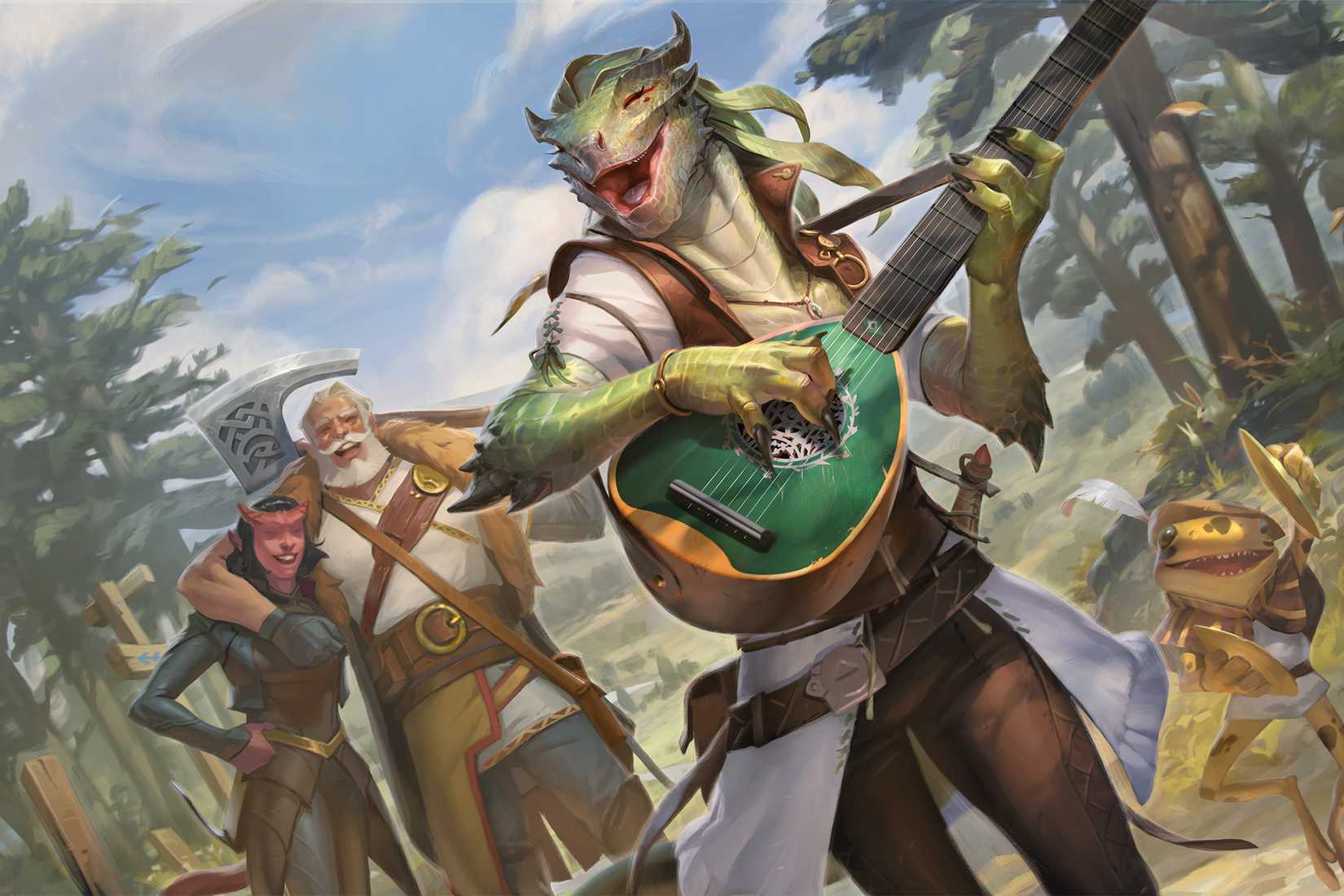
Consider the implications: this effectively adds a suite of 8 to 10 context-sensitive "spells" or abilities to the bard’s toolkit, accessible through a familiar resource. Bardic Inspiration, which scales with Charisma and replenishes after a short rest starting at level five, is a foundational resource for bards. Attaching a reliable, chosen effect to this resource elevates the College of Spirits bard from a gamble to a versatile support and control caster. It allows players to feel impactful and strategic, reinforcing the core fantasy of a bard who can adapt their performance to any challenge. The frustrating sensation of "wasting" a resource on an unhelpful random outcome is largely eliminated, replaced by a sense of meaningful contribution and tactical depth.
The level six feature, Empowered Channeling, also returns from Unearthed Arcana, providing a welcome boost to the healing and damage output of the Spirit Tales, alongside a special use of the Spirit Guardians spell. Similarly, the level 14 feature, Mystical Connection, remains consistent with the playtest material, further solidifying the subclass’s high-level capabilities. These complementary features ensure that the College of Spirits bard scales effectively throughout a campaign, providing impactful abilities at various tiers of play.
Beyond the Dice Roll: Flavor, Fantasy, and Functionality
The narrative consistency between a character’s concept and their mechanical execution is paramount in TTRPGs. The initial College of Spirits subclass struggled here; while the flavor suggested a bard wrestling with partially controlled spiritual energies, the mechanics translated this into frustrating unpredictability rather than engaging challenge. The updated version, with its "controlled channeling" option, better embodies the fantasy of a bard who learns to attune themselves more deeply to the spiritual world, gaining greater mastery over its powers as they grow in experience. The initial random roll can still represent the initial, wild outpouring of spiritual energy, while the ability to choose an effect signifies the bard’s developing skill and connection.
This revision highlights a critical lesson in TTRPG design: while randomness can indeed add flavor, fun, and excitement, it must be implemented thoughtfully, especially when tied to player agency and resource expenditure. Players typically desire a degree of predictability and control over their character’s actions, particularly when expending finite resources. The new College of Spirits bard respects this desire, allowing players to feel competent and strategic, rather than perpetually at the mercy of a dice roll.
Wizards of the Coast’s Evolving Design Philosophy: Responding to the Community
While Ravenloft: The Horrors Within has generated some discussion for repurposing content from Van Richten’s Guide to Ravenloft, the comprehensive update to the College of Spirits bard serves as a powerful illustration of Wizards of the Coast’s evolving design philosophy for 5.5e. This revision is not merely a tweak; it is a fundamental re-engineering of a problematic subclass, indicative of a willingness to listen to community feedback and refine existing content based on extensive playtesting.
The iterative process, moving from 5e to Unearthed Arcana and finally to the published 5.5e version, demonstrates a commitment to quality control and player satisfaction. It suggests that future updates and new content for Dungeons & Dragons will likely prioritize player agency and the strategic utility of class features, even when incorporating elements of randomness. This responsiveness is crucial for maintaining a healthy and engaged player base, ensuring that character options are not only flavorful but also mechanically viable and enjoyable to play. The fix for the College of Spirits bard can be seen as a direct response to the collective voice of the D&D community, signaling a positive direction for the game’s continued development.
Implications for Player Experience and Character Diversity
The revised College of Spirits bard carries significant implications for player experience and character diversity within Dungeons & Dragons. For existing players who may have previously abandoned or avoided the subclass due to its frustrations, this update offers a compelling reason to revisit it. The newfound reliability and strategic depth make the College of Spirits a genuinely enticing option, capable of contributing meaningfully to any adventuring party.
This enhancement also enriches the overall landscape of bardic subclasses. Bards are renowned for their versatility, and the College of Spirits now firmly carves out its niche as a strong contender for those who enjoy a blend of support, control, and a touch of the supernatural, with the added flexibility of choosing effects. It broadens the appeal of the bard class, encouraging more diverse character concepts and playstyles. A bard who can reliably call upon spirits for targeted healing, defensive buffs, or offensive strikes becomes a highly valuable asset, making the role-playing choices that much more satisfying.
A Precedent for Future Revisions: The Path of 5.5e
The successful rehabilitation of the College of Spirits bard sets a powerful precedent for how Wizards of the Coast might approach future revisions in 5.5e (or One D&D). It underscores the importance of:
- Player Agency: Providing players with meaningful choices, especially when expending resources, is critical for engagement.
- Balanced Randomness: Incorporating randomness in a way that adds excitement without undermining strategic play or causing frustration.
- Iterative Design: Utilizing public playtesting and community feedback to continuously refine and improve game mechanics.
- Thematic and Mechanical Alignment: Ensuring that the mechanical expression of a class or subclass effectively supports its thematic fantasy.
This approach suggests a future for Dungeons & Dragons where existing content is not simply discarded but thoughtfully re-evaluated and improved, building upon the foundations of 5th Edition while addressing its known shortcomings. It represents a mature evolution in game design, focusing on creating a more consistently enjoyable and robust experience for all players.
The Broader Landscape of TTRPG Design: Lessons in Randomness
The journey of the College of Spirits bard offers a valuable case study for TTRPG designers across the industry. It highlights the fine line between "fun randomness" and "frustrating randomness." Fun randomness often involves minor, flavorful elements or high-risk, high-reward situations where the player is fully aware of the gamble and its potential consequences. Frustrating randomness, conversely, often arises when a core ability, central to a character’s identity and resource economy, yields inconsistent and unhelpful results, leaving the player feeling powerless and ineffective.
The solution implemented in Ravenloft: The Horrors Within—providing both a free random bonus and a controlled, resource-costing choice—could serve as a blueprint for other games grappling with similar design challenges. It acknowledges the appeal of spontaneity while empowering players to mitigate risk and exert control when it matters most.
In conclusion, the update to the College of Spirits bard in Ravenloft: The Horrors Within is far more than a simple rules adjustment; it is a significant victory for player experience and a testament to the ongoing refinement of Dungeons & Dragons. What was once a source of frustration has been transformed into a dynamic and strategically rich option, ensuring that bards of the College of Spirits can now truly weave tales of power, not just unpredictable chaos, across the Domains of Dread. This fix not only revitalizes a struggling subclass but also reinforces the positive trajectory of 5.5e, promising a more engaging and responsive D&D experience for years to come.


 Lina Irawan
 Sagoh
Sagoh