

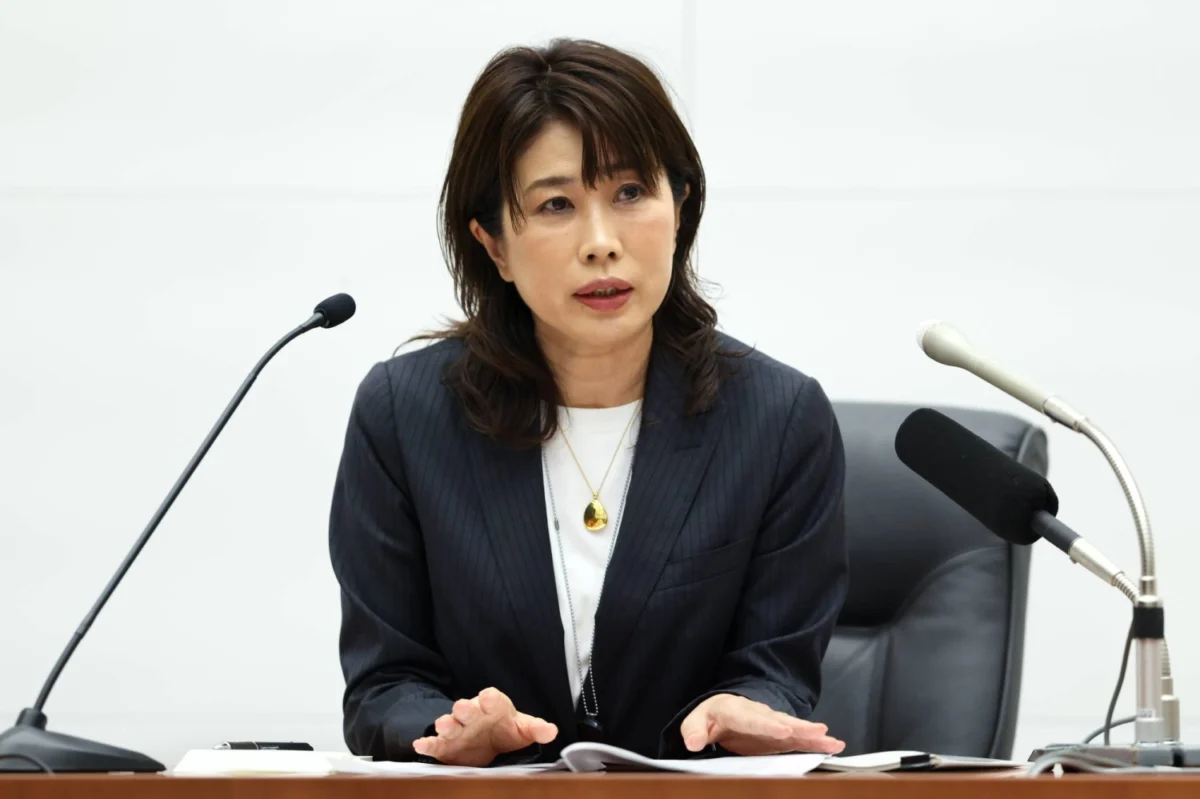
TOKYO — The Bank of Japan (BOJ) entered a critical new chapter this week as Ayano Sato, the latest appointee to the central bank’s Policy Board, signaled a cautious approach toward the nation’s long-standing inflation target. In her inaugural press conference held in Tokyo on Tuesday, Sato’s remarks suggested that despite recent interest rate hikes, the central bank’s mission to normalize monetary policy remains in its nascent stages.
Her appointment, championed by Prime Minister Sanae Takaichi, is widely viewed by market analysts as a signal that the administration remains sensitive to the fragile nature of Japan’s economic recovery. As the yen hits historic lows and global economic volatility persists, Sato’s presence on the board is expected to provide a counterbalance to the hawkish momentum that has defined the BOJ’s recent moves.
The Core Stance: Inflationary Norms Still Unsettled
The central theme of Sato’s debut address was a pragmatic skepticism regarding the "stickiness" of current price increases. While Japan has recently seen inflation metrics hovering above the BOJ’s long-term 2% target, Sato challenged the notion that this represents a fundamental shift in the nation’s economic behavior.
“While we may observe some risk of inflation overshooting, I do not believe that an inflationary norm has yet become firmly established,” Sato stated.
This assessment is significant. For decades, the Japanese economy was defined by deflationary pressures that discouraged consumer spending and business investment. For the BOJ, the goal has been to pivot from a "deflationary mindset" to one of stable, sustainable growth. By suggesting that this transition is not yet "firmly established," Sato is essentially arguing that the central bank cannot afford to be overly aggressive in its tightening cycle.
Her refusal to explicitly state her long-term policy bias—opting instead to remain neutral during her first official outing—did little to quell speculation that she will serve as a stabilizing force, likely resisting any rapid or drastic interest rate hikes that could jeopardize the still-fragile consumption patterns of Japanese households.
Chronology: A Turbulent Path to Normalization
To understand the weight of Sato’s appointment, one must look at the rapid-fire succession of events that have defined the Bank of Japan’s policy landscape over the past month.
- Mid-June 2026: The BOJ, responding to persistent inflationary pressure and global pressure, implements a landmark interest rate hike, lifting the benchmark rate to its highest level in 31 years. The move is hailed by some as the final curtain on the era of negative interest rates and ultra-loose monetary policy.
- Late June 2026: Market reaction to the policy shift proves volatile. The yen begins a sharp depreciation, exacerbated by the interest rate differential between the U.S. Federal Reserve and the BOJ.
- June 30, 2026: The Japanese yen slides to its lowest valuation against the U.S. dollar since 1986, creating a domestic outcry regarding the rising cost of imported energy and foodstuffs.
- July 1, 2026: Ayano Sato officially assumes her five-year term on the BOJ board.
- July 2, 2026: In her first press conference, Sato articulates a cautious outlook, effectively cooling expectations of further imminent hikes and emphasizing the need for stability over speed.
This chronology highlights the narrow tightrope the Bank of Japan is walking: trying to fight inflation without strangling the economic growth that the country has fought so hard to reclaim.
Supporting Data: The Yen, Inflation, and External Pressures
The context of Sato’s appointment is inextricably linked to the performance of the yen. As of early July 2026, the currency’s slide to 1986 levels is not merely a statistical anomaly; it is a profound economic burden.
The Cost of a Weak Currency
Sato acknowledged the dual nature of the weak yen. On one hand, a cheaper yen traditionally benefits Japan’s massive export sector by making goods more competitive globally and inflating the repatriated earnings of corporate giants. On the other hand, for a nation that imports the vast majority of its energy and a significant portion of its food, a weak yen is essentially a "tax" on households.
"High foreign-exchange volatility isn’t desirable," Sato noted. "Policymakers need to watch its impact on prices."

Inflation vs. Real Wages
While the Consumer Price Index (CPI) has shown consistent growth, the crucial metric remains real wages. If inflation rises faster than wages, the standard of living drops, leading to reduced consumption. Data from the first half of 2026 shows that while nominal wages have seen a slight uptick, they have failed to keep pace with the rising costs of living, a discrepancy that Sato and her colleagues will be closely monitoring in the coming months.
Official Responses and Political Implications
The appointment of Ayano Sato is widely attributed to Prime Minister Sanae Takaichi. In a political climate where the administration is focused on "New Capitalism" and revitalizing regional economies, the appointment of a board member who prioritizes caution over aggressive tightening is a clear signal of the government’s intent.
The Takaichi Doctrine
Takaichi has been vocal about the need for the central bank to work in tandem with government fiscal policy. By selecting a candidate who echoes the sentiment that inflation is not yet "firmly established," the administration is ensuring that the BOJ will not move to restrict credit at a time when the government is looking to stimulate domestic industrial growth and wage hikes.
Market Reaction
Financial markets remain in a state of watchful waiting. Investors who had priced in a series of aggressive rate hikes throughout 2026 are now recalibrating their models. The consensus among analysts is that while the "emergency" era of the BOJ is over, the path to a high-interest-rate environment will be incremental, punctuated by long periods of data gathering.
Implications: What to Expect in the Next Five Years
Ayano Sato’s five-year term will likely be defined by the "Great Balancing Act." As she settles into her role, several long-term implications for the Japanese economy have emerged:
1. Data-Dependent Policy
Sato’s emphasis on the "firm establishment" of an inflationary norm suggests that the BOJ will be looking for sustained wage growth rather than mere headline inflation numbers. Future rate hikes will likely be delayed until there is undeniable evidence that Japanese households have the purchasing power to absorb higher borrowing costs.
2. Currency Stabilization as a Secondary Mandate
While the BOJ’s primary mandate is price stability, the current volatility of the yen has forced the board to consider the broader economic impacts of currency fluctuations. Sato’s remarks indicate that the BOJ will likely coordinate more closely with the Ministry of Finance to prevent "excessive" volatility that could destabilize the domestic market.
3. The End of "Easy" Policy Shifts
The era of unanimous, swift policy shifts within the BOJ may be coming to an end. Sato’s appointment adds a voice of caution to a board that had appeared increasingly unified in its hawkish leanings. This will likely lead to more robust, and perhaps more frequent, split decisions on interest rates, providing a healthier, albeit more complex, deliberative process.
4. Navigating Global Headwinds
Japan does not operate in a vacuum. As the United States and the European Union grapple with their own economic cycles, the BOJ must ensure that its domestic policy does not exacerbate capital flight or deepen the recessionary risks already present in the global economy. Sato’s pragmatic approach is expected to favor "patience" over "reaction."
Conclusion: A New Standard of Prudence
As Ayano Sato takes her seat at the Bank of Japan, the message to the markets is clear: do not expect a rush to judgment. Her insistence that the current inflationary trend is not yet a permanent feature of the Japanese economy provides a necessary buffer against the pressures of immediate, reflexive policy shifts.
The next five years will be a test of whether Japan can successfully normalize its monetary policy without triggering the very deflationary traps it has spent decades trying to escape. With Sato on the board, the Bank of Japan has signaled that it prefers the slow, deliberate path of stability over the potential volatility of an accelerated tightening cycle. For the Japanese consumer and the global markets, this represents a period of sustained, cautious observation—a necessary cooling-off phase in one of the world’s most complex financial landscapes.











