

Despite the absence of a Brazilian feature in the main competition sections at this year’s Cannes Film Festival, the mood among the Brazilian delegation at the Marché du Film was far from dampened. Instead, there was a palpable sense of purpose and confidence. Building on the hard-won momentum of recent years—highlighted by the international acclaim of political dramas like "The Secret Agent"—representatives from São Paulo arrived at the world’s most prestigious film market with a clear message: Brazil is no longer just a source of creative talent; it is a burgeoning, industrialized powerhouse for global production.
At the heart of this delegation were government officials from the state of São Paulo, who utilized the platform to showcase the tangible results of a landmark investment strategy. For these policymakers, the mission at Cannes was twofold: to celebrate the initial success of the pioneering Paulo Gustavo Law and to unveil a bold, 20-year roadmap designed to solidify the state’s position as a premier international filming destination.
The Paulo Gustavo Law: A Catalyst for Recovery
To understand the current surge in activity, one must look back at the post-pandemic landscape of 2021. The Brazilian audiovisual sector, like many worldwide, faced a catastrophic contraction due to COVID-19. However, the industry also mourned the loss of one of its most beloved icons: comedian and actor Paulo Gustavo. In his honor, the federal government enacted the "Paulo Gustavo Law," a historic R$2.8 billion ($571 million) stimulus package released in May 2023.
This massive injection of capital was distributed across Brazil’s 27 states and 5,000 municipalities. The state of São Paulo secured a $50 million slice, which was immediately channeled into a multifaceted development plan. Rather than dispersing funds into isolated projects, the state focused on a structural approach, targeting governance, infrastructure, workforce training, and international promotion. This was not just a bailout; it was an industrial strategy designed to build a self-sustaining ecosystem.
Chronology of a Transformation
The trajectory of São Paulo’s audiovisual sector has been defined by a rapid shift from reactive support to proactive industrial planning:
- 2021: The tragic passing of Paulo Gustavo serves as a turning point, leading to the federal legislative initiative that bears his name.
- 2023: The federal government releases the $571 million stimulus package. São Paulo begins the deployment of its $50 million allocation, focusing on both local production and international appeal.
- 2023-2024: The launch of the state’s audiovisual development plan. The creation of the São Paulo Film Commission leads to a comprehensive mapping of 1,600 filming locations.
- 2024: The first wave of projects funded by the Paulo Gustavo Law hits the screens, including the political thriller A Conspiração Condor, directed by André Sturm.
- 2025-2026 (Current Focus): The drafting of the 20-year Plano de Desenvolvimento da Indústria Audiovisual Paulista, aimed at insulating the industry from political volatility.
Data-Driven Growth: The Economic Engine
Marília Marton, Secretary of Culture, Economy, and Creative Industries of São Paulo, emphasizes that the state’s strategy views film through the lens of economic impact. "We focused on film as an industry, one that brings great economic return to the state," Marton explains.
The numbers support her claim. The audiovisual sector in São Paulo is responsible for an estimated 1.6 million jobs. By investing in talent development schools and fostering professional mentorship, the state has ensured that the "knowledge economy" surrounding cinema is growing alongside the production volume.
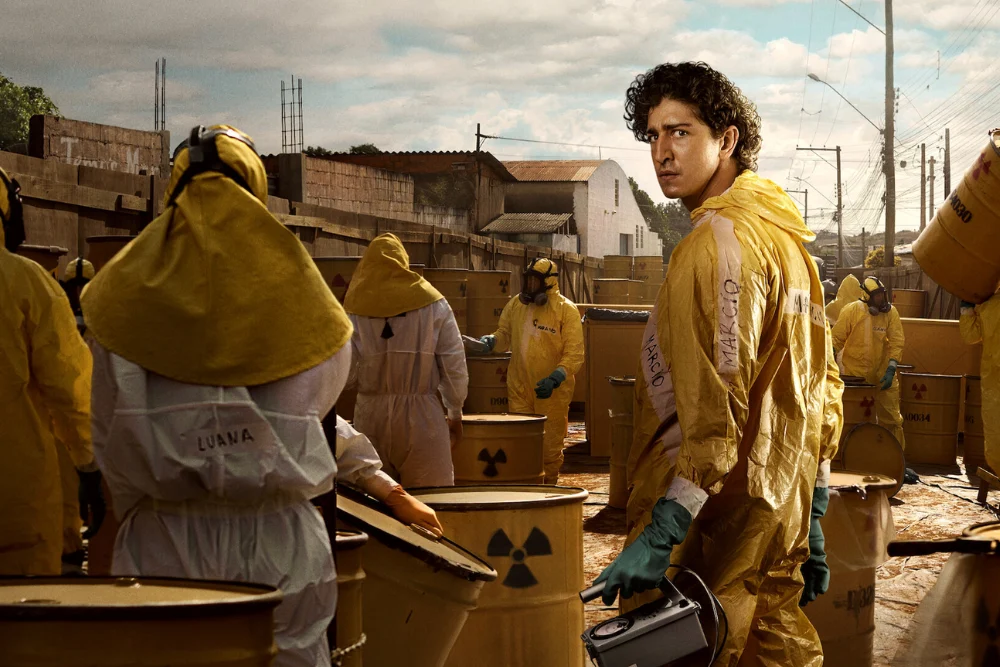
The state has also leveraged its favorable exchange rate. With the Brazilian Real remaining relatively weak against the Euro and the Dollar, international production houses have found that they can secure high-end production value at a fraction of the cost required in North America or Western Europe. This has already attracted major players; for instance, the science-fiction film Zero K, starring Peter Sarsgaard, Caleb Landry Jones, and Britt Lower, is currently filming in the state. Furthermore, Netflix’s recent chart-topping success, Emergency Radioactive, was produced entirely in the interior of São Paulo, proving that the state’s logistical capabilities extend well beyond the capital city.

Official Perspective: The Need for Stability
Speaking to Variety at the Marché du Film, Marton reflected on the challenges of scaling up production. "Soon after the establishment of the Paulo Gustavo Law, we realized that producing large-scale, quality films was an expensive, arduous task," she admitted. "I feel we had the right sensibility at the right time of choosing to listen to the industry and understand their needs."
The primary challenge now is transition. The "easy" money from the emergency stimulus has been deployed, and the focus must shift toward long-term sustainability. "The industry needs predictability," Marton stresses. "Filmmakers need to think ahead of certain dates, and producers need calendars. That’s how we can negotiate international partnerships and build our visibility abroad."
To achieve this, the state is moving toward a 20-year legislative plan—the Plano de Desenvolvimento da Indústria Audiovisual Paulista. This document is designed to codify support for the industry, ensuring that infrastructure, funding, and training programs remain in place regardless of the political party currently in power. "Governments come and go, but the state remains," Marton notes. "We need to ensure that we have stable, long-lasting policies in place to tranquilize the sector."
Implications for the Global Market
The implications of São Paulo’s strategy are significant for the international film community. By standardizing its offerings through the state film commission—which provides a "one-stop-shop" for permits, logistical support, and financial incentives—São Paulo is lowering the barrier to entry for foreign studios.
The establishment of the "São Paulo Audiovisual Hub" and the recent opening of a dedicated Netflix office in the city are testaments to this success. The goal is to move from being a "location of choice" to a "partner of choice."
As the state moves forward, the emphasis remains on the entire value chain. From the initial screenplay development to the final exhibition in theaters, the government is attempting to ensure that the audience is not forgotten. "We are working on bringing audiences back to the cinema," Marton adds. "The solution is not about a single strategy; it’s about coordinating efforts over an extensive period. We can’t bet on isolated initiatives alone."
Ultimately, the presence of the São Paulo delegation at Cannes serves as a signal to the world: the Brazilian state is open for business, its infrastructure is ready, and it is playing the long game. By prioritizing consistency over volatility, São Paulo is not just producing films; it is engineering a cultural and economic juggernaut that is likely to dominate the South American landscape for decades to come.











No comments yet. Be the first to join the conversation!