

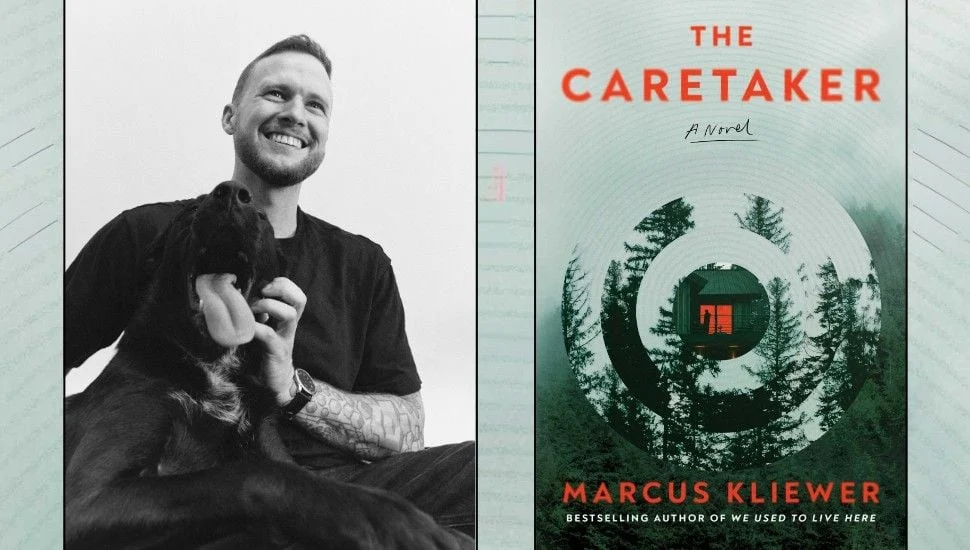
In the landscape of contemporary horror, the line between psychological projection and narrative craft is often porous. For bestselling author Marcus Kliewer, that boundary didn’t just blur—it served as the catalyst for a life-altering medical discovery. Kliewer, best known for his breakout success We Used to Live Here, recently released his sophomore novel, The Caretaker, published by 12:01 Books. While the book stands as a chilling work of fiction, it also functions as a stark, semi-autobiographical exploration of Obsessive-Compulsive Disorder (OCD), a condition the author was unaware he was living with until his readers pointed it out.
The Genesis of a Creative Return
The path to The Caretaker began in the crucible of the 2020 global pandemic. Like many, Kliewer found himself navigating the isolation and existential dread that defined the era. For him, the remedy was a return to his roots: writing horror.
"It was oddly comforting to find a type of misery I had control over," Kliewer reflects. "Even if that control was simply typing words on a page."
Bolstered by Canada’s CERB (Canada Emergency Response Benefit), which provided him the financial stability to focus on his craft, Kliewer returned to the digital trenches of the internet’s horror scene. He revisited r/NoSleep, the popular Reddit community that has served as a launchpad for modern horror legends. After a six-year hiatus from the platform, he began serializing a story titled The Man in my Basement Takes One Step Closer Every Week.
At the time, the project was intended as a creative exercise in suspense. He was not writing a medical case study; he was writing a terrifying story about a man confronting an encroaching, inexplicable threat.
The Unexpected Mirror: A Reader’s Intervention
The turning point occurred mid-series. As Kliewer tracked the evolving narrative of his protagonist, he received a direct message from a reader. The message was not a typical critique of his prose or pacing; it was a personal observation. The reader asked if the story was an intentional allegory for OCD, noting that the protagonist’s internal monologue—the cycles of doubt, the repetitive intrusive thoughts, and the paralyzing need for specific mental rituals—bore a striking resemblance to the reader’s own lived experience with the disorder.
Initially, Kliewer dismissed the connection. Like much of the general public, his understanding of OCD was limited to pop-culture tropes: the desire for symmetry, an obsession with cleanliness, or the frequent hand-washing stereotypes seen in film. "I was honored to hear the story resonated with someone, but I remember thinking the similarities were likely just coincidental," Kliewer admits. "My understanding of OCD at the time was limited at best, ignorant at worst."
However, the comment acted as a seed of curiosity. Kliewer began to research the clinical reality of OCD, moving beyond the stereotypes.
Unpacking the Clinical Reality: Beyond the Stereotypes
As Kliewer delved into medical literature and psychological resources, he discovered that OCD is not merely about organizing books or washing hands. He began learning about "Pure O" (obsessions without visible compulsions), harm OCD, and religious/moral scrupulosity—subtypes that are frequently misunderstood or missed entirely by those who do not experience them.

The realization was profound. The "horror" he had been intuitively writing—the feeling of being trapped in one’s own mind, the endless cycles of intrusive, unwanted thoughts, and the exhausting attempts to neutralize them—was, in fact, the lived reality of OCD.
Following consultations with counselors and mental health specialists, Kliewer received an official diagnosis. The diagnosis provided a name for the internal turbulence he had been experiencing for years, reframing his past struggles and his current creative output.
The Caretaker: A Metaphor for the Mind
This journey from ignorance to diagnosis fundamentally altered the trajectory of his writing. His second novel, The Caretaker, serves as a spiritual successor to his Reddit series, but it carries a heavier, more intimate weight. It is, in many ways, a visceral metaphor for the experience of living with an undiagnosed, untreated anxiety disorder.
The novel depicts the "horrific nature" of the mind when it turns against itself. By externalizing the internal symptoms of OCD into the horror genre, Kliewer provides readers with a rare, inside-out view of the disorder.
"I hope it resonates with those who live with OCD," Kliewer says, "and gives others a window into the exhausting, shapeshifting, and often horrific nature of the disorder."
The Implications of Narrative Advocacy
Kliewer’s experience highlights a growing trend in literature where authors use the medium of horror to externalize complex mental health conditions. Horror, by nature, explores the loss of control and the confrontation with the "monstrous." For many suffering from OCD, the intrusive thoughts are the monster.
Medical experts suggest that when authors use their platforms to demystify mental health, it can have a positive ripple effect:
- Reduction of Stigma: By framing OCD as a multifaceted, often terrifying experience rather than a "quirk," authors help dismantle the trivialization of the condition.
- Early Identification: Just as Kliewer’s reader helped him identify his own symptoms, literature can act as a catalyst for others to seek professional help.
- Community Building: Sharing personal experiences through fiction allows those who feel isolated in their diagnoses to see themselves represented in the mainstream.
Conclusion: The Horror of Understanding
Marcus Kliewer’s journey from a Reddit horror writer to a professionally published author with a diagnosis is a testament to the power of self-reflection through art. The Caretaker is more than just a horror novel; it is a clinical observation dressed in the guise of a thriller.
By pulling back the curtain on his own mind, Kliewer has not only produced a compelling work of fiction but has also contributed to a broader, more nuanced conversation about mental health. For those readers who find themselves staring at the page and seeing their own anxieties reflected back, the book may serve as the same mirror that changed the author’s life forever. As Kliewer continues his career, he stands as a reminder that sometimes the most terrifying stories we tell are the ones that lead us to the truth about ourselves.










No comments yet. Be the first to join the conversation!